Home · Itineraries
A day at a time
Five days
Day one: the ancient heart
Begin at the arena, climb the Palatine, walk down through the Forum and up to Michelangelo's square on the Capitoline.
Day two: the squares in the bend
From the Pantheon to Piazza Navona, then east to the Trevi Fountain and north to the Spanish Steps and Piazza del Popolo.
Day three: Vatican City and the far bank
The Vatican Museums and St. Peter's in the morning, Castel Sant'Angelo after lunch, Trastevere for the evening.
Day four: the pilgrim basilicas
Santa Maria Maggiore and St. John Lateran on the eastern hills, then south to the Baths of Caracalla.
Day five: beyond the walls
The Borghese Gallery and its park, then out along the Appian Way among the tombs and catacombs.
In full
Itineraries
How these routes work
Each day follows one group of sights that stand close together on the ground, so most of the walking is short and the transport is at the start and the end. They follow the six groups on the sights page, and every stop links to its own page with history, what to see and how to visit.
Two of the days depend on tickets arranged in advance: the Colosseum park on day one and the Vatican on day three. Read the booking ahead page before you travel, and fix those two days first; the others can move around them.
One day
With a single day, combine the first two routes. Spend the morning at the Colosseum, the Forum and the Palatine, which share one ticket and one park, then climb to the Capitoline for the view back over the Forum. After lunch, walk northwest to the Pantheon and on to Piazza Navona, then east to the Trevi Fountain and up to the Spanish Steps as the light goes. It is a long day on foot, all of it in the old center, and it shows you both ancient and Baroque Rome.
If the Vatican matters more to you than the ancient city, swap the morning: the Vatican Museums and St. Peter's, then cross the Ponte Sant'Angelo and walk to Piazza Navona and the Pantheon.
Day one in detail
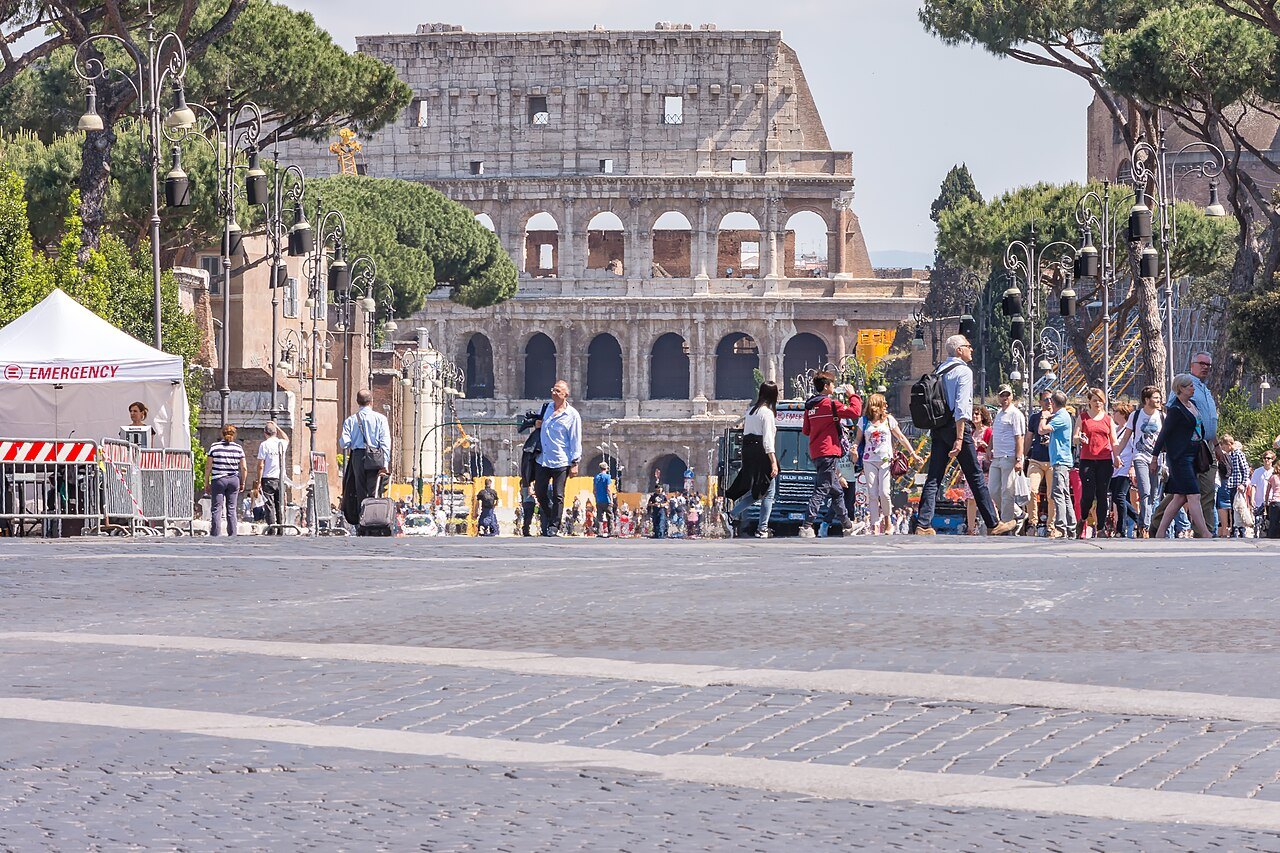
Start at the Colosseum as early as your ticket allows, and look first at the Arch of Constantine just to its southwest, on the old triumphal route. Inside the park, climb the Palatine, where legend puts Romulus and the emperors built their palaces, and look down over the Circus Maximus. Then descend into the Forum and walk the Via Sacra past the temples, the Curia and the Arch of Septimius Severus.
Leave the Forum toward the Capitoline and climb to Michelangelo's square, the Campidoglio, by the Cordonata, his gently sloping ramp. The Capitoline Museums fill both palaces on the square, joined underground by the Tabularium, whose arches frame the best view of the Forum anywhere. Allow two to three hours for the museums if you go in; otherwise stand at the balustrade, then walk down to the Pantheon for the evening.
Three days
Three days is enough for the first three routes. Day one is the ancient heart, with the Colosseum, the Palatine, the Forum and the Capitoline. Day two is the squares in the bend, from the Pantheon and Piazza Navona to the Trevi Fountain, the Spanish Steps and Piazza del Popolo, with the Pincio terrace at the end.
Day three is Vatican City. Go to the Vatican Museums early, ending in the Sistine Chapel, and then to St. Peter's, remembering that the basilica has no cloakroom and that the dome is visited on a booked slot. In the afternoon walk to Castel Sant'Angelo, and in the evening cross into Trastevere for dinner and the square of Santa Maria in Trastevere.
Day two in detail
Begin at the Pantheon when it opens, before the square fills, and look up at the oculus. Walk west to Piazza Navona, whose long oval keeps the shape of Domitian's stadium, with Bernini's Four Rivers in the middle. From there cross back east through the old streets to the Trevi Fountain, going down to the basin only if you have a ticket, and on north to the Spanish Steps, where sitting and eating on the steps are forbidden. Finish by walking the Via del Babuino to Piazza del Popolo and climbing to the Pincio terrace for the view at sunset.
Five days
Five days lets you add the rest. Day four takes you east to the pilgrim basilicas: Santa Maria Maggiore, with its fifth-century mosaics, and St. John Lateran, the cathedral of Rome, with the Holy Stairs across the square. From there it is a walk south to the Baths of Caracalla, one of the most striking ruins in the city.
Day five goes beyond the walls. Spend the morning at the Borghese Gallery, arranged in advance, and in the Villa Borghese park, then head south to the Porta San Sebastiano and out along the Appian Way, past the church of Domine Quo Vadis and the catacombs to the tomb of Caecilia Metella.
A longer stay
With a week or more, slow down. Spend a morning on the Janiculum above Trastevere for the view, walk the old Jewish Ghetto in Sant'Angelo, and look for the marble plaques of the rioni on the street corners. Go to Testaccio for Roman cooking, and give a day to the towns and ruins outside the city; the day trips page describes them.
A longer stay also lets you see places twice: the Pantheon in sun and in rain, when water falls through the oculus, or the Trevi Fountain early in the morning and again at night.
Pacing, weather and evenings
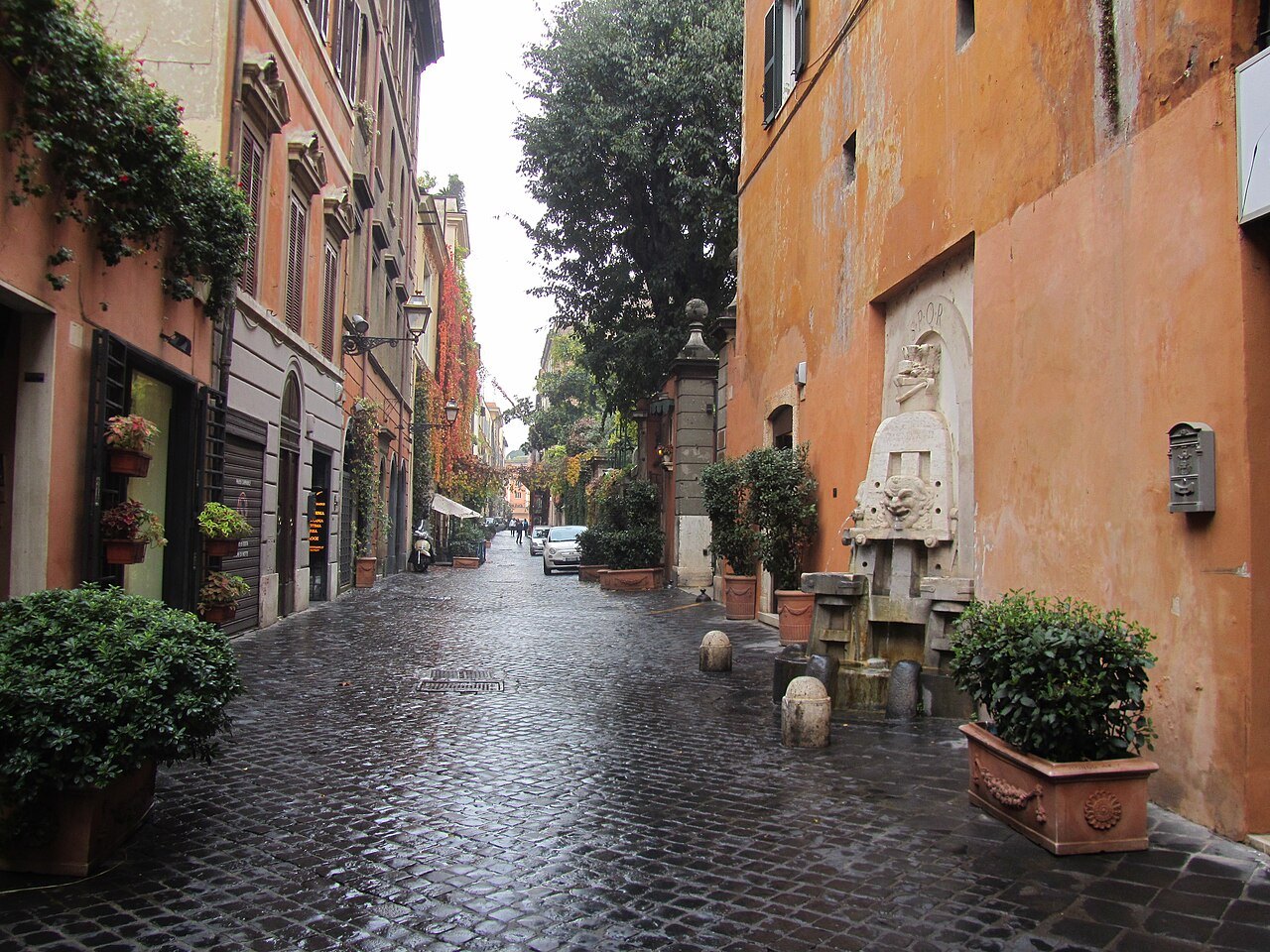
Rome is hard on the feet. The streets are cobbled, the ancient sites are uneven and open to the sun, and the hills are real. In summer, when afternoons average around 91 °F, do the open-air sites early and keep churches and museums for the heat of the day; carry a bottle and fill it at the nasoni, the city's free drinking fountains. The when to come page describes the seasons.
Build in a long lunch and a rest in the afternoon; the routes are planned so that each day can stop at a café or a church and pick up again. Every route here also works in reverse, which helps when a ticket slot or a closure fixes one end of the day.
Evenings belong to the squares and to Trastevere. Piazza Navona, the Pantheon's square and the lanes across the river are at their best after dark, when the day's tour groups have gone and Romans come out to eat.
On a rainy day, go indoors: the Vatican Museums, the Capitoline Museums, the great basilicas and the Borghese Gallery can fill several days on their own. The Pantheon is worth seeing in the rain for the column of water that falls through its open oculus onto the sloping floor.
Where to base yourself
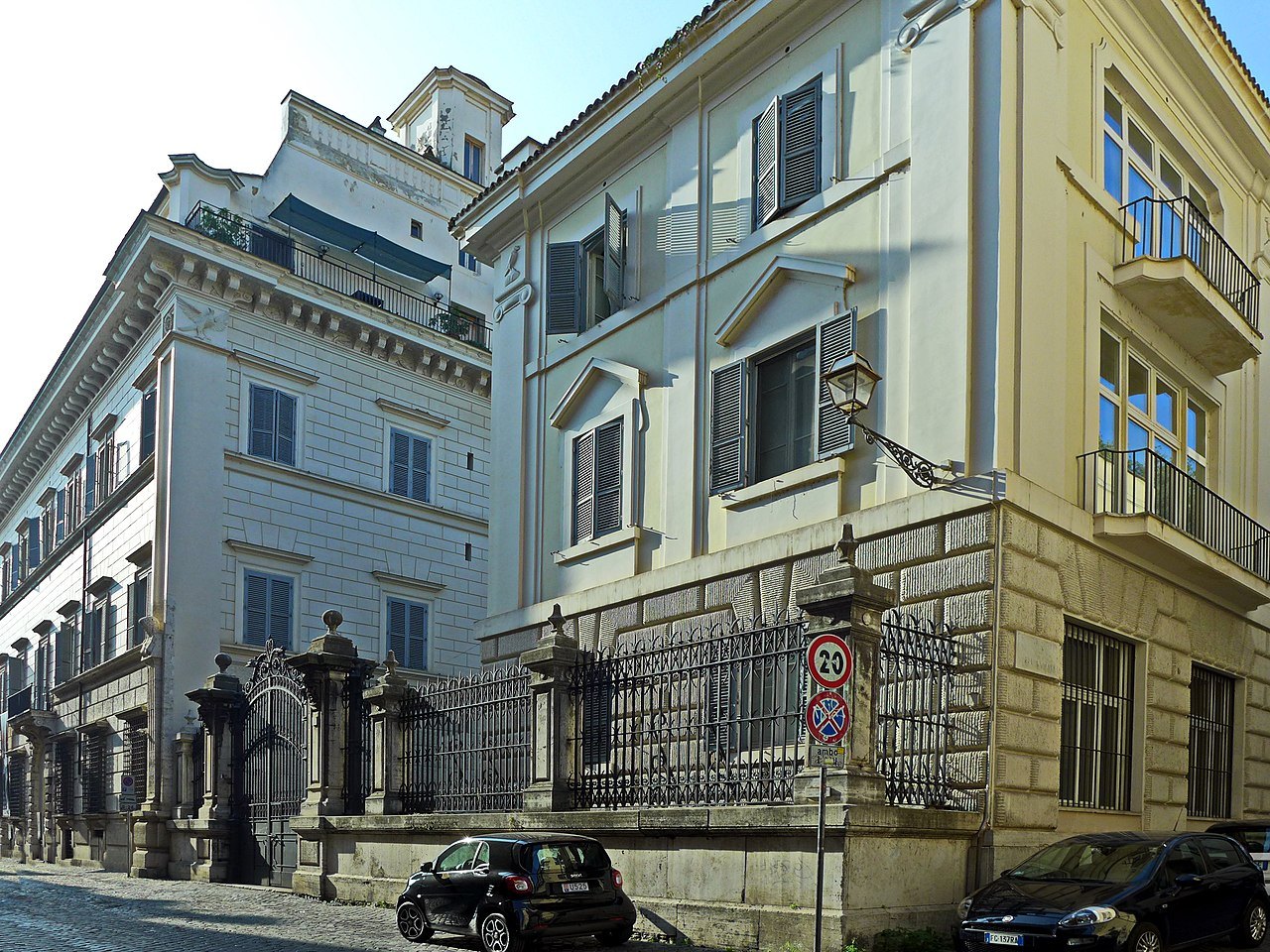
For these routes, a base in the squares in the bend of the Tiber or in Monti keeps days one, two and four on foot; Prati suits the Vatican day; Termini is best for early trains. The neighborhoods page compares them, and the getting around page explains the Metro, trams and buses for the longer hops.
Seen on the way
More photographs
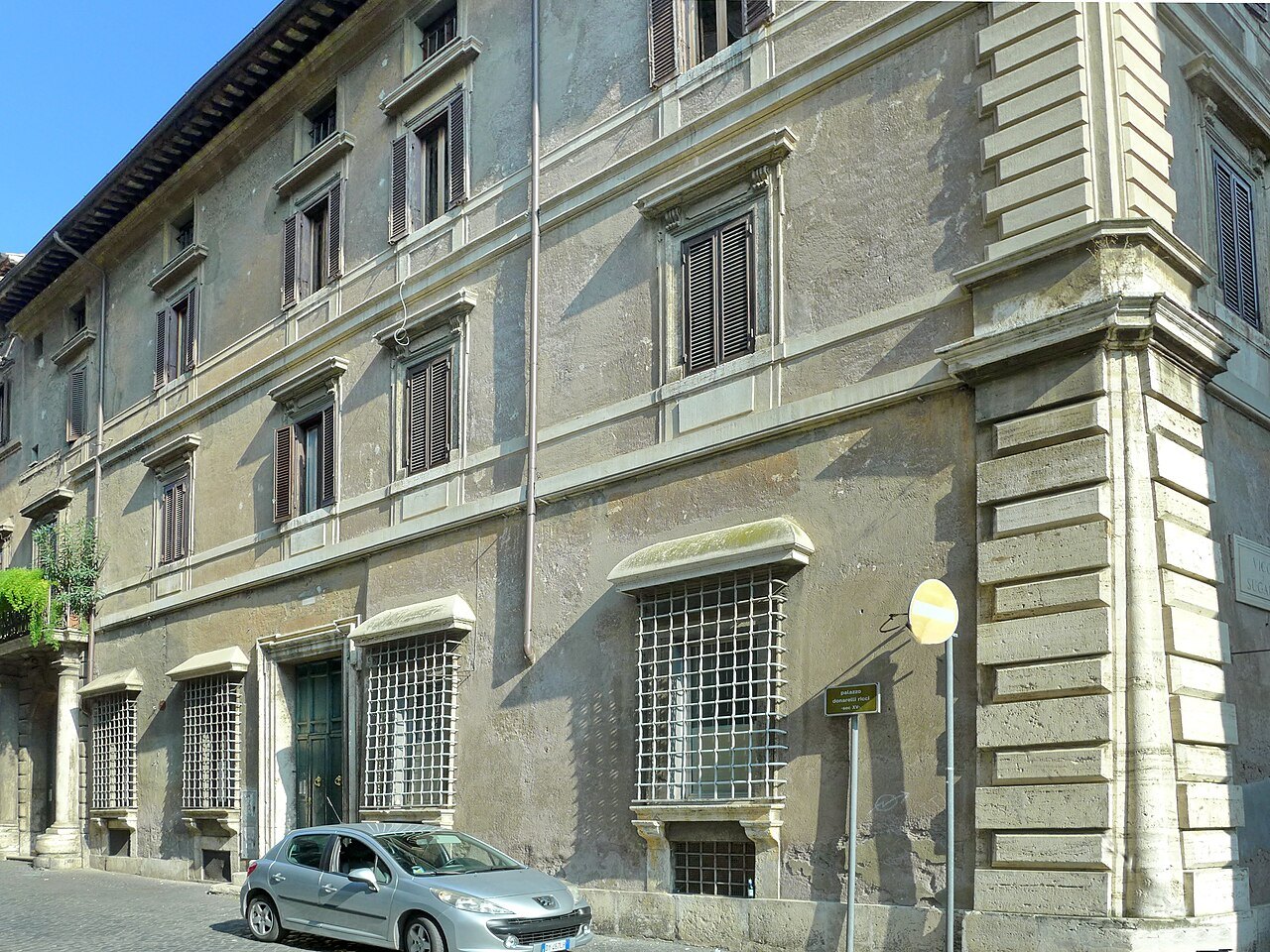
The rusticated corner and barred windows of a Renaissance palace on Via GiuliaPeter1936F, Wikimedia Commons, CC BY-SA 4.0 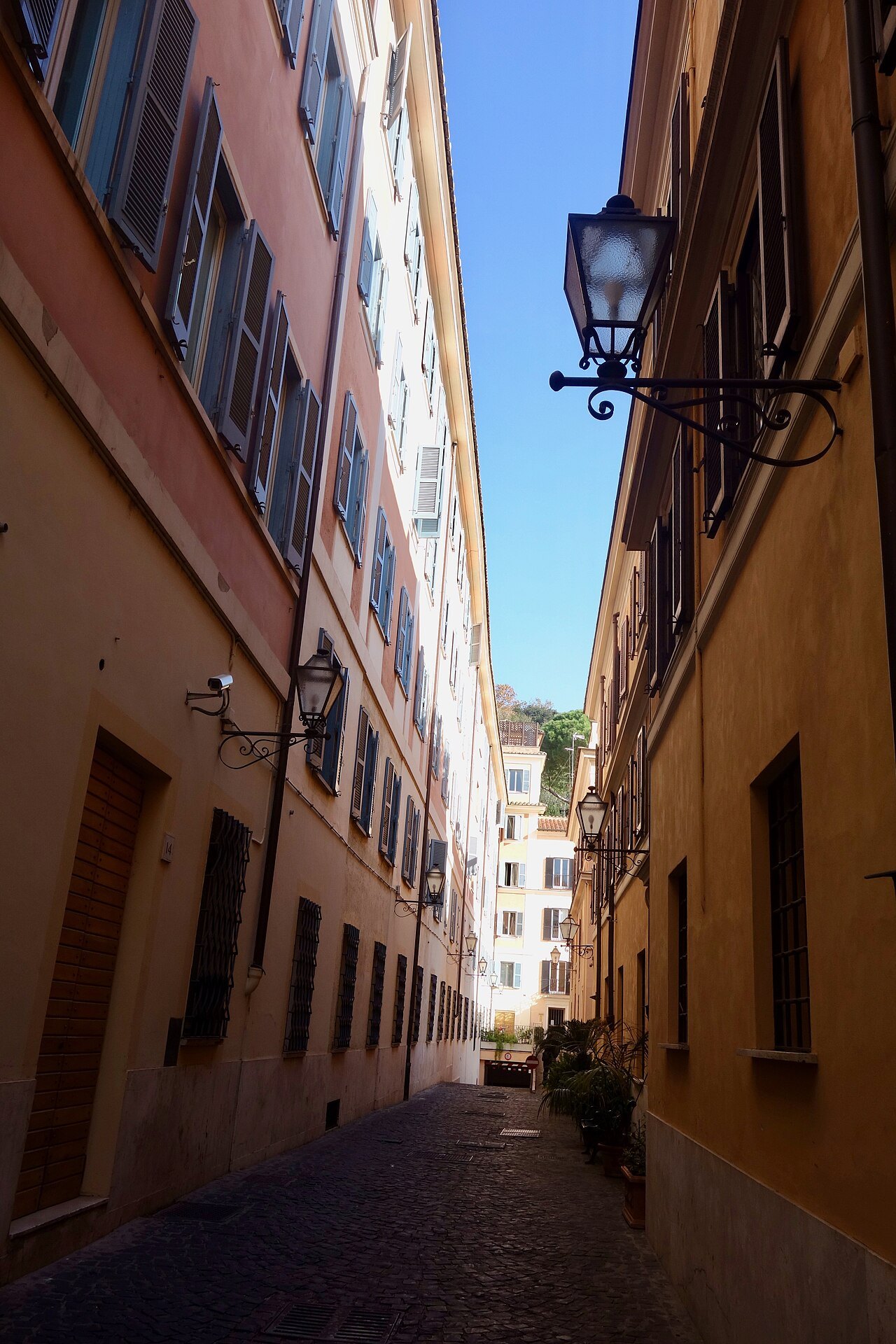
A narrow side alley off Via Margutta between tall ocher walls, a lantern on a bracketSonse, Wikimedia Commons, CC BY 2.0