Home · Sights · The Roman Forum
What you are looking at
The Roman Forum
X · Campitelli
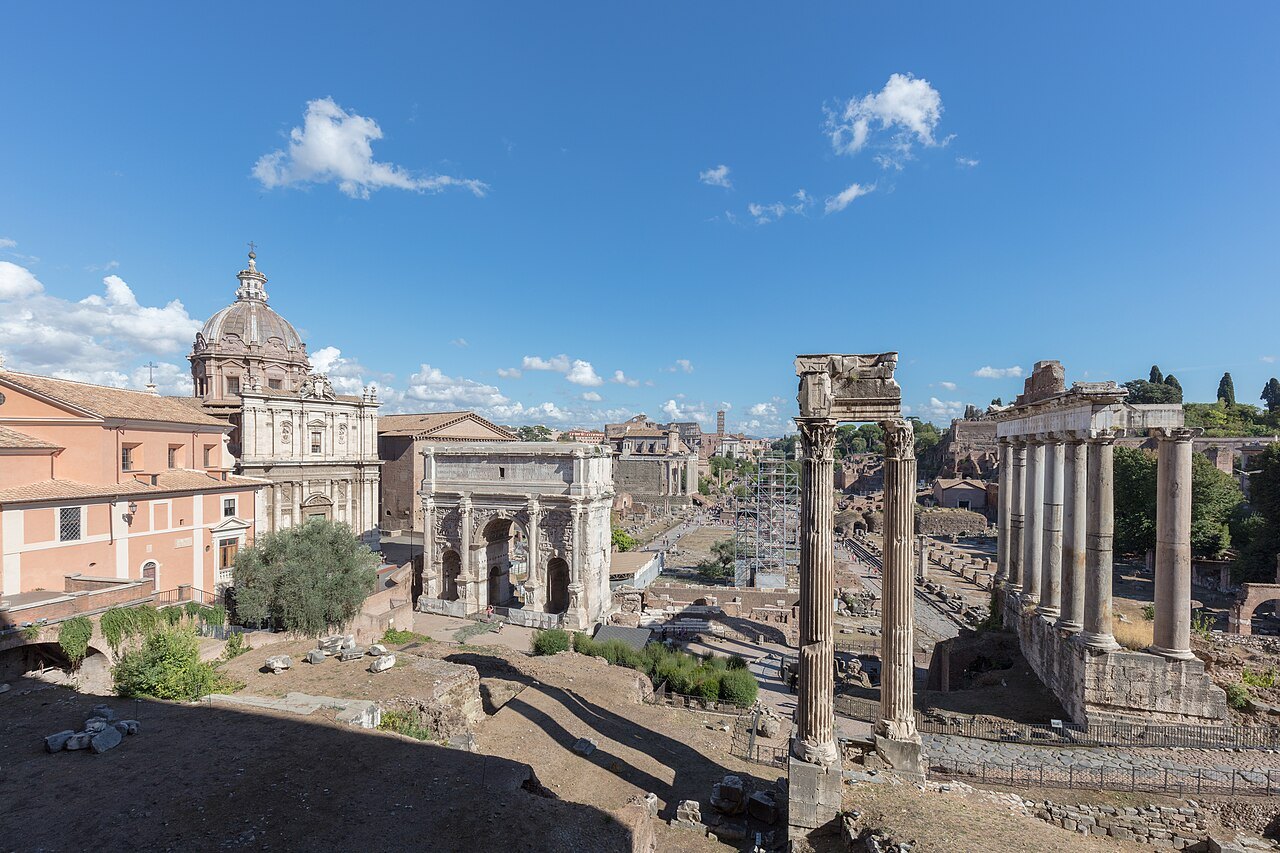
- IThe Via SacraThe main street of ancient Rome, running from the Capitoline through the Forum toward the Colosseum.
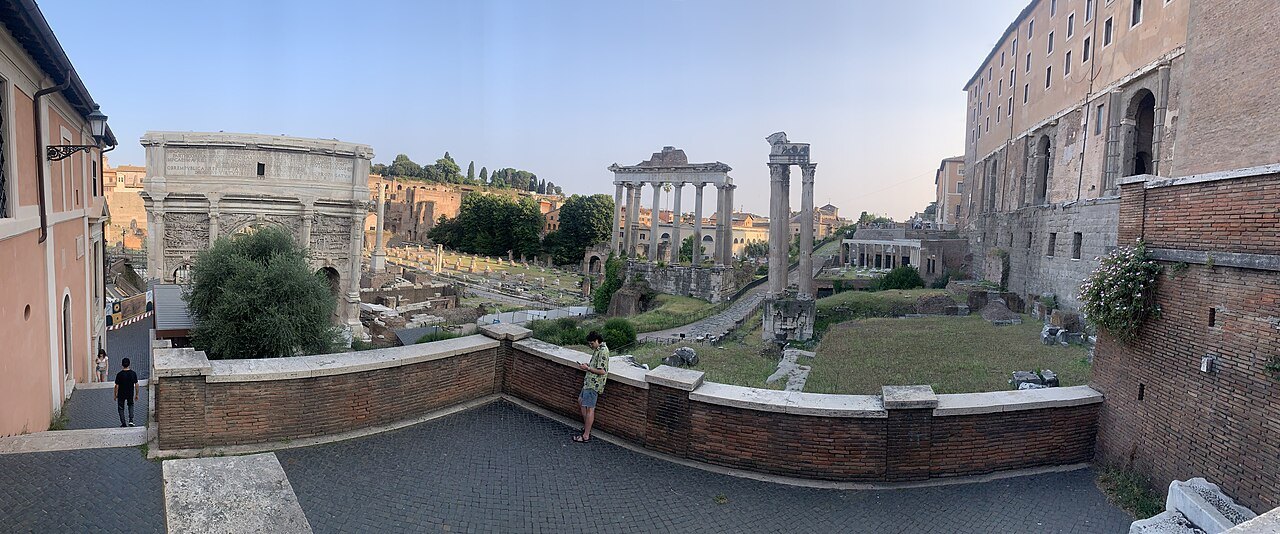
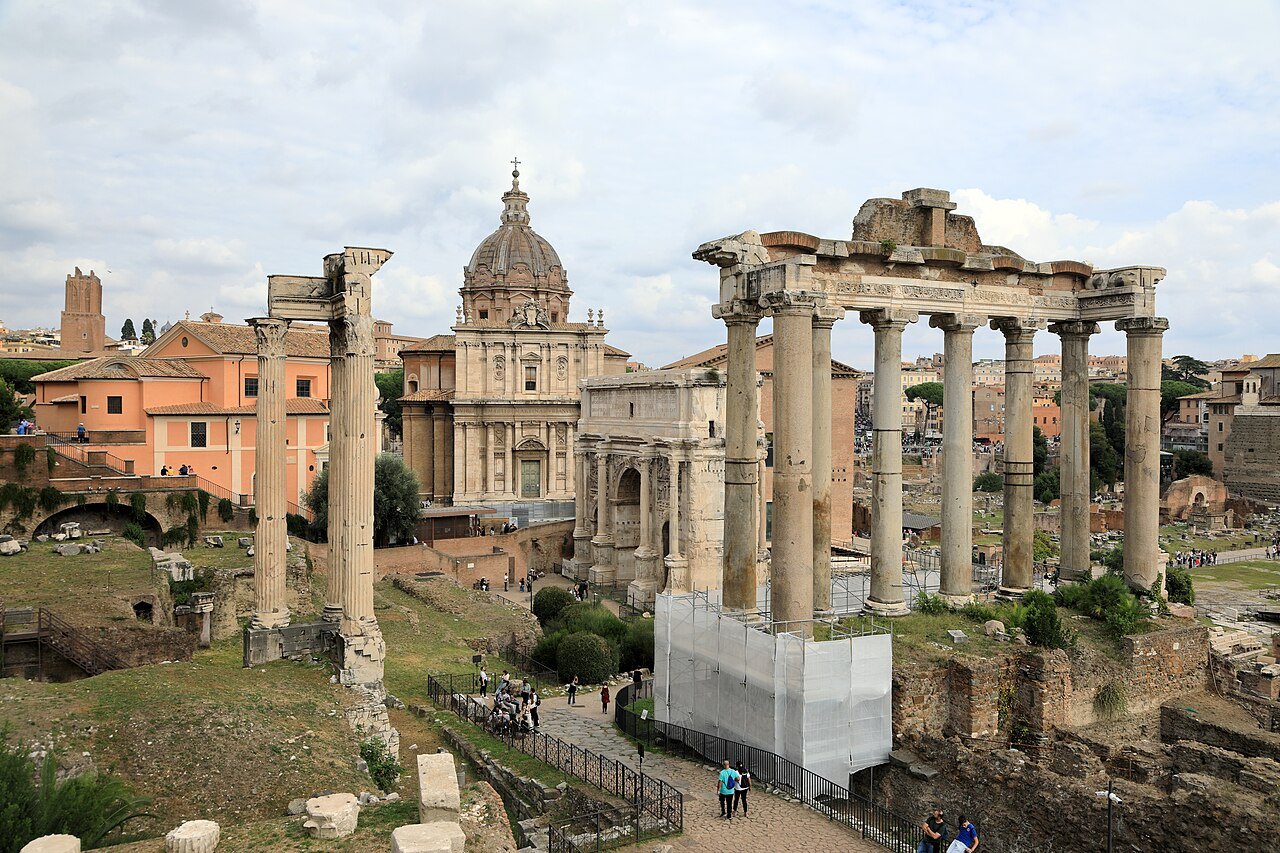
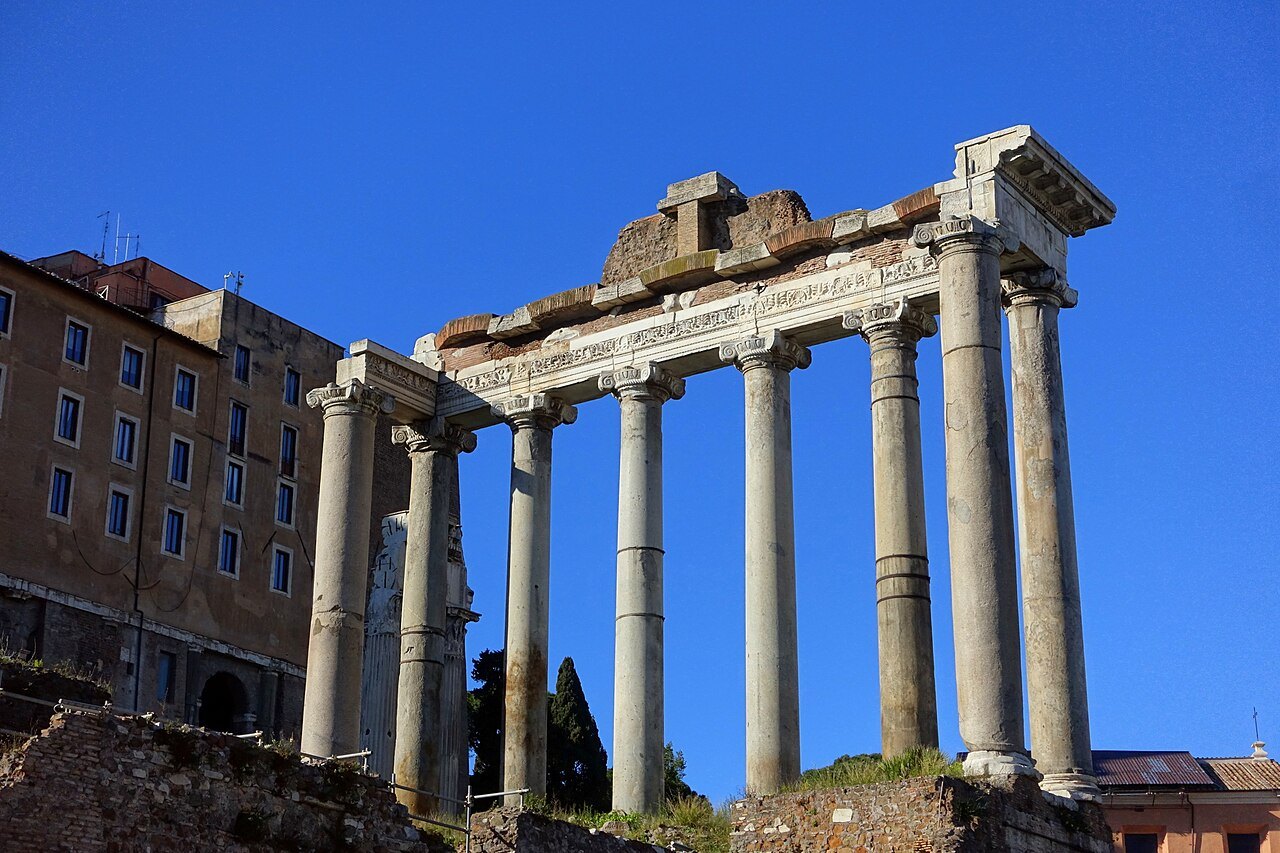
- IIThe Temple of SaturnEight granite columns on a high podium, one of the oldest temples in the Forum and once its treasury.
- IIIThe CuriaThe brick Senate house begun by Julius Caesar and finished by Augustus in 29 BC.
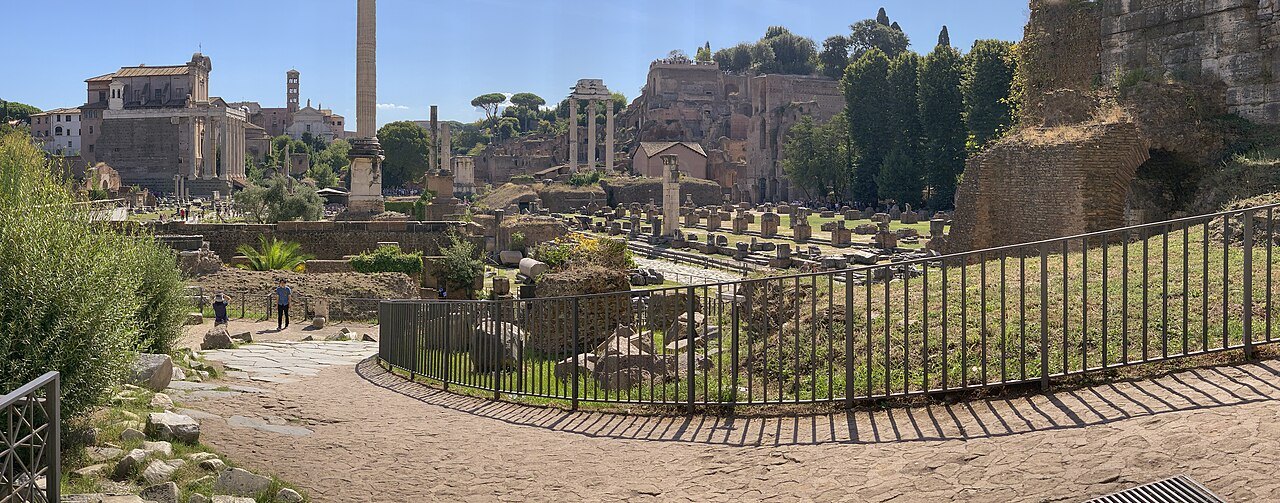
- IVThe Temple of VestaA round temple where the sacred fire of Rome was kept, beside the house of the Vestal Virgins.
- VThe Arch of Septimius SeverusWhite marble, dedicated in 203 to the emperor's victories in the east, at the foot of the Capitoline.
- VIThe Arch of TitusBuilt around 81 by Domitian, its reliefs show the spoils of the Temple in Jerusalem carried in triumph.
The sight in full
Reading the place
Why it matters
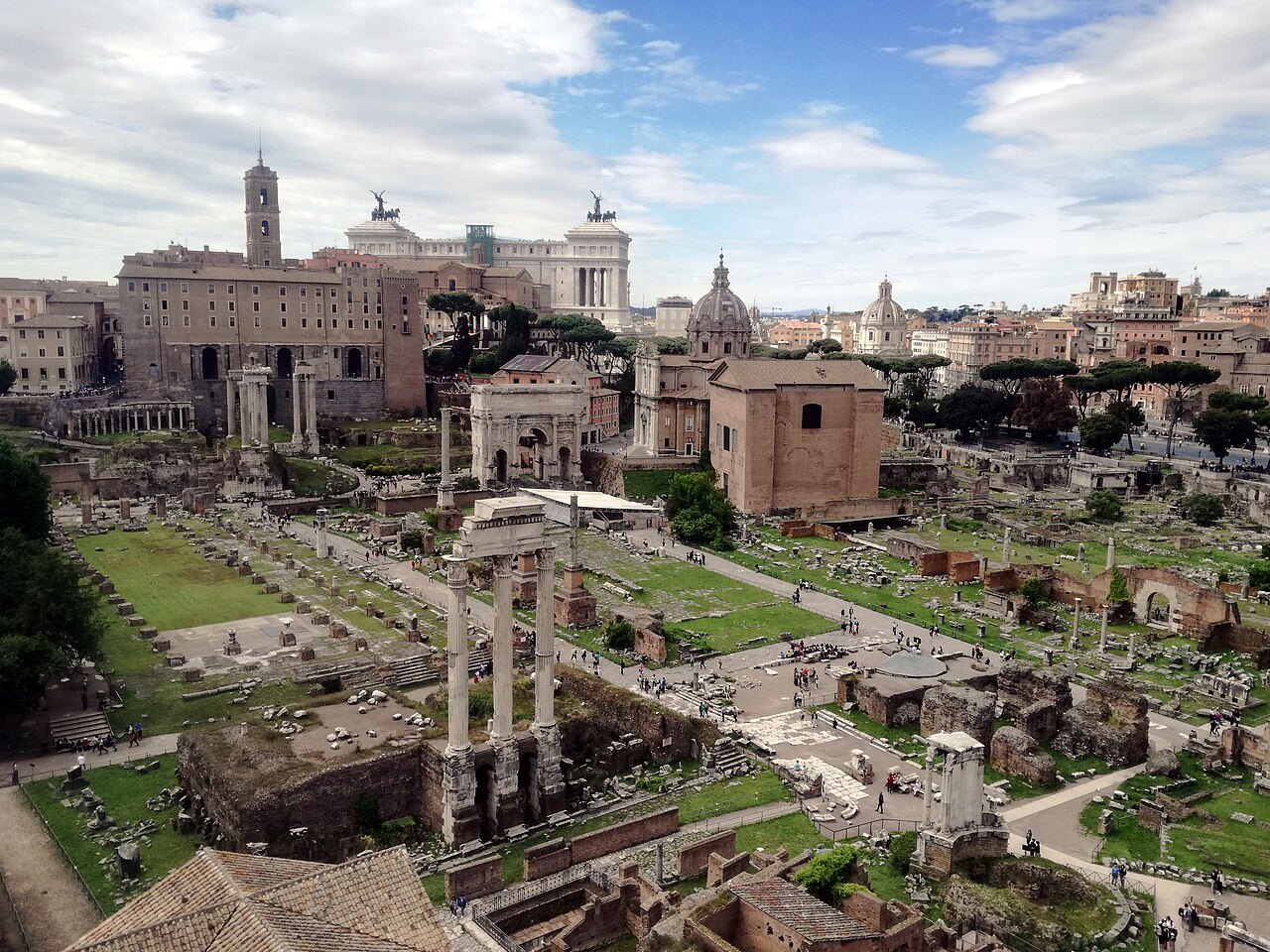
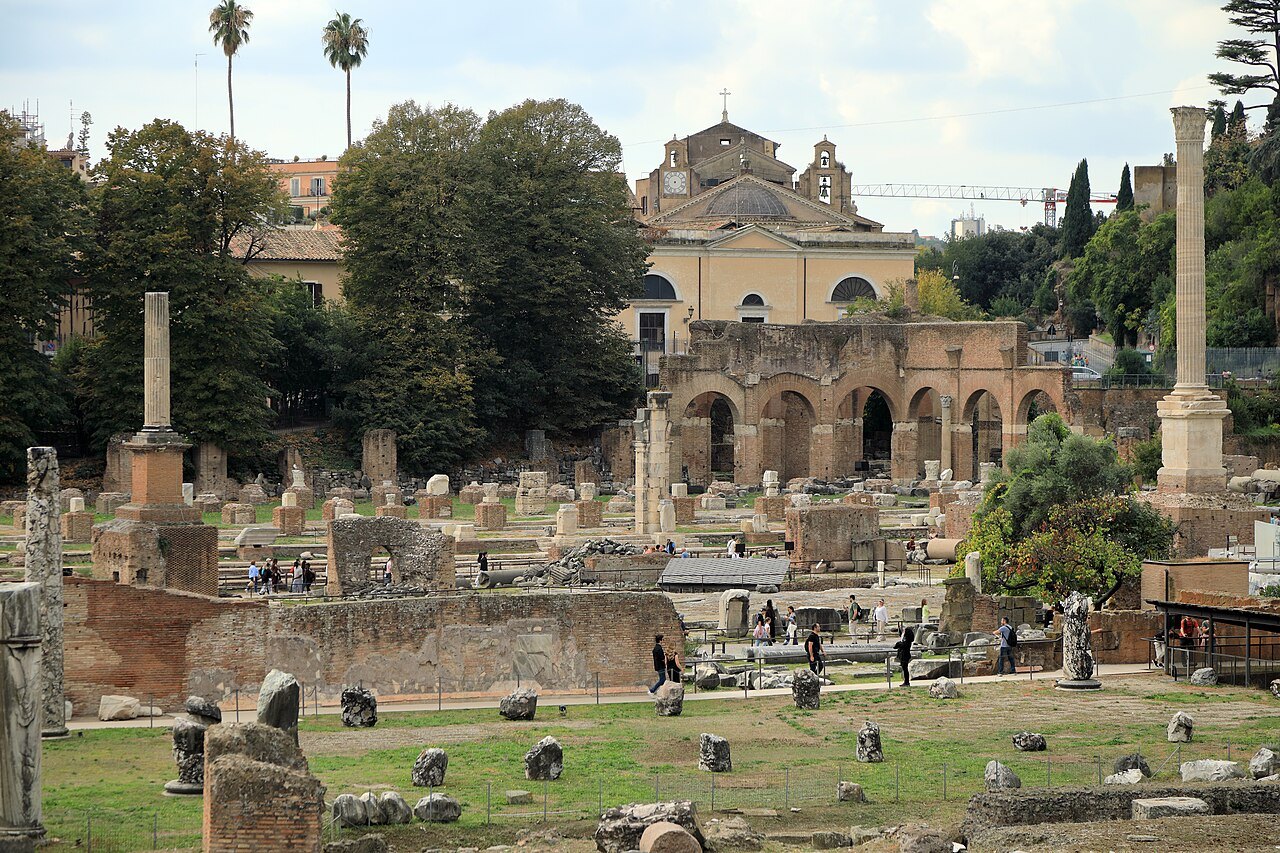
For centuries the Forum was the center of daily life in Rome: the setting of triumphal processions and elections, of public speeches, criminal trials and gladiatorial matches, and the heart of the city's business and law. Statues and monuments to its leaders crowded around it. It lies in the small valley between the Palatine and the Capitoline hills, and it has been called the most celebrated meeting place in the world. Today it is a sprawling field of ruins and working excavations visited by millions of people each year.
It is not one planned square. Unlike the later imperial forums nearby, which were laid out on the model of a Greek plaza, the Roman Forum grew piece by piece over many centuries, despite attempts by Sulla, Julius Caesar and Augustus to bring order to it. By imperial times the buildings around the central square had shrunk the open space to a rectangle of about 427 by 164 feet.
From a marsh to a square
The valley began as a marshy lake where water from the surrounding hills collected. The early kings drained it with the Cloaca Maxima, the great sewer. Flooding from the Tiber and soil washed down from the hills then raised the ground level century after century, which is why the ancient pavement now lies well below the modern street.
The oldest shrines stood at the southeastern edge: the Regia, the ancient royal residence, and the Temple of Vesta, with the house of the Vestal Virgins behind it. The earliest temples with known dates are the Temple of Saturn and the Temple of Castor and Pollux, both of the fifth century BC. Under Augustus the Forum took its final form, with the Temple of the deified Julius Caesar built in 29 BC between Caesar's funeral pyre and the Regia.
Walking the Via Sacra
The Via Sacra, the Sacred Street, was the main street of ancient Rome. It led from the top of the Capitoline Hill through the Forum's most important religious sites, where it is widest, to the Colosseum. It was part of the route of the Roman triumph, when a victorious general was paraded into the city, and in Nero's reign it was lined with colonnades. It was also where the daily crowd gathered in the basilicas to talk, gamble, do business and seek justice.
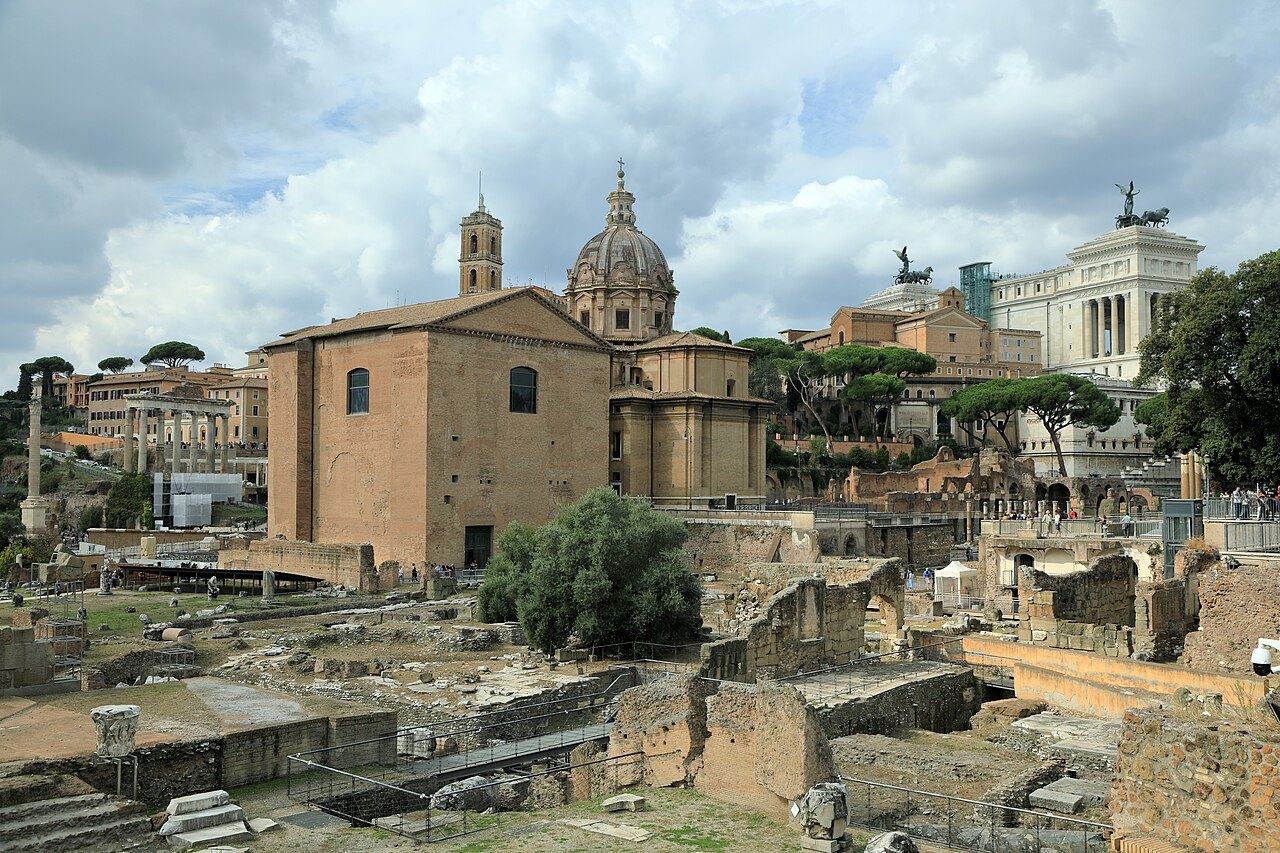
At the Capitoline end stands the white marble Arch of Septimius Severus, dedicated in 203 to the emperor's victories in the east with his two sons, one of the most visible landmarks in the Forum. Beside it are the eight columns of the Temple of Saturn, rebuilt in 42 BC, which also served as the state's bank. Across the square is the tall brick Curia, the Senate house that Julius Caesar began in 44 BC and Augustus finished in 29 BC.
The temples on the east side
Farther along, the round Temple of Vesta sheltered the holy fire that stood for the safety of Rome; the ruin keeps Corinthian columns on a round podium. Behind it lies the House of the Vestal Virgins, the priestesses who kept the fire, between the Regia and the Palatine. The remains of the altar of Julius Caesar are still a place where people leave flowers, and special commemorations are held there each March 15, the day of his death.
The Temple of Antoninus and Faustina, its portico still whole, was later turned into the church of San Lorenzo in Miranda, and its Baroque façade rises behind the ancient columns. Beyond it the three enormous vaults of the Basilica of Maxentius survive from what was, when it was built, the largest building in the Forum and the last Roman basilica built in the city.
The arch at the top
The Via Sacra climbs to the Arch of Titus, built around 81 by the emperor Domitian after the death of his brother Titus, to honor Titus's deification and his victory with their father Vespasian over the Jewish rebellion. Its inner panels show the triumphal procession of 71 after the fall of Jerusalem, and they give one of the few contemporary pictures of objects from the Temple in Jerusalem, carried by Roman soldiers.
From here the path turns up onto the Palatine, and the Colosseum is in view down the slope.
Ruin, quarry and excavation
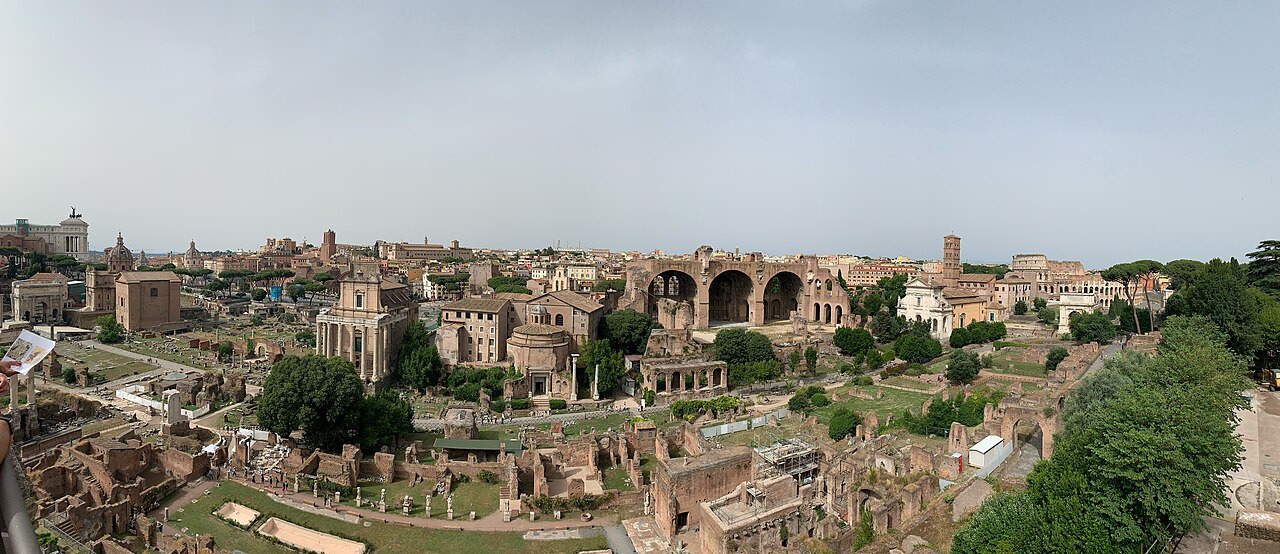
After the western empire fell, the city shrank toward the river and the Forum was largely abandoned. In the sixth century some of its buildings became churches. The Column of Phocas, put up before the Rostra in 608, was the last monument ever added. The emperor Constans II stripped the lead from the roofs in 663, and by the Middle Ages the monuments lay buried under debris in a pasture called the Campo Vaccino, the cattle field.
The Renaissance did some of the worst damage: in the 1540s Pope Paul III used the Forum as a quarry for the new St. Peter's. Systematic clearing began in 1803 and state excavations in 1898, led by Giacomo Boni until his death in 1925. The digging has never really stopped. Since 2009, finds near the black stone of the Lapis Niger have pointed to a wall of the eighth or ninth century BC, older than the traditional date of Rome's founding.
How to visit
The Forum belongs to the same archaeological park as the Colosseum and the Palatine, and the park's online tickets are sold only on its official ticketing site; the booking ahead page explains how to buy. The Palatine is part of the same visit.
Allow two hours for the Forum and the Palatine together. There is very little shade and the paving is ancient and uneven. The Forum lies between two hills, so for an overview start from above, from the Palatine side or the Capitoline.
Myths worth setting aside
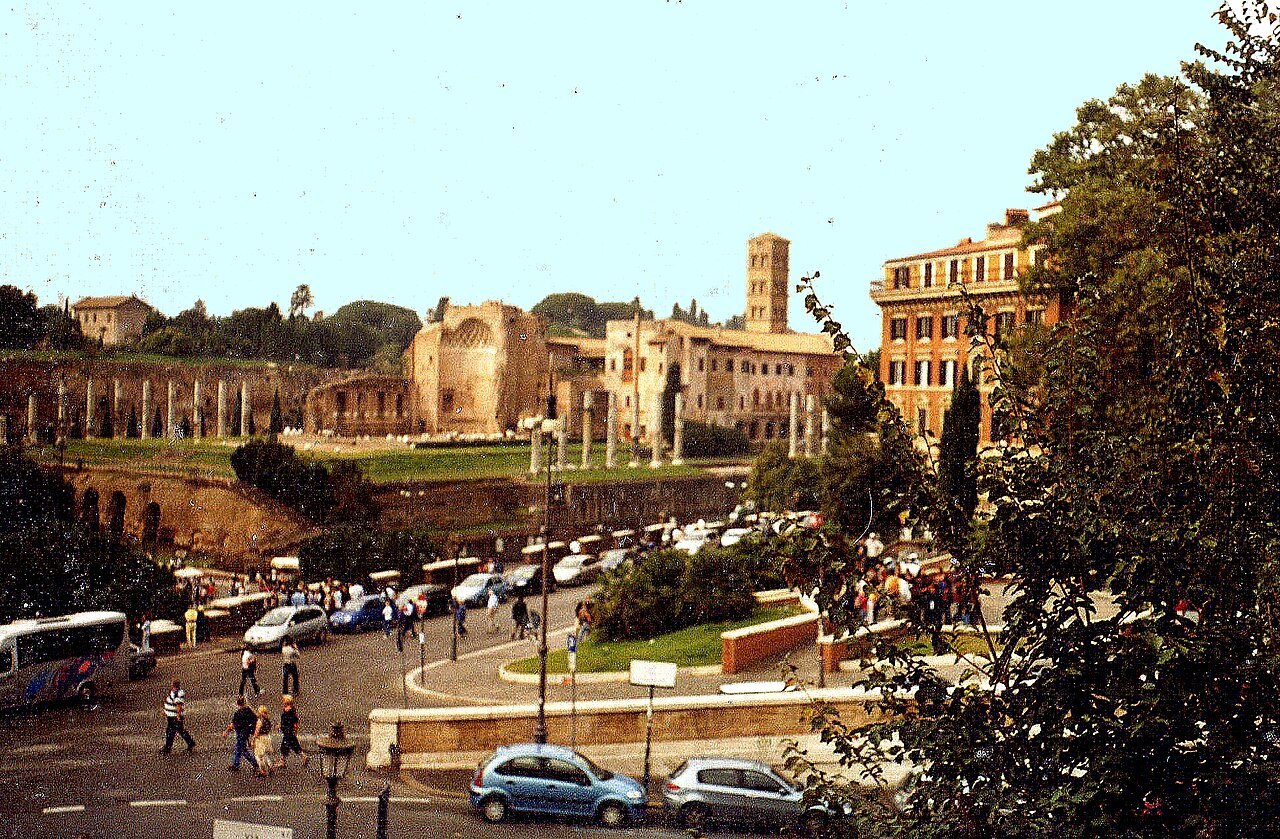
The ruins are often described as the Forum as it stood in Caesar's day. What you see is a layering of many centuries: Republican temples rebuilt under the emperors, imperial arches, a late Roman basilica, a medieval church inside a temple and a column dedicated to a Byzantine emperor, all cleared back to one level by modern excavators. The Via Sacra you walk is itself partly a redirection: its stretch between the end of the Forum and the Colosseum, under the Arch of Titus, was laid out after the Great Fire of 64.
Where to go next
Nearby
- Nearby · XIX · CelioThe ColosseumBegun under Vespasian in 72 and opened under his son Titus in AD 80 on the site of Nero's private lake, the largest amphitheater ever built still stands at the center of Rome, three tiers of arches and an attic high.Read the page →
- Nearby · X · CampitelliThe Palatine Hill and the Circus MaximusThe centermost of the seven hills, where Rome began and where the emperors lived: the palaces of Augustus, Tiberius and Domitian above, and below them the long green hollow of the Circus Maximus, the city's great racetrack.Read the page →
- Nearby · X · CampitelliThe Capitoline Hill and its MuseumsThe seat of the city's government since the Middle Ages: a square Michelangelo turned to face the new Rome, and two palaces holding one of the oldest public museums in the world.Read the page →