Home · Sights · The Appian Way
What you are looking at
The Appian Way
Outside the walls
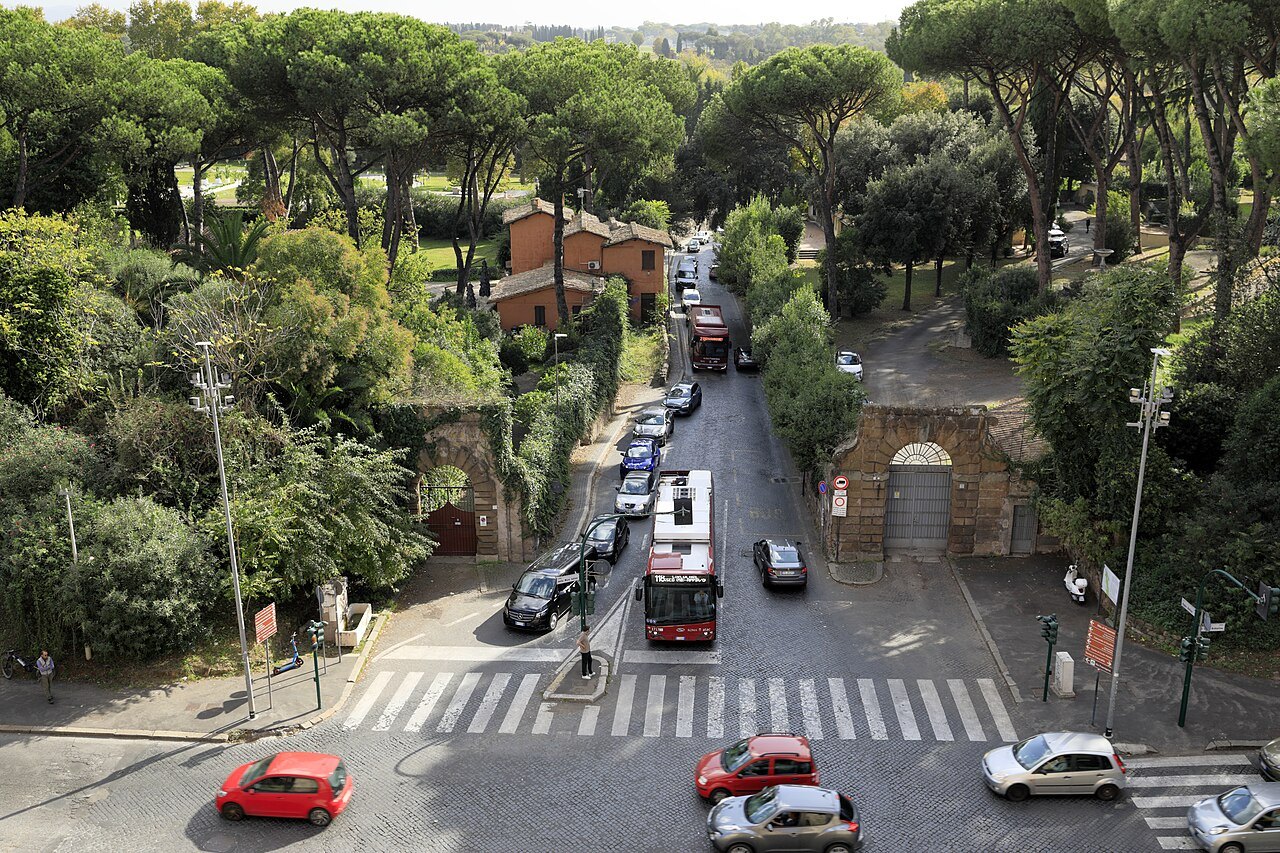
- IPorta San SebastianoThe largest and one of the best-preserved gates in the Aurelian Walls, with a museum of the walls.
- IIDomine Quo VadisA small church on the spot where, in legend, Peter met Christ as he fled Rome.
- IIIThe catacombsThree early Christian catacombs and one Jewish catacomb, along or near the first miles of the road.
- IVThe Circus of MaxentiusThe best-preserved circus in the Roman area, second in size only to the Circus Maximus.
- VCaecilia MetellaThe great drum of a noblewoman's tomb of the first century BC, crowning a rise at the third mile.
- VIThe pavingStretches of the old stone road, fitted so closely they seemed to have grown together.
The sight in full
Reading the place
Why it matters
The Appian Way, the Via Appia, was one of the first and most important roads of the Roman Republic. It connected Rome to Brindisi, in the heel of Italy, and it was so important that the poet Statius called it the queen of the long roads. It entered the UNESCO World Heritage List in 2024.
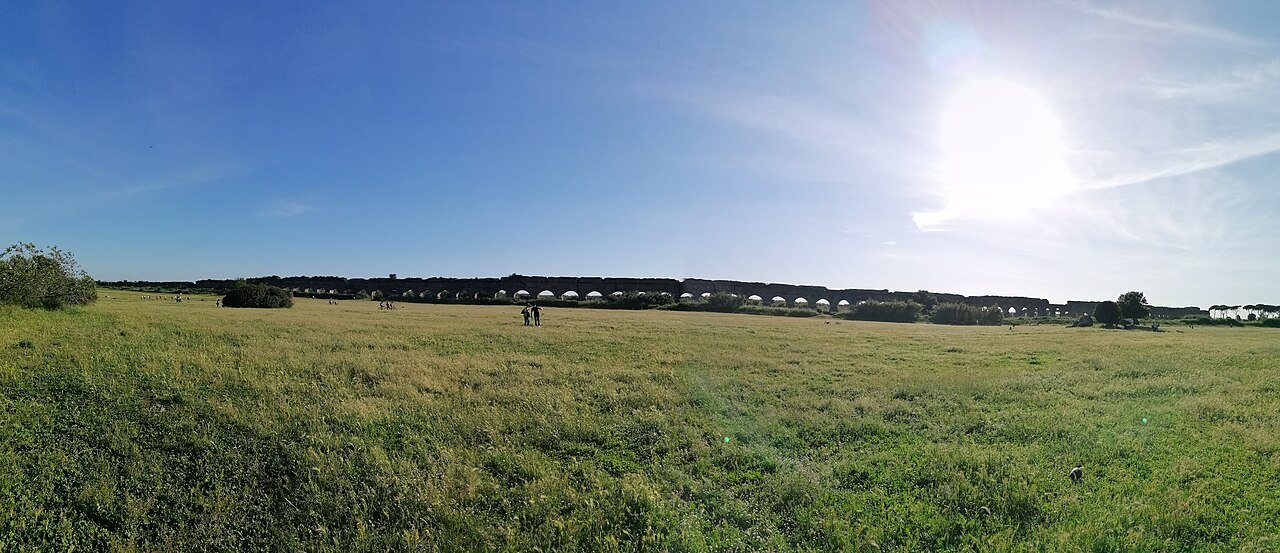
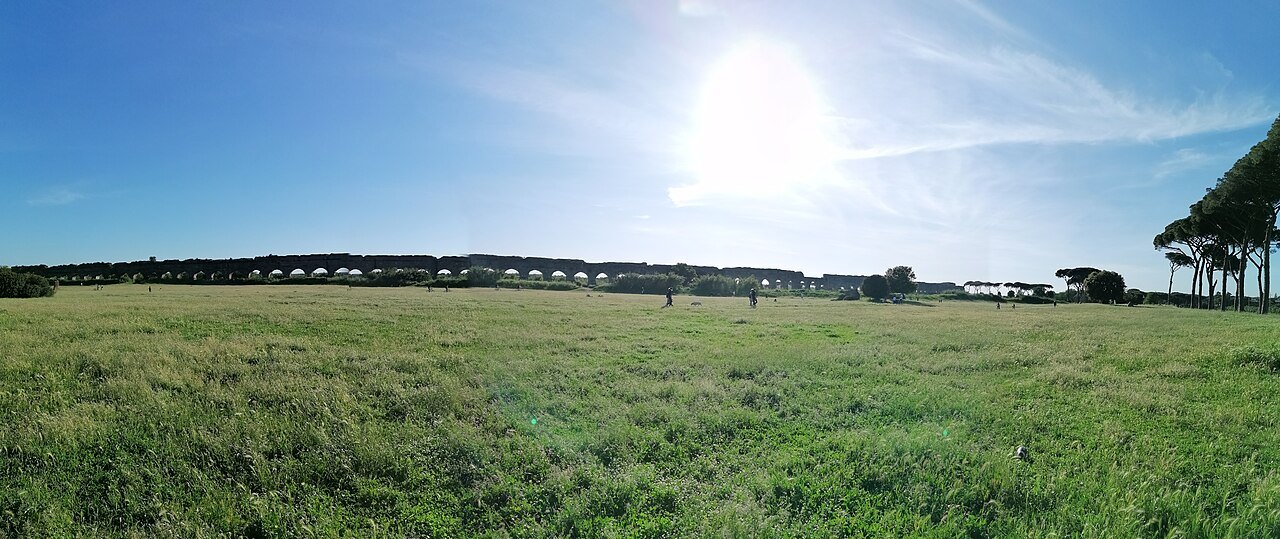
Close to the city, it is also one of the great walks of Rome. Beyond the Aurelian Walls, where the traffic thins, the old road runs south through the countryside between the ruins of tombs, villas and a circus. It is possible to follow it on foot for about ten miles from its start near the Baths of Caracalla.
A military road
The road is named for Appius Claudius Caecus, the Roman censor who began it in 312 BC, during the wars against the Samnites of the south. Between Rome and its ally Capua lay the Pontine Marshes, a malarial swamp that armies could not cross or supply, and Appius, without waiting to be told by the Senate, drove a road straight across them. It let Rome move fresh troops and supplies south at speed, and the wars turned in Rome's favor. Appius was said to have lost his sight in old age, hence his name caecus, the blind.
The road was built in layers, leveled earth, small stones and mortar, then gravel, and on top close-fitting stones cambered in the middle so rainwater would run off into the ditches on either side. The Byzantine historian Procopius wrote that the stones fitted so tightly that they seemed to have grown together rather than to have been laid. It reached Capua, 132 Roman miles from Rome, and was later extended all the way to Brindisi.
Spartacus and the saints
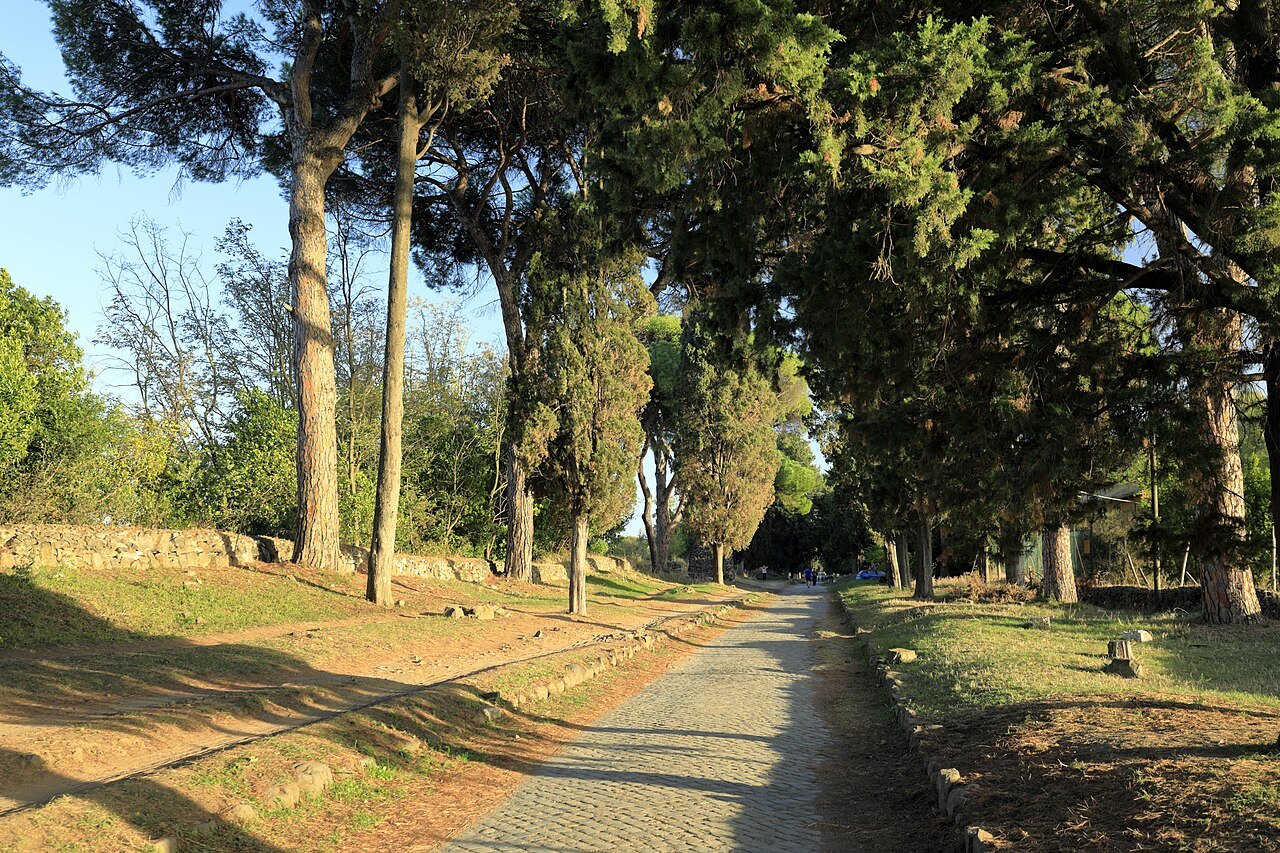
The road saw one of the grimmest scenes of Roman history. After the slave revolt led by the gladiator Spartacus was crushed in 71 BC, six thousand captured slaves were crucified along the Appian Way from Rome to Capua.
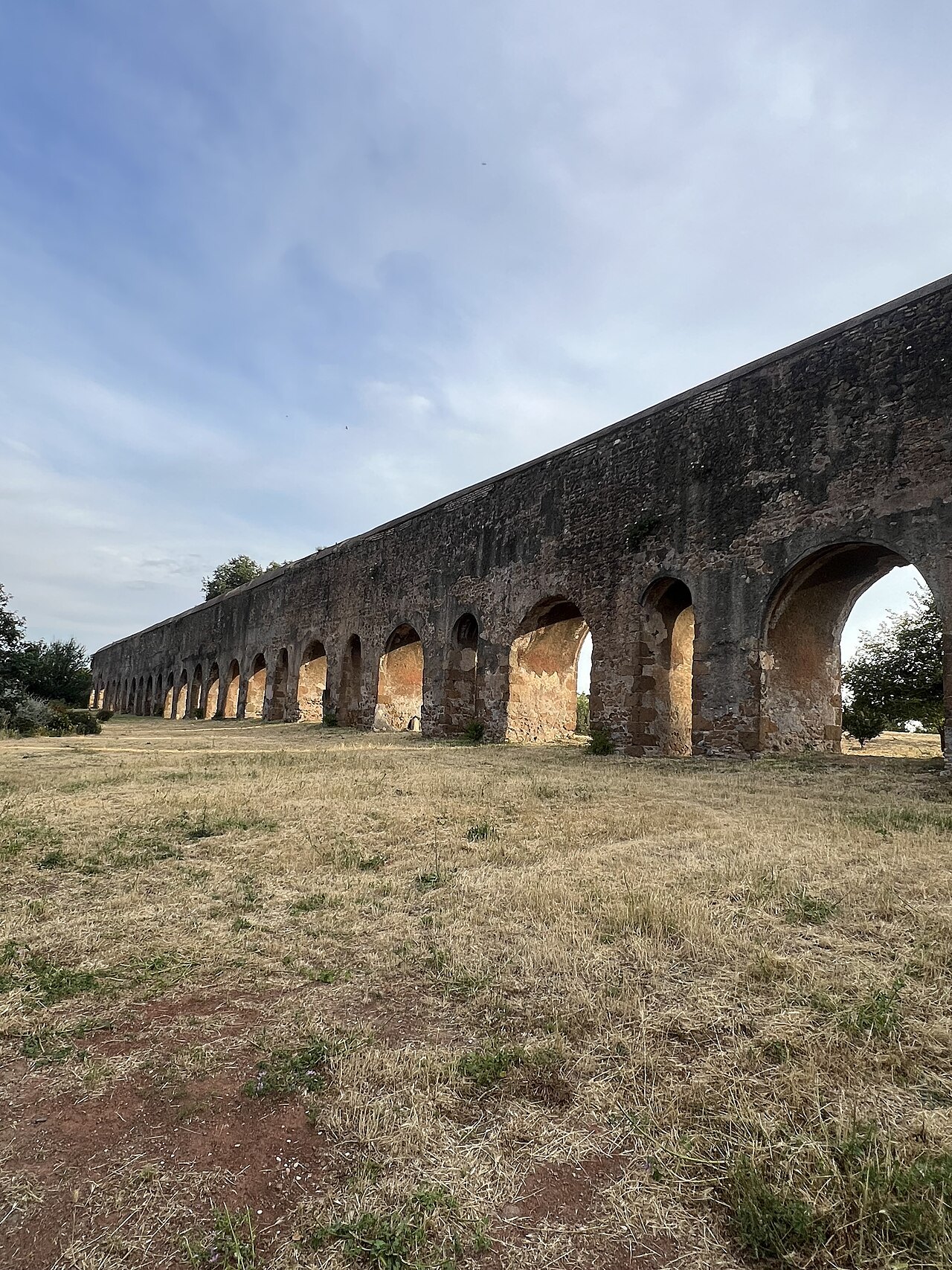
It is also a road of Christian memory. About half a mile past the gate, where the Via Ardeatina branches off, stands the small church of Domine Quo Vadis. According to the apocryphal Acts of Peter, it marks where Peter, fleeing persecution in Rome, met the risen Christ and asked him, Lord, where are you going? Christ answered that he was going to Rome to be crucified again, and Peter turned back. There has been a shrine here since the ninth century; the present church dates from 1637.
The catacombs
Romans buried their dead outside the city, and along the first miles of the road lie three catacombs of Roman and early Christian origin and one of Jewish origin. The Catacomb of Callixtus, the most extensive and perhaps the best known in Rome, takes its name from the deacon Callixtus, who ran the cemetery before he became pope; it covers about 90 acres on four levels, reaching more than sixty feet below ground, and became the official cemetery of the Roman Church. Nearby is the church of San Sebastiano, one of the Seven Pilgrim Churches, above its own catacombs.
Maxentius and Caecilia Metella
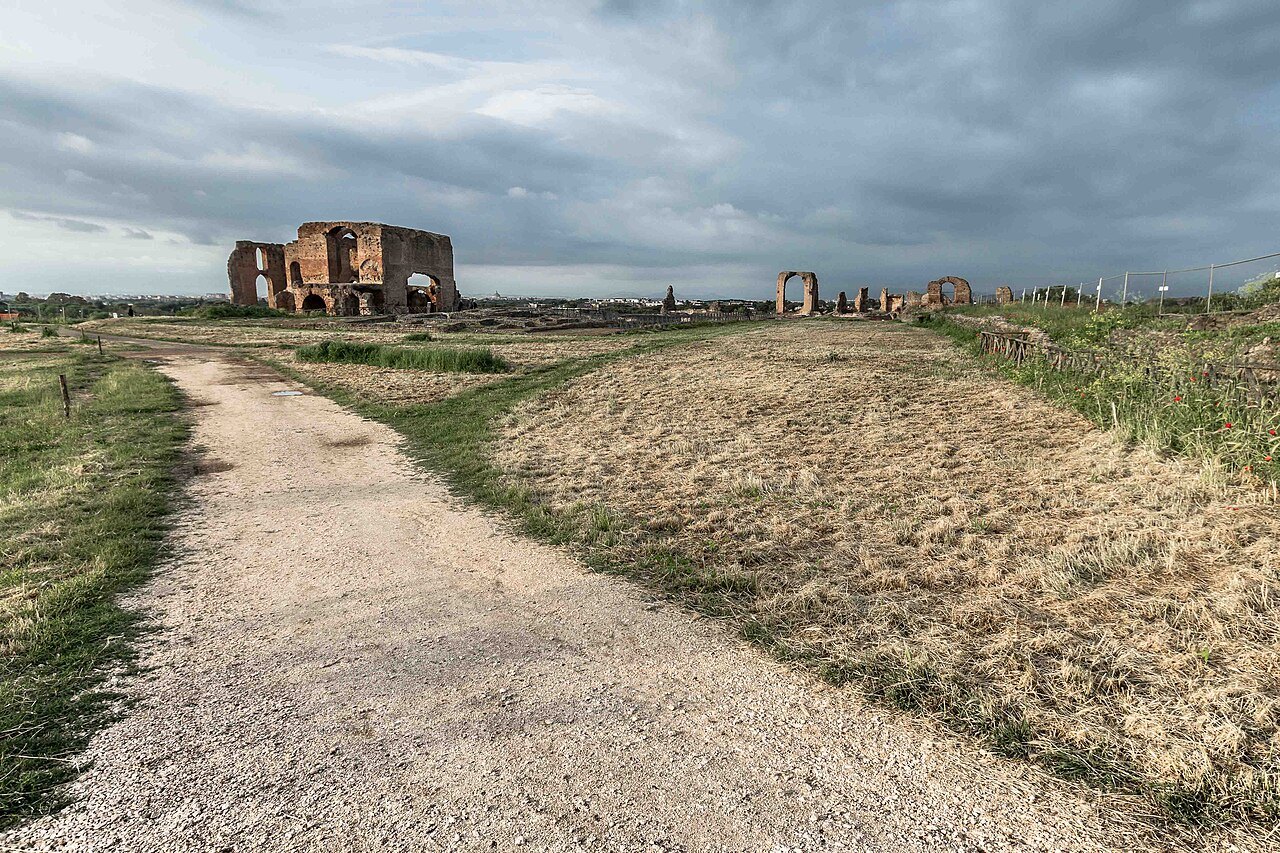
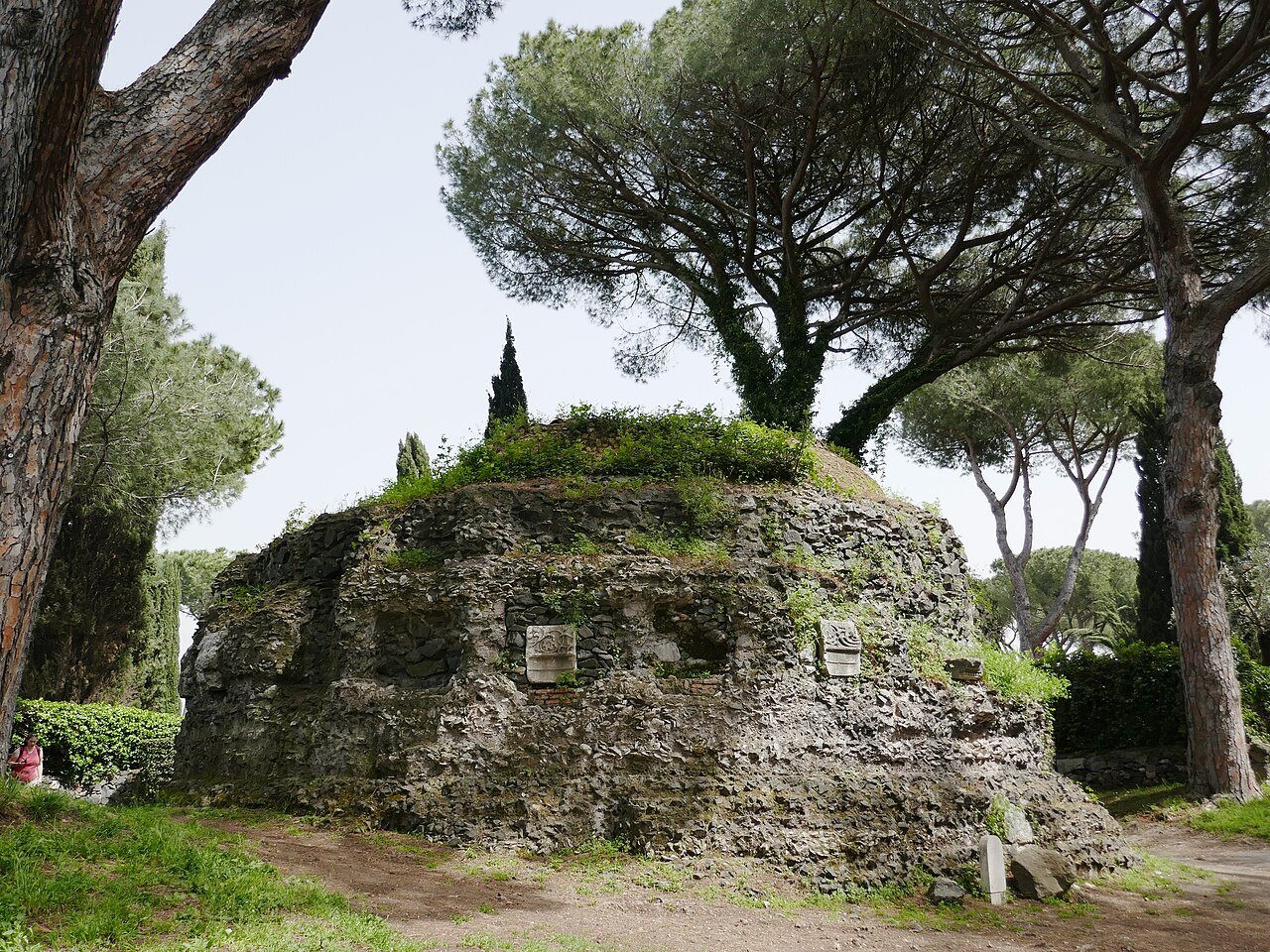
Between the second and third miles are the remains of a complex that the emperor Maxentius built between 306 and 312. Its circus is the best preserved in the Roman area and second in size only to the Circus Maximus; the only games recorded there were probably funeral games for his young son Valerius Romulus, who died in 309 and was likely buried in the round tomb beside it.
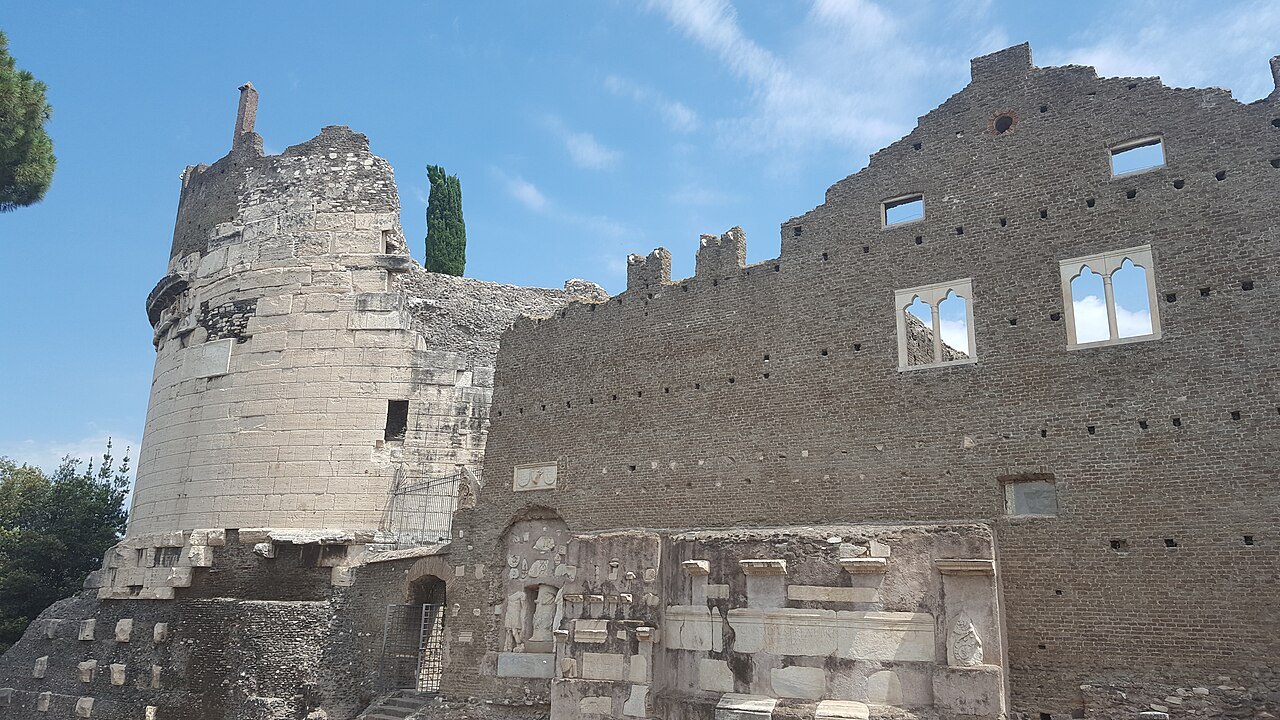
Just beyond, on top of a rise, stands the Tomb of Caecilia Metella, one of the best known and best preserved monuments of the road. It was built in the first century BC for a noblewoman, the daughter of a consul and daughter-in-law of the triumvir Crassus: a great drum 100 Roman feet across on a square base, carrying her name in an inscription. At its back stands the castle of the Caetani family, built against the tomb. Past it, the road runs on toward the Villa of the Quintilii at the fifth mile, and eventually toward the Castelli Romani in the Alban Hills.
How to visit
Start at the Porta San Sebastiano, which houses a museum of the Walls. The first three miles or so of the road are still heavily used by cars, buses and coaches; beyond them traffic is very light, and the ruins can be explored on foot in relative safety. Plan to reach that quieter stretch before you start walking, and wear solid shoes for the old stones. Only a handful of Rome's more than fifty catacombs can be visited, San Sebastiano and San Callisto among them; check each one's official site for its rules and its guided visits before you go.
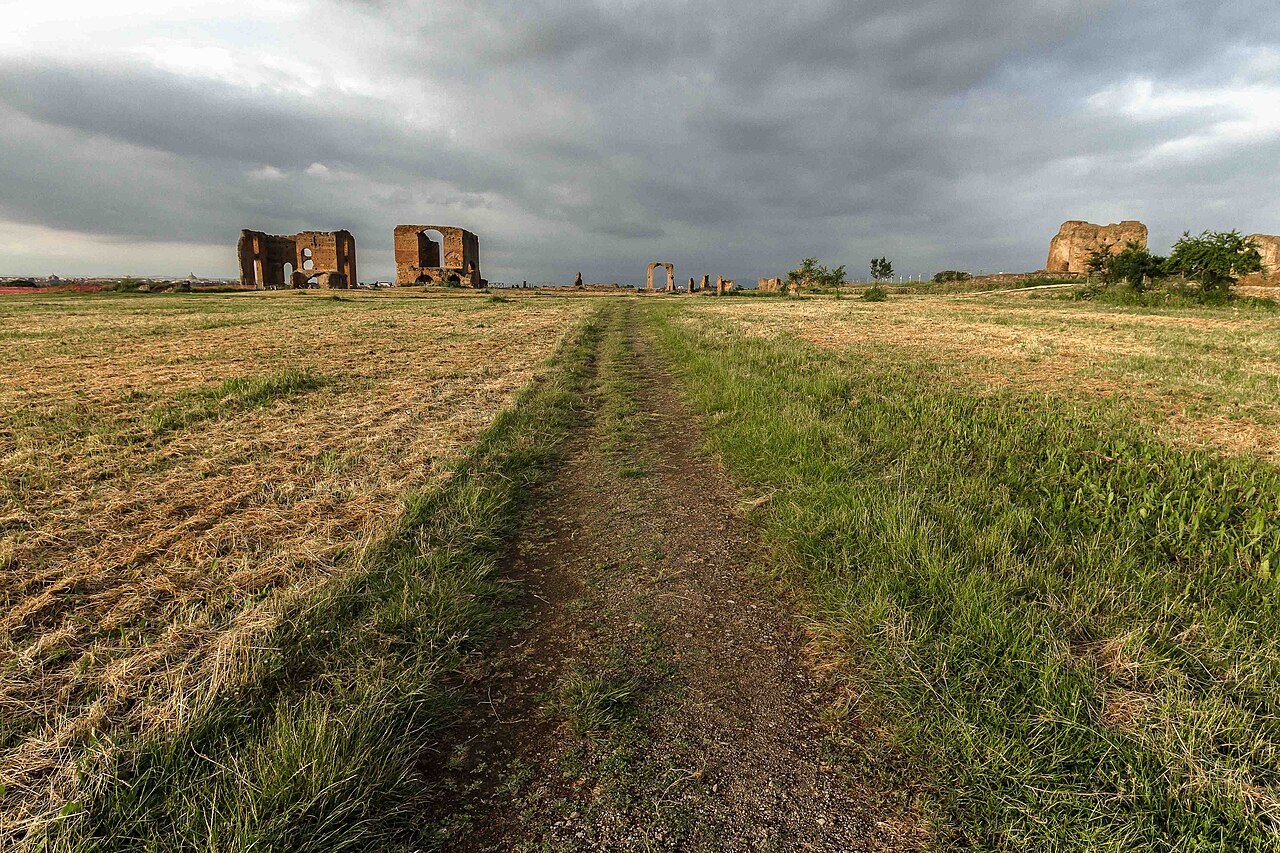
The road is part of the Appia Antica Regional Park, and the Park of the Caffarella borders it on the north. See the day trips page for the towns of the Alban Hills farther along.
Myths worth setting aside
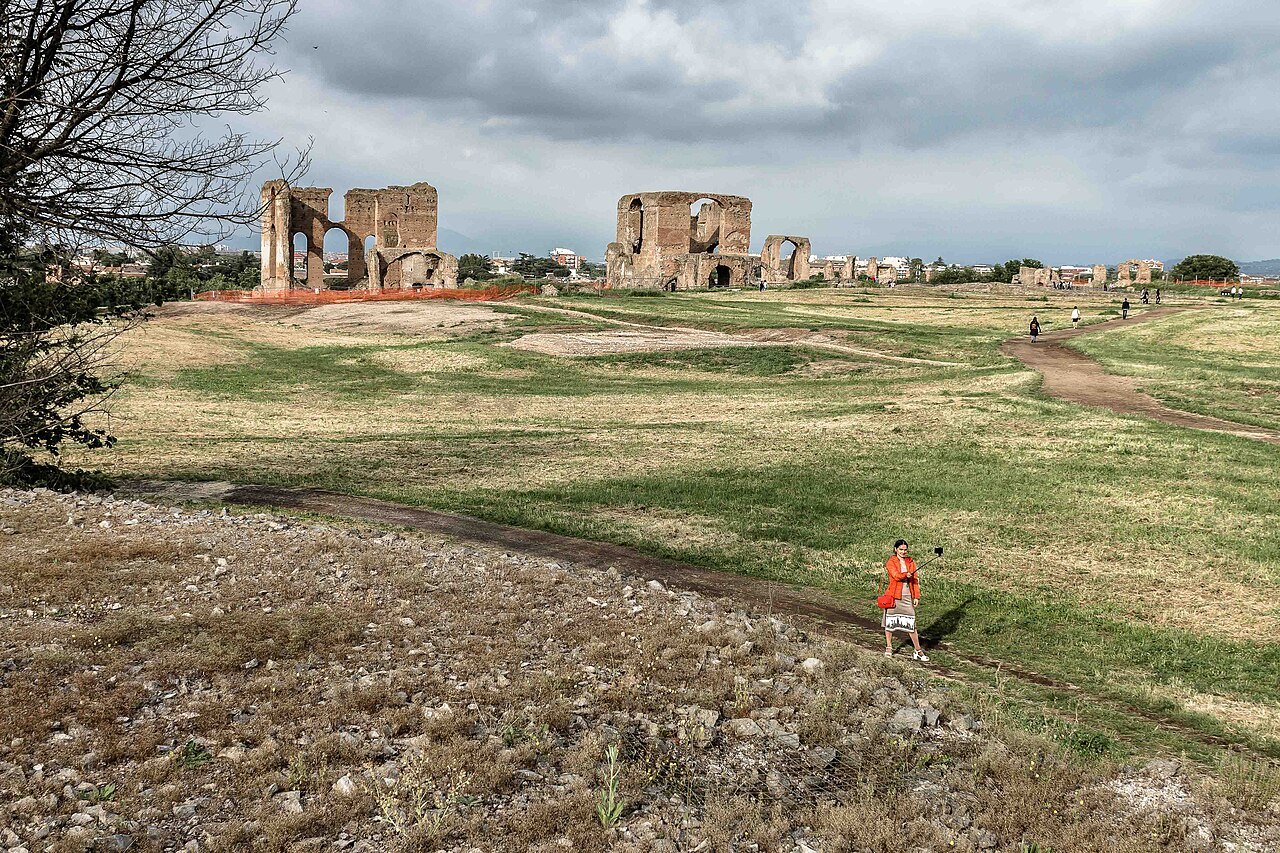
The Appian Way is often called the oldest Roman road. It was not the first road out of Rome, but it was the first long road built for moving troops beyond the region around the city, which is why it became the model for the rest. And the original road had no milestones, because they were not yet in use; the few that survive are later.
Where to go next
Nearby
- Nearby · XXI · San SabaThe Baths of CaracallaThe city's second-largest public baths, begun under Septimius Severus and opened by his son Caracalla in 216: brick halls over a hundred feet high on a site of 62 acres, free to every Roman, in use until the Goths cut the aqueduct in 537.Read the page →
- Nearby · XIX · CelioThe ColosseumBegun under Vespasian in 72 and opened under his son Titus in AD 80 on the site of Nero's private lake, the largest amphitheater ever built still stands at the center of Rome, three tiers of arches and an attic high.Read the page →
- Nearby · I · MontiSt. John LateranDedicated in 324, the oldest public church in Rome and the cathedral of its bishop, the pope: Borromini's nave of giant apostles, Galilei's palace-like front of 1735, the tallest obelisk in the city, and across the square the Holy Stairs, climbed on the knees.Read the page →