Home · Sights · The Trevi Fountain
What you are looking at
The Trevi Fountain
II · Trevi
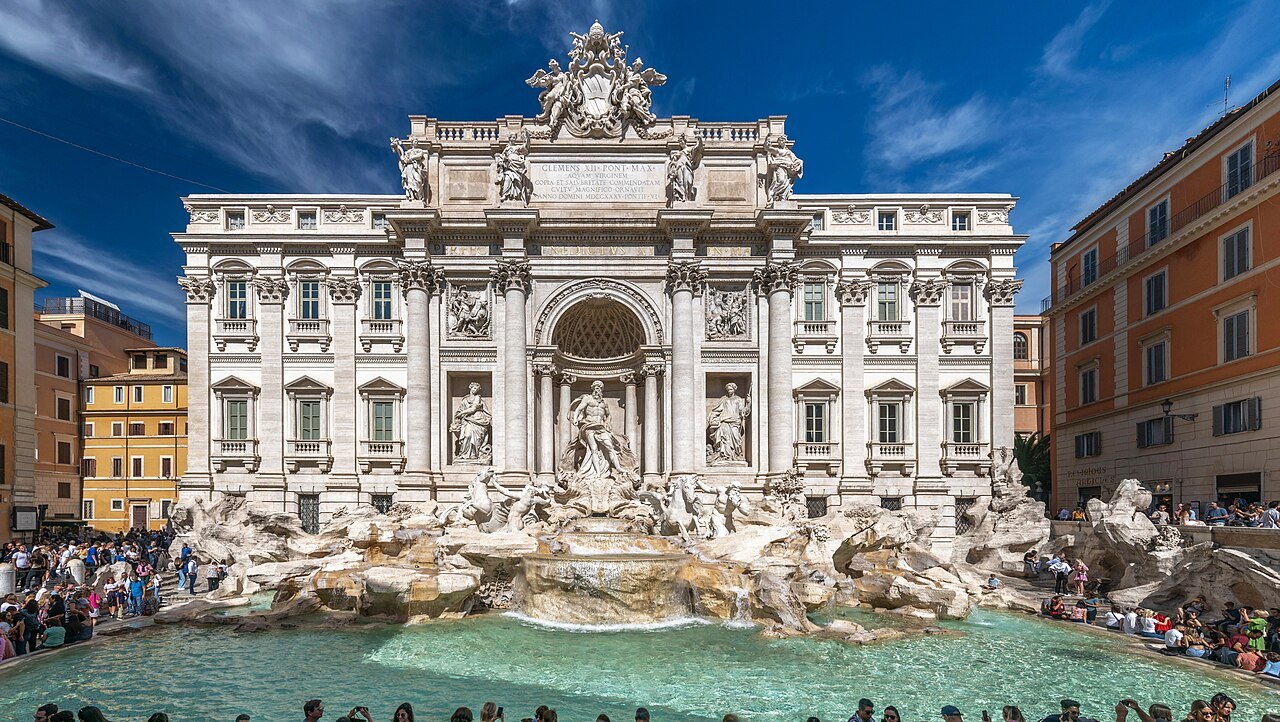
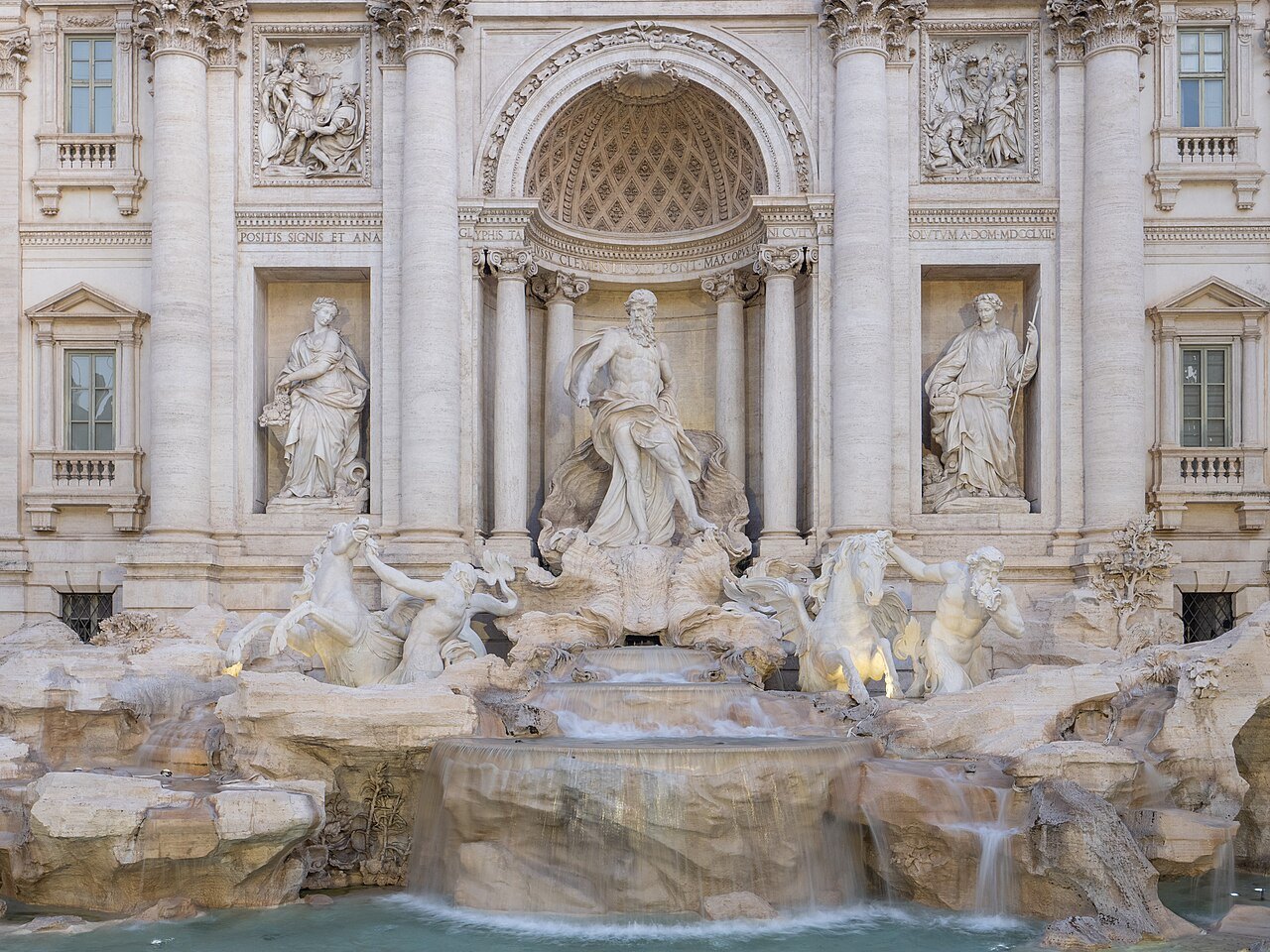
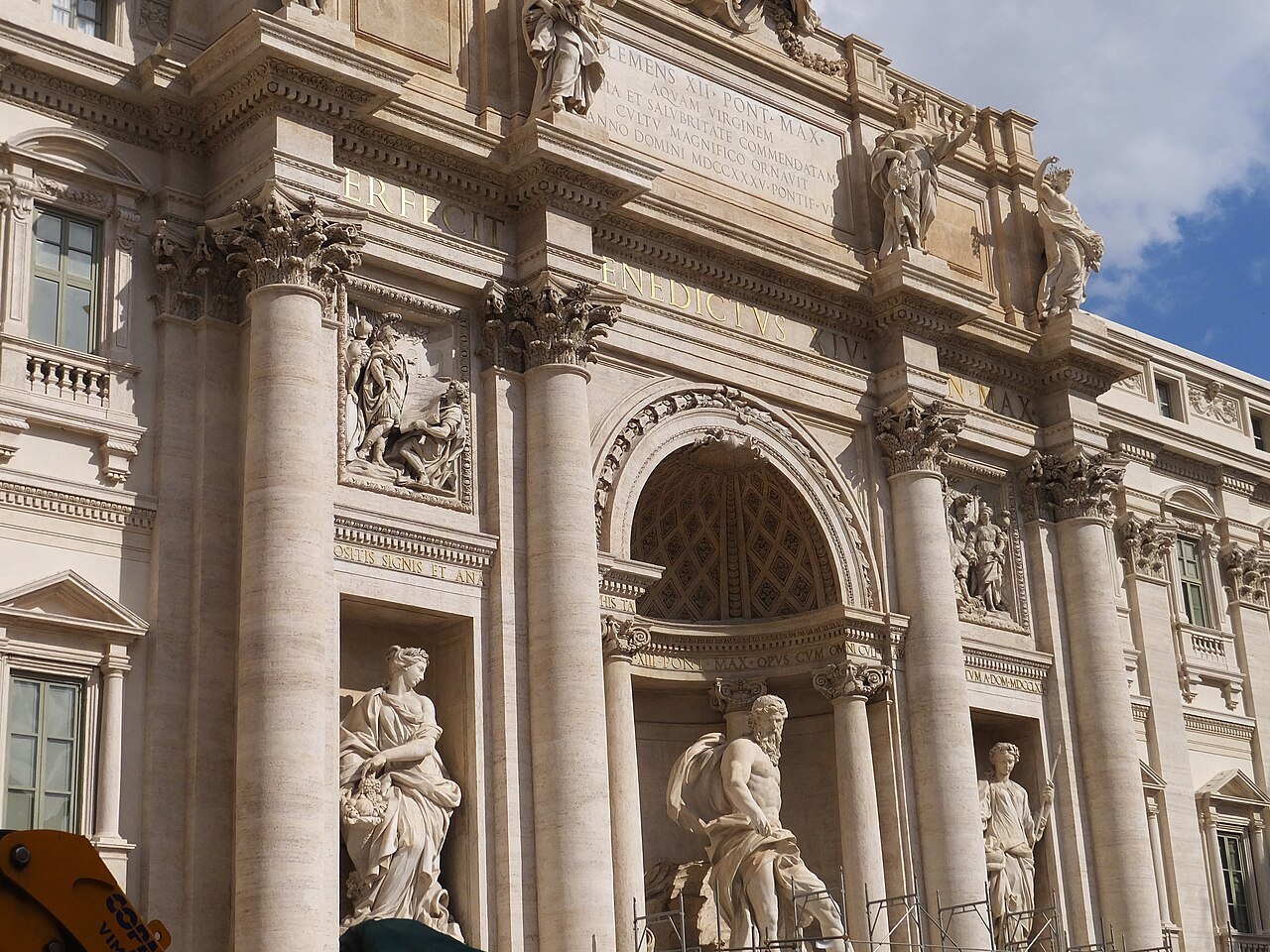
- IOceanusThe sea god in the central niche, riding a shell chariot drawn by sea horses and Tritons.
- IIAbundance and SalubrityThe two statues in the side niches: one pours water from an urn, one offers a cup to a snake.
- IIIThe reliefsPanels above telling the Roman story of the aqueduct, including the maiden who found the spring.
- IVThe Palazzo PoliThe palace the fountain is built against, given a new front of giant Corinthian pilasters.
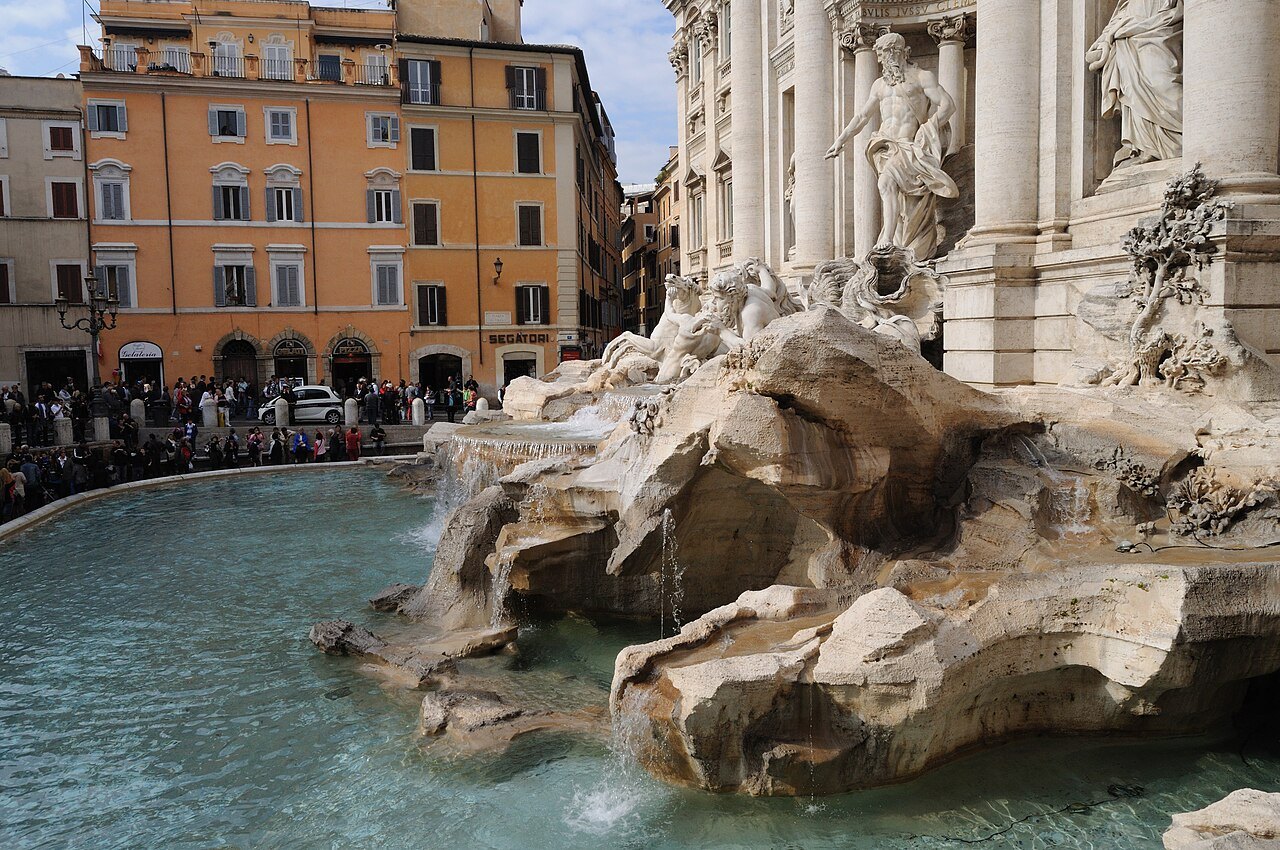
- VThe rocks and basinTravertine from near Tivoli, carved as a cliff the water tumbles over into a wide basin.
- VIThe Ace of CupsA carved vase on the right, placed to hide a barber's sign from the fountain.
The sight in full
Reading the place
Why it matters
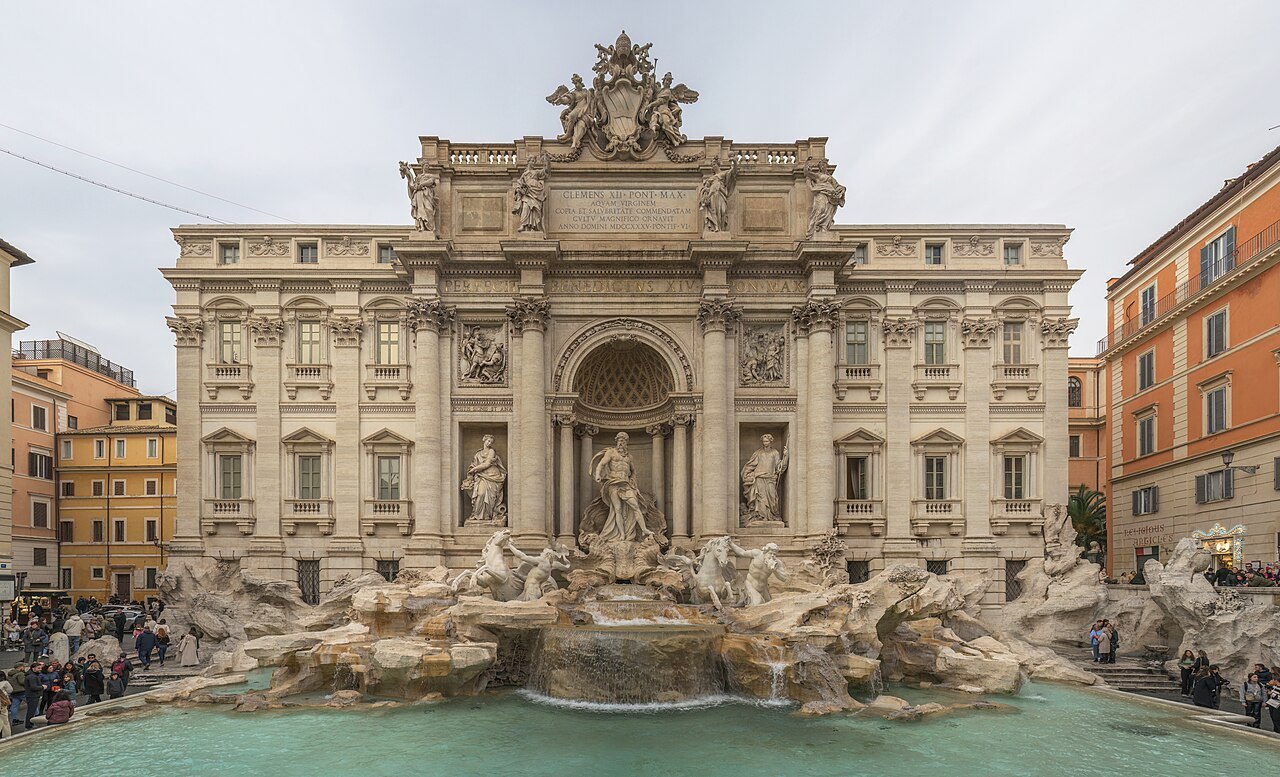
The Trevi Fountain fills a small square in the rione of Trevi, where three streets meet; the name comes from trivium, the meeting of three roads. It is the largest Baroque fountain in the world and one of the most famous fountains anywhere: about 86 feet high and 161 feet wide, built against the whole back of a palace, so that the square seems too small for it.
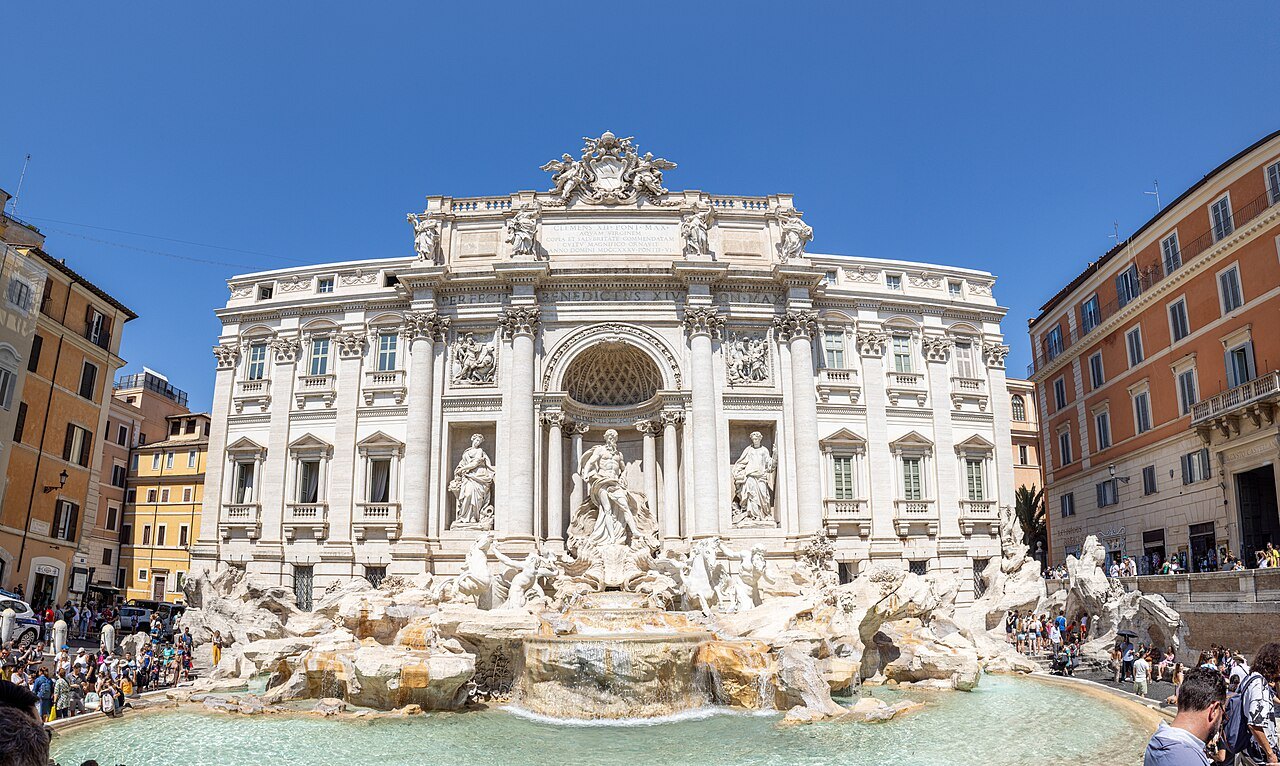
It is also a working piece of Rome's water supply. The fountain marks the end of the Acqua Vergine, the revived Aqua Virgo, one of the aqueducts of ancient Rome, which still carries water to it from a spring outside the city.
The aqueduct of the maiden
In 19 BC, according to the story, Roman engineers searching for pure water were led by a young girl to a spring about eight miles from the city. The aqueduct they built took an indirect route about fourteen miles long and fed the Baths of Agrippa near the Pantheon. It served Rome for more than four hundred years.
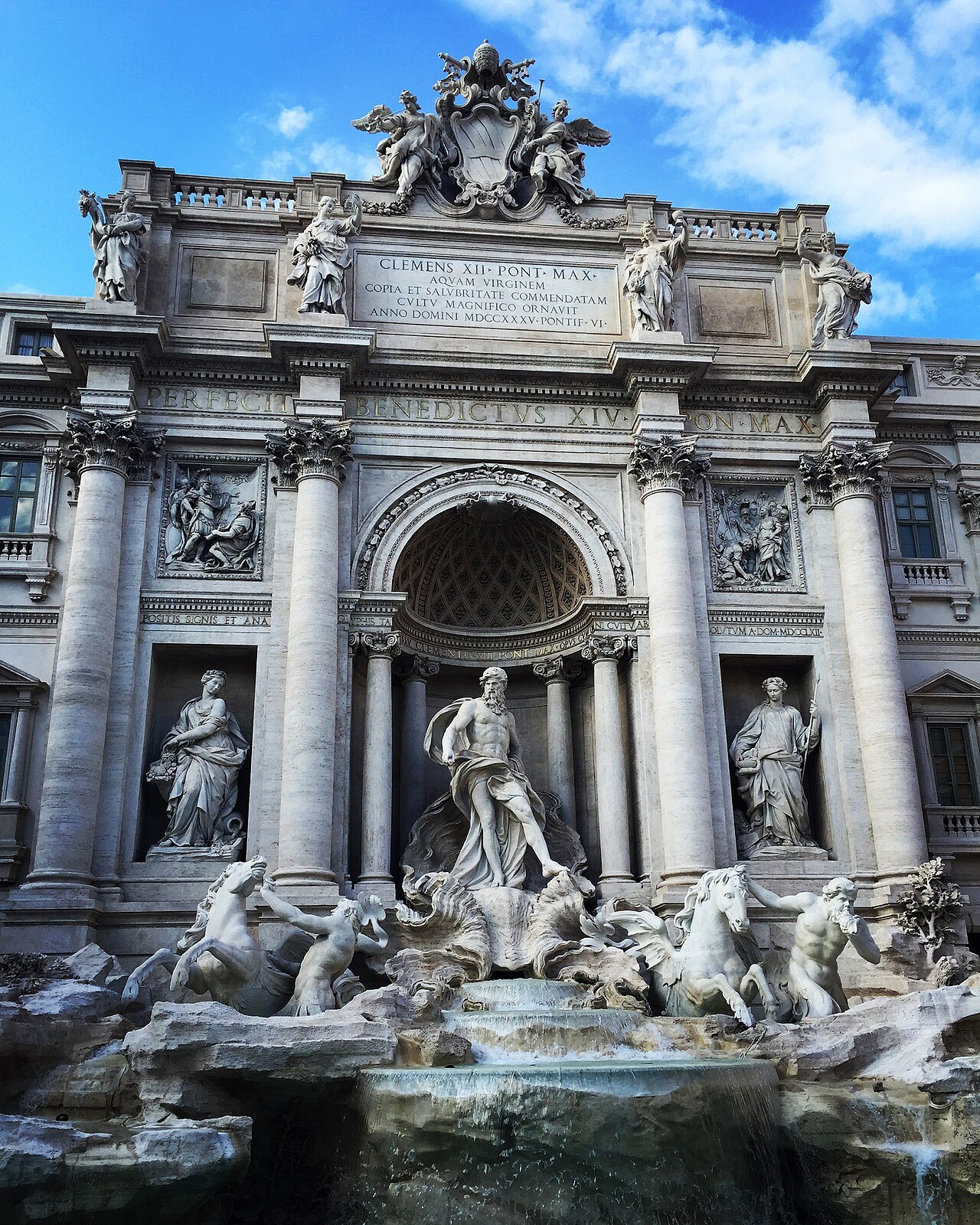
The aqueducts suffered when the Goths besieged Rome in 537, but the Acqua Vergine stayed in use through the Middle Ages, with repairs recorded from the eighth century onward. Its water, low in calcium, is still collected about six miles from the city. The scene of the maiden showing the soldiers the spring is carved in one of the reliefs on the fountain.
From Bernini's sketches to Salvi's fountain
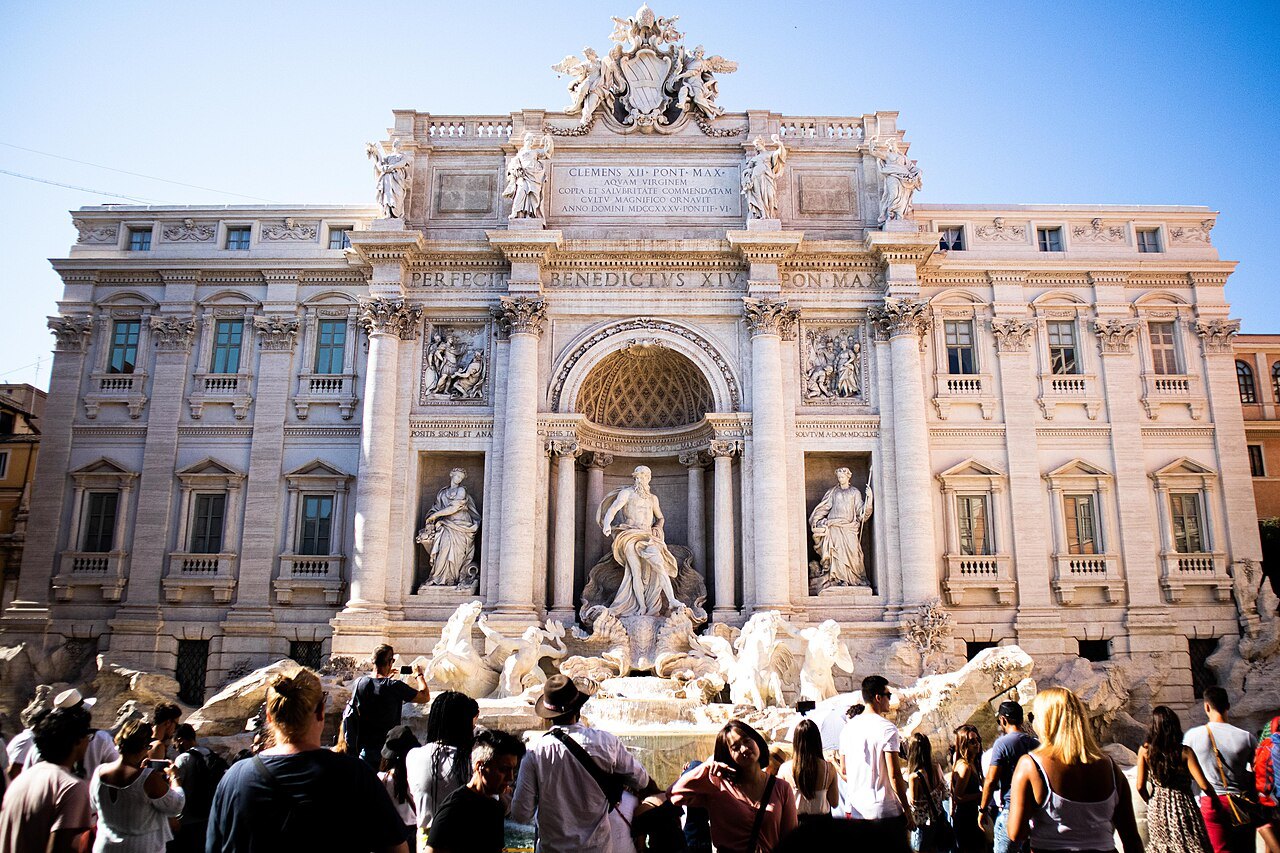
In 1629 Pope Urban VIII found the old fountain here too plain and asked Bernini to sketch a replacement; the project died with the pope, though Bernini's touches can be seen in what was built later. A century on, Pope Clement XII held a competition in 1730. Nicola Salvi first lost to the Florentine Alessandro Galilei, but after an outcry in Rome over a Florentine winning, Salvi was given the commission, and work began in 1732.
A palace, now the Palazzo Poli, already stood on the site, so Salvi built the fountain into its rear. He died in 1751 with the work half done. Four sculptors finished the figures, Pietro Bracci carving Oceanus, and Giuseppe Pannini completed the fountain as architect in 1762, replacing planned statues of Agrippa and of the maiden with the allegories there now. It was inaugurated by Pope Clement XIII.
What you see
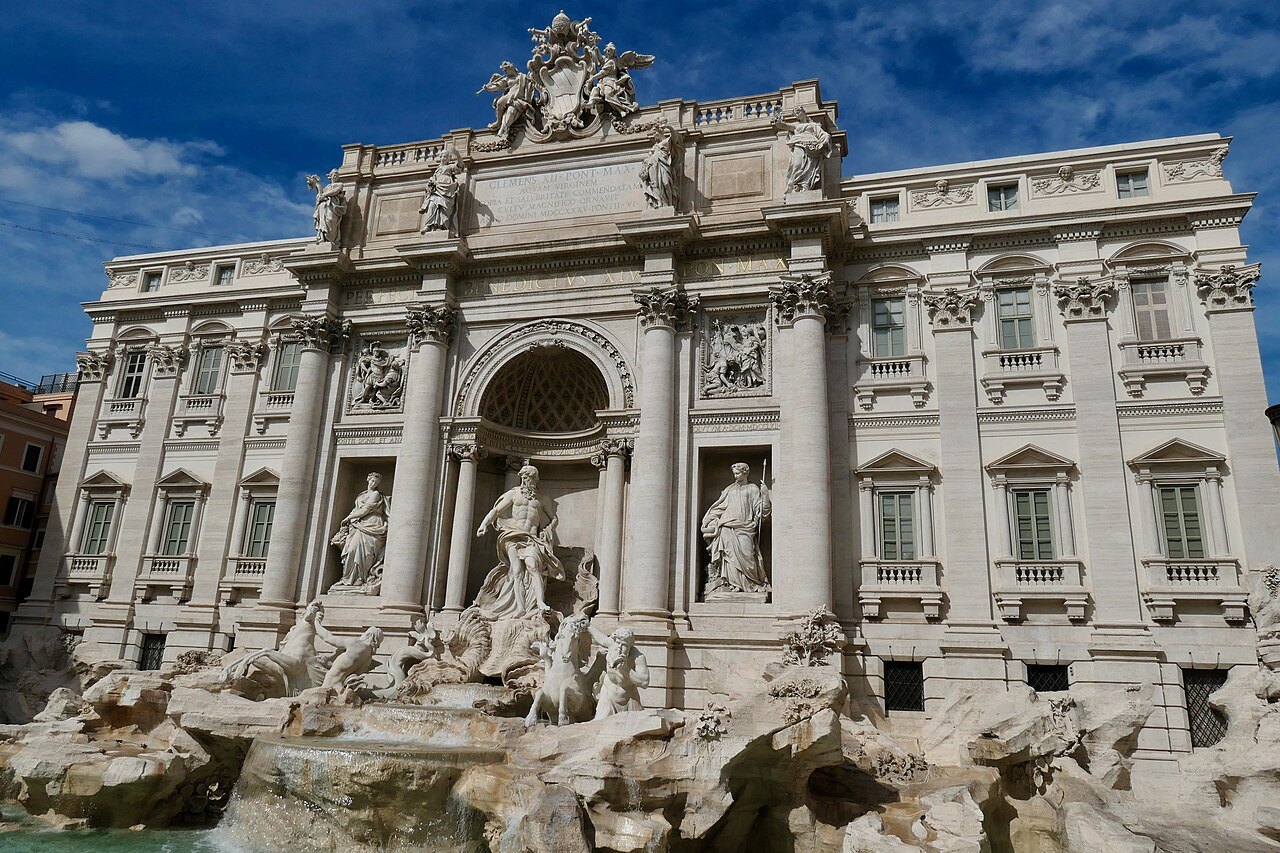
The theme is the taming of the waters. At the center a triumphal arch is set against the palace front, and in its niche stands Oceanus, riding a shell-shaped chariot pulled by sea horses that Tritons struggle to control, one horse calm and one rearing. In the side niches Abundance pours water from her urn and Salubrity holds a cup from which a snake drinks. Above them, reliefs tell the Roman origin of the aqueduct.
The Tritons and the horses balance each other in pairs, but their moods and poses are set in the strongest possible contrast, a Rococo liveliness that was already in fashion in France and Germany by 1730. Below, water and carved rock pour forward together over a false cliff into the wide basin, filling the little square. Most of the stone is travertine quarried near Tivoli. On the right, a large carved vase stands a little apart: Salvi put it there to hide a barber's sign that spoiled his view, and Romans call it the Ace of Cups for its likeness to the playing card.
Restorations and crowds
The fountain was cleaned in 1988 of the discoloring left by smog and again in 1998, when it was given recirculating pumps. The most thorough restoration in its history, sponsored by the fashion house Fendi, ran from June 2014 to November 2015 and added more than a hundred LED lights to its night illumination. It was drained again for three months of work at the end of 2024, and when it reopened in December a queuing system began, with a cap on the number of people at the basin.
In February 2026 the city introduced a ticket for visitors who are not Roman residents to go down to the basin itself, part of its effort to manage one of the most crowded places in Rome; the proceeds are meant for restoration and stewards. Check the city's current rules before you go, as the arrangement is new.
The coins
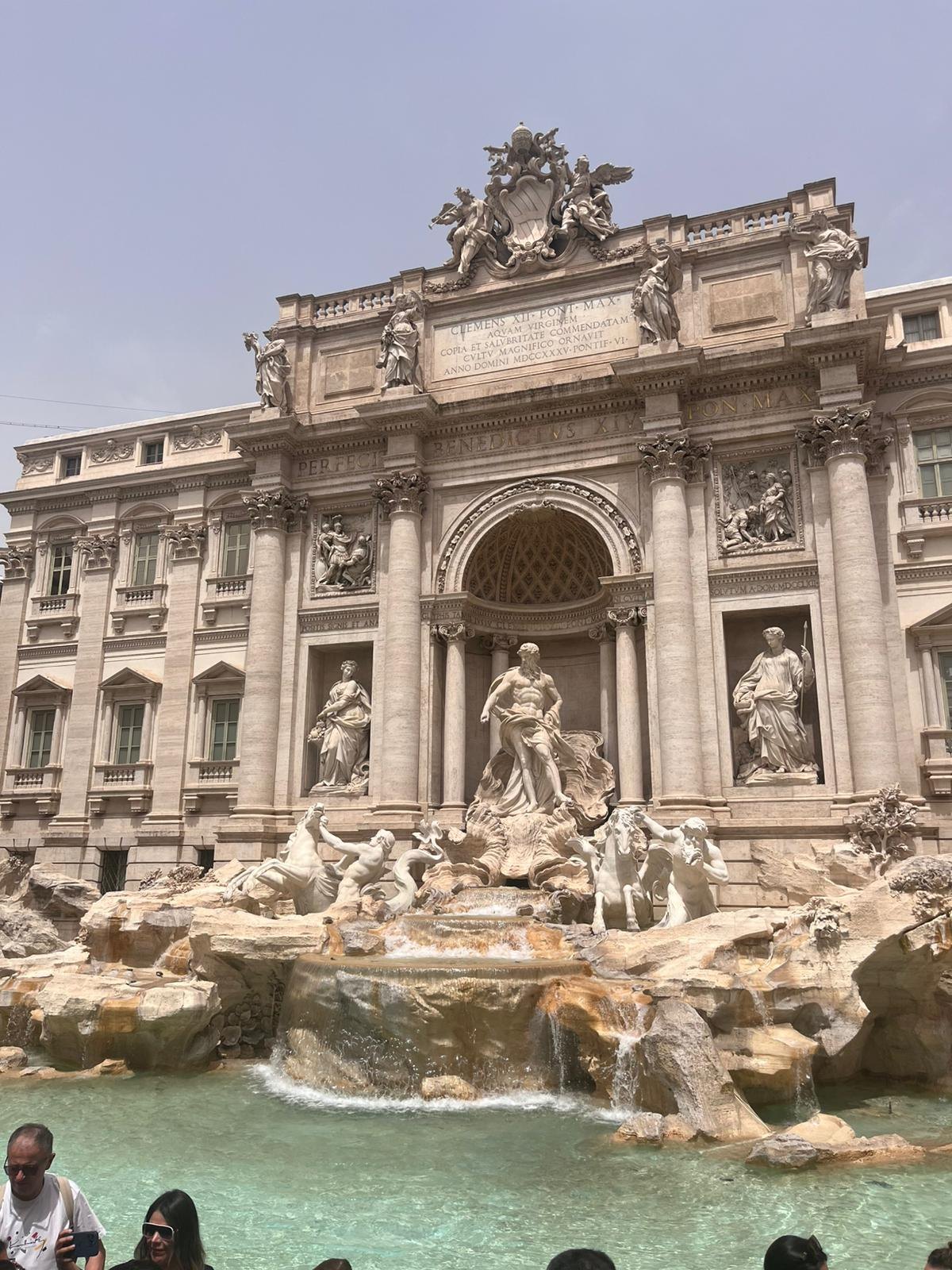
The best-known tradition is to throw a coin into the fountain before leaving the city, which is supposed to bring you back to Rome; the custom is to throw it with the right hand over the left shoulder, back to the fountain. Thousands of euros are estimated to land in the water every day. The money is collected and given to Caritas for its charity work, and taking coins from the fountain is illegal.
The fountain's fame owes much to film: Roman Holiday in 1953, Three Coins in the Fountain in 1954, and above all La Dolce Vita in 1960, in which Anita Ekberg wades into the basin with Marcello Mastroianni. The fountain also has its music: the third movement of Ottorino Respighi's symphonic poem Fountains of Rome, from 1916, is named for it.
How to visit
Since 2 February 2026 a ticket is needed to go down into the basin area, the steps beside the water; the fountain is always visible from the square without one. Tickets are sold on the fountain's official site, fontanaditrevi.roma.it, at the city's tourist info points and civic museums, and at the entrance by card only; residents of Rome, young children and disabled visitors with a companion enter free.
Inside, the rules are simple: no food or drink, no smoking, no sitting on the edge of the basin, and the traditional coin is the only thing you may throw. Give yourself a few minutes at the top of the square to take in the whole façade first. The Spanish Steps and the Pantheon are a short walk away, so the three are easily joined in one walk through the center.
Where to go next
Nearby
- Nearby · IV · Campo MarzioThe Spanish StepsOne hundred and thirty-five steps climbing a steep slope from the Piazza di Spagna to the French church of Trinità dei Monti, designed after a competition of 1717 and paid for with a French diplomat's legacy.Read the page →
- Nearby · IX · PignaThe PantheonA Roman temple rebuilt under Hadrian and a church since 609: a portico of granite columns, then a round hall under the largest unreinforced concrete dome in the world, lit only by the open oculus at its top.Read the page →
- Nearby · IV · Campo MarzioPiazza del Popolo and the PincioThe great oval square inside Rome's northern gate, where the road from the north entered the city: an Egyptian obelisk older than the city itself, twin churches, three streets fanning south, and the Pincio's terrace above.Read the page →