Home · Sights · Santa Maria Maggiore
What you are looking at
Santa Maria Maggiore
XV · Esquilino
- IThe nave mosaicsMosaics of the fifth century with Old Testament scenes, made just after the church was built.
- IIThe apse mosaicJacopo Torriti's Coronation of the Virgin of 1295, signed by the Franciscan friar.
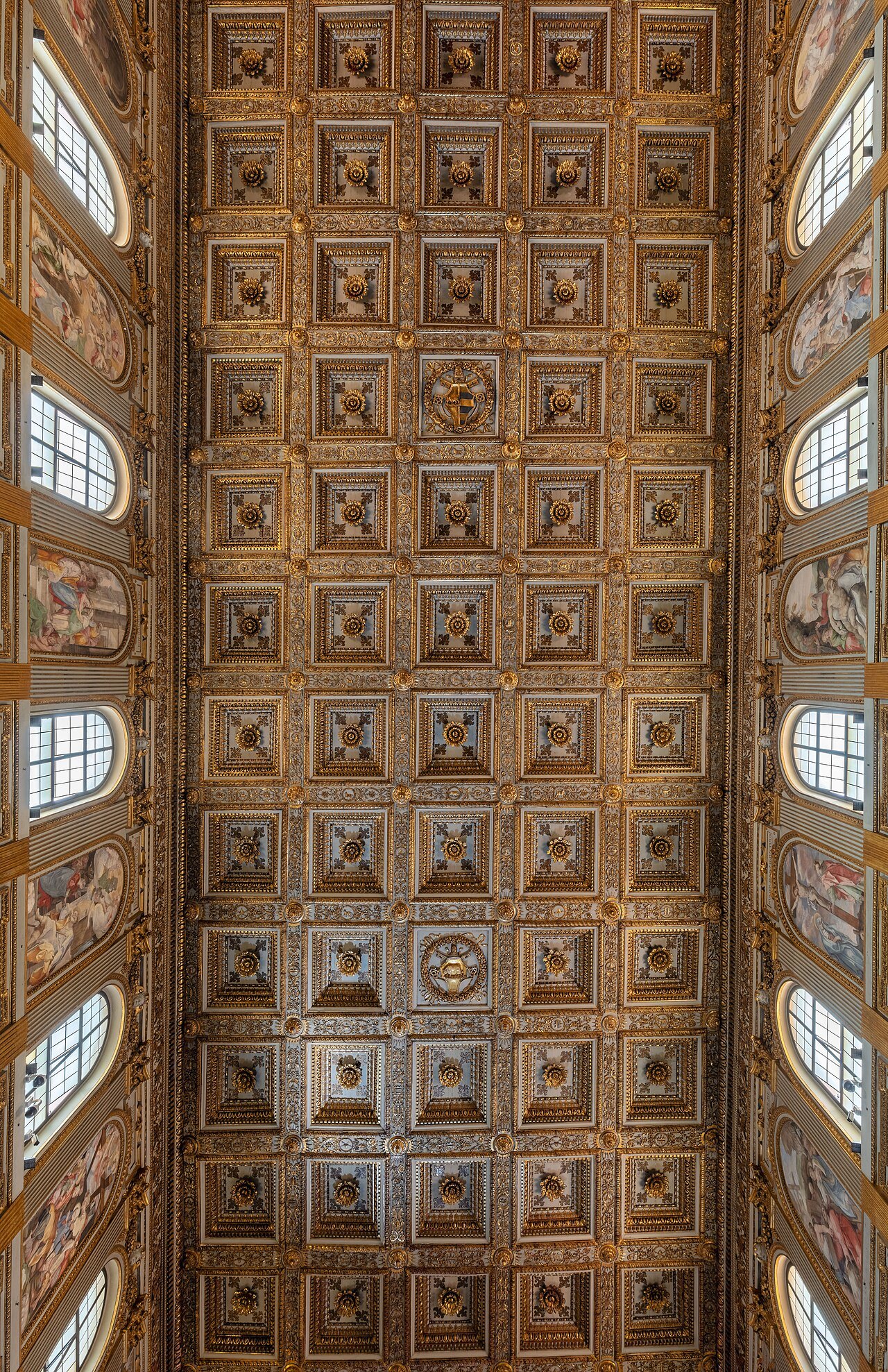
- IIIThe coffered ceilingGiuliano da Sangallo's ceiling, said to be gilded with gold brought back by Columbus.
- IVThe Borghese ChapelThe chapel of the Salus Populi Romani, the icon venerated as protectress of the Roman people.
- VThe bell towerThe fourteenth-century campanile, at about 246 feet the highest in Rome.
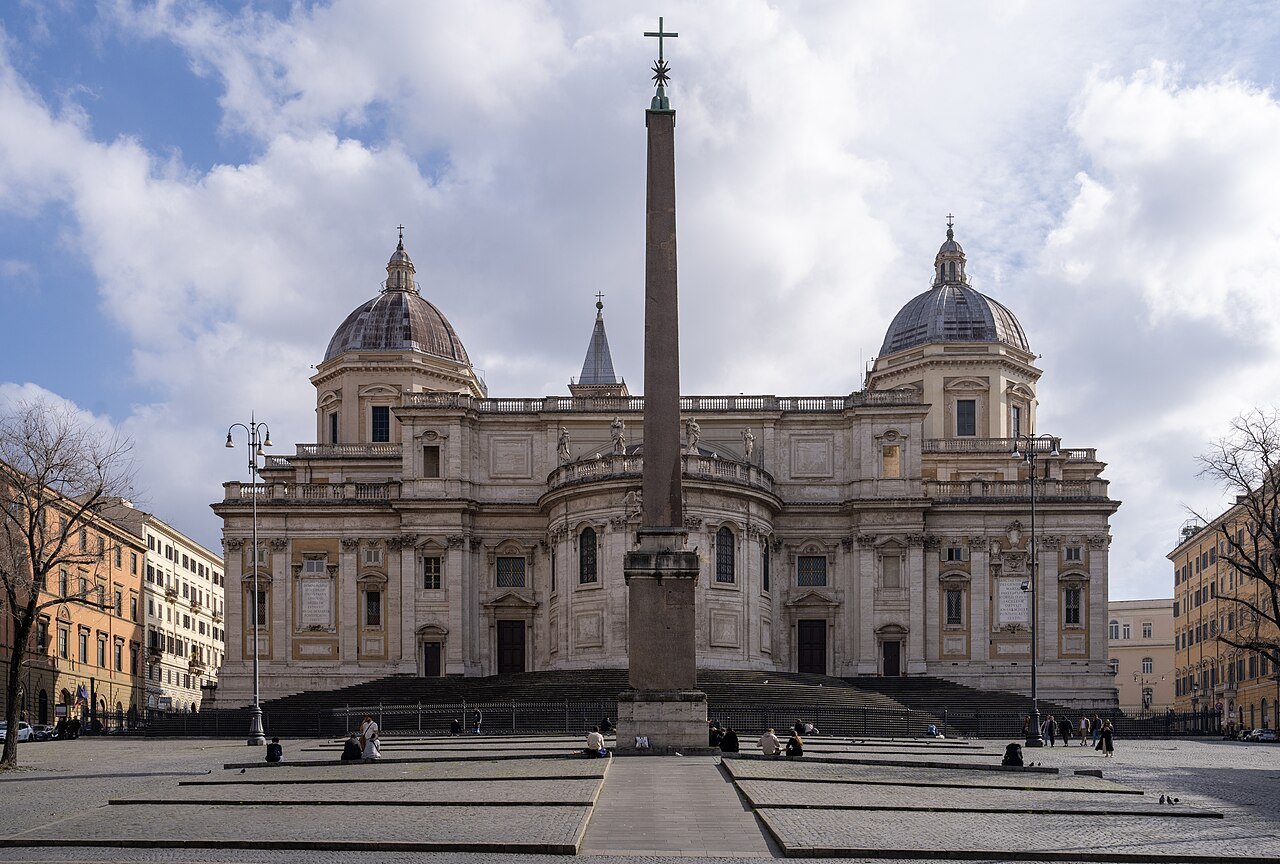
- VIThe Marian columnA column from the Basilica of Maxentius, raised in the piazza in 1614 under a Virgin and Child.
The sight in full
Reading the place
Why it matters
Santa Maria Maggiore, Saint Mary Major, is the largest church dedicated to the Virgin Mary in Rome and has been called the mother of all Marian shrines. It stands on the Piazza dell'Esquilino, on the summit of the Esquiline Hill, in the rione of Esquilino. It is one of the four major papal basilicas of Rome, with St. Peter's, St. John Lateran and St. Paul outside the Walls, and one of the Seven Pilgrim Churches that pilgrims walked between on the route set by Philip Neri in 1552.
Unlike St. Peter's, it stands on Italian soil. Under the Lateran Treaty of 1929 the basilica is Italian territory, but it is the property of the Holy See, and Italy grants it the immunity given to the embassies of foreign states. It keeps the core of its original fifth-century structure, which makes it one of the best places in the city to see what an early Christian basilica looked like inside.
Snow in August
The church is also called Our Lady of the Snows. According to a legend first recorded after the year 1000, a childless Roman patrician named John and his wife vowed their property to the Virgin and prayed to know how to use it. On the night of 5 August, at the height of the Roman summer, snow fell on the top of the Esquiline, and in a vision the Virgin told them to build her church on the spot it covered. Pope Liberius, the story adds, dreamed of the same snowfall and marked out the plan.
The legend is still remembered each year on the feast of the dedication, when white rose petals are dropped from the dome during the Mass. An early fifteenth-century painting by Masolino shows the miracle.
The church of 434
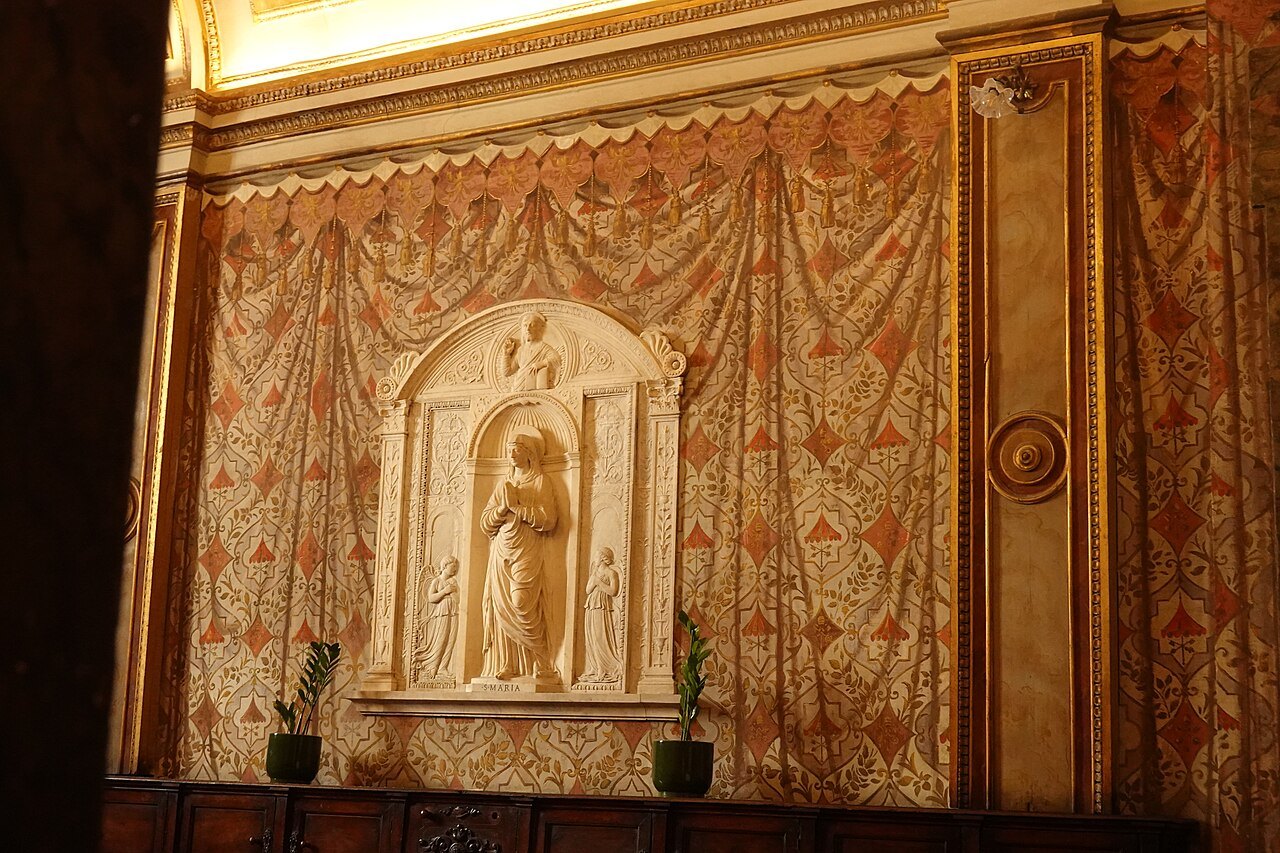
The present church was built on the Esquiline in the 420s and 430s and consecrated by Pope Sixtus III on 5 August 434. It rose just after the Council of Ephesus of 431 declared Mary the Mother of God, and it celebrates that decision. Its inscription on the triumphal arch, Sixtus the bishop to the people of God, still records the pope's part in it.
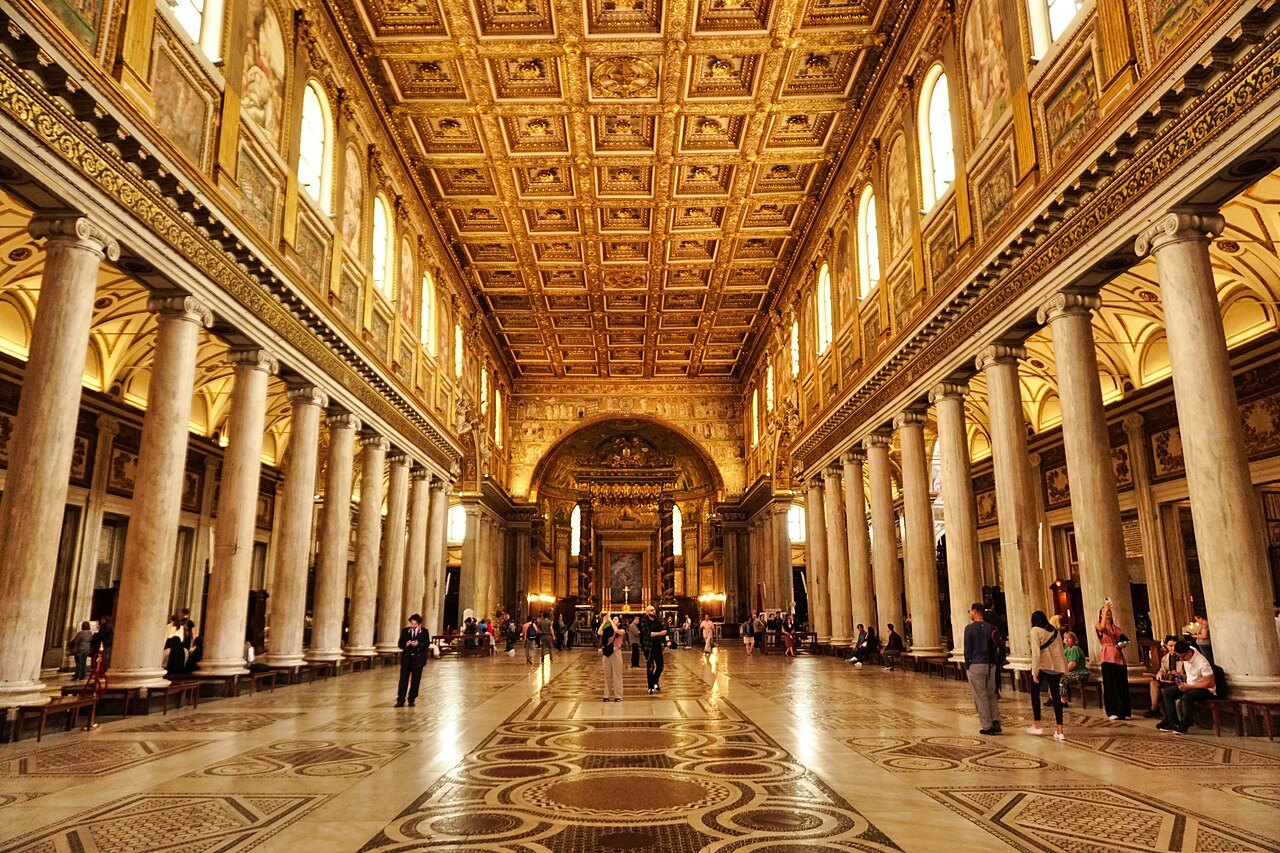
The mosaics from that time survive along the nave and on the triumphal arch: scenes from the life of the Virgin and of Christ, and from the Old Testament, Moses striking the Red Sea and the Egyptians drowning in its greenish-blue waters. The church was long known as Saint Mary of the Crib, for its relic of the manger of the Nativity, boards of sycamore wood believed to have come to the church in the seventh century.
What you see inside
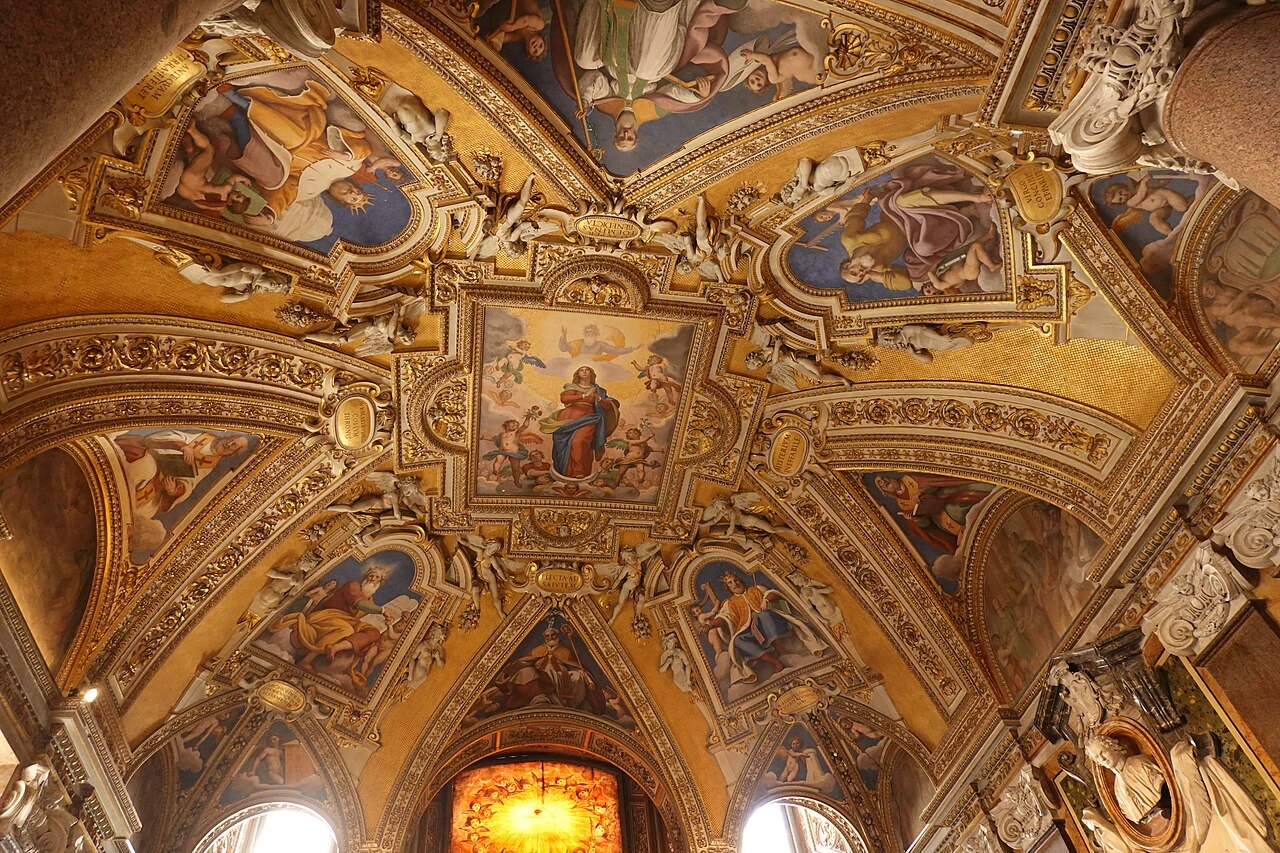
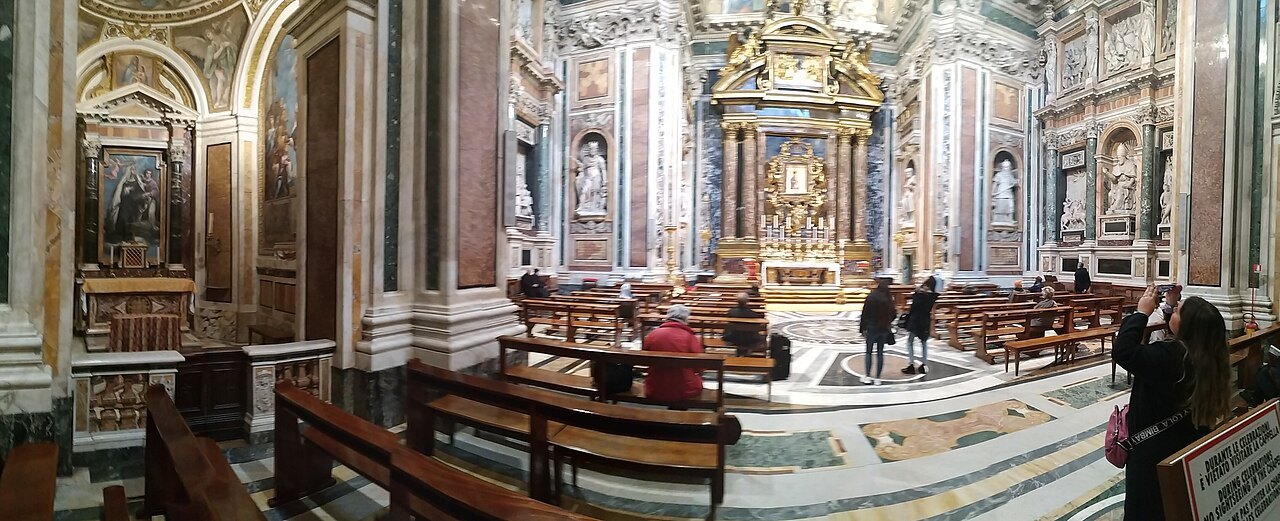
The nave is lined with forty columns, thirty-six of marble and four of granite, which Ferdinando Fuga pared down so that they would match and gave identical gilt-bronze capitals. Above them runs the coffered ceiling designed by Giuliano da Sangallo in the sixteenth century, said to be gilded with gold that Christopher Columbus first brought back, a gift from Ferdinand and Isabella to the Spanish pope Alexander VI. In the apse, the Coronation of the Virgin of 1295 is signed by the Franciscan friar Jacopo Torriti.
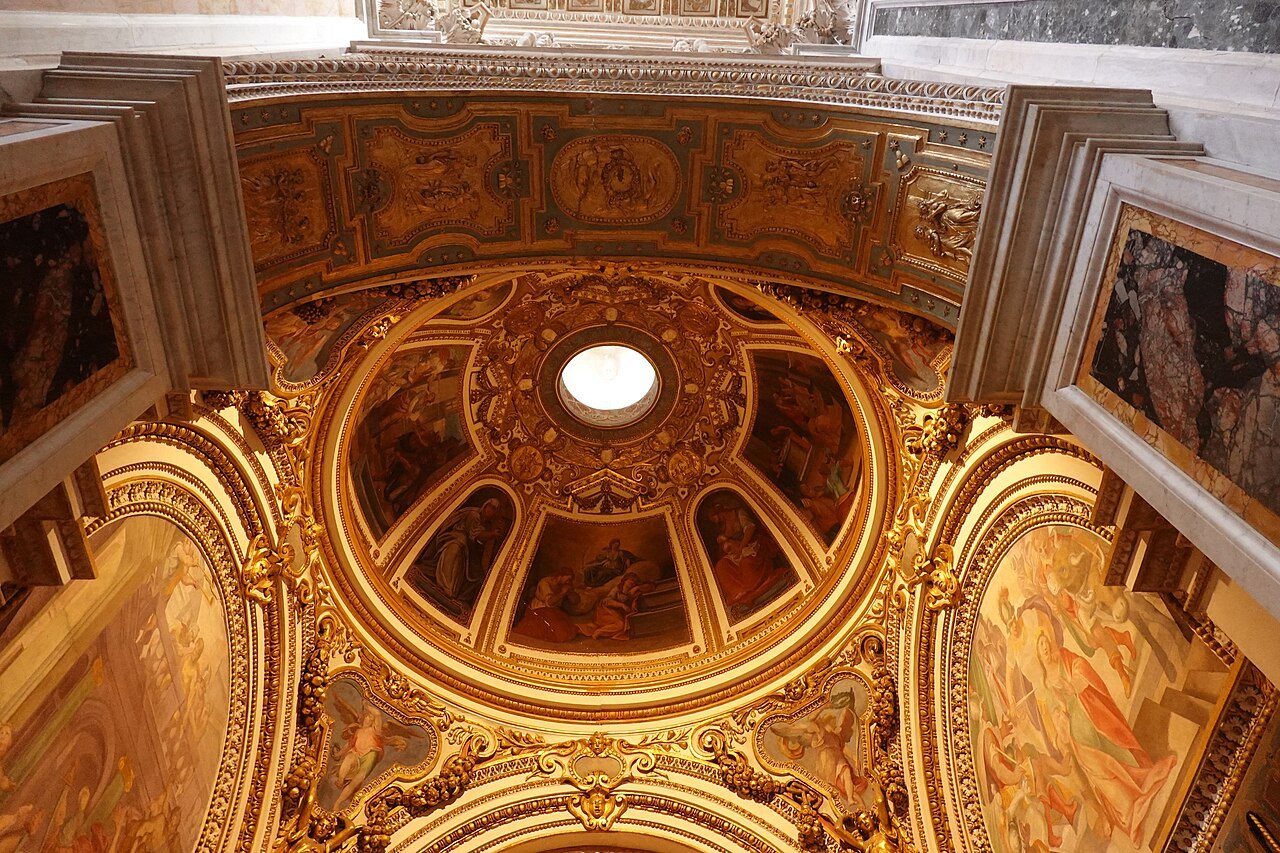
Two great domed chapels face each other across the nave. Off the right transept is the Sistine Chapel, named for Pope Sixtus V, not to be confused with the chapel of the same name in the Vatican; its Mannerist decoration was completed in 1587 to 1589, and fragments of a thirteenth-century Nativity believed to be by Arnolfo di Cambio lie beneath its altar. Opposite is the Pauline or Borghese Chapel, which holds the Salus Populi Romani, a venerated icon of the Madonna and Child, credited in tradition with keeping plague from the city.
Just outside the Sistine Chapel is the tomb of Gian Lorenzo Bernini and his family. Pope Francis, who visited the icon on the day after his election, was buried in the basilica in 2025, in the side aisle between the Sforza Chapel and the Pauline Chapel, the first pope buried outside the Vatican since 1903.
Outside
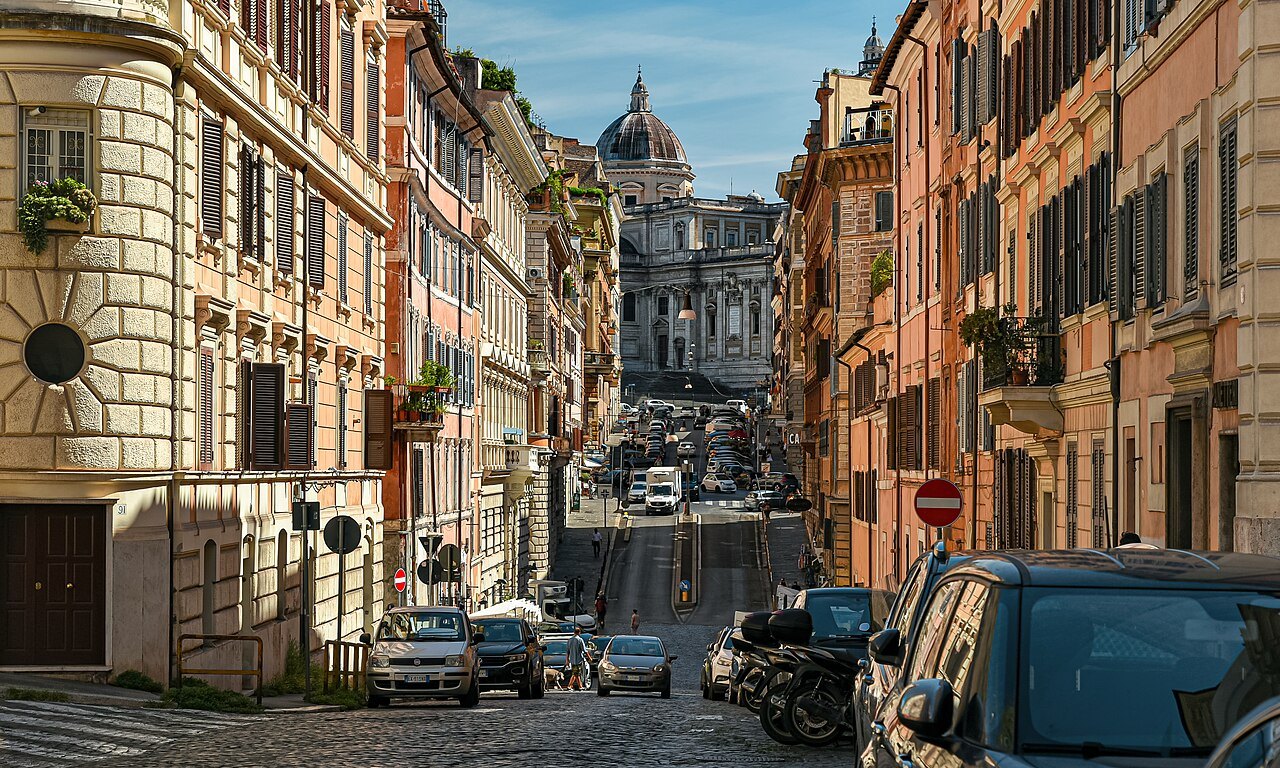
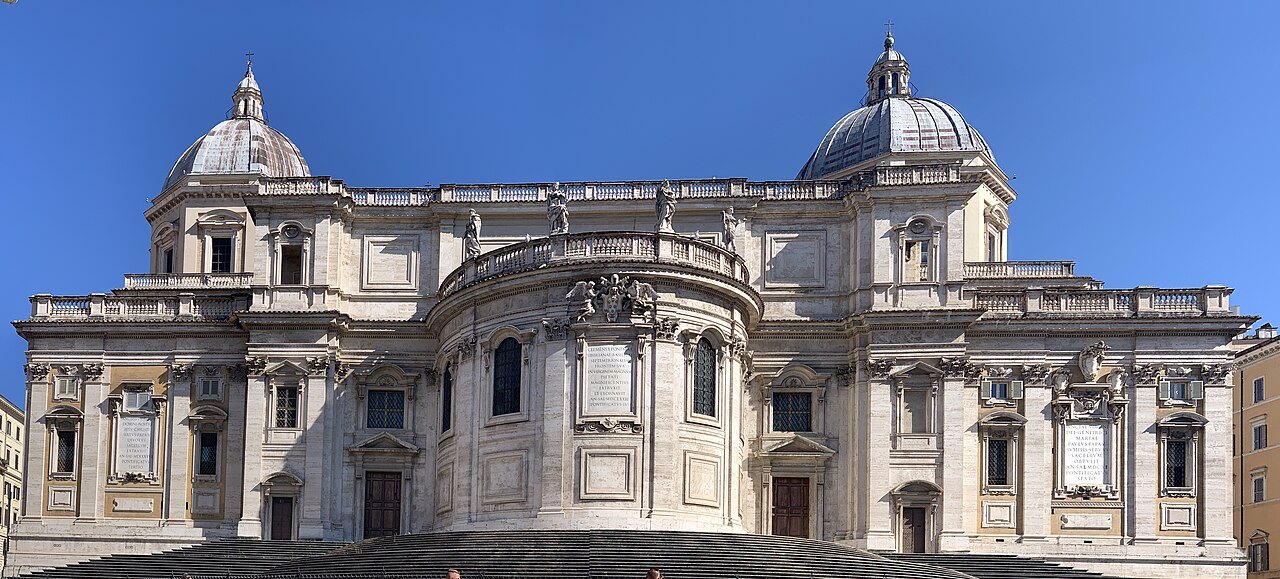
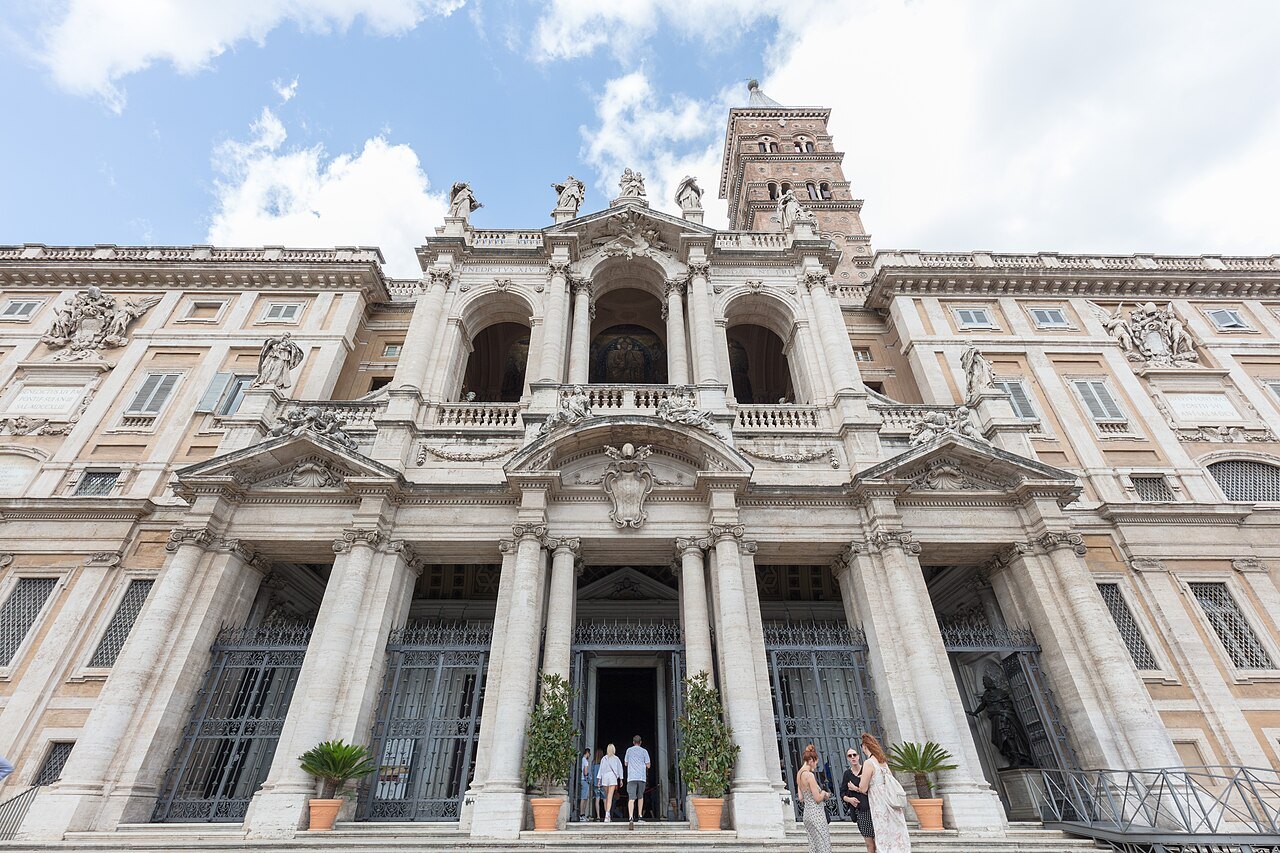
The medieval front of the church is masked by the loggia that Fuga designed for Benedict XIV in 1743, which screens but did not destroy the mosaics of the old façade. Behind it rises the campanile of the fourteenth century, about 246 feet high, the tallest bell tower in Rome.
In the piazza in front stands a Marian column, raised in 1614 to designs by Carlo Maderno for Paul V. The column is the only one left intact from the Basilica of Maxentius and Constantine in the Roman Forum; the Virgin and Child on top was cast by Orazio Censore to a model by Guillaume Berthélot. To the right of the façade, a column shaped like an upended cannon barrel topped by a cross celebrates the end of the French Wars of Religion.
How to visit
Santa Maria Maggiore is a working church and a place of pilgrimage, so dress as you would for any major church in Rome, with shoulders and knees covered, and keep quiet near the chapels where people come to pray. Look for the Marian column in the piazza first, then go in by the loggia, down the nave to the apse mosaic, and across to the two domed chapels. Combine it with a visit to the Colosseum or the other papal basilicas.
Myths worth setting aside
The basilica's claim to be the first church in Rome dedicated to Mary is disputed by Santa Maria in Trastevere, whose throne carries the same claim. And the snowfall of August belongs to a legend first written down six centuries after the church was built.
Where to go next
Nearby
- Nearby · I · MontiSt. John LateranDedicated in 324, the oldest public church in Rome and the cathedral of its bishop, the pope: Borromini's nave of giant apostles, Galilei's palace-like front of 1735, the tallest obelisk in the city, and across the square the Holy Stairs, climbed on the knees.Read the page →
- Nearby · XIX · CelioThe ColosseumBegun under Vespasian in 72 and opened under his son Titus in AD 80 on the site of Nero's private lake, the largest amphitheater ever built still stands at the center of Rome, three tiers of arches and an attic high.Read the page →
- Nearby · II · TreviThe Trevi FountainNicola Salvi's fountain of 1732 to 1762, the largest Baroque fountain in the world, marks where the water of an aqueduct first built in 19 BC arrives in the city, filling a small square at the meeting of three streets.Read the page →