What you are looking at
The Colosseum
XIX · Celio
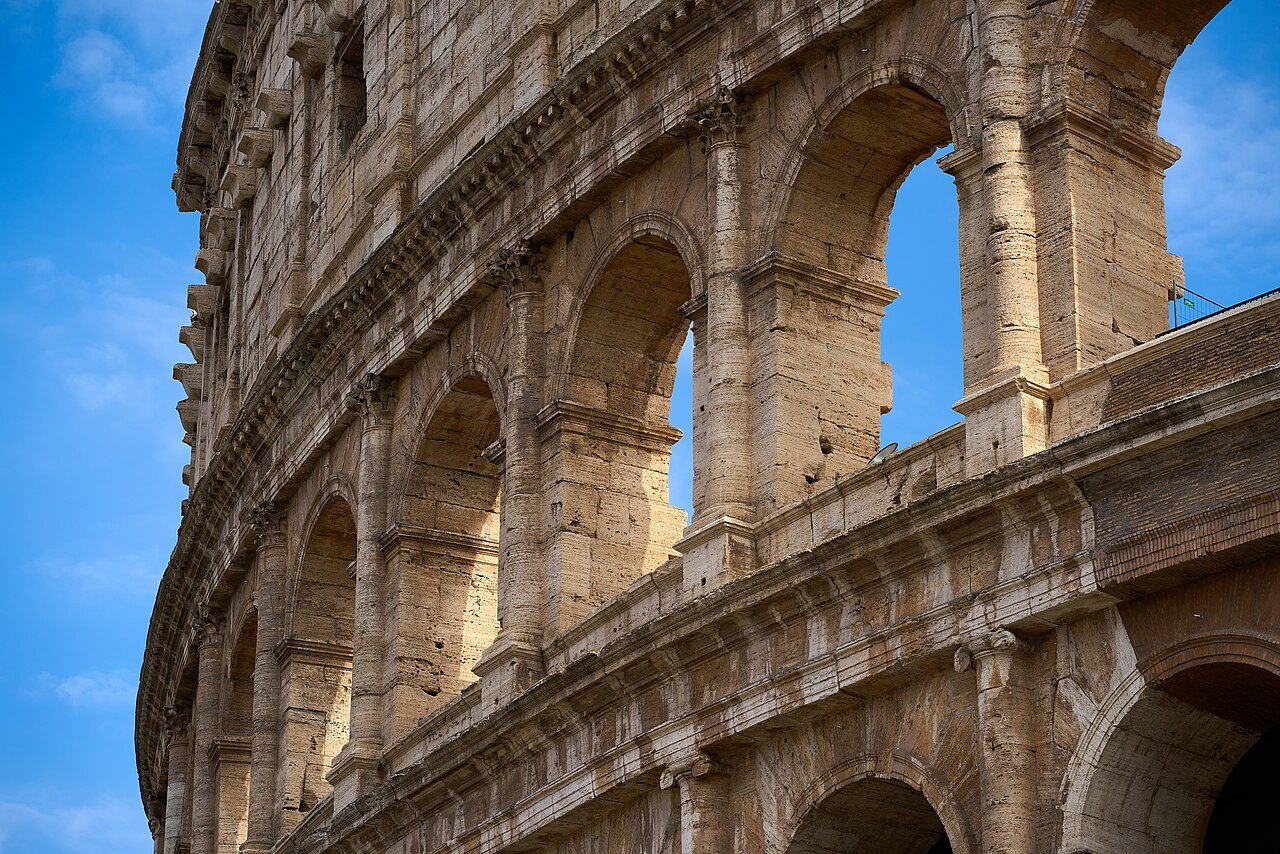
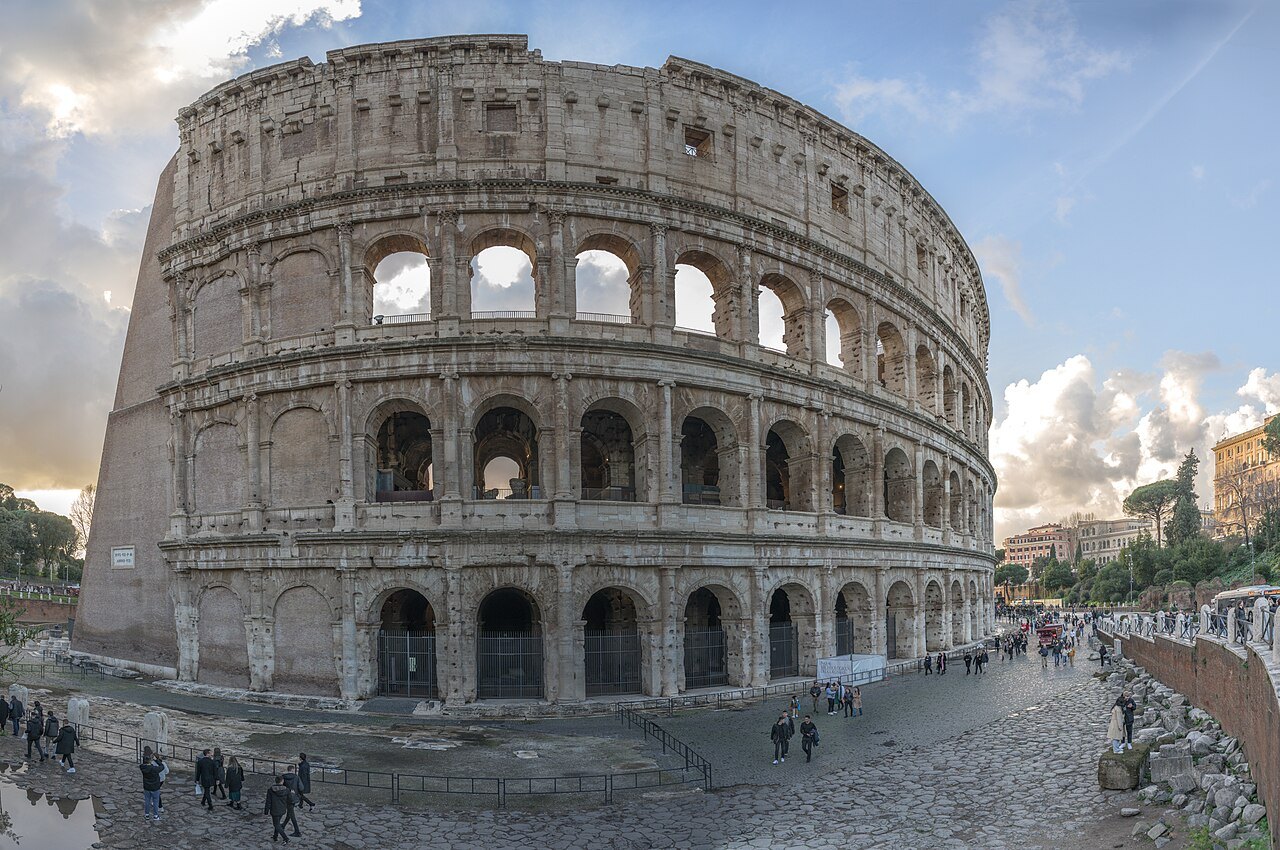
- IThe outer wallThe surviving north side: three arcades framed by Doric, Ionic and Corinthian columns, and a tall attic above.
- IIThe brick buttressesThe triangular brick wedges at each end, added in 1807 and 1827 to hold the wall up.
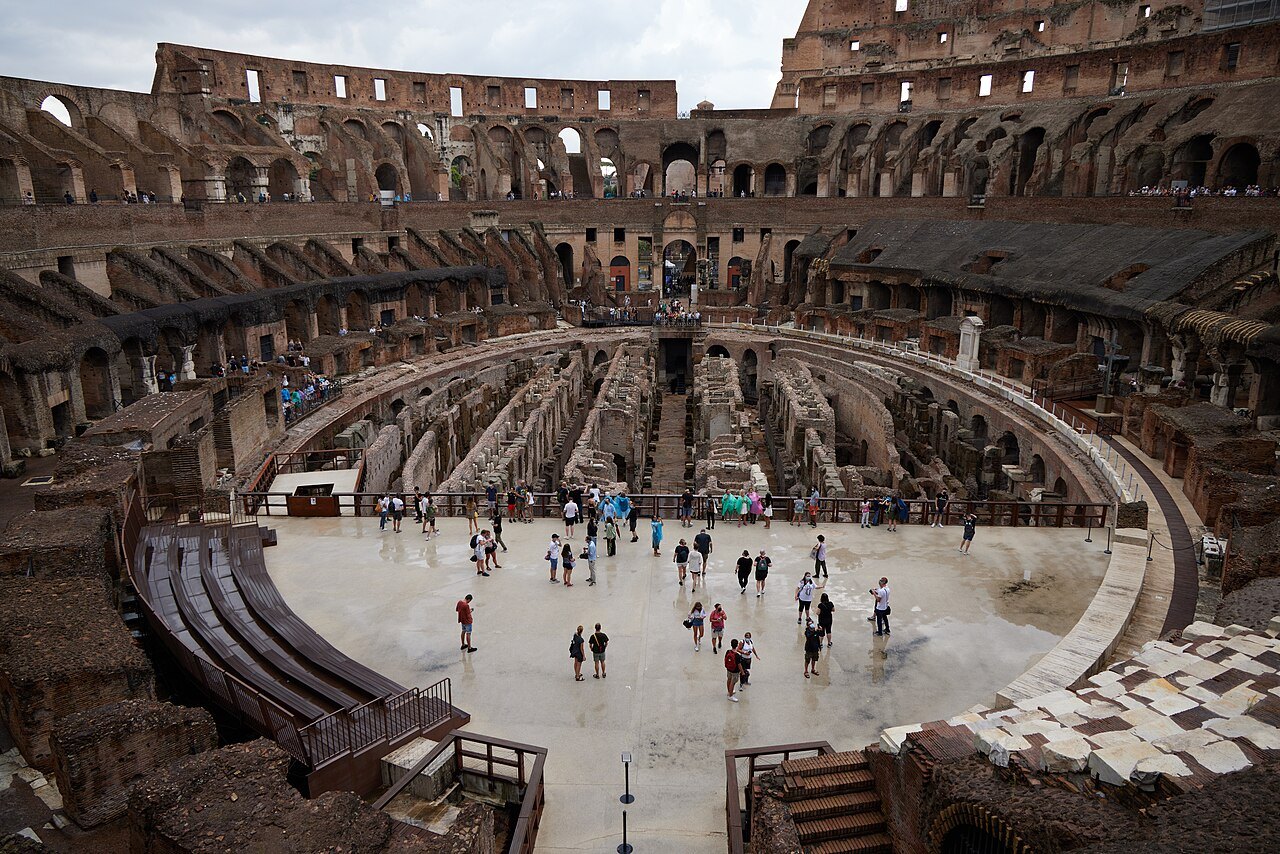
- IIIThe arenaAn ellipse about 272 feet long, once a wooden floor spread with sand, now partly rebuilt.
- IVThe hypogeumDomitian's two-level warren of tunnels and cages under the floor, where animals and fighters waited.
- VThe tiersSeating that sorted Rome by rank, from the senators' podium to the standing gallery at the top.
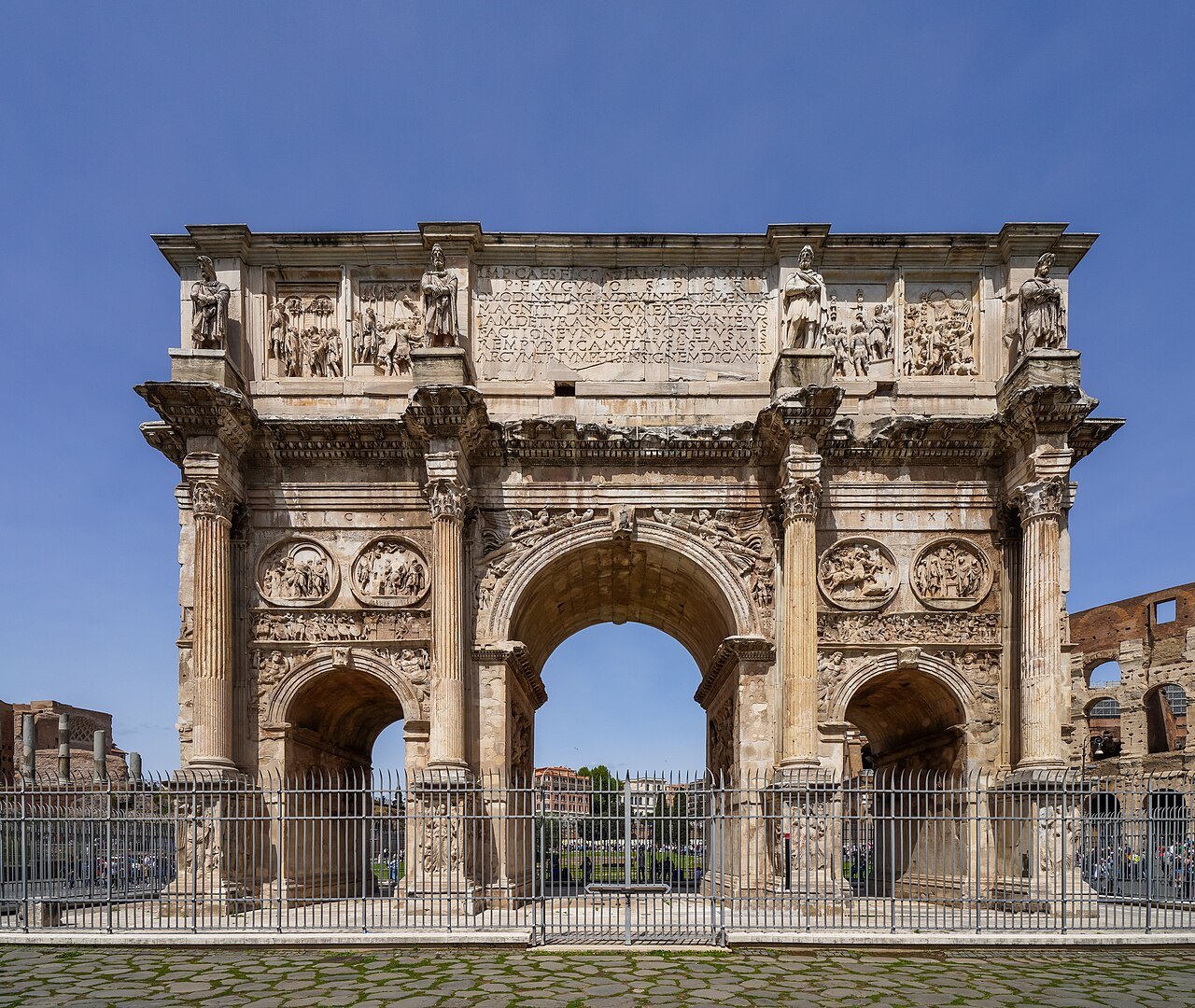
- VIThe Arch of ConstantineNext door on the triumphal route, the largest Roman triumphal arch, dedicated in 315.
The sight in full
Reading the place
Why it matters
The Colosseum is the building most people picture when they picture Rome. It stands in the low valley between the Caelian, Esquiline and Palatine hills, just east of the Roman Forum, and it is the largest amphitheater ever built and the largest one still standing anywhere. Construction began under the emperor Vespasian in 72 and the building was completed under his son and heir Titus in AD 80, with further changes under Domitian. Because all three emperors belonged to the Flavian family, later scholars named it the Flavian Amphitheater.
It was built for spectacle: gladiatorial combat, animal hunts, executions, reenactments of battles and dramas based on myth. It could hold an estimated 50,000 to 80,000 spectators at different times in its history, with an average audience of some 65,000, and it served that purpose into the early Middle Ages.
Nero's lake, an emperor's gesture
The site was chosen for a reason. After the Great Fire of 64, Nero took much of this valley for his own palace, the Domus Aurea, and laid out an artificial lake surrounded by pavilions and gardens, with a giant bronze statue of himself at the entrance. Vespasian had most of the palace torn down and the lake filled in, and put the new amphitheater on the spot. Returning land an emperor had taken for himself to the public was a populist gesture, and it placed the building, unlike most amphitheaters, in the middle of the city.
A reconstructed inscription found on the site records that Vespasian paid for the work from his general's share of the spoils of the Jewish war that ended with the siege of Jerusalem in 70. The name Colosseum came much later. It is believed to come from that colossal statue of Nero, which Hadrian moved beside the amphitheater; by about the year 1000 the Latin name was in use for the building itself.
What you see from the outside
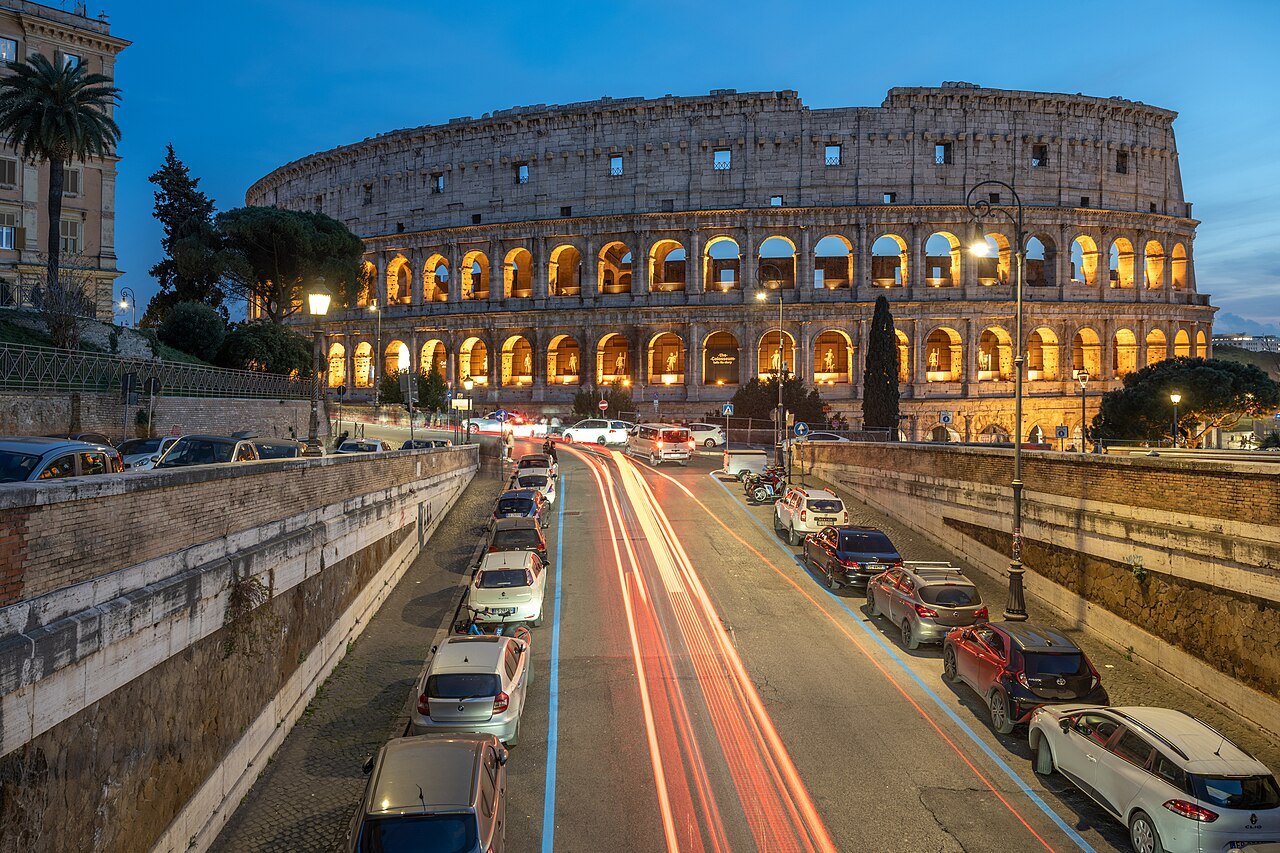
The Colosseum is free-standing, an ellipse about 615 feet long and 510 feet wide, and its outer wall rises 157 feet. The travertine blocks were laid without mortar and held with some 300 tons of iron clamps. When the clamps were pried out in the Middle Ages they left the pockmarks that scar the stone today.
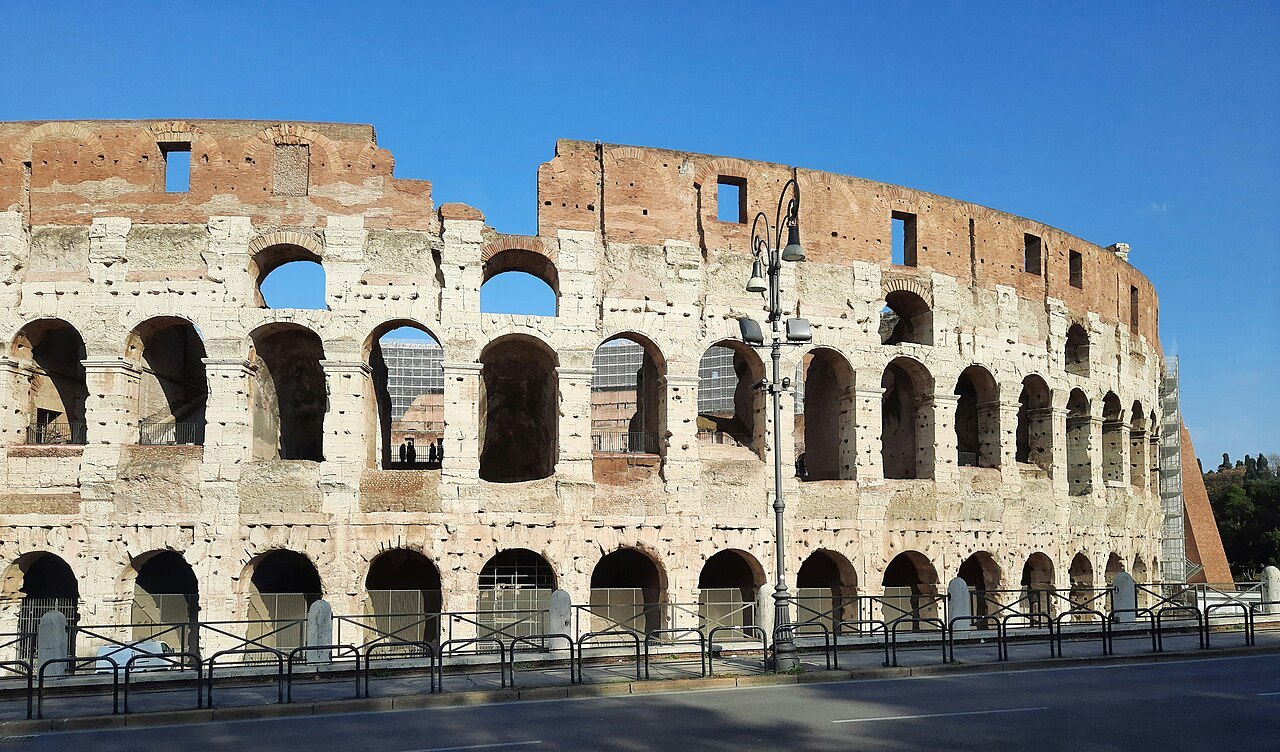
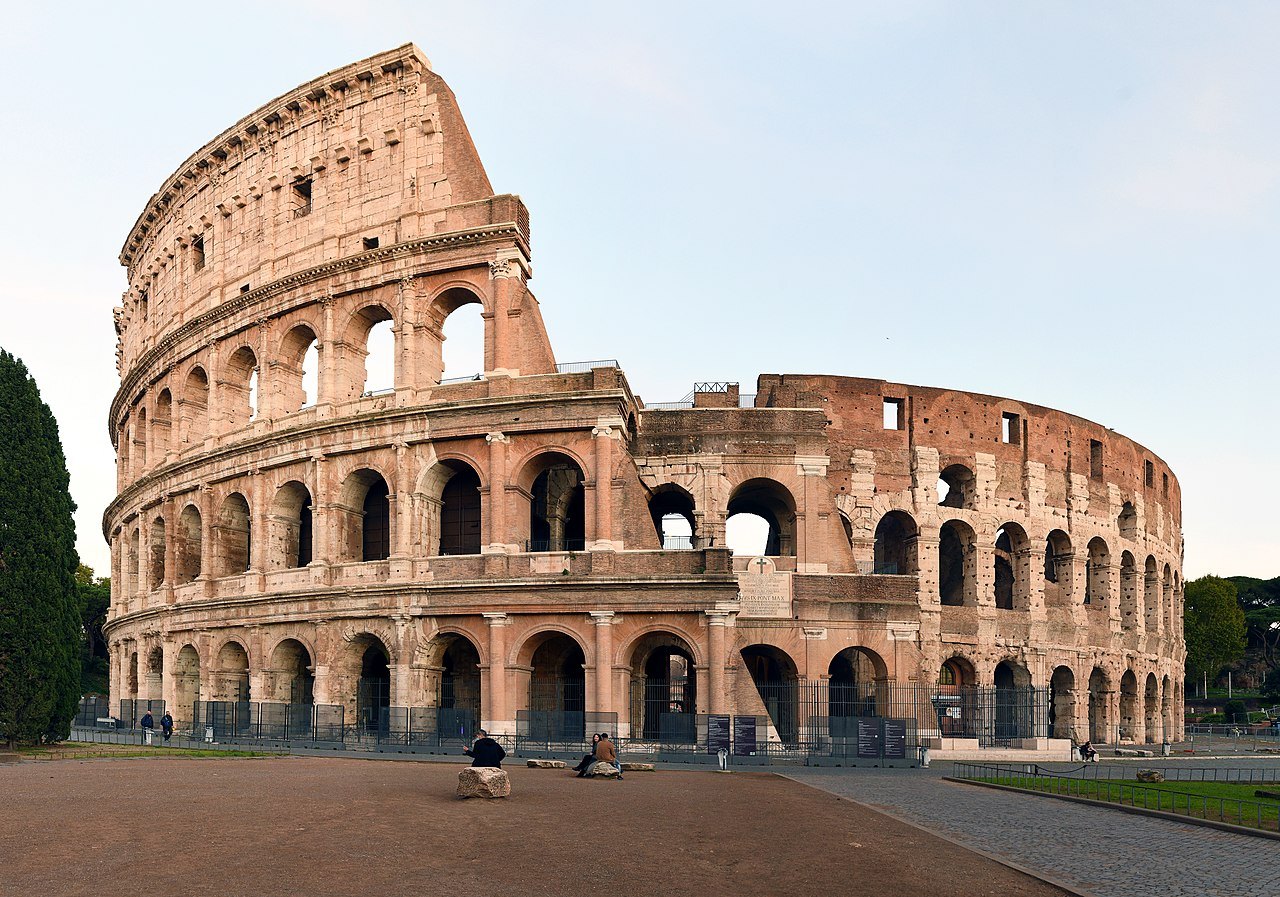
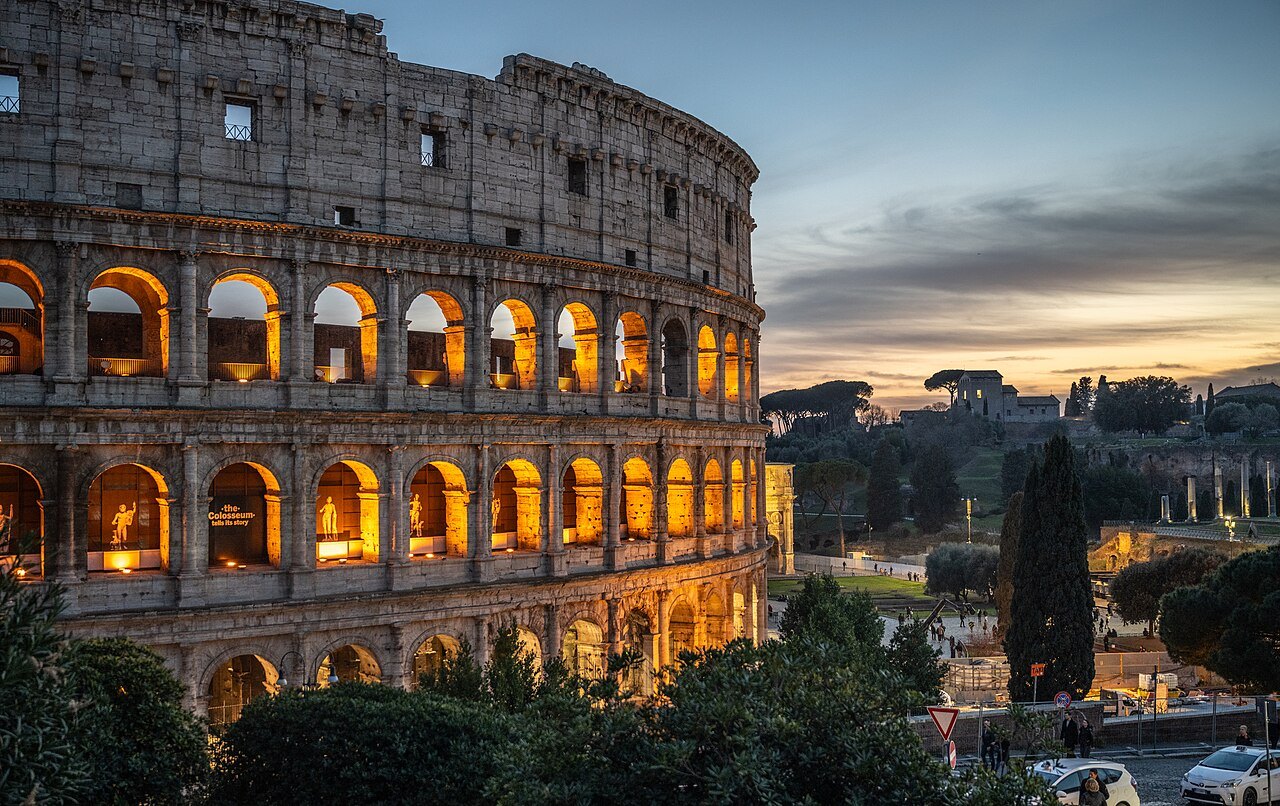
Only the north side of the original outer wall still stands. It shows the whole design: three stories of arcades framed by engaged columns in the three orders, Doric at the bottom, then Ionic, then Corinthian, with a tall attic above decorated with Corinthian pilasters and pierced by small windows. The arches of the upper floors once framed statues. Most of what you walk around elsewhere is in fact the original inner wall, exposed when the outer ring fell.
At each end of the standing section, triangular brick wedges lean against the stone. They are not Roman: they were built in 1807 and 1827 to shore the wall up. The south side, on softer ground, collapsed in the great earthquake of 1349, and its stone was carted off to build palaces, churches and hospitals across the city.
Inside: the tiers and the arena
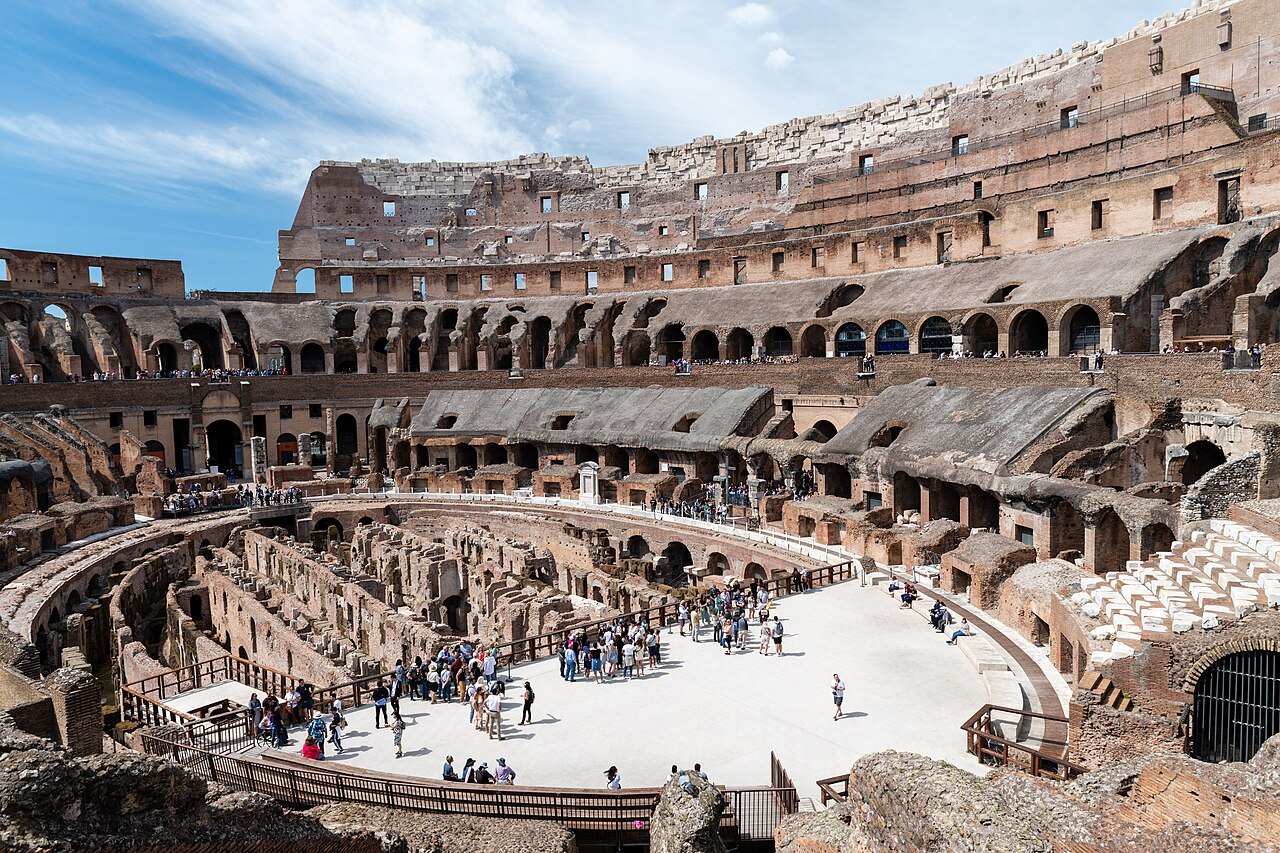
The seating reflected Roman society rank by rank. The emperor and the Vestal Virgins had boxes at the north and south ends, with the best views. Senators sat on a broad podium beside them and brought their own chairs; the names of some fifth-century senators are still carved into the stone. Above them came the knights, then ordinary citizens, rich below and poor above, and at the very top a gallery for the poor, slaves and women, standing room or steep wooden benches.
The arena was about 272 feet by 157 feet, a wooden floor covered in sand, and the Latin word for sand, harena, is where the word arena comes from. Little of the original floor survives. A section has been rebuilt, which lets you stand at arena level and look up at the tiers.
The hypogeum
Under the floor lies the hypogeum, the underground. It was not part of the first building: Domitian ordered it. Its two levels of tunnels and cages held gladiators and animals before the games, and eighty vertical shafts, with elevators, pulleys and hinged platforms, lifted animals and scenery straight into the arena.
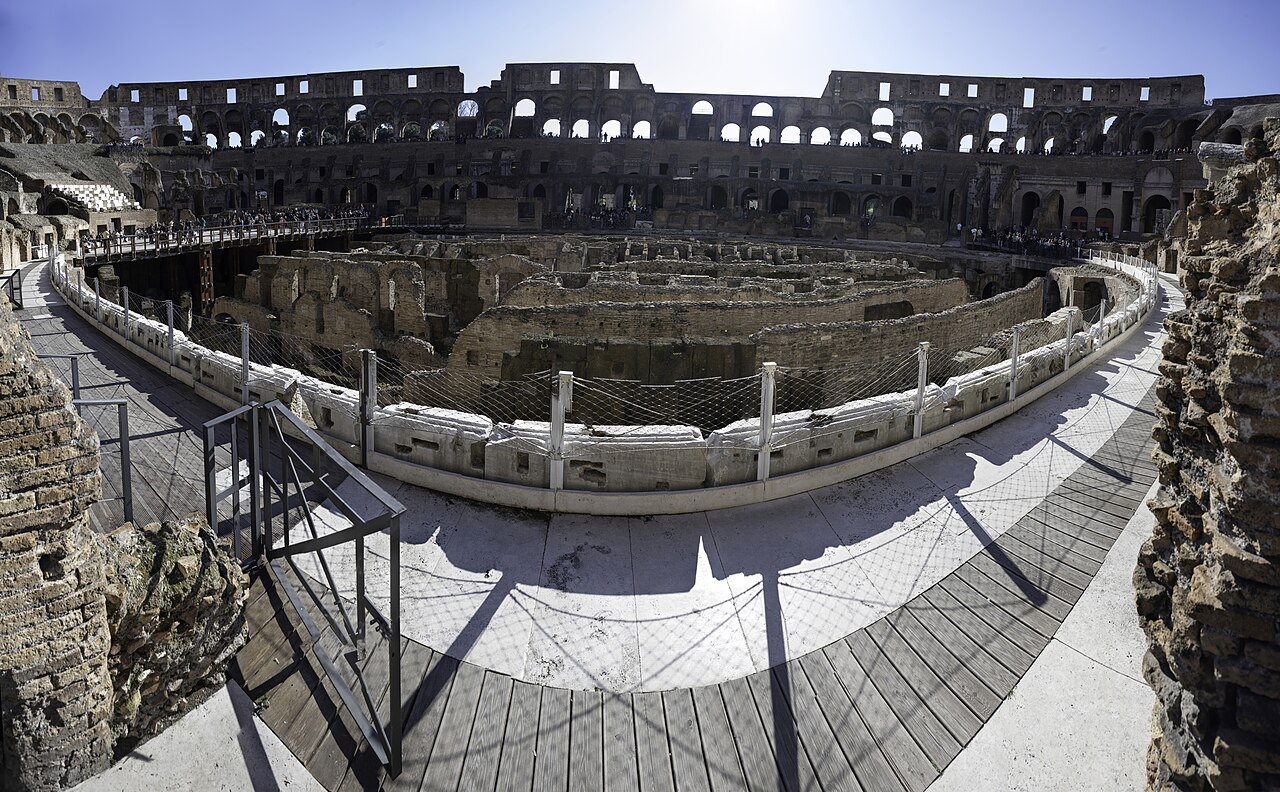
Tunnels connected it to stables and to the gladiators' barracks at the Ludus Magnus to the east, and separate passages let the emperor and the Vestals come and go without crossing the crowds. The underground passages were opened to the public in the summer of 2010, and since 2017 the top two levels of the building can be visited on guided routes.
After the games
By the late sixth century a small chapel had been built into the structure and the arena had become a cemetery. The vaults under the seating were rented out as houses and workshops into the twelfth century. Around 1200 the Frangipani family fortified the building as a castle. A religious confraternity lived in its northern part from 1377 until the early nineteenth century, while the rest was quarried for stone and its marble burned for lime.
In 1749 Pope Benedict XIV forbade its use as a quarry and consecrated it to the Passion of Christ, installing the Stations of the Cross. Later popes cleared the plants that had overgrown it and began the repairs that continue. The first full cleaning and repair of the façade in the building's history was completed in 2016.
How to visit
The Colosseum, the Roman Forum and the Palatine Hill belong to one archaeological park, and its online tickets are sold only on the park's own ticketing website, which also runs a form for reporting resale on unauthorized channels. Tickets carry the visitor's name, and the park allows a name to be changed only once, in a few listed cases and no later than the seventh day before the visit, so enter names carefully. Buy there rather than from resellers, and check which areas a ticket covers: the arena floor, the underground and the upper levels are sold as separate routes. The booking ahead page covers the other timed tickets in the city.
Allow at least an hour and a half for the building alone and more if you add the underground. The Arch of Constantine stands just to the southwest, on the old triumphal route, and the Forum and the Palatine are a few minutes' walk from it, so the three are usually seen together in a long morning. Much of the park is exposed to the sun and its paths are uneven stone.
The arch next door
The Arch of Constantine was commissioned by the Senate to celebrate Constantine's victory over Maxentius at the Milvian Bridge in AD 312 and dedicated in 315. It is the largest Roman triumphal arch, about 69 feet high and 85 feet wide, with three bays, and it spans the Via Triumphalis, the route of victory processions into the city. Much of its sculpture was taken from earlier monuments to Trajan, Hadrian and Marcus Aurelius, with the heads recut as Constantine's.
Myths worth setting aside
The Colosseum is often called the great site of Christian martyrdom, and Benedict XIV declared it sanctified by martyrs' blood. There is no historical evidence for his claim, and no record that anyone suggested it before the sixteenth century. Some Christians were probably executed there as criminals, but many scholars place most martyrdoms at other venues, above all the Circus Maximus, below the Palatine. And the famous prophecy that Rome will stand as long as the Colosseum stands, attributed to the Venerable Bede, almost certainly referred to the colossal statue of Nero, not to the building.
Where to go next
Nearby
- Nearby · X · CampitelliThe Roman ForumA marshy valley between the Palatine and the Capitoline, drained by Rome's kings and built over for a thousand years: temples, arches, basilicas and the Senate house along the Via Sacra, the city's oldest street.Read the page →
- Nearby · X · CampitelliThe Palatine Hill and the Circus MaximusThe centermost of the seven hills, where Rome began and where the emperors lived: the palaces of Augustus, Tiberius and Domitian above, and below them the long green hollow of the Circus Maximus, the city's great racetrack.Read the page →
- Nearby · XXI · San SabaThe Baths of CaracallaThe city's second-largest public baths, begun under Septimius Severus and opened by his son Caracalla in 216: brick halls over a hundred feet high on a site of 62 acres, free to every Roman, in use until the Goths cut the aqueduct in 537.Read the page →