Home · Getting Here
Every way in
Two airports, the stations and the port
Fiumicino
Rome's main airport, about twenty miles from the center. The Leonardo Express runs non-stop from the airport's own station to Termini.
Fiumicino by regional train
The FL1 regional trains link the same airport station with other Rome stations, including Tiburtina.
Taxis at Fiumicino
White cars with a roof sign and a license number, at the Arrivals level of Terminals 1 and 3. A fixed fare set by the city covers the center.
Ciampino
The smaller airport, used by low-cost and charter flights. A shuttle bus meets the train at Ciampino station for Termini.
Roma Termini
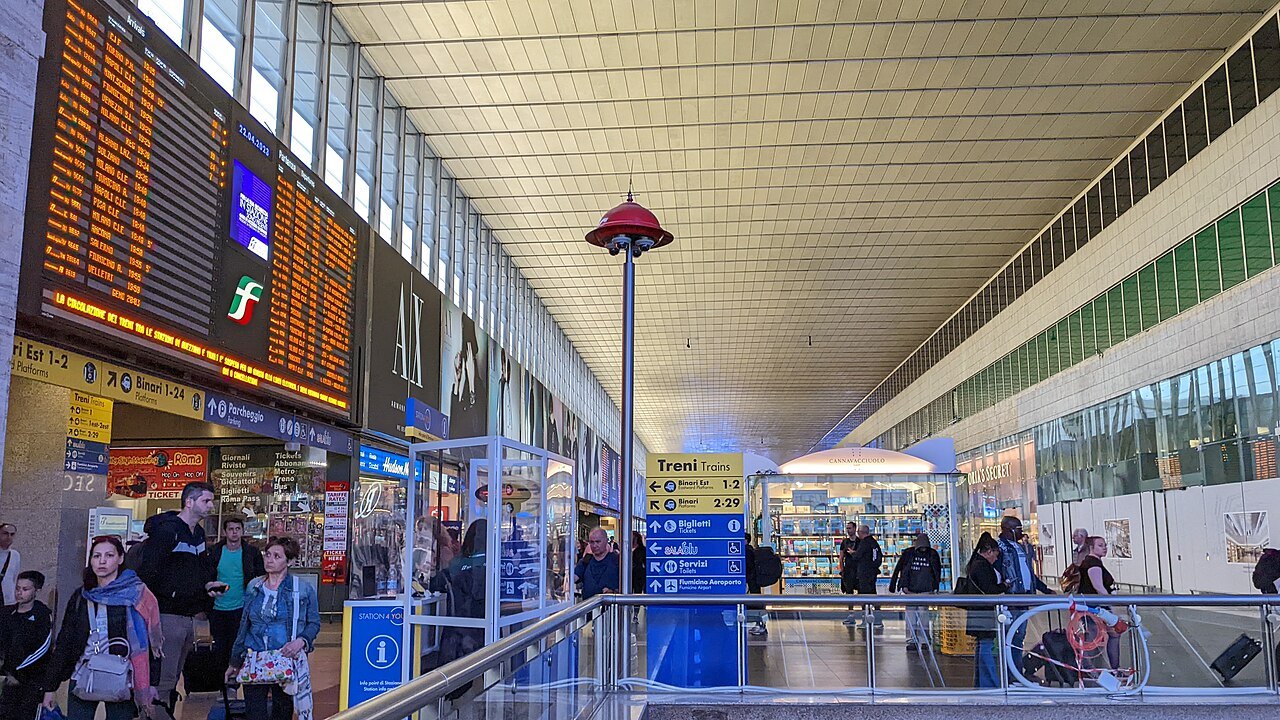
The main station, the busiest in Italy, where Metro lines A and B cross and the city buses start.
Roma Tiburtina
The second station, in the northeast of the city, on Metro line B.
Civitavecchia
The cruise port of Rome, about thirty-seven miles west-northwest, on the old railway to the city.
In full
Getting Here
The shape of arrival
Rome is reached by air, by rail or, for cruise passengers, by sea, and almost every route ends at one place: Roma Termini, the city's main station, beside the Baths of Diocletian. From Fiumicino the airport train runs straight there; from Ciampino a bus and train combination does; and the high-speed trains from the north and south stop there too. Knowing that makes the first hour simple.
Where you stay decides what happens next. Termini is on both Metro lines, and taxis and buses leave from the square in front of it. If your hotel is near the Vatican or in Prati, the Metro's line A takes you there; if it is in Trastevere or Monti, a short taxi ride or a tram may be easier. The getting around page explains the Metro, buses and trams.
Fiumicino, the main airport
Leonardo da Vinci–Fiumicino is Rome's main airport and the busiest in Italy, on the coast at Fiumicino about twenty miles from the city. It opened in 1961 to replace Ciampino as the main airport, and it is the hub of Italy's flag carrier; the remains of Roman ships were found during its construction. It is managed by Aeroporti di Roma, whose website is the place to check terminals and transport.
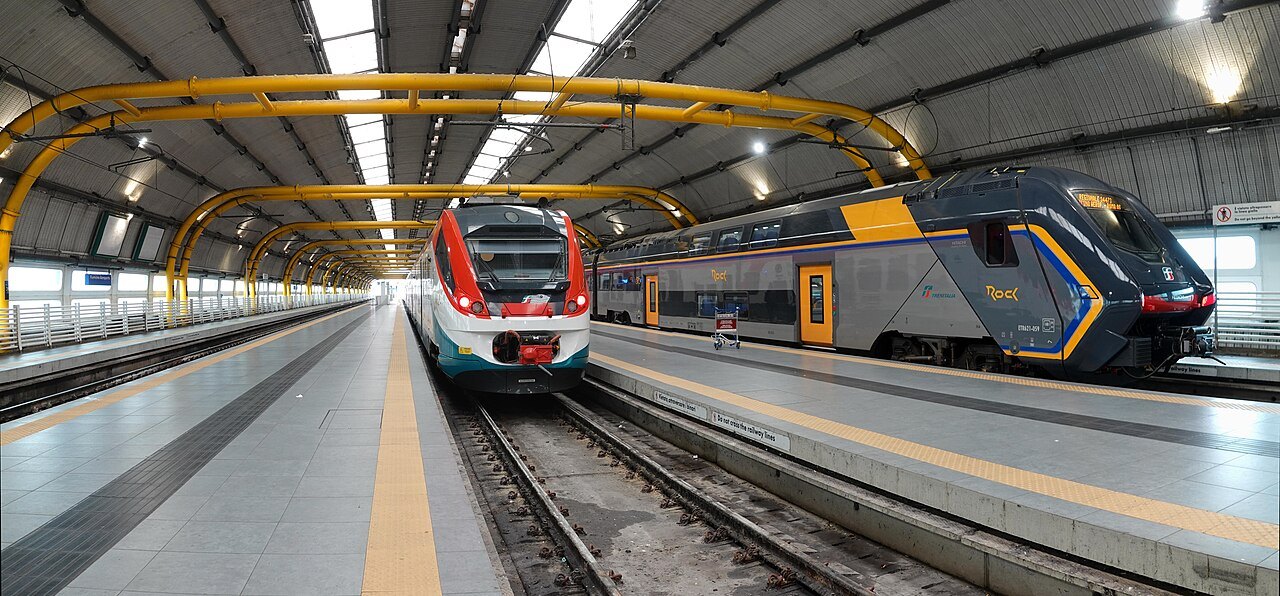
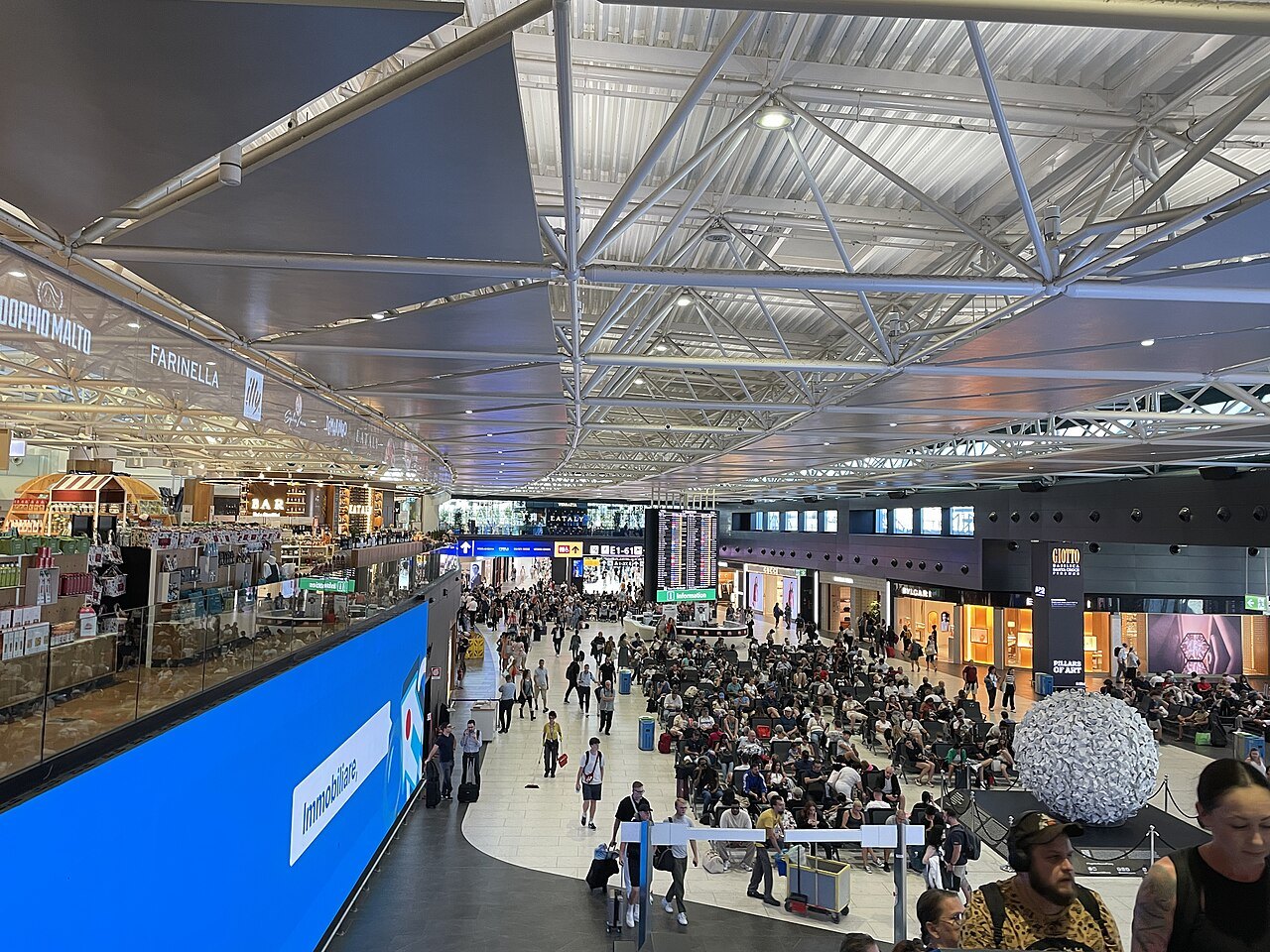
The airport has its own railway station, inside the airport area close to the terminals, reached by following the signs. Two kinds of train leave from it. The Leonardo Express runs non-stop to Roma Termini in thirty-two minutes, with departures every fifteen minutes through the day. The FL1 regional trains call at other Rome stations instead, including Tiburtina, and run less often at weekends and on holidays. Tickets are sold on Trenitalia's website, at the station ticket offices, at self-service machines in the airport and the station, and at authorized travel agencies and newsstands.
Taking a taxi from Fiumicino
Taxis wait at the Arrivals level of Terminals 1 and 3. Official Rome taxis are white, with a TAXI sign on the roof, the city's symbol on the front doors and a license number shown on the doors, on the back and inside the car. A fixed fare set by the municipality applies to the city center within the Aurelian Walls, valid in both directions and including all supplements; for other destinations the meter and the city's fare table apply, and it is wise to confirm the expected fare with the driver before setting off.
The airport operator is blunt about the risk: any other vehicle may be driven by someone without a taxi license and may charge more, and visitors should be wary of anyone inside the airport offering a ride into the city. A chauffeured car, called NCC in Italy, must be booked in advance and is not available at the taxi rank.
Ciampino, the smaller airport
Rome's second airport, Ciampino, lies about seven and a half miles southeast of the center, just outside the ring road. It opened in 1916, making it one of the oldest airports still in service; the airship Norge left from here in 1926 on the first flight to reach the North Pole. Today it serves low-cost and charter flights and is also a military airfield.
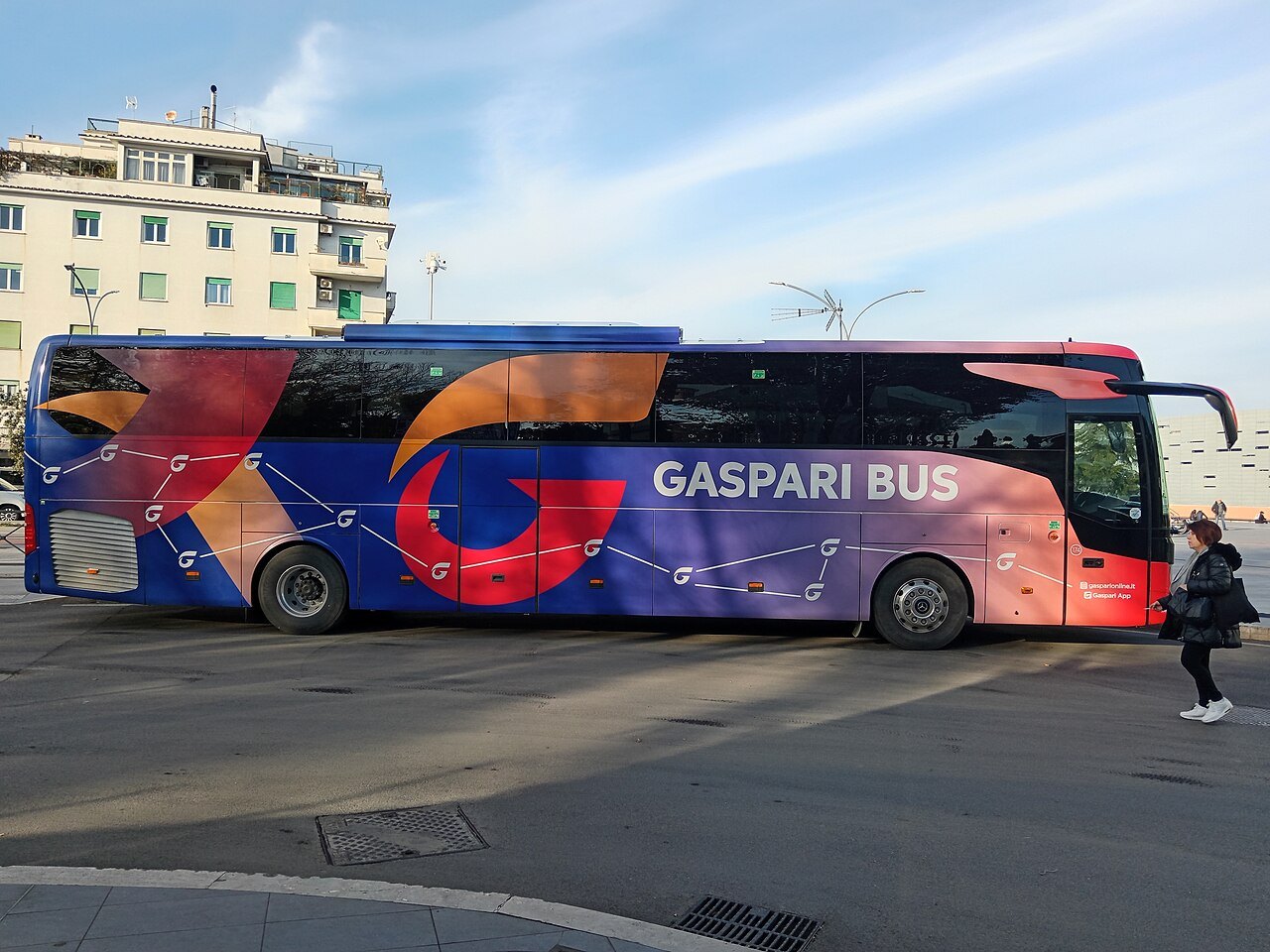
Ciampino has no station of its own. Trenitalia's Ciampino Airlink combines a shuttle bus, which leaves from the square opposite the airport entrance, with a train from Ciampino station to Termini; the bus stop is a few yards from the airport entrance, and the bus makes an intermediate stop on its way to the station.
The great stations
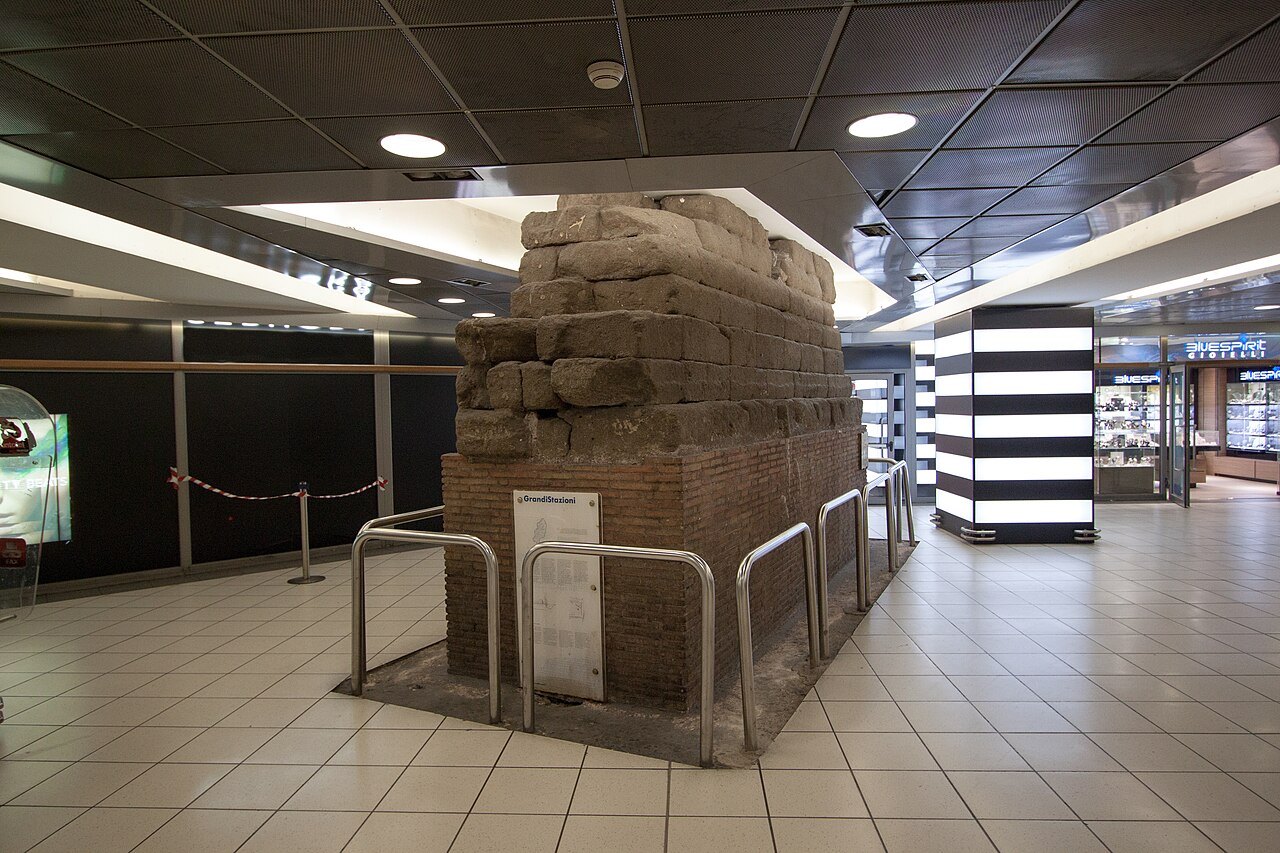
Roma Termini is Italy's busiest station and one of the largest in Europe, with thirty-two platforms and some 850 trains a day, and services to every major Italian city. Its name comes from the ancient Baths of Diocletian, the thermae across the street. The long, low modern front was designed after a competition of 1947 and opened in 1950, and outside the station a stretch of the Servian Wall of the fourth century BC still stands. Metro lines A and B cross beneath it, and the main city bus station fills Piazza dei Cinquecento in front.
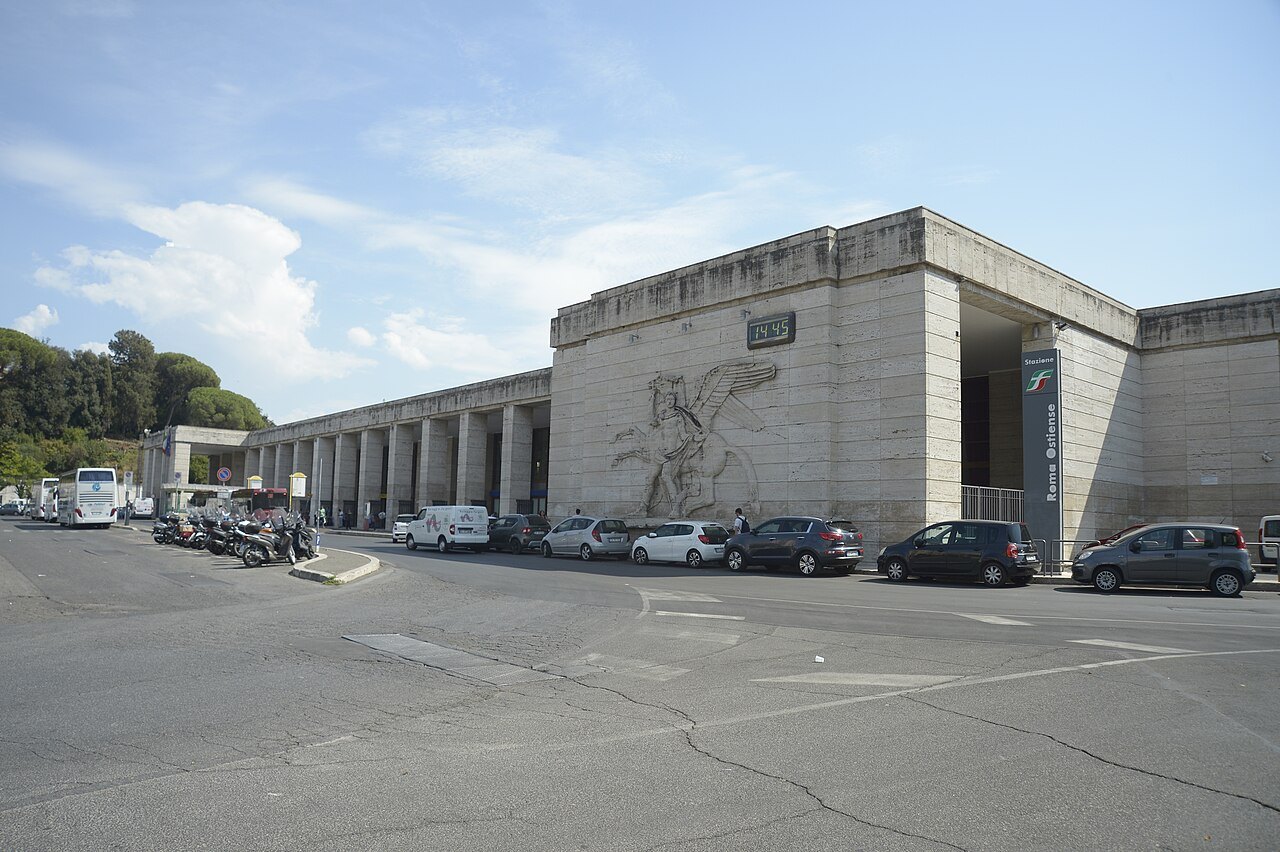
Roma Tiburtina, in the northeast of the city, is the second station, opened in 1866 and rebuilt between 2007 and 2011, with its own stop on Metro line B. Some high-speed trains call here as well as, or instead of, at Termini, so check which station your ticket names. Roma Ostiense, in the south, is linked to the Piramide stop on line B and to the suburban railway to the sea at Ostia.
By train from the rest of Italy
Rome sits in the middle of Italy's high-speed network, on the line that runs from Milan through Bologna and Florence to Rome, Naples and Salerno. The first stretch of it, the Rome–Florence direttissima, was begun in 1970, the first high-speed line in Italy and in Europe. Arriving by train from Florence, Naples or Milan brings you into the center without an airport transfer at all.
Buy tickets from the railway companies' own websites or the machines in the stations. High-speed and intercity trains need a seat reservation, even for holders of rail passes.
Arriving by sea
Cruise ships dock at Civitavecchia, a port on the Tyrrhenian Sea about thirty-seven miles west-northwest of Rome, often called the Port of Rome. It was built for the emperor Trajan around 106, to designs by Apollodorus of Damascus, and it is Italy's busiest cruise port and one of the busiest in the world, with its own cruise terminal. The railway between Civitavecchia and Rome is one of the oldest in the city: it was one of the three lines that met at the first Termini in 1863.
Arriving well
Plan the last mile before you land. Know which station or airport you arrive at, how you will reach your hotel from it, and whether you arrive after the trains stop, when a taxi from the official rank is the simplest answer. Keep the fixed-fare rule in mind at Fiumicino, and ignore anyone offering a ride inside the terminal.
If you arrive with a free afternoon, the neighborhood around Termini has its own sights: Santa Maria Maggiore stands on the Esquiline a few streets away.
Seen on the way
More photographs
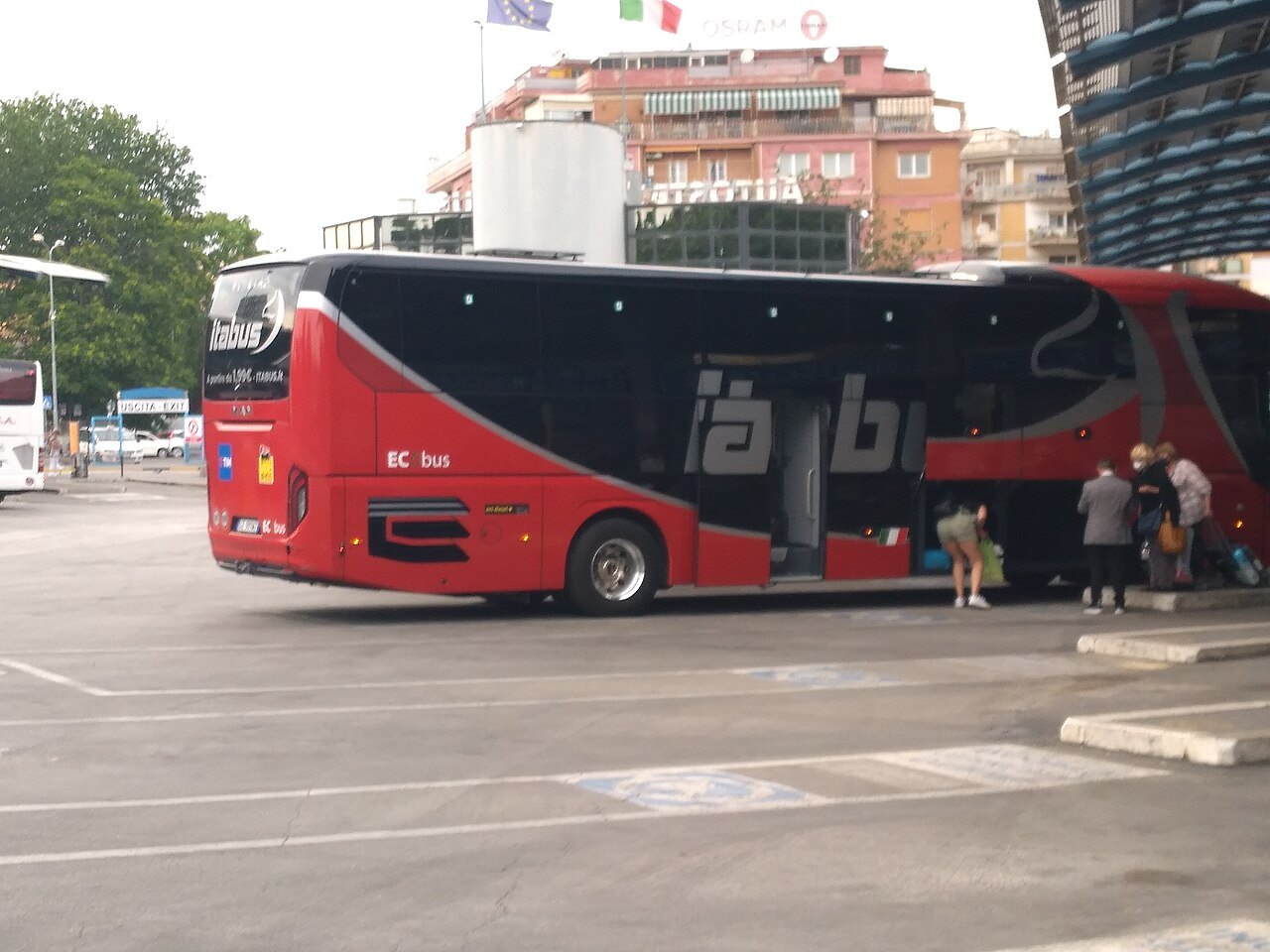
A red long-distance coach at a bus terminal, passengers loading luggageCAPTAIN RAJU, Wikimedia Commons, CC BY-SA 4.0 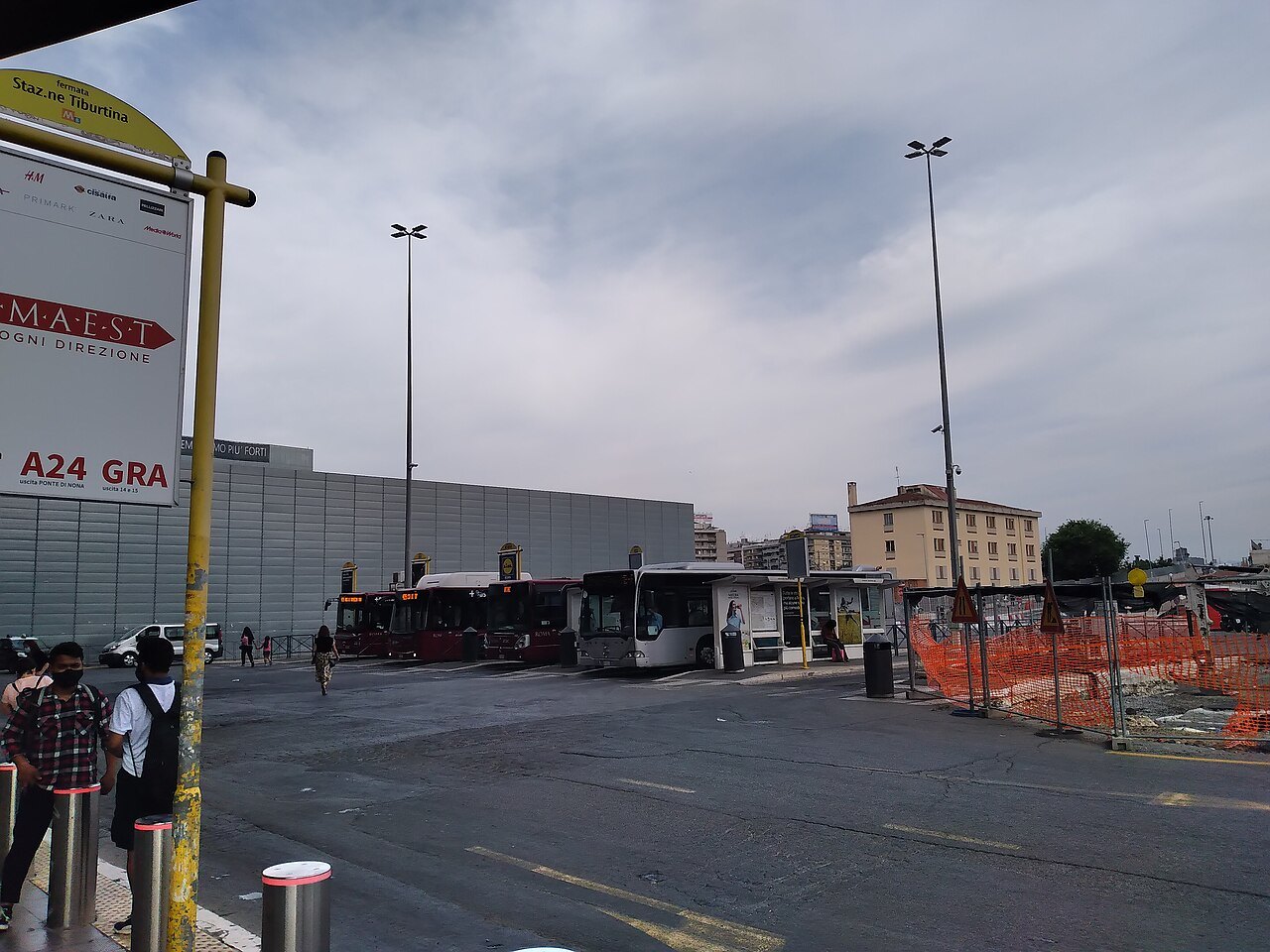
The bus terminus at Tiburtina station, buses parked beyond a wide roadCAPTAIN RAJU, Wikimedia Commons, CC BY-SA 4.0 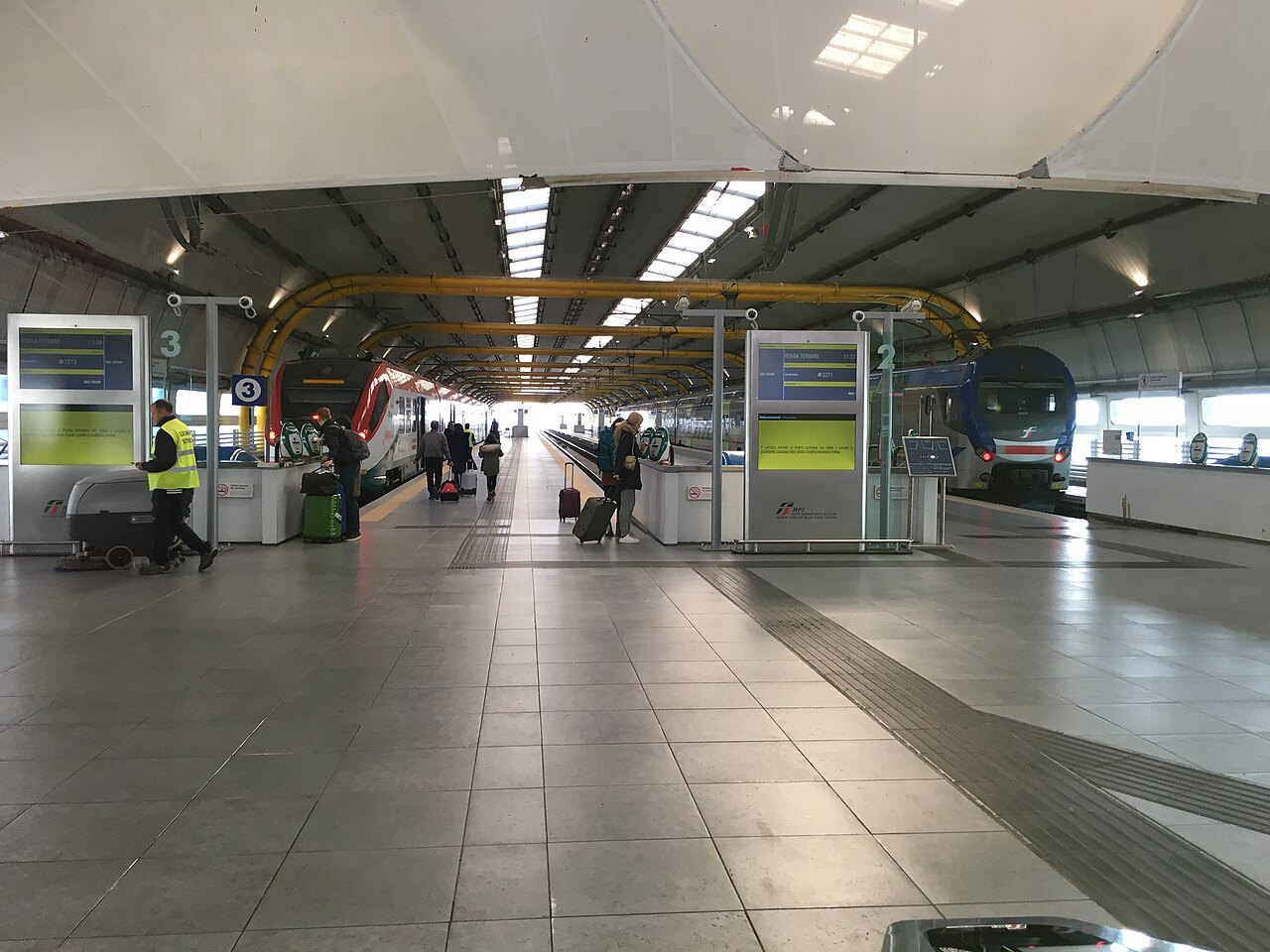
The concourse of the Fiumicino airport railway station, the tracks beyond the ticket barriersCyril Yoshi, Wikimedia Commons, CC BY-SA 4.0