Home · Sights · The Palatine Hill and the Circus Maximus
What you are looking at
The Palatine Hill and the Circus Maximus
X · Campitelli
- IThe Palace of DomitianThe imperial palace that dominates the hilltop, with its state rooms and private wing side by side.
- IIThe houses of Augustus and LiviaThe first emperor's home and the house of his wife, known for their painted walls.
- IIIThe Farnese GardensSixteenth-century gardens laid out over the ruins of the palace of Tiberius.
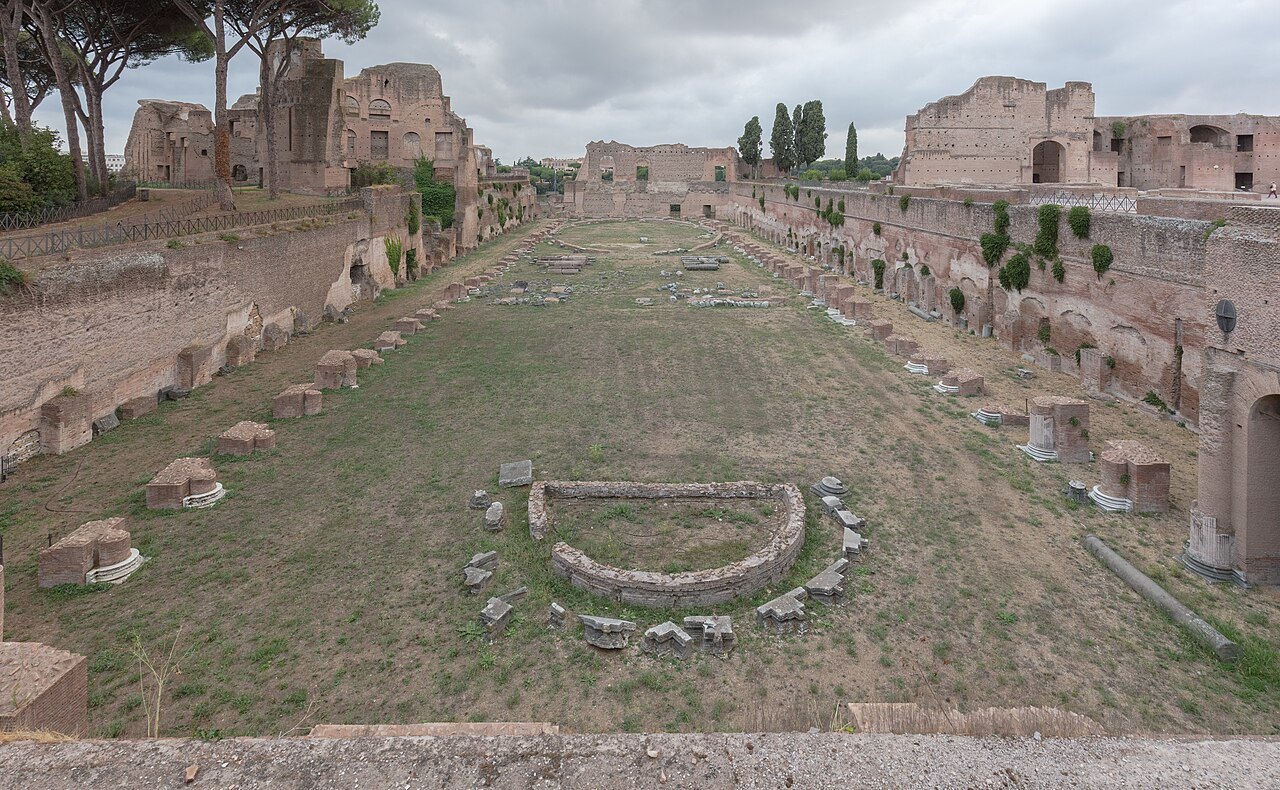
- IVThe Palatine stadiumA long sunken garden in the form of a racetrack, inside Domitian's palace.
- VThe Palatine MuseumFinds from the excavations, in what survives of a nineteenth-century villa and convent.
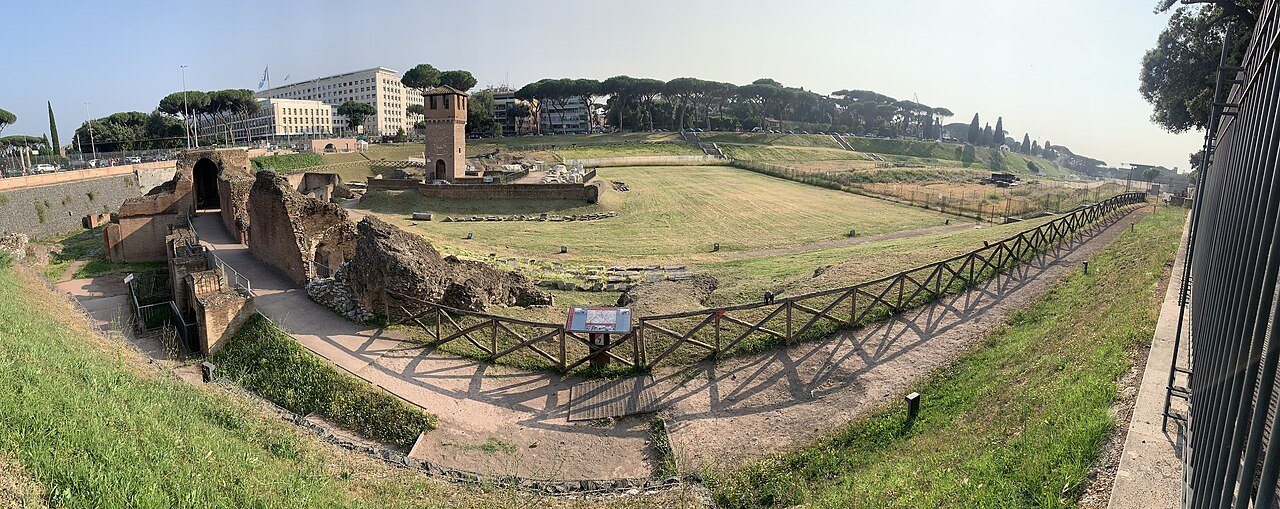
- VIThe Circus MaximusThe valley below the hill, once a racetrack for 150,000 people, now a public park.
The sight in full
Reading the place
Why it matters
The Palatine is the centermost of Rome's seven hills and one of the oldest parts of the city. Excavations show people living here from the tenth century BC, and huts found in 1907 and 1948 date from the centuries when the city was founded. It has been called the first nucleus of the Roman Empire. When Augustus made his home here, the hill became the preserve of the emperors, and its name, Palatium, is the origin of the English word palace.
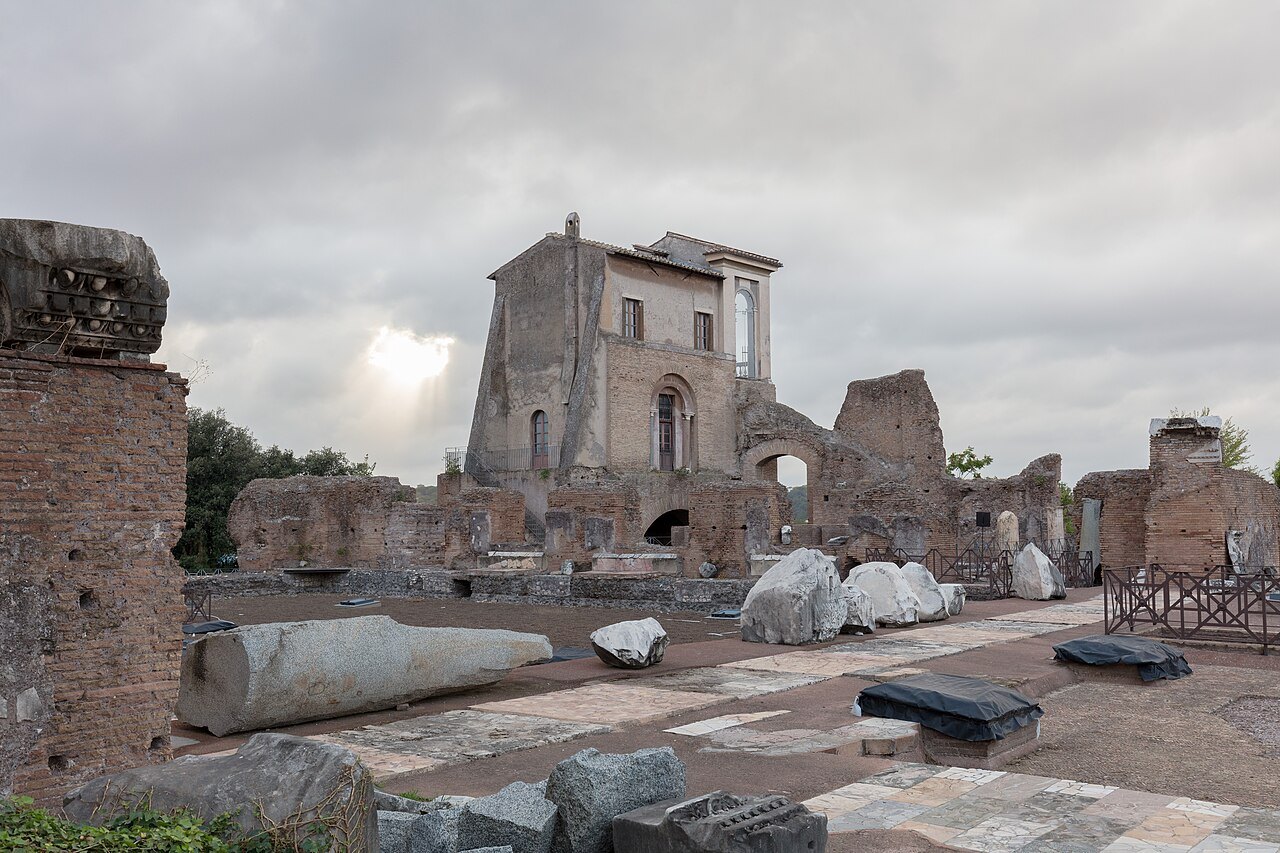
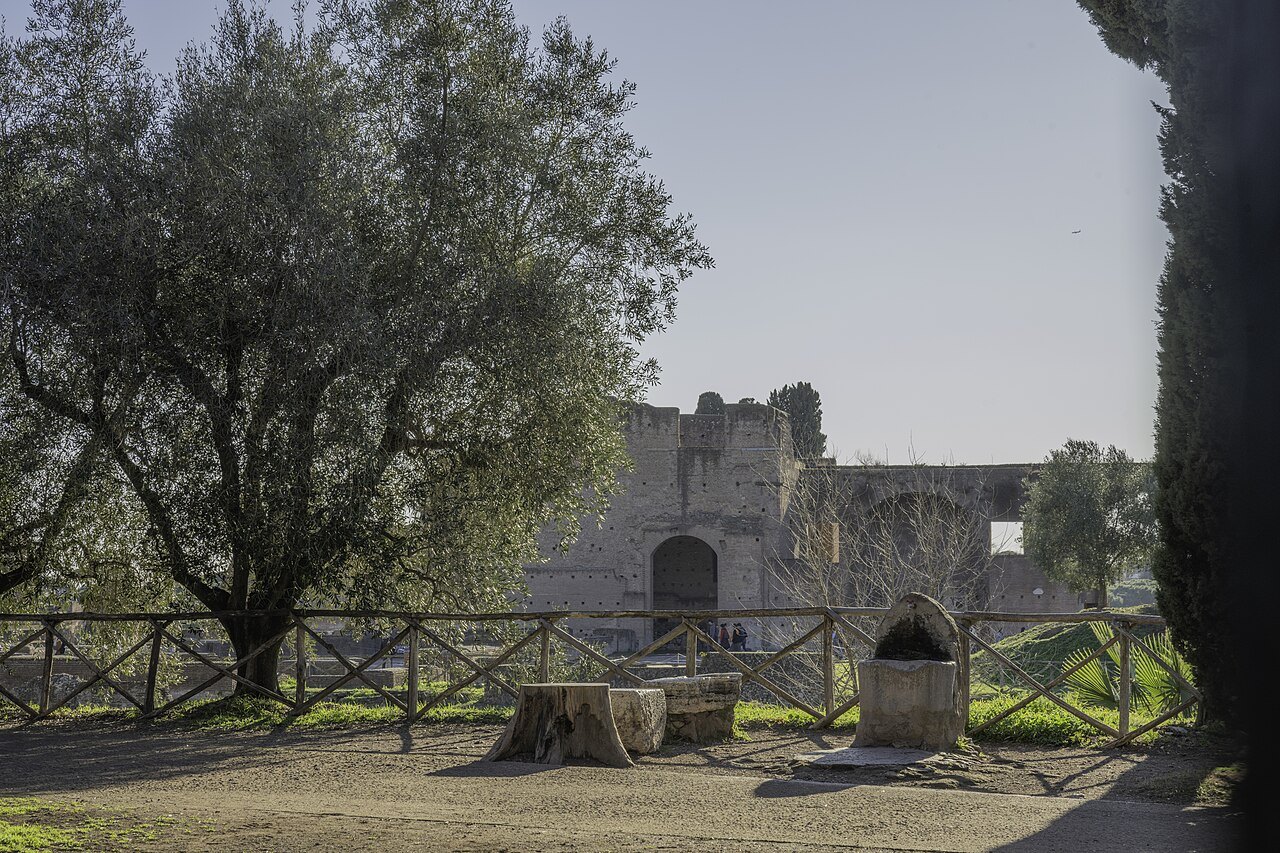
Today the whole hilltop is an open-air museum of ruins, pines and gardens. It rises straight from the Roman Forum on one side and falls to the Circus Maximus on the other, and it belongs to the same archaeological park as the Forum and the Colosseum.
The hill of Romulus
In Roman myth the Palatine held the Lupercal, the cave where the she-wolf fed the twins Romulus and Remus, and it was here that the grown Romulus chose to found his city and killed his brother. Another legend says Hercules struck the monster Cacus so hard that his club split the southeast corner of the hill, where a stair later carried Cacus's name.
The Romans took their own beginnings seriously. In Augustus's own reign a sort of archaeological dig on the hill turned up Bronze Age pottery and tools, and he declared the spot the original town of Rome. Modern excavators have confirmed a Bronze Age settlement older than the traditional date of the founding. The hill once had two summits with a hollow between them, the higher called Palatium and the lower Germalus, and the ancient city plan known as the Forma Urbis gives it a circuit enclosing about 63 acres. In 2006 archaeologists announced the discovery beneath the hill of a very ancient aristocratic house, which they believe was the birthplace of Augustus, the first emperor.
The emperors' palaces
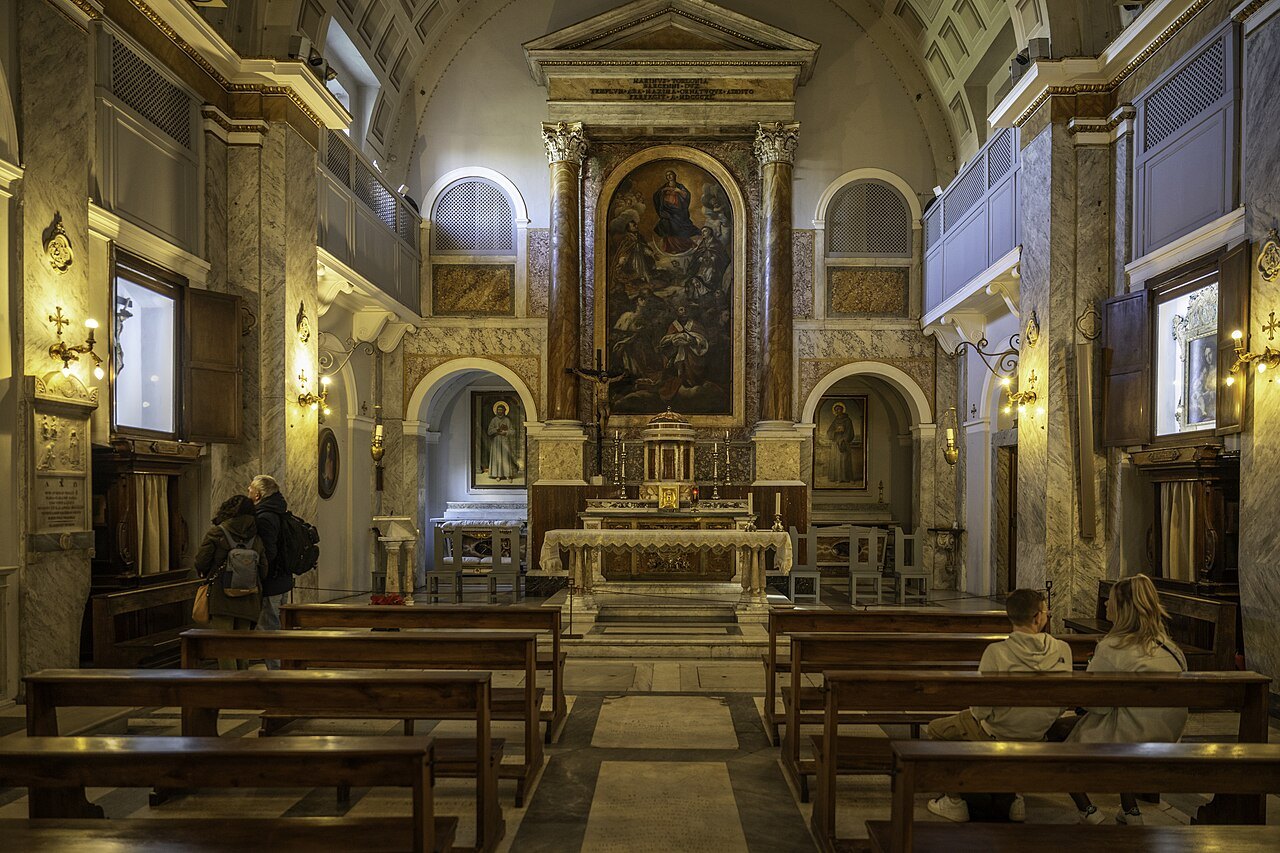
Under the Republic the hill was a neighborhood of the rich. From 27 BC Augustus built his house here, and with him a temple to Apollo, and the hill gradually became the exclusive domain of emperors. The ruins of the palaces of at least Augustus, Tiberius and Domitian can still be seen.
The House of Livia, the wife of Augustus, is known for its frescoes, though it is attributed to her only on the evidence of a name on a lead pipe and its closeness to the House of Augustus. The Domus Tiberiana, the house of Tiberius, was later absorbed into Nero's first palace. After the Great Fire of 64 destroyed that palace, Nero replaced it with the far larger Domus Aurea.
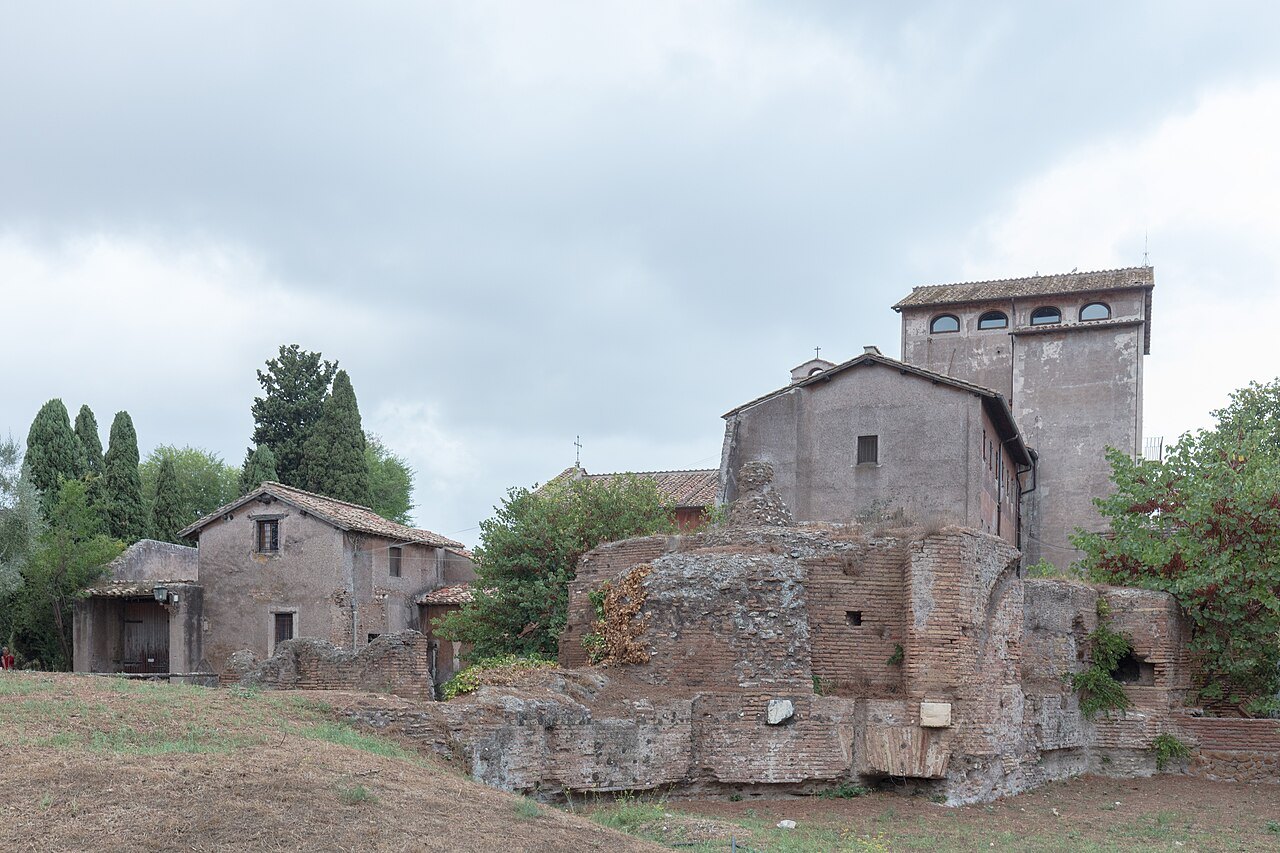
Dominating the hilltop now is the Palace of Domitian, built largely in his reign over the earlier buildings of Nero, with its public wing, the Domus Flavia, and its private one, the Domus Augustana. Inside it lies the Palatine stadium, a long sunken court in the shape of a racetrack. Later emperors kept adding to it, above all the Severan family, whose Domus Severiana reaches out over the southern slope toward the Circus.
Gardens and a vanished villa
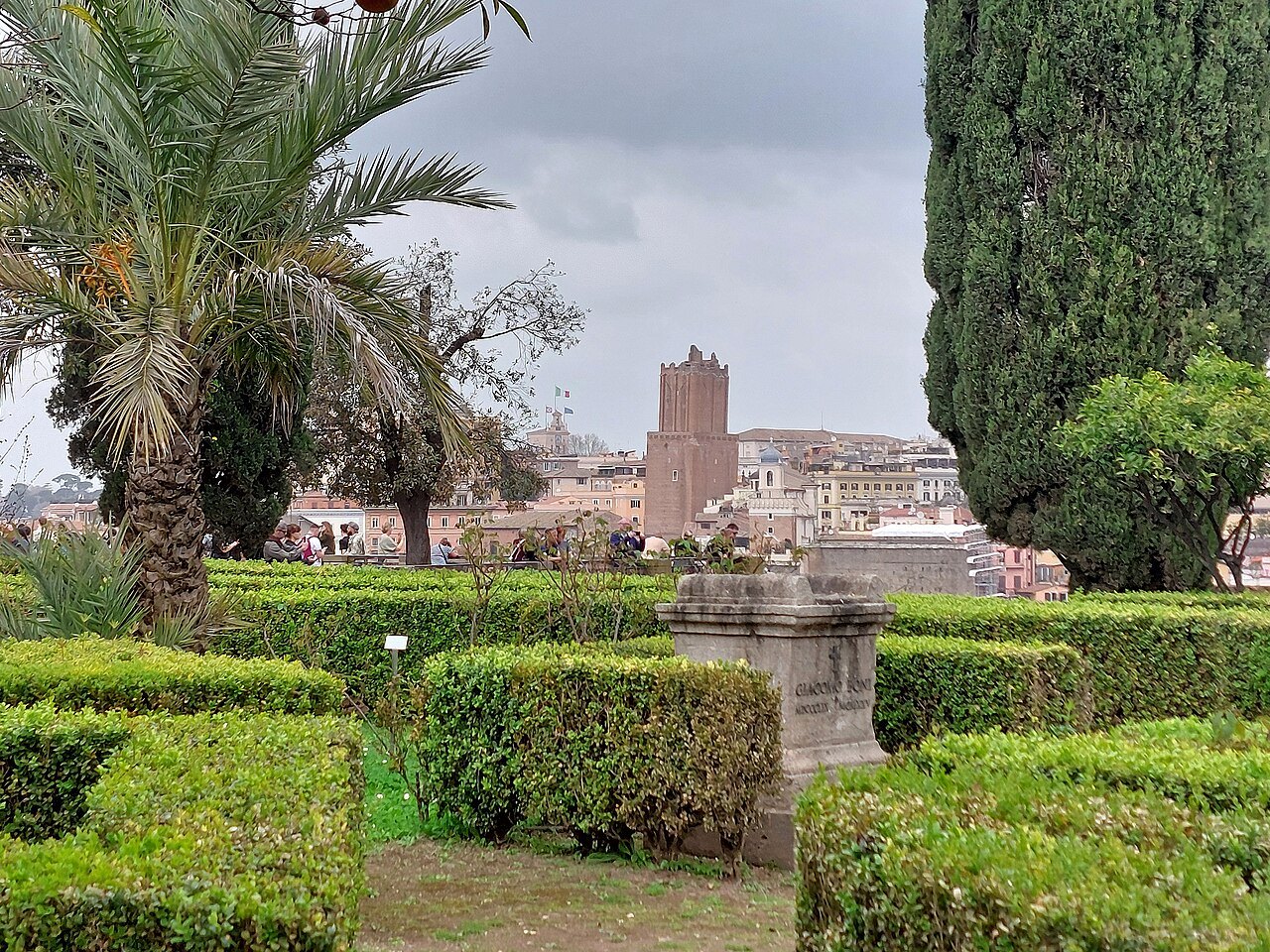
From the sixteenth century the Farnese family owned the hill, and their gardens, the Orti Farnesiani, still partly survive above the remains of the house of Tiberius, with terraces that look down over the Forum.
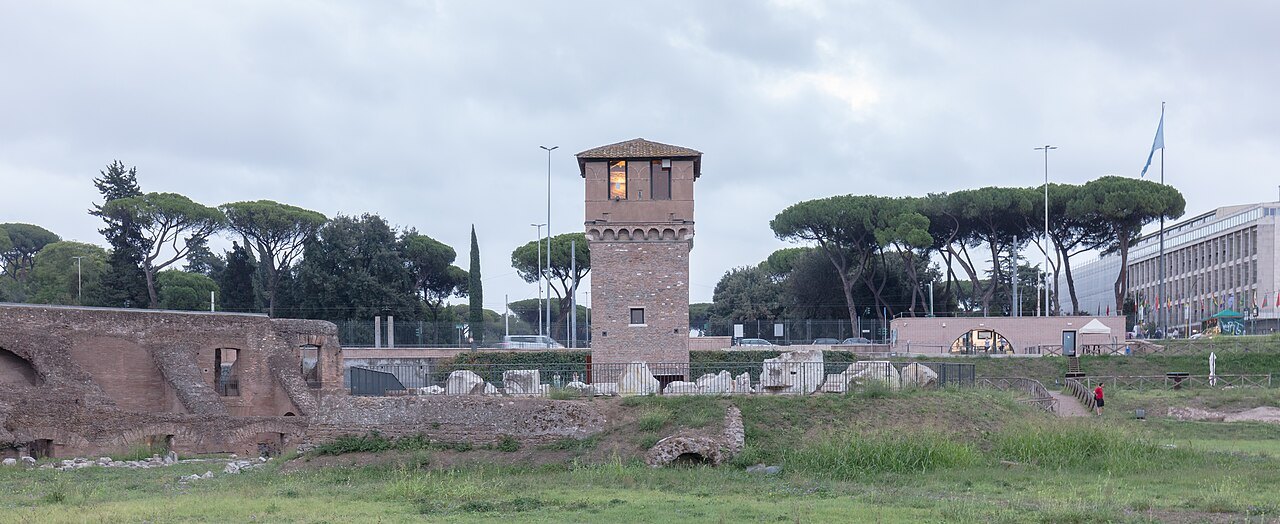
At the top of the hill, between the two wings of Domitian's palace, a sixteenth-century villa was bought around 1830 by a Scot, Charles Mills, who turned it into an elaborate neo-Gothic house. It became a convent at the end of the nineteenth century and was partly demolished from 1928 for the excavations. The Palatine Museum now fills what is left, with finds from the digs on the hill.
The Circus Maximus
Below the southern side of the hill, in the valley between the Palatine and the Aventine, lies the Circus Maximus, the first and largest stadium of ancient Rome. It was a chariot-racing track about 2,037 feet long and 387 feet wide, and it could hold over 150,000 spectators; in its full form it became the model for circuses across the empire. Roman tradition traced its first games to the last kings, the Tarquins.
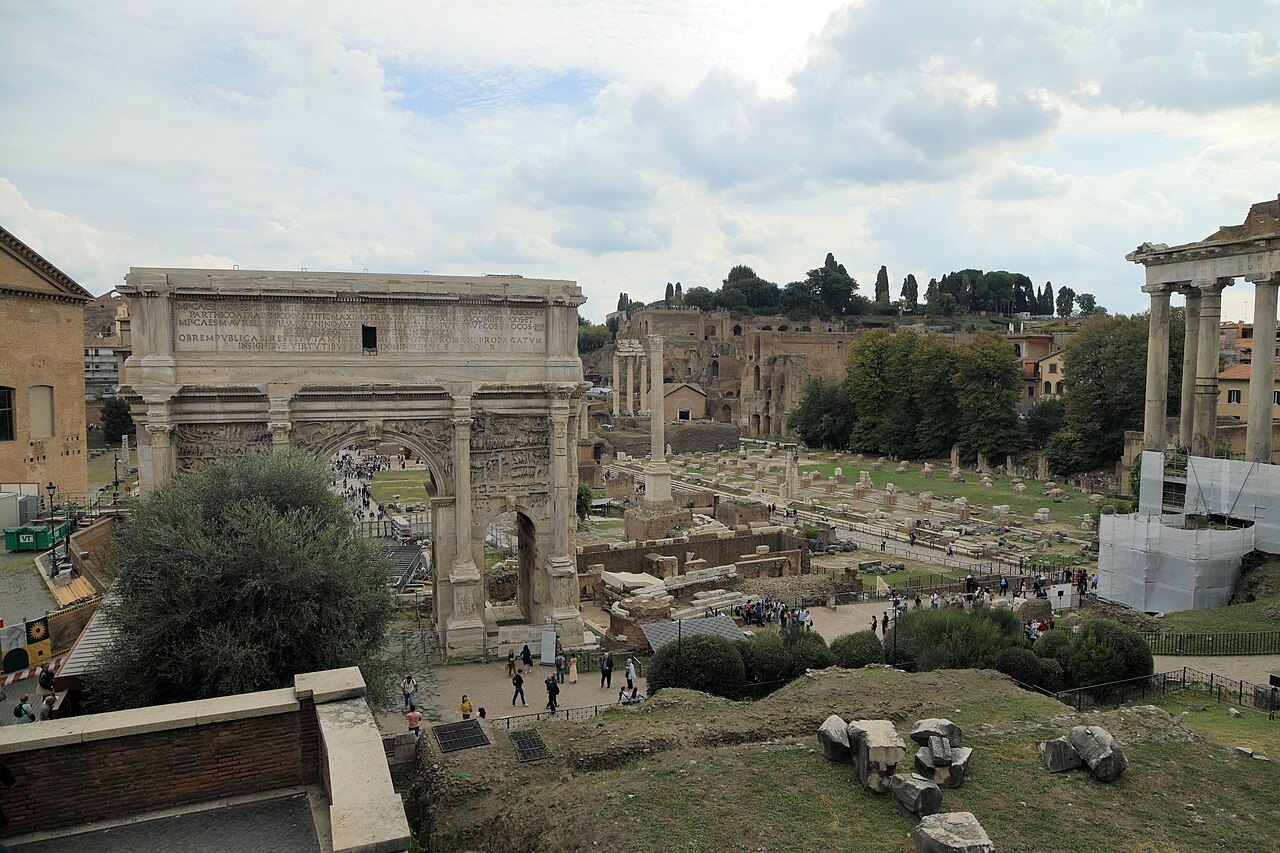
Races, beast hunts, athletics and gladiator fights were all held here during the great public games. The last known beast hunt took place in 523 and the last known races in 549. Augustus set up Rome's first obelisk on its central barrier, brought from Egypt; it now stands in Piazza del Popolo. The site is a public park today, an open oval of grass where the shape of the track is still easy to read from the hill above.
How to visit
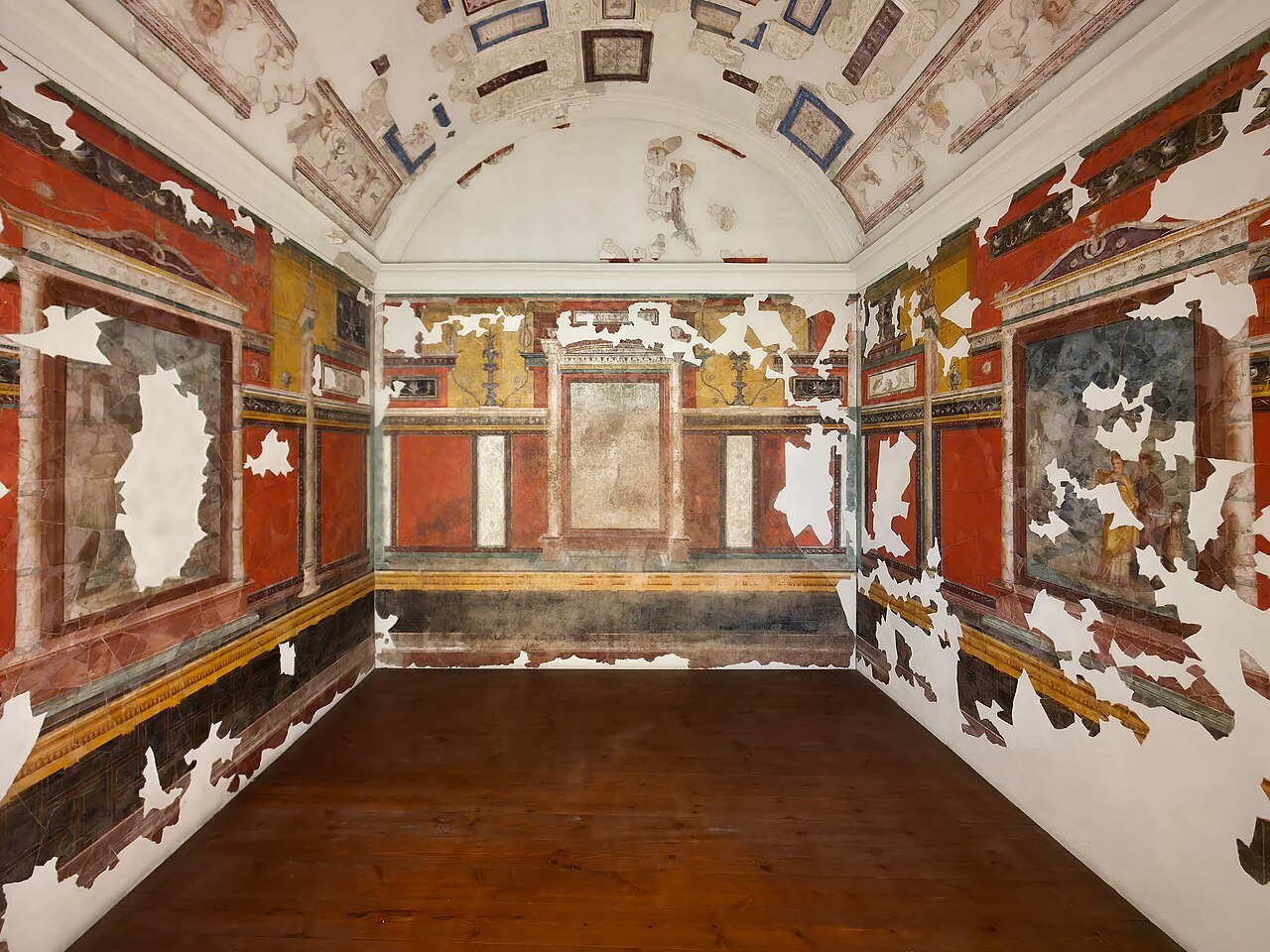
The Palatine is entered on the same ticket system as the Forum and the Colosseum, bought on the archaeological park's official ticketing site; the booking ahead page explains it. Most visitors come up from the Forum and cross the hill, and the two together deserve a long morning.
The hill is greener and quieter than the Forum, with shade under the pines. Paths climb and descend, and much of the ground is ancient paving or gravel. The Circus Maximus below is a public park and needs no ticket.
Myths worth setting aside
The cave of the she-wolf is part of the Palatine's story, but no visitor walks into it. And the House of Livia may not be Livia's at all: the name rests on a single inscription on a water pipe and on the house's position beside that of Augustus.
Where to go next
Nearby
- Nearby · X · CampitelliThe Roman ForumA marshy valley between the Palatine and the Capitoline, drained by Rome's kings and built over for a thousand years: temples, arches, basilicas and the Senate house along the Via Sacra, the city's oldest street.Read the page →
- Nearby · XIX · CelioThe ColosseumBegun under Vespasian in 72 and opened under his son Titus in AD 80 on the site of Nero's private lake, the largest amphitheater ever built still stands at the center of Rome, three tiers of arches and an attic high.Read the page →
- Nearby · XXI · San SabaThe Baths of CaracallaThe city's second-largest public baths, begun under Septimius Severus and opened by his son Caracalla in 216: brick halls over a hundred feet high on a site of 62 acres, free to every Roman, in use until the Goths cut the aqueduct in 537.Read the page →