Home · Sights · The Capitoline Hill and its Museums
What you are looking at
The Capitoline Hill and its Museums
X · Campitelli
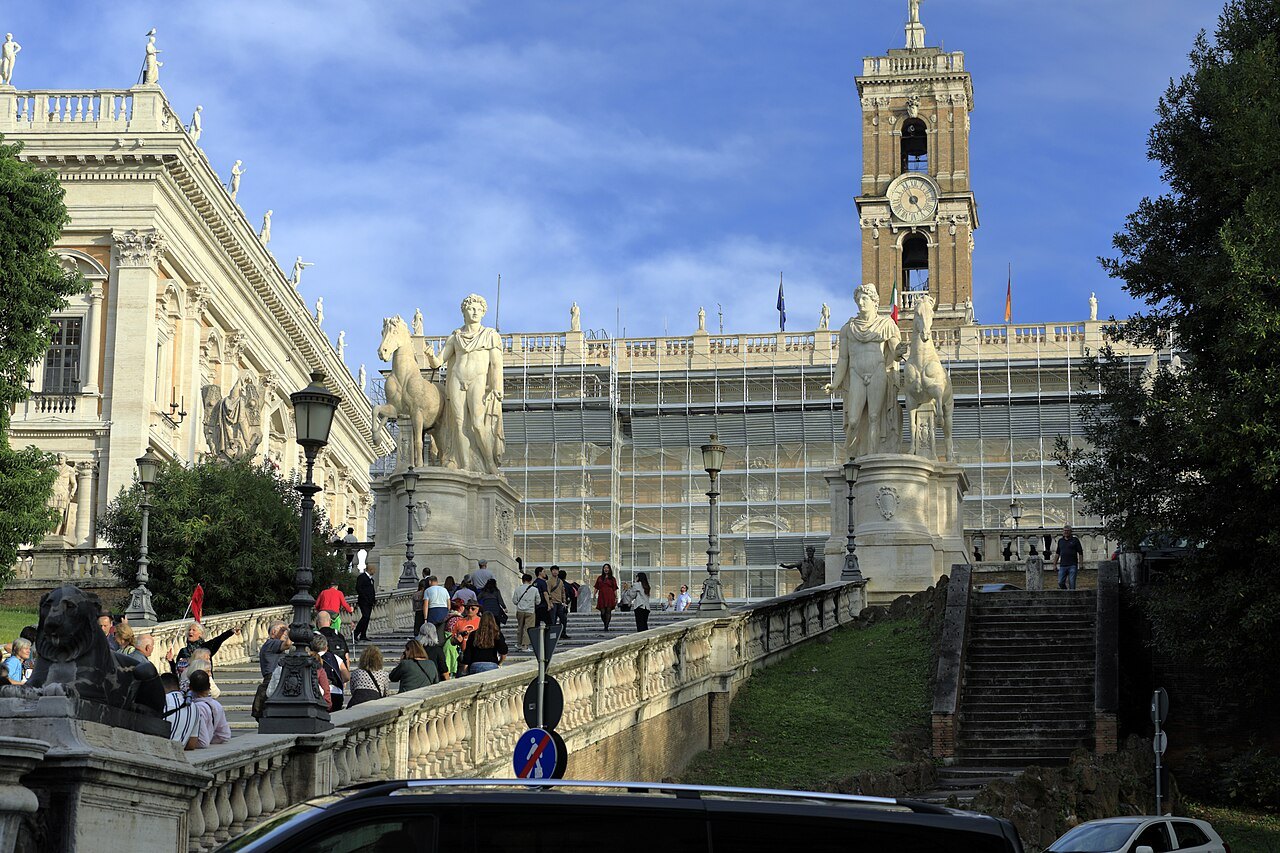
- IThe CordonataMichelangelo's broad ramped stair, gentle enough to ride up, with basalt lions at its foot.
- IIThe squareAn oval of geometric paving between three palaces, laid to Michelangelo's design in 1940.
- IIIMarcus AureliusThe gilded bronze horseman; the original is inside, a copy stands in the square.
- IVThe Palazzo dei ConservatoriThe courtyard with the colossal head of Constantine, and the frescoed rooms upstairs.
- VThe Palazzo NuovoRooms of Roman sculpture, among them the Dying Gaul.
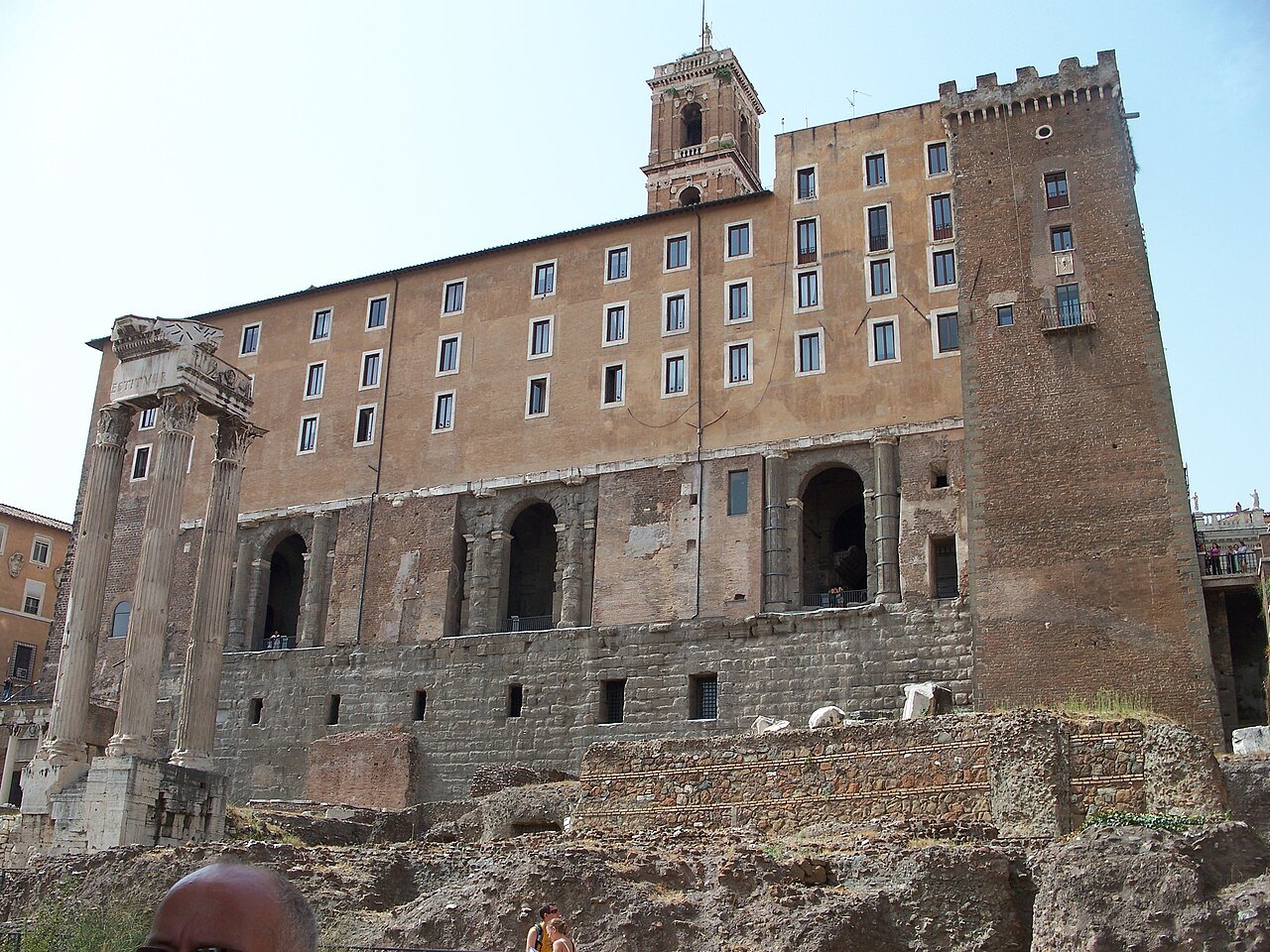
- VIThe TabulariumThe ancient records office under the city hall, reached from the museums' underground gallery.
The sight in full
Reading the place
Why it matters
The Capitoline Hill rises between the Roman Forum and the Campus Martius. Since the Middle Ages the square on its summit, the Piazza del Campidoglio, has been the seat of the city's civil government: the Palazzo Senatorio at its head is Rome's city hall. It grew from a fortress of the Corsini family built on the ancient ruins, which the Roman people took over in 1114 as the seat of the city's senate and enlarged in the fourteenth century; the open ground in front, where the people gathered, was flanked by the headquarters of the captains of the city militia.
The two palaces facing each other across the square hold the Capitoline Museums, dedicated above all to the art and history of ancient Rome. Their story begins in 1471, when Pope Sixtus IV gave the people of Rome a group of ancient bronzes kept until then at the Lateran, among them the she-wolf. In 1734 Pope Clement XII opened the collection to the public, which makes it one of the earliest museums in the world open to everyone.
Michelangelo's square
Before the Renaissance the hilltop was a neglected clearing, known as the goat hill because goats grazed there, with two crumbling medieval buildings set at an awkward angle. Pope Paul III wanted a symbol of the new Rome to impress the emperor Charles V and commissioned Michelangelo to give the hill order. Michelangelo's first designs date to 1534, and between 1534 and 1538 he redesigned the square in every detail.
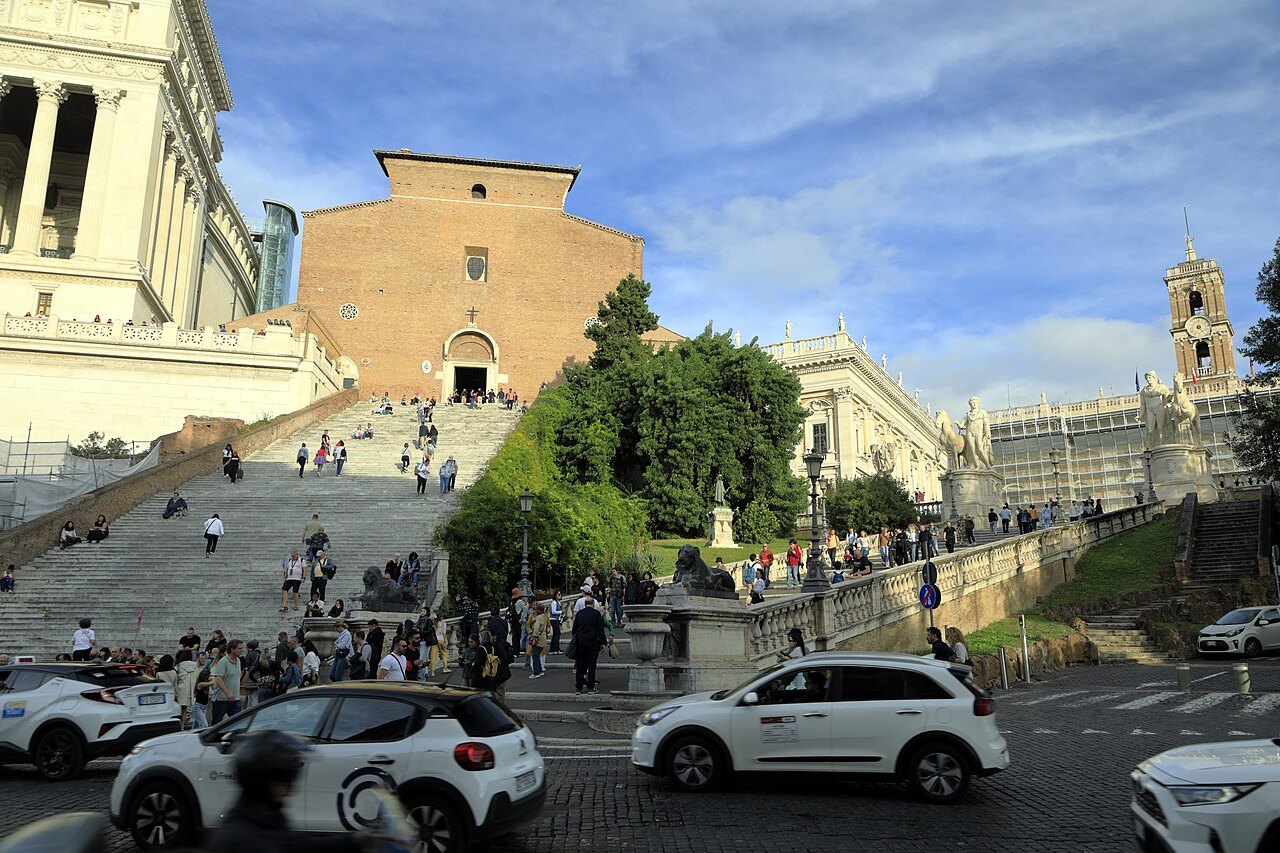
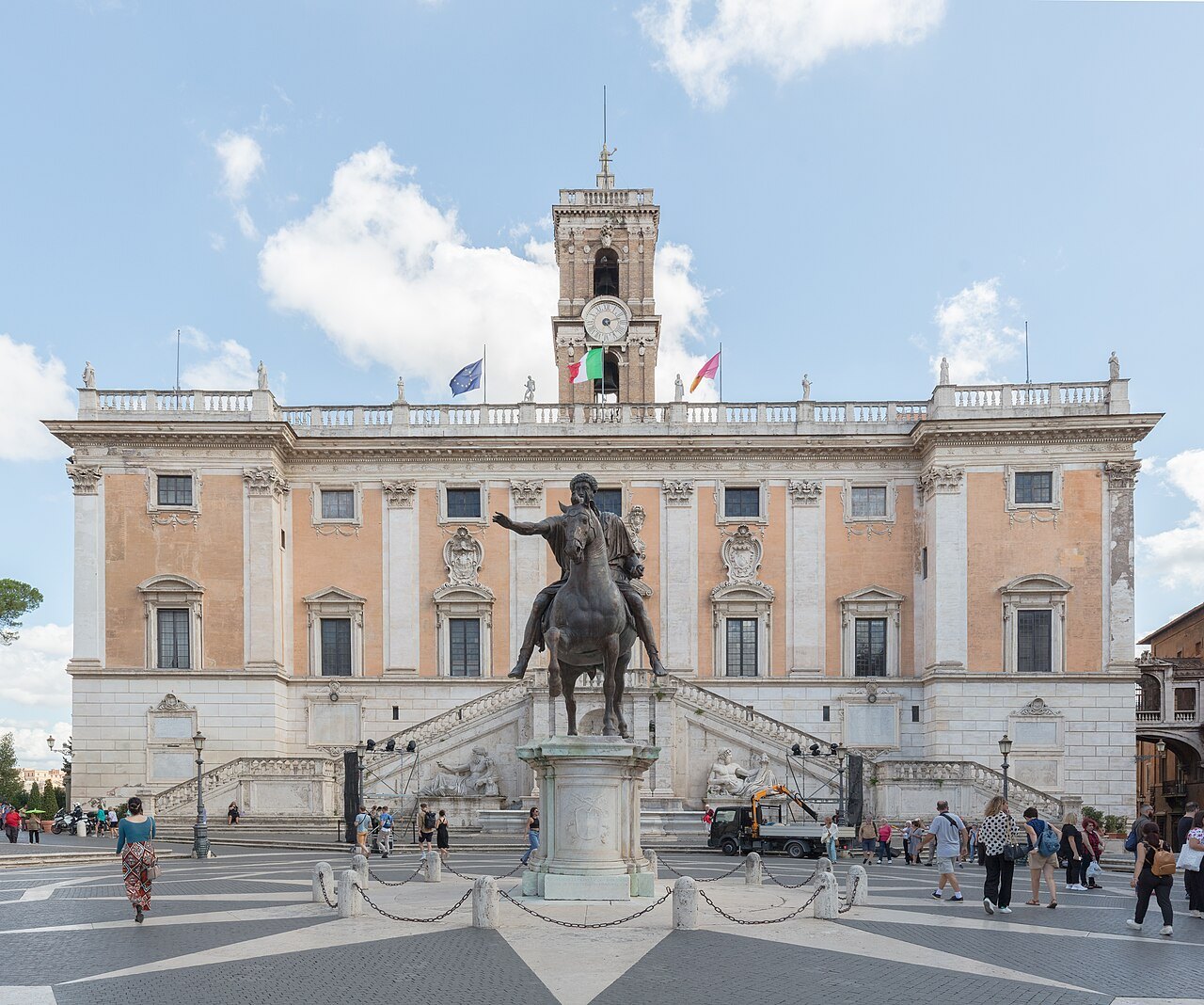
His boldest decision was to turn the Capitoline around. The square no longer faces the ancient Forum behind it but looks out toward St. Peter's, the new center of power. He refaced the Palazzo Senatorio, built on the ruins of the ancient Tabularium, and the fifteenth-century Palazzo dei Conservatori, designed a matching Palazzo Nuovo to close the third side, and gave the Senatorio its double stair. The square was finished in the seventeenth century, and its star-patterned paving was only completed to his design in 1940, working from an old engraving.
What you see on the climb
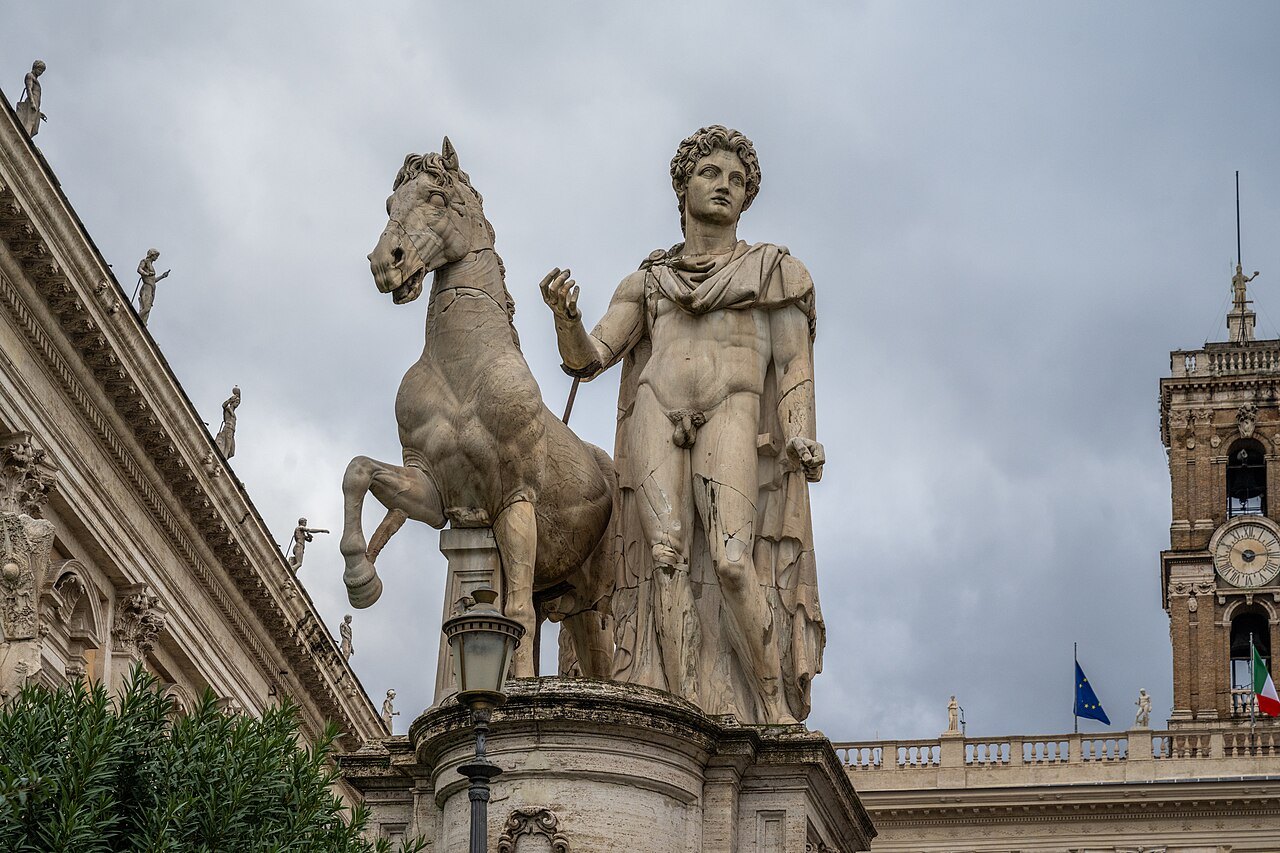
You arrive by the Cordonata, the wide ramped stair Michelangelo designed to be gentle enough for riders to go up without dismounting. Two Egyptian lions in black basalt, turned into fountains, lie at its foot, and a monument to Cola di Rienzo, the fourteenth-century tribune of the people, stands on the grass halfway up. At the top wait the Dioscuri, the twins Castor and Pollux with their horses, and marble trophies of arms.
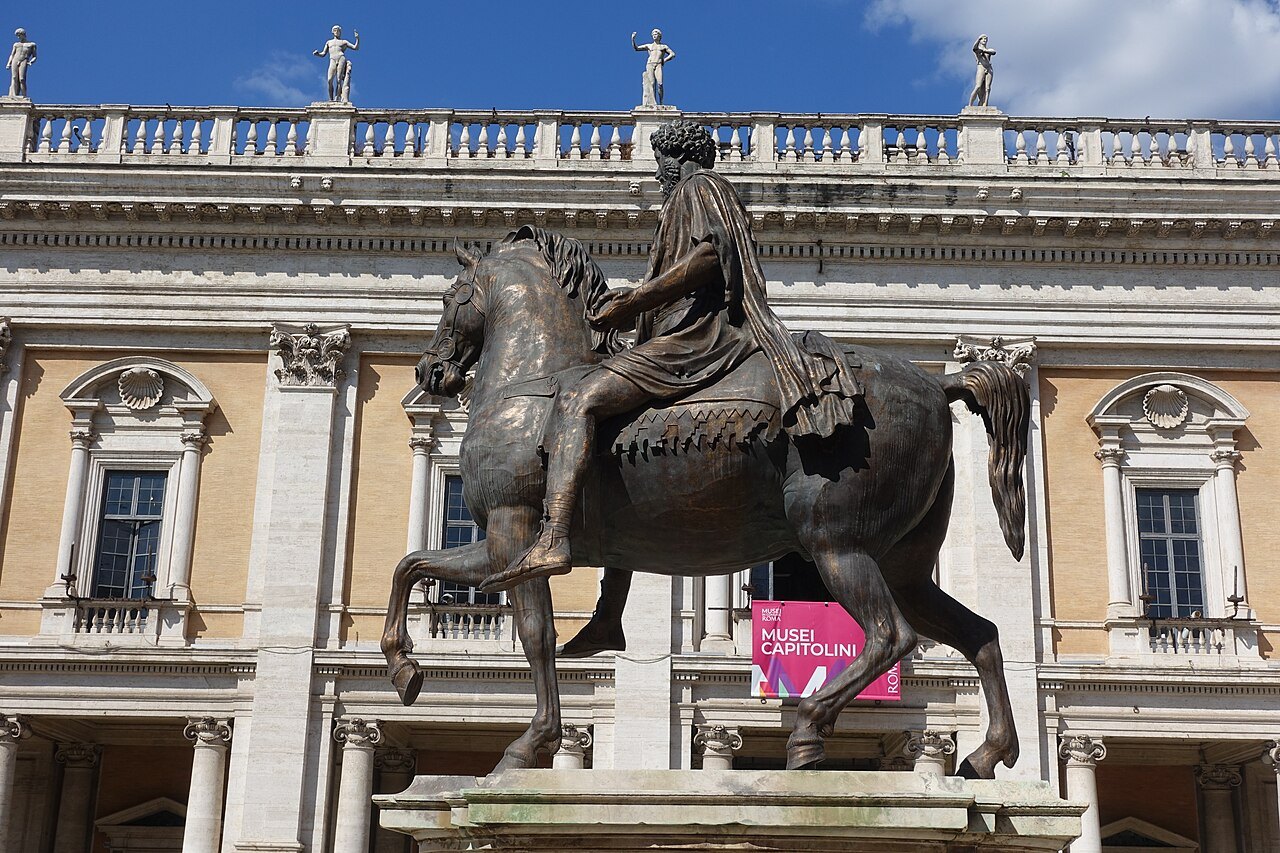
In the center of the oval stands the equestrian statue of Marcus Aurelius, the gilded bronze horseman that once stood outside the Lateran. Michelangelo set it here on its paved oval. The statue in the square is a copy; after restoration the original was moved inside the museums. The paving and the horseman are on the back of the Italian fifty-cent coin.
Inside the Palazzo dei Conservatori
The courtyard of the Palazzo dei Conservatori is a gathering of giants: the remains of the colossal statue of Constantine, reliefs of the Roman provinces from the Temple of Hadrian, and two colossal captive Dacians from Trajan's Forum. Upstairs the Conservators' Apartment has walls painted with scenes of Rome's early history, and the picture gallery holds Renaissance and Baroque paintings.
Here too is the bronze she-wolf, the symbol of the city. It is believed to be an Etruscan work of the fifth century BC, and the twins Romulus and Remus under it were added only in the fifteenth century. This palace is also where the Treaties of Rome were signed in 1957, founding the European Economic Community that became the European Union.
The Palazzo Nuovo and the Tabularium
Across the square, the Palazzo Nuovo is given over to ancient sculpture: rooms of emperors and philosophers, and the hall named for its most famous piece, the Dying Gaul, a Roman copy of a Greek bronze made to celebrate a victory of the kings of Pergamon over the Galatians.
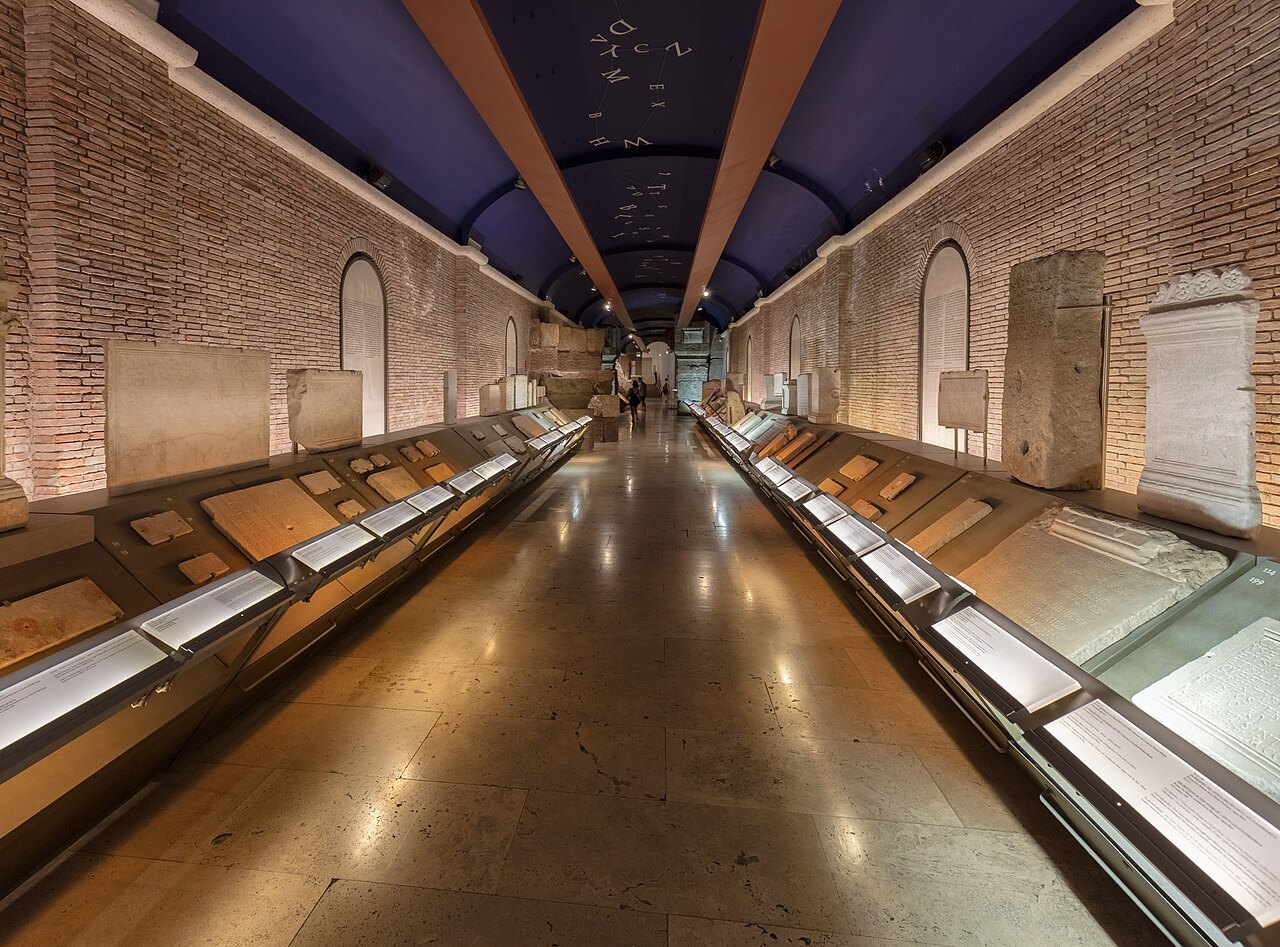
The two palaces are joined underground by a gallery of inscriptions, and from it you enter the Tabularium, the ancient building that is thought to have held part of the state's records, engraved on bronze tablets. Its long base of volcanic tuff, about 241 feet long, still supports the city hall above.
How to visit
The square is a public space: climb the Cordonata from Piazza d'Aracoeli, or come up from the Forum side. The museums are run by the city, and their own website posts notices when rooms close for work, so check it before planning around a particular piece; the booking ahead page covers tickets in general.
Allow two to three hours for both palaces and the Tabularium. The steep stair beside the Cordonata leads to the church of Santa Maria in Aracoeli, a separate climb. Michelangelo also designed the balustrade at the top, from which you look down over Piazza d'Aracoeli. The walk from here to the Pantheon and to Piazza Navona takes you through the old center in a few minutes.
Myths worth setting aside
The Dying Gaul was long taken for a gladiator falling on his shield, and it became perhaps the most famous work in the collection under that name. It shows a wounded Gallic warrior, made for a monument of victory. And the she-wolf suckling the twins is not one ancient work: the wolf is believed to be Etruscan, but the boys were added some two thousand years later.
Where to go next
Nearby
- Nearby · X · CampitelliThe Roman ForumA marshy valley between the Palatine and the Capitoline, drained by Rome's kings and built over for a thousand years: temples, arches, basilicas and the Senate house along the Via Sacra, the city's oldest street.Read the page →
- Nearby · IX · PignaThe PantheonA Roman temple rebuilt under Hadrian and a church since 609: a portico of granite columns, then a round hall under the largest unreinforced concrete dome in the world, lit only by the open oculus at its top.Read the page →
- Nearby · VI · ParionePiazza Navona and Campo de' FioriThe long oval of Domitian's stadium, remade in the seventeenth century as Rome's Baroque showpiece with three fountains and Borromini's church, and a few streets south the old market square of Campo de' Fiori.Read the page →