Home · Sights · St. John Lateran
What you are looking at
St. John Lateran and the Holy Stairs
I · Monti
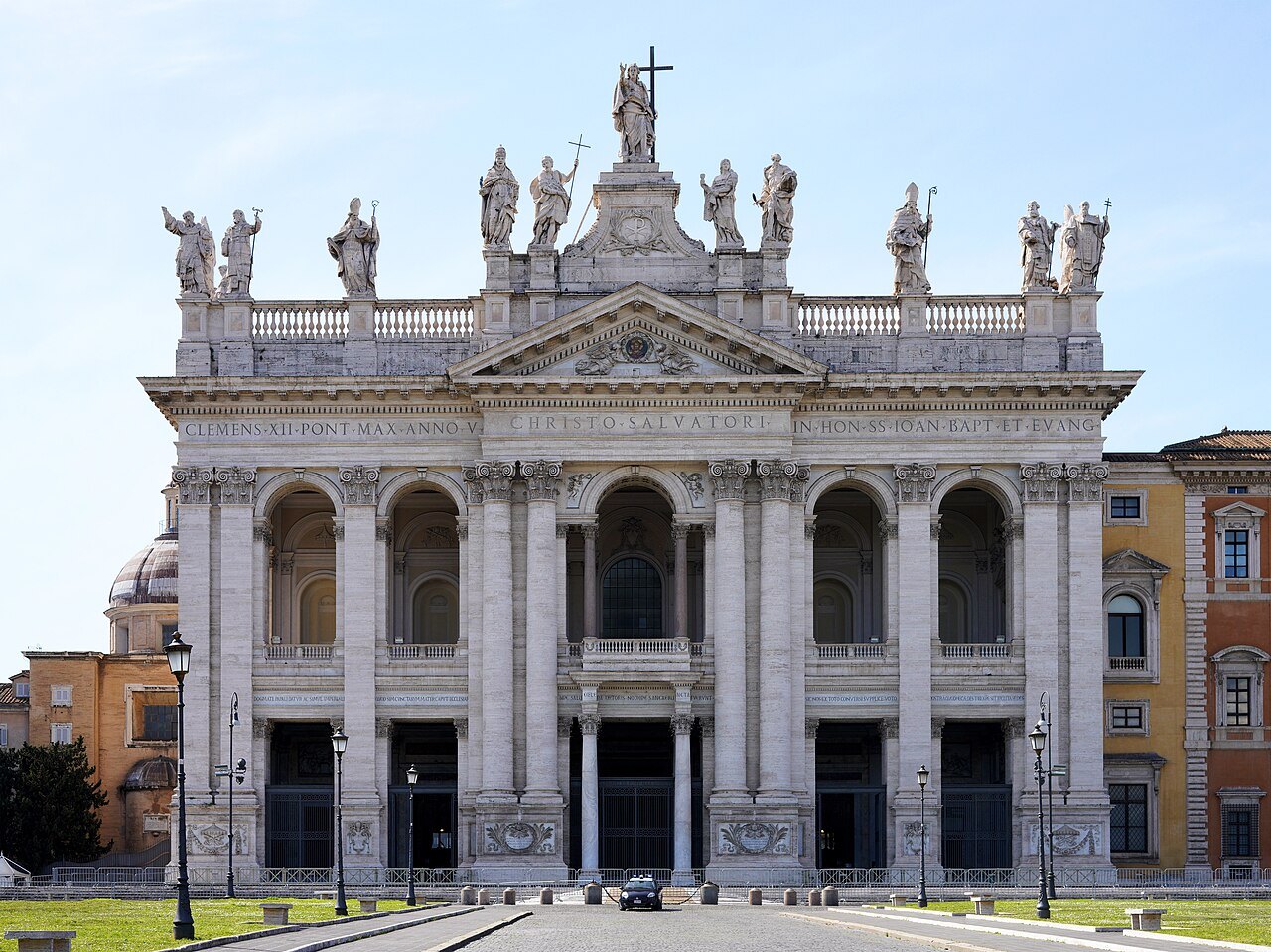
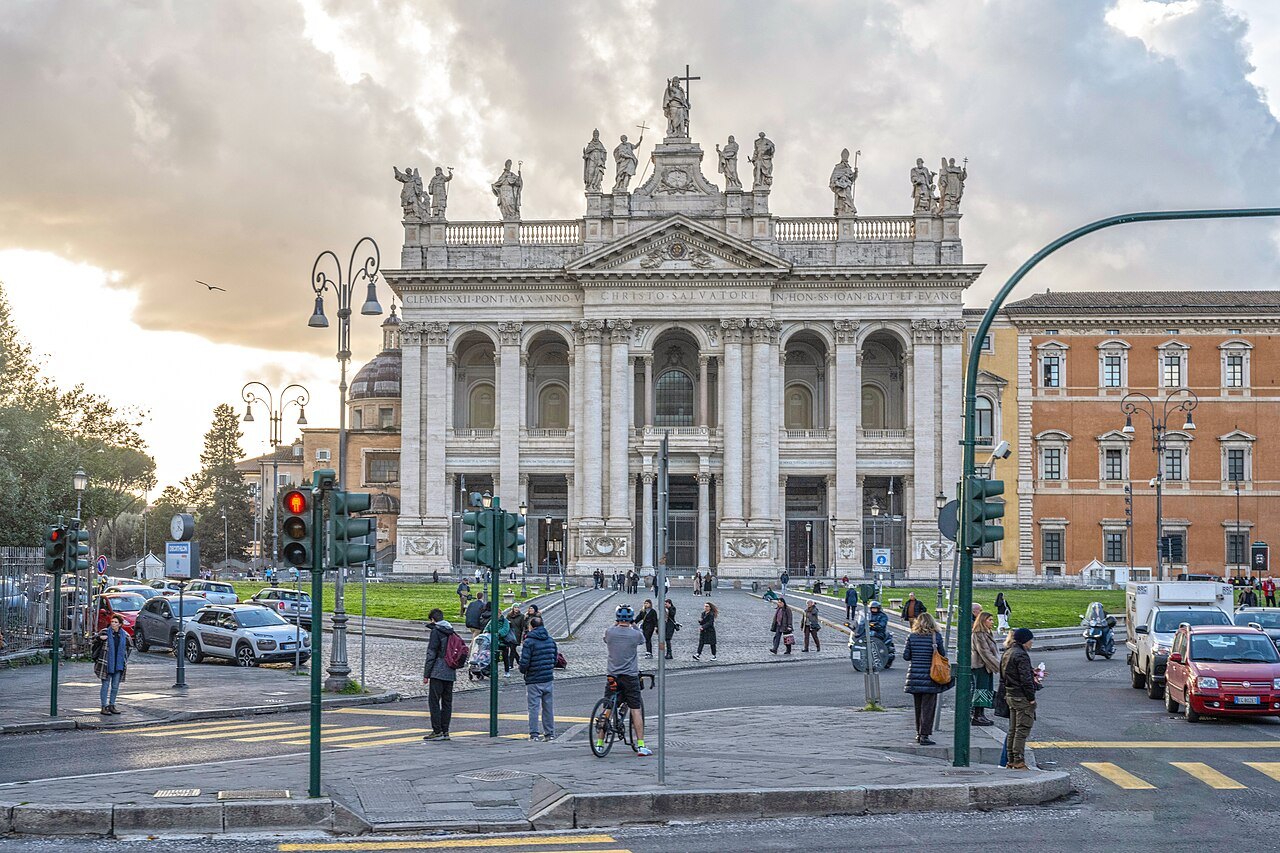
- IThe façadeAlessandro Galilei's front of 1735, won in a competition held by Pope Clement XII.
- IIThe naveBorromini's remodeled interior, with twelve colossal statues of the apostles in its niches.
- IIIThe ciboriumThe Gothic canopy of 1369 over the papal altar, still standing in the Baroque church.
- IVThe cloisterA thirteenth-century cloister of twisted, inlaid columns by the Vassalletto family and the Cosmati.
- VThe Lateran obeliskTaken from the temple of Amun at Karnak, the tallest obelisk in Rome.
- VIThe Holy StairsTwenty-eight marble steps, by tradition from Pilate's house, climbed on the knees.
The sight in full
Reading the place
Why it matters
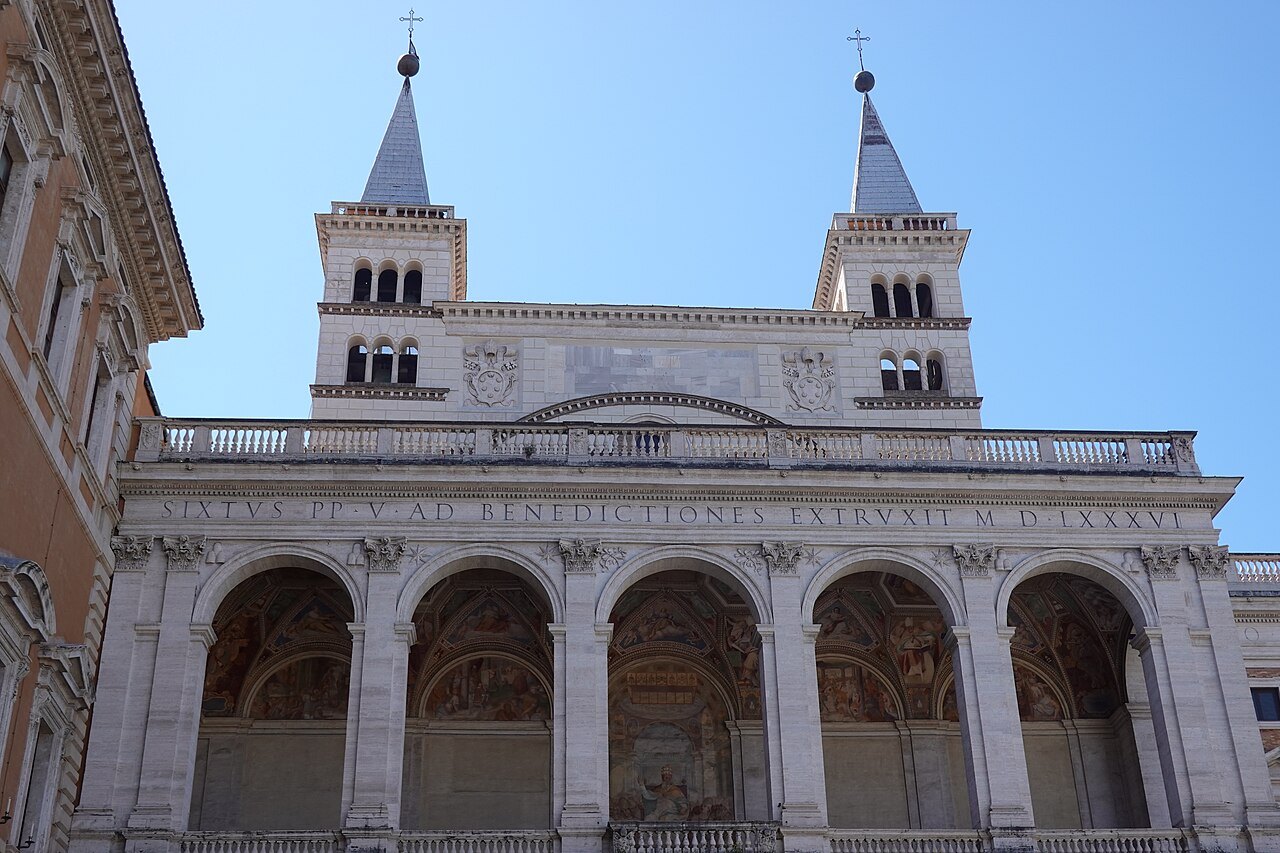
The pope's cathedral is not St. Peter's. It is St. John Lateran, the Archbasilica of the Most Holy Savior and Saints John the Baptist and John the Evangelist at the Lateran, the cathedral of the Diocese of Rome and the seat of its bishop. An inscription on its front calls it the mother and head of all the churches in the city and the world. Founded in 324, it is the oldest public church in Rome and the oldest of the four major papal basilicas.
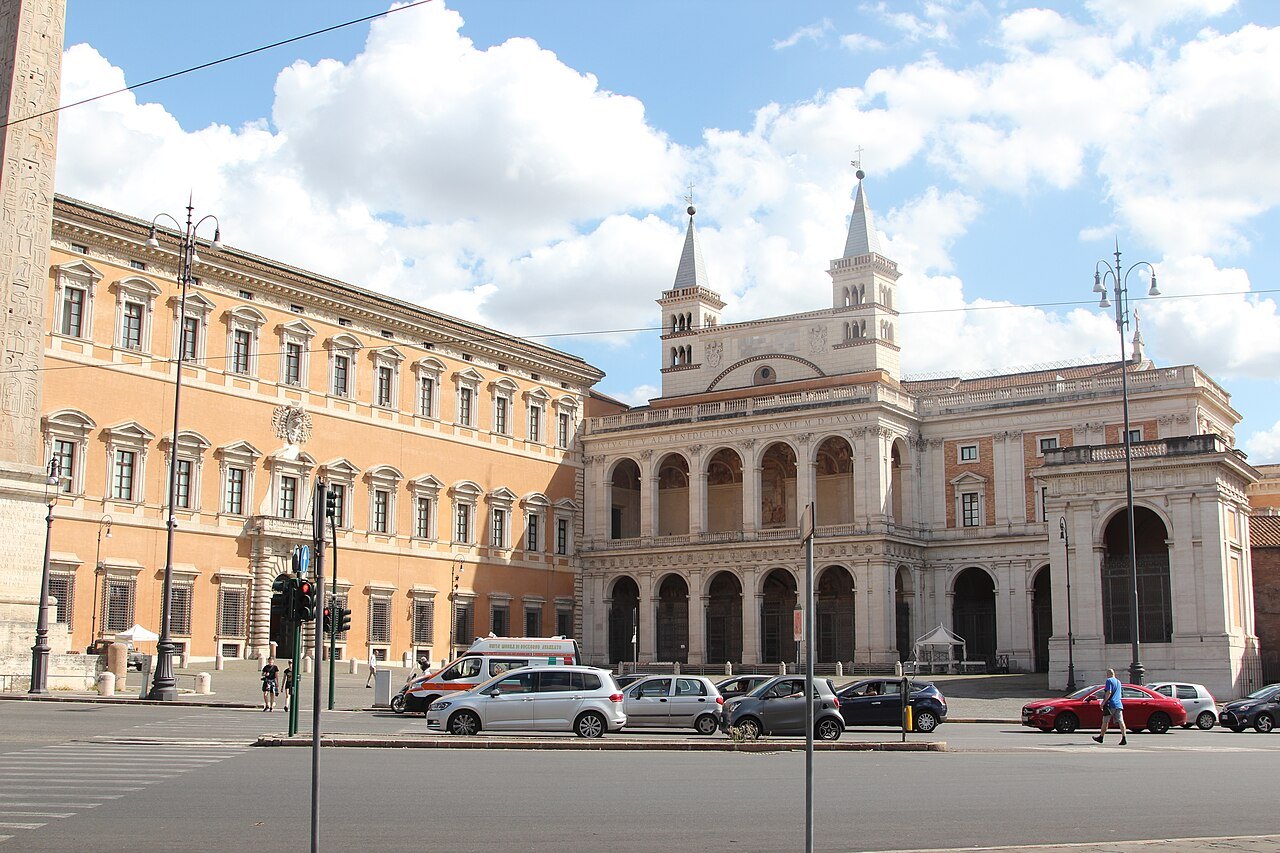
It stands in the southeast of the old city, in the rione of Monti, about two and a half miles from Vatican City. The basilica lies on Italian ground, but as property of the Holy See it and the buildings around it enjoy extraterritorial status under the Lateran Treaty of 1929, which was signed in the Lateran Palace next door.
From cavalry fort to cathedral
The church stands over the remains of a fort built in 193 for the emperors' mounted bodyguards, and substantial remains of it lie directly beneath the nave. After Constantine's victory at the Milvian Bridge, the guard, which had fought for his rival, was abolished and its fort demolished. The neighboring palace of the Laterani, an old Roman family whose name the place still carries, passed to the emperor and was given to the bishop of Rome. Pope Sylvester I dedicated the basilica and the palace in 324, to Christ the Savior.
For a thousand years the Lateran was the popes' home. The church was almost totally destroyed by an earthquake in 897, and twice ravaged by fire in the fourteenth century, when the popes lived at Avignon and sent money for its rebuilding. Sixtus V rebuilt it in the late sixteenth century, and in 1586 he pulled down what remained of the ancient palace, keeping only its private chapel, and put up the smaller palace that Domenico Fontana designed.
The façade
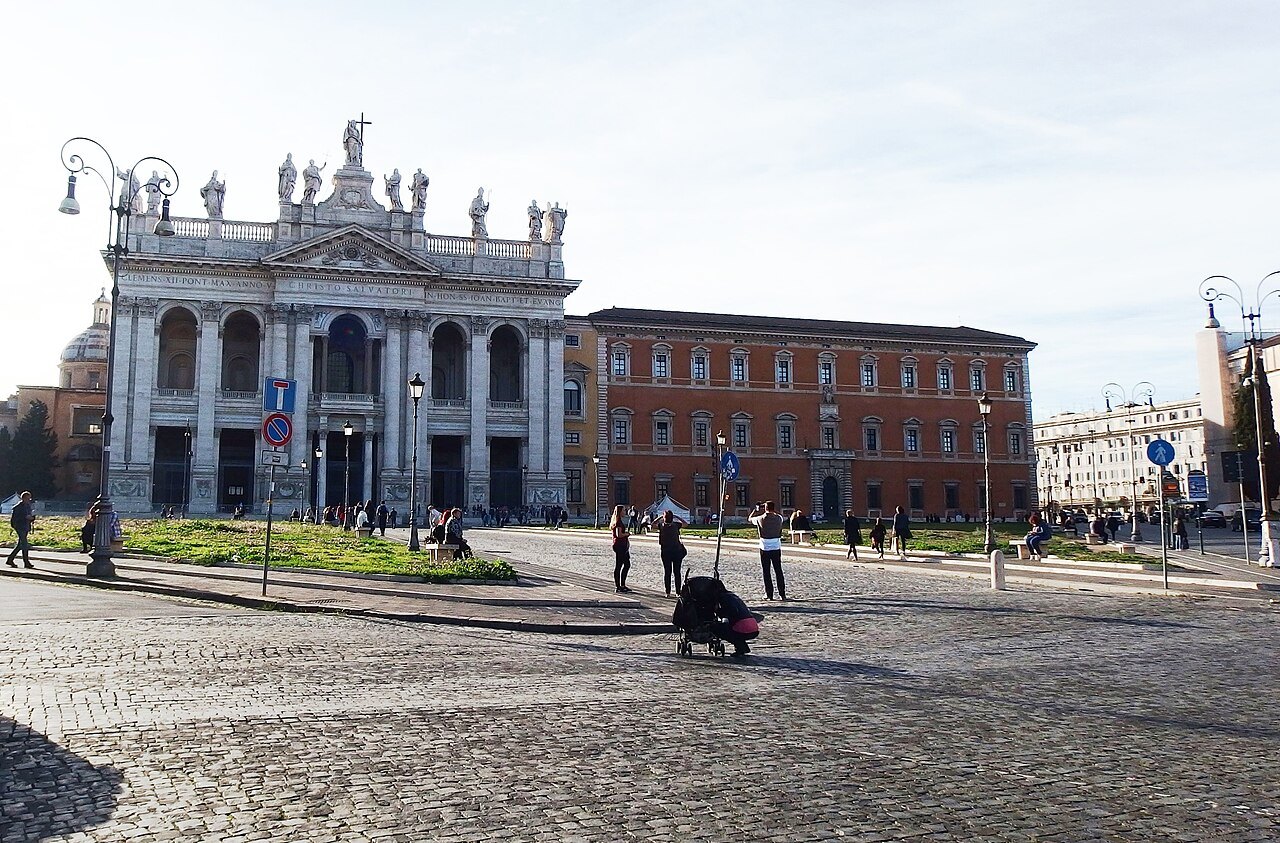
The front you see was the result of a competition held by Pope Clement XII and won by Alessandro Galilei; it was completed in 1735. Its long inscription dedicates the building to Christ the Savior in honor of the two Saints John, in the fifth year of Clement's reign. The usual complaint is that it is the façade of a palace, not of a church, but it is a masterly screen: a wide central bay brought slightly forward, a pediment breaking the roof balustrade, and giant paired pilasters binding the whole in the manner of Michelangelo's palaces on the Capitoline.
The nave and the altar
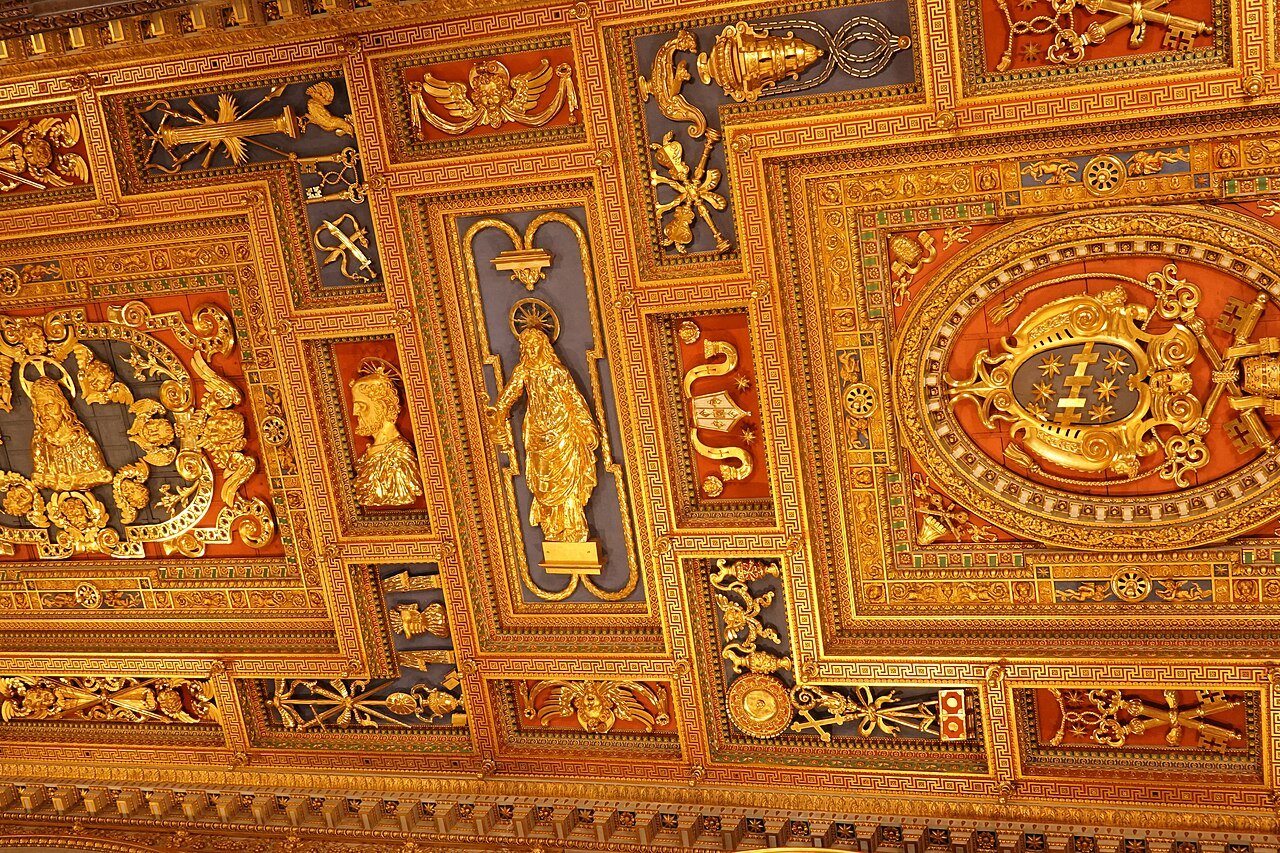
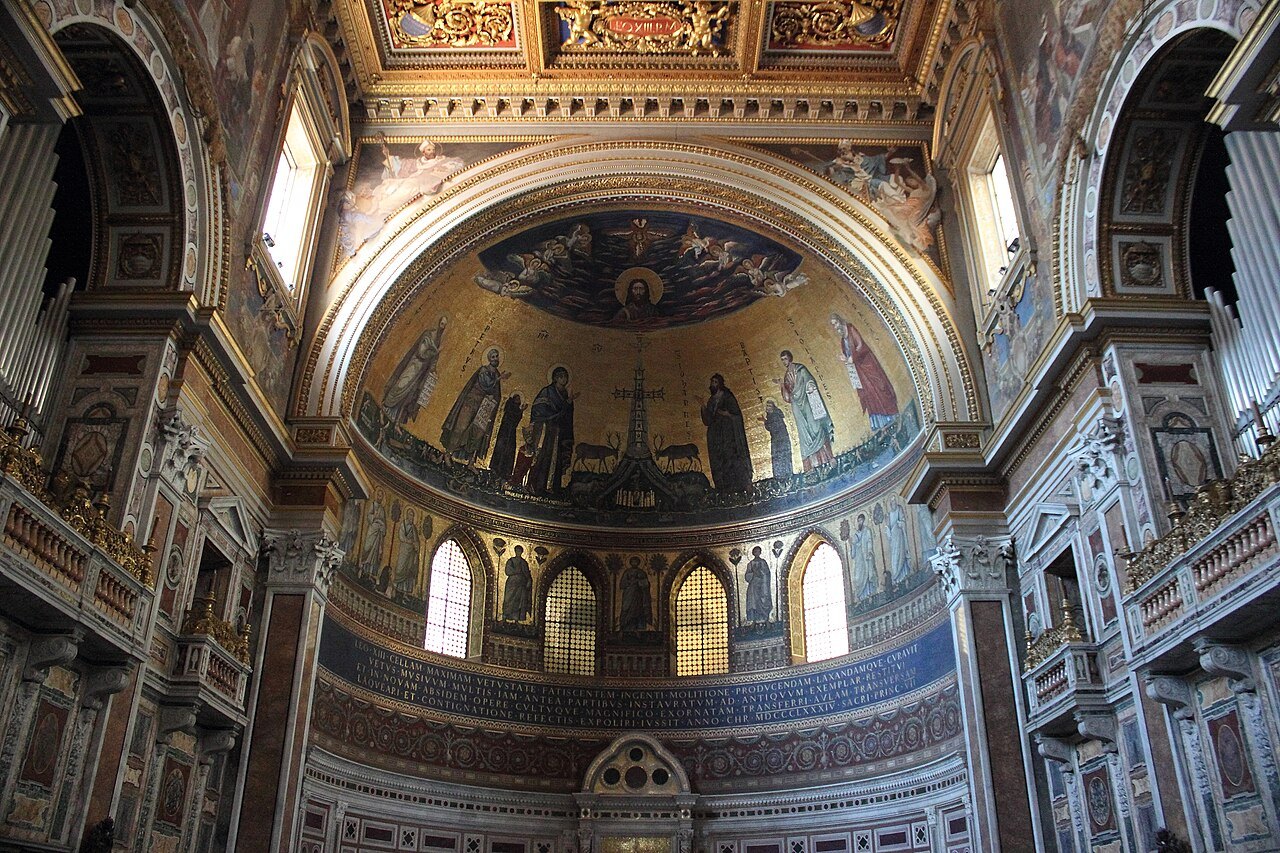
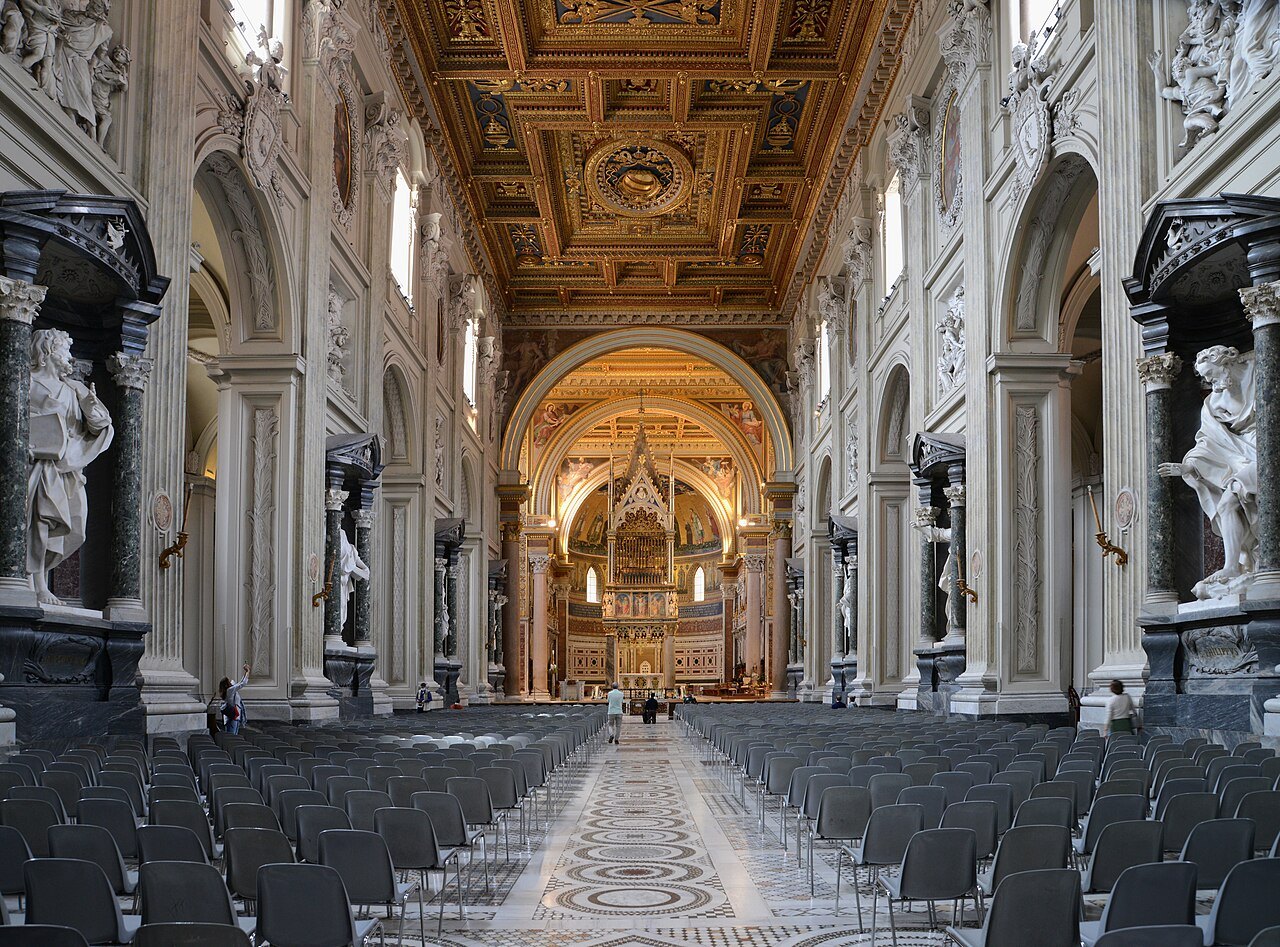
Inside, the nave was renovated in the seventeenth century by Francesco Borromini for Pope Innocent X. His scheme created twelve great niches along the nave, which stood empty for decades until 1702, when Clement XI launched a scheme for twelve larger-than-life apostles and opened the commission to the leading sculptors of late Baroque Rome; the statues were in place by 1718. The floor is medieval Cosmatesque work of inlaid colored stone.
Over the papal altar stands a graceful Gothic ciborium of 1369, which looks out of place in its surroundings and is all the more striking for it. The church is dedicated first to Christ the Savior, so its feast day is 6 August, the Transfiguration. As an odd survival of history, the president of France is by right its first and only honorary canon, a title held by French heads of state since King Henry IV.
The cloister
Of the medieval buildings around the church, the part that survives is the thirteenth-century cloister, surrounded by twisted columns of inlaid marble, in a style between the Romanesque and the Gothic, by the Vassalletto family and the Cosmati. It keeps fragments of the older church, among them statues of Saints Peter and Paul, and a papal throne with an unsavory name, taken from a psalm sung at old papal coronations about lifting the poor from the dunghill.
The obelisk and the Holy Stairs
In the square beside the palace stands the Lateran obelisk, the tallest obelisk in Rome and the largest standing ancient Egyptian obelisk in the world, weighing over 230 tons. It was taken from the temple of Amun at Karnak and brought to Rome in 357 to decorate the central barrier of the Circus Maximus.
Across the road is the Scala Sancta, the Holy Stairs: twenty-eight white marble steps that, by Catholic tradition, led up to the house of Pontius Pilate in Jerusalem and were climbed by Christ on the way to his trial; medieval legends say that Saint Helena brought them to Rome. Sixtus V had them rebuilt in their present place in 1589, leading to the Sancta Sanctorum, the Holy of Holies, the private chapel of the early popes, named for the many precious relics kept there. Since the early eighteenth century the stairs have been cased in wood for protection, and they may be climbed only on the knees; they were briefly uncovered after restoration in 2019.
How to visit
St. John Lateran is a working cathedral, so dress with respect, covering shoulders and knees, and keep quiet near the altars. The Holy Stairs are a place of devotion before they are a sight: pilgrims climb them on their knees, often in prayer, and the chapel at the top keeps an icon of Christ said in legend to be not made by human hands. Combine the Lateran with Santa Maria Maggiore, the other papal basilica on the eastern side of the old city.
Where to go next
Nearby
- Nearby · XV · EsquilinoSanta Maria MaggioreThe largest church to the Virgin in Rome, consecrated in 434 on the summit of the Esquiline, with the fifth-century mosaics of its nave still in place, a ceiling said to be gilded with the first gold from the Americas, and a legend of snow in August.Read the page →
- Nearby · XIX · CelioThe ColosseumBegun under Vespasian in 72 and opened under his son Titus in AD 80 on the site of Nero's private lake, the largest amphitheater ever built still stands at the center of Rome, three tiers of arches and an attic high.Read the page →
- Nearby · XXI · San SabaThe Baths of CaracallaThe city's second-largest public baths, begun under Septimius Severus and opened by his son Caracalla in 216: brick halls over a hundred feet high on a site of 62 acres, free to every Roman, in use until the Goths cut the aqueduct in 537.Read the page →