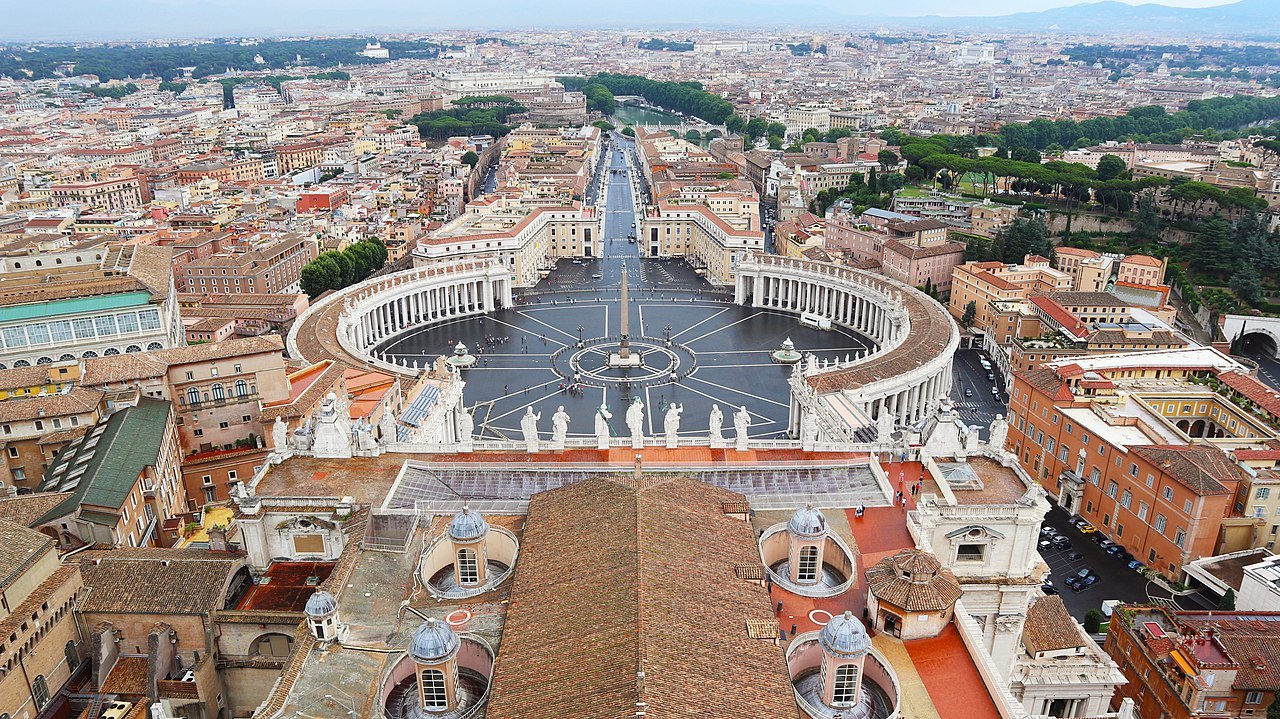
Home · Vatican City
A separate state
The state beside Rome
A separate state — not a rione, not part of Italy
- Size
- About 109 acres, the smallest country in the world by area and by population.
- Founded
- 11 February 1929, by the Lateran Treaty between the Holy See and the Kingdom of Italy.
- Ruled by
- The pope, as bishop of Rome and head of the Catholic Church, through the Holy See.
- Border
- No passport controls for visitors entering from the surrounding Italian territory.
- Money
- The euro, by a special agreement with the European Union; its own coins are rare.
- Guard
- The Pontifical Swiss Guard, founded in 1506, in its Renaissance tricolor uniform.
- Getting there
- Metro Line A to Ottaviano or Cipro for the Museums, or walk from Castel Sant'Angelo.
In full
Vatican City
A country inside a city
Vatican City, officially the Vatican City State, is an independent country completely surrounded by Rome. With an area of about 109 acres and a population of under a thousand, it is the smallest state in the world by both measures. It is ruled by the pope, who is the bishop of Rome and head of the Catholic Church, and it is governed by the Holy See, itself a sovereign entity under international law. Its highest officials are clergy.
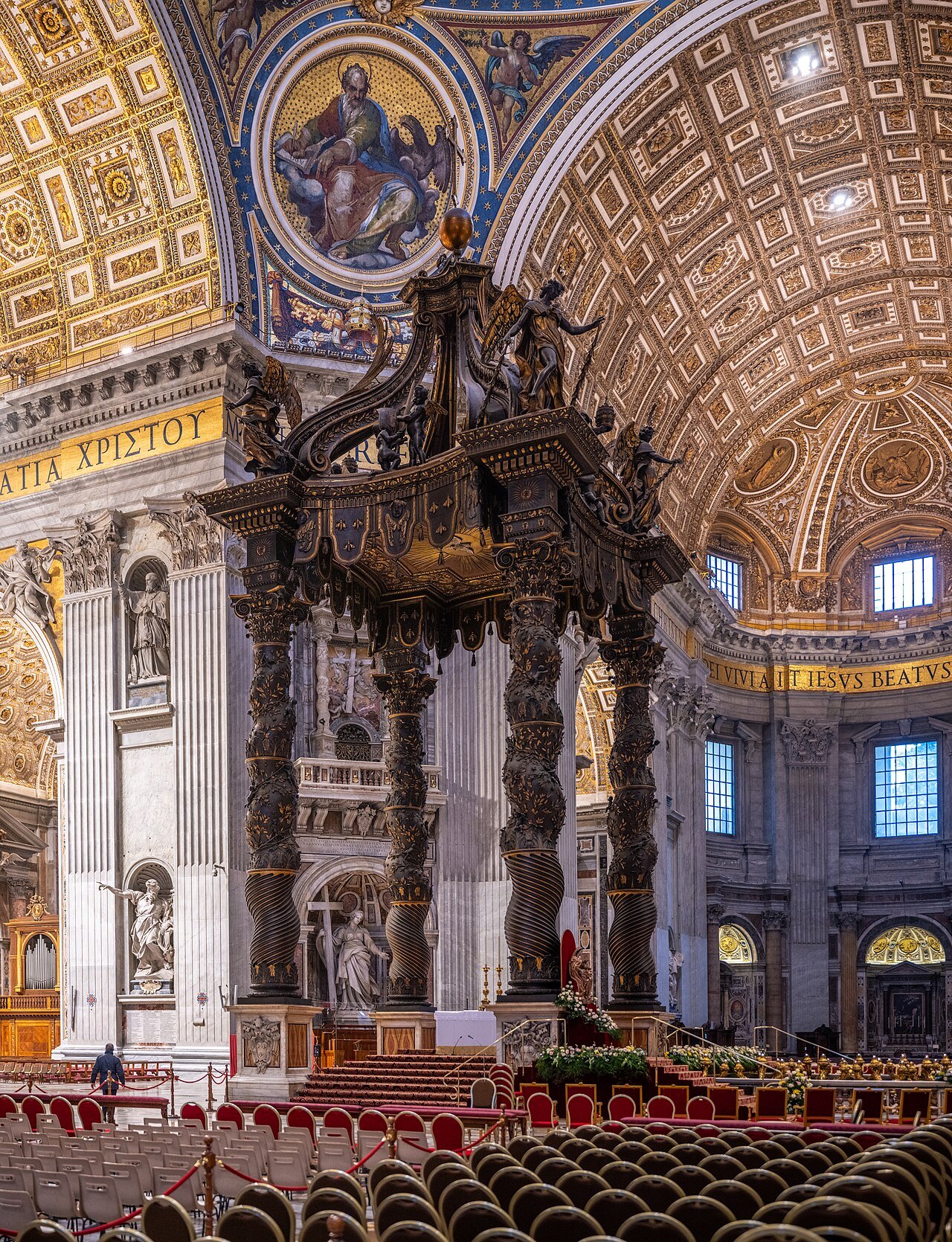
This site treats it as what it is: a separate state beside Rome, not one of the city's districts and not part of Italy. Its sights, St. Peter's Basilica and the Vatican Museums with the Sistine Chapel, carry Vatican City in place of a rione.
How it came to be
For more than a thousand years the popes ruled the Papal States, a territory that covered much of central Italy. In 1870 the new Kingdom of Italy took Rome, and for the next sixty years relations were hostile; the pope's claim to sovereignty became known as the Roman question. It was settled by the Lateran Treaty, signed on 11 February 1929 in the Lateran Palace, beside St. John Lateran. The treaty spoke of Vatican City as a new creation, not as a remnant of the old Papal States.
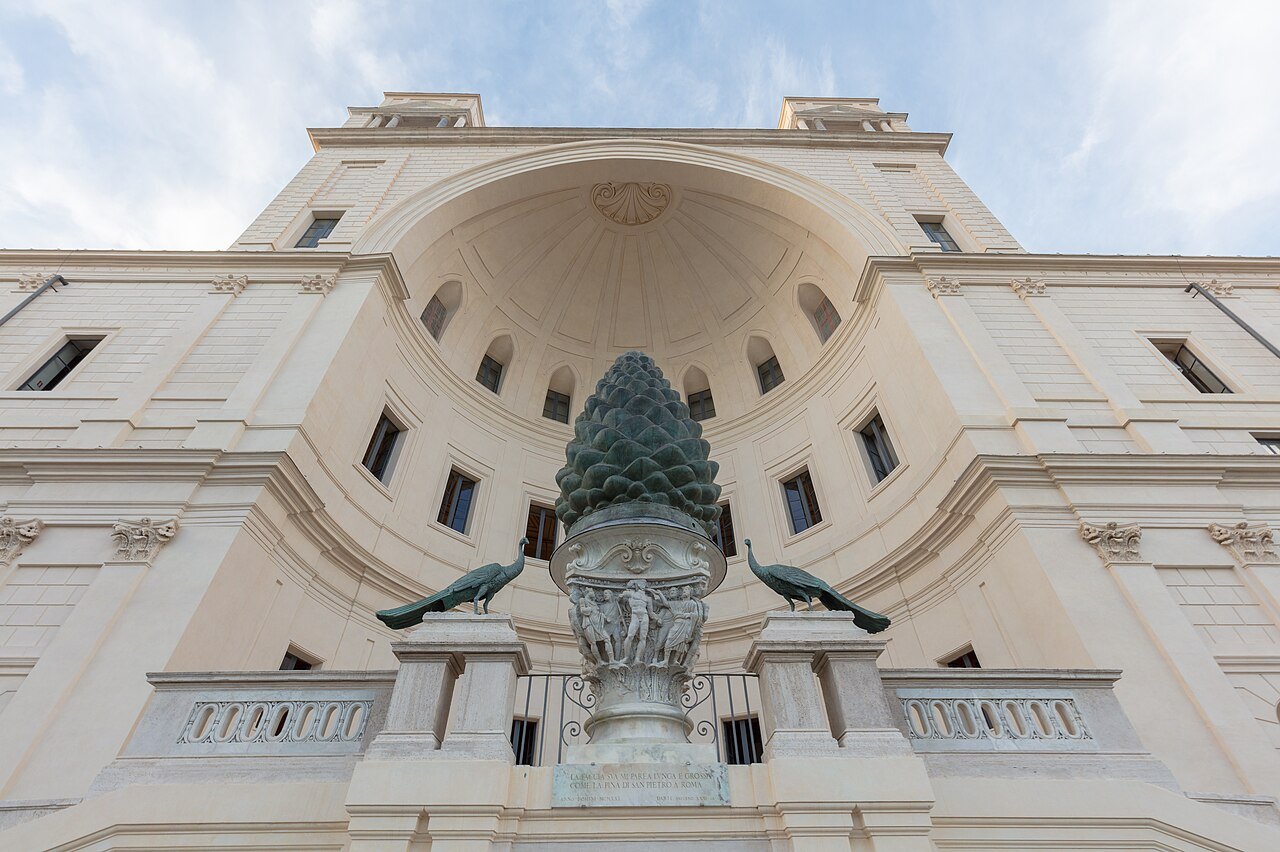
The name comes from the Vatican Hill and, before that, from the ager Vaticanus, the Vatican territory of the Romans. The area was protected by the walls of Pope Leo IV in the ninth century and later by the fortifications of Paul III, Pius IV and Urban VIII, and stone walls still bound the state on the north, south and west. To mark the treaty, the long straight Via della Conciliazione, the road of the conciliation, was cut to link the Vatican to the heart of Rome.
Crossing in
There are no passport controls for visitors entering Vatican City from Italy. The open side of the state is St. Peter's Square: the square is Vatican territory, but up to the steps of the basilica it is normally patrolled by Italian police. Beyond the square, entry is to the basilica or to the museums, each with its own entrance and its own rules.
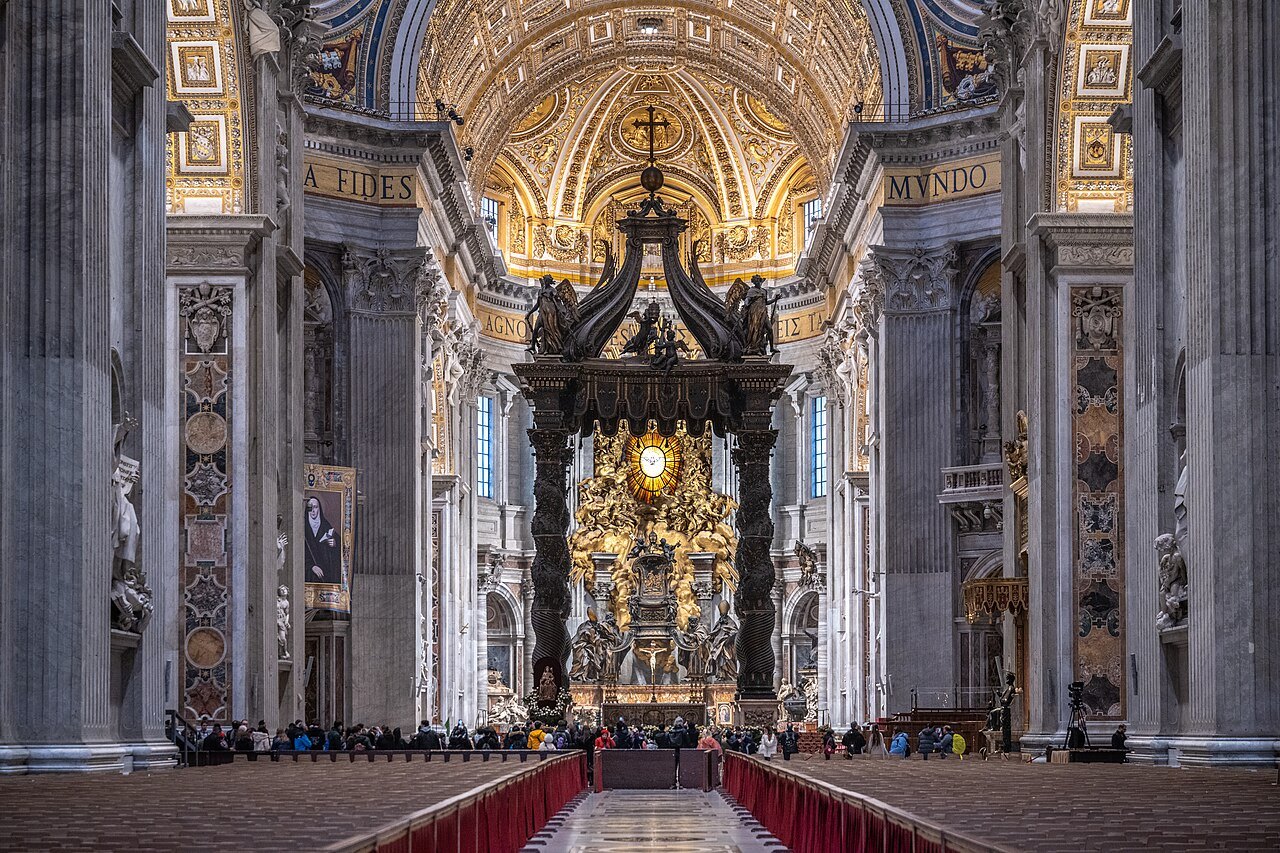
The Vatican Museums give their own directions: Metro Line A to Ottaviano or Cipro, or the buses and tram that stop near Piazza del Risorgimento and in front of the museums. From the old city the classic approach is on foot, over the Ponte Sant'Angelo and along Via della Conciliazione.
The rules that apply here
The dress code is the same across the museums, the Sistine Chapel and St. Peter's: no sleeveless or low-cut clothing, no shorts above the knee, no miniskirts and no hats. The basilica asks for clothing below the knee and covered shoulders. It applies to every visitor, so dress for the whole day, not just for the first visit.
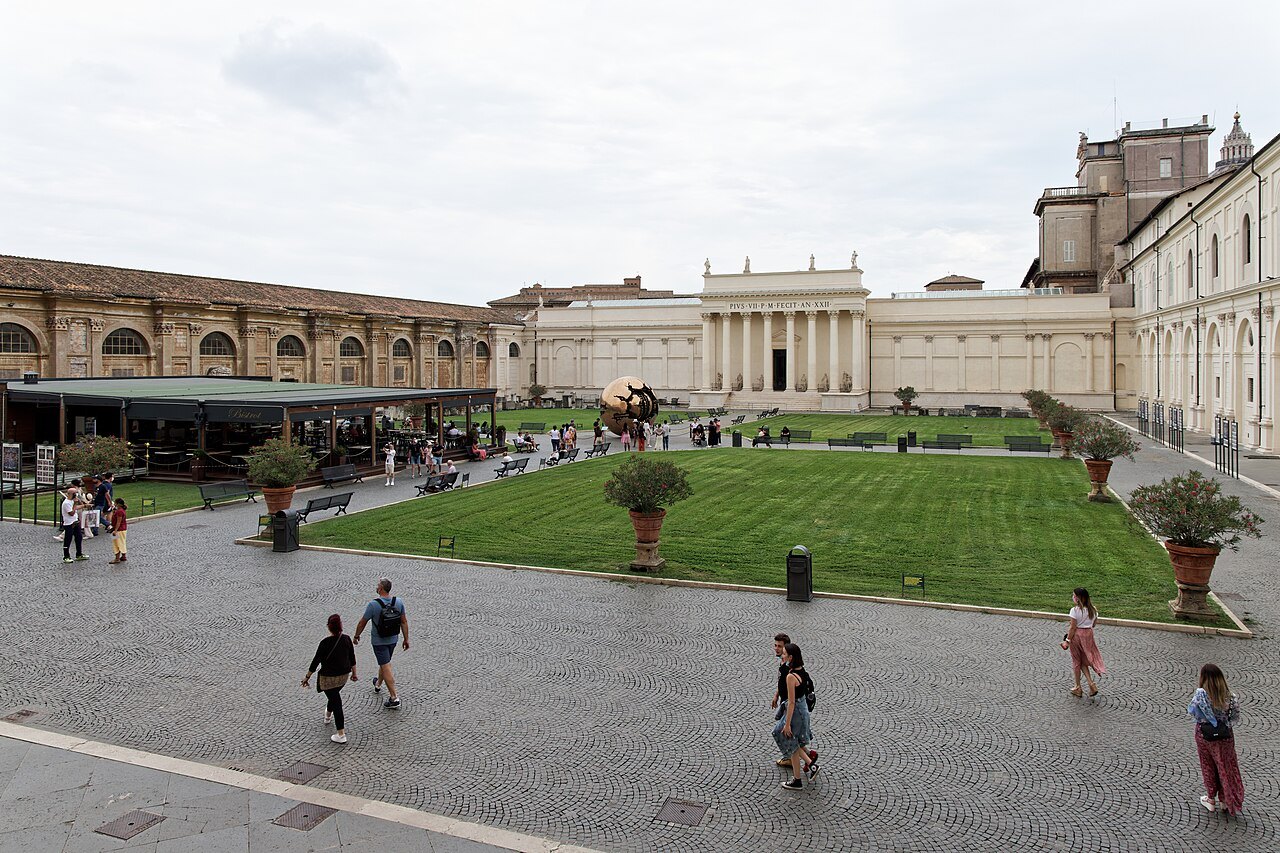
Bags need planning too. The museums have a free cloakroom for large bags, backpacks, umbrellas and tripods, but the basilica has no cloakroom at all and admits only small bags, and the museums advise visitors going on to the basilica not to leave anything in their cloakroom. Photography for personal use is allowed in the museums except in the Sistine Chapel; the basilica asks visitors not to photograph at all. Buy museum tickets only from the museums' own site, tickets.museivaticani.va.
The state's own details
Vatican City uses the euro under an agreement with the European Union; it issues its own euro coins in small numbers, and collectors prize them. It is guarded by the Pontifical Swiss Guard, founded in 1506 under Julius II and among the oldest military units still in service, whose recruits are unmarried Swiss Catholic men. New guards are sworn in every year on 6 May, the anniversary of the day in 1527 when the Guard was nearly destroyed defending the pope in the Sack of Rome.
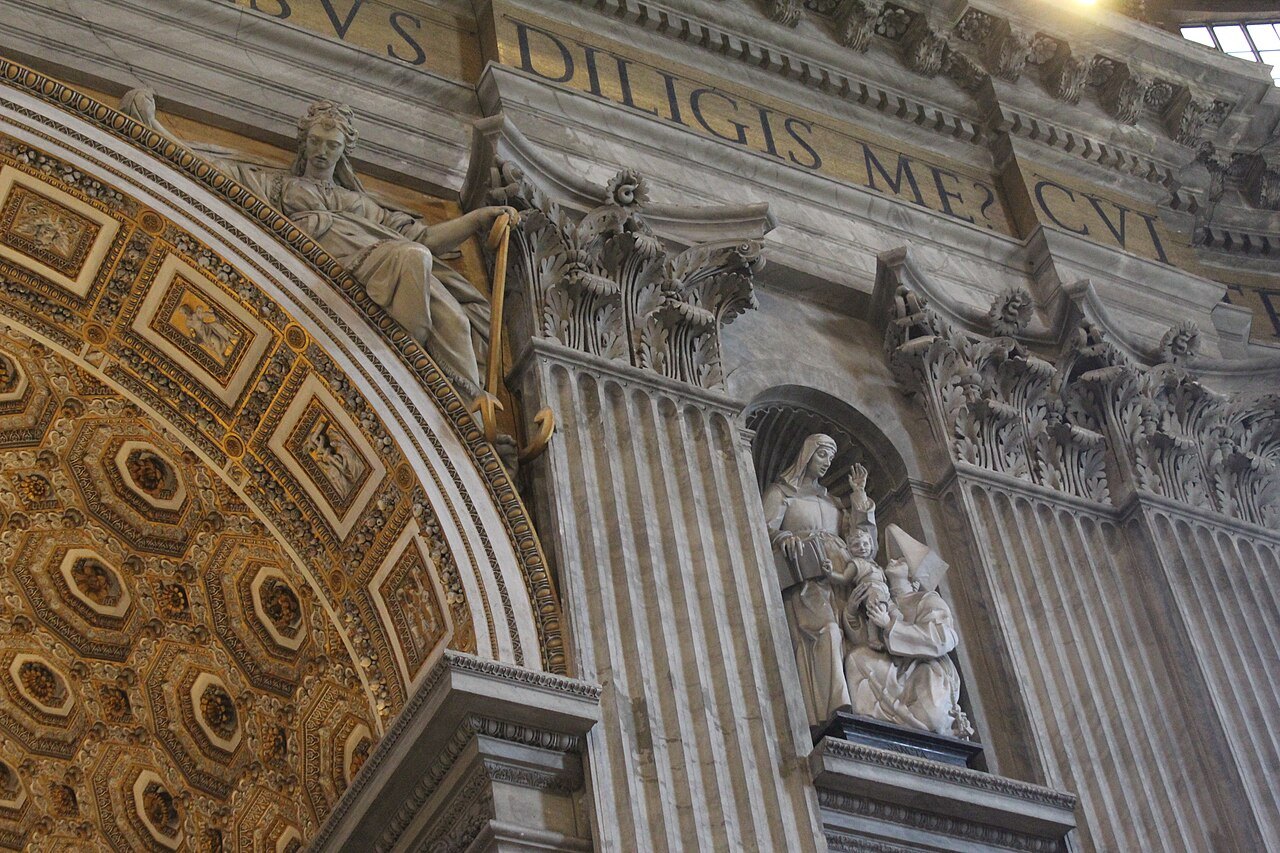
Half the state is garden: the Vatican Gardens cover about 57 acres and can be visited only with a guide. The Holy See also owns buildings in Italy, among them the papal basilicas of Rome and the palace at Castel Gandolfo, which have a status like that of embassies but remain on Italian territory.
Seen on the way
More photographs
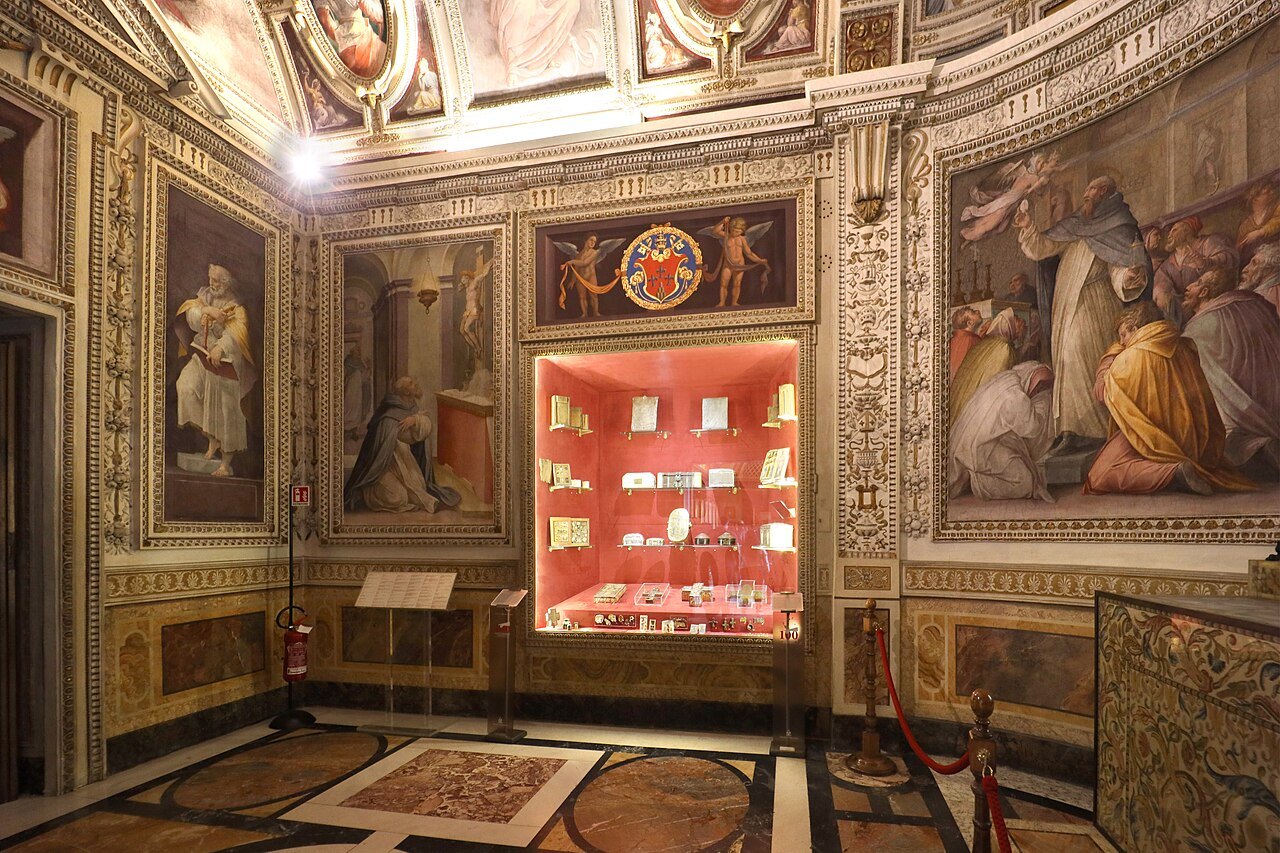
A frescoed chapel in the Vatican Museums, a red-lined display case in the middleFabrizio Garrisi, Wikimedia Commons, CC BY-SA 4.0 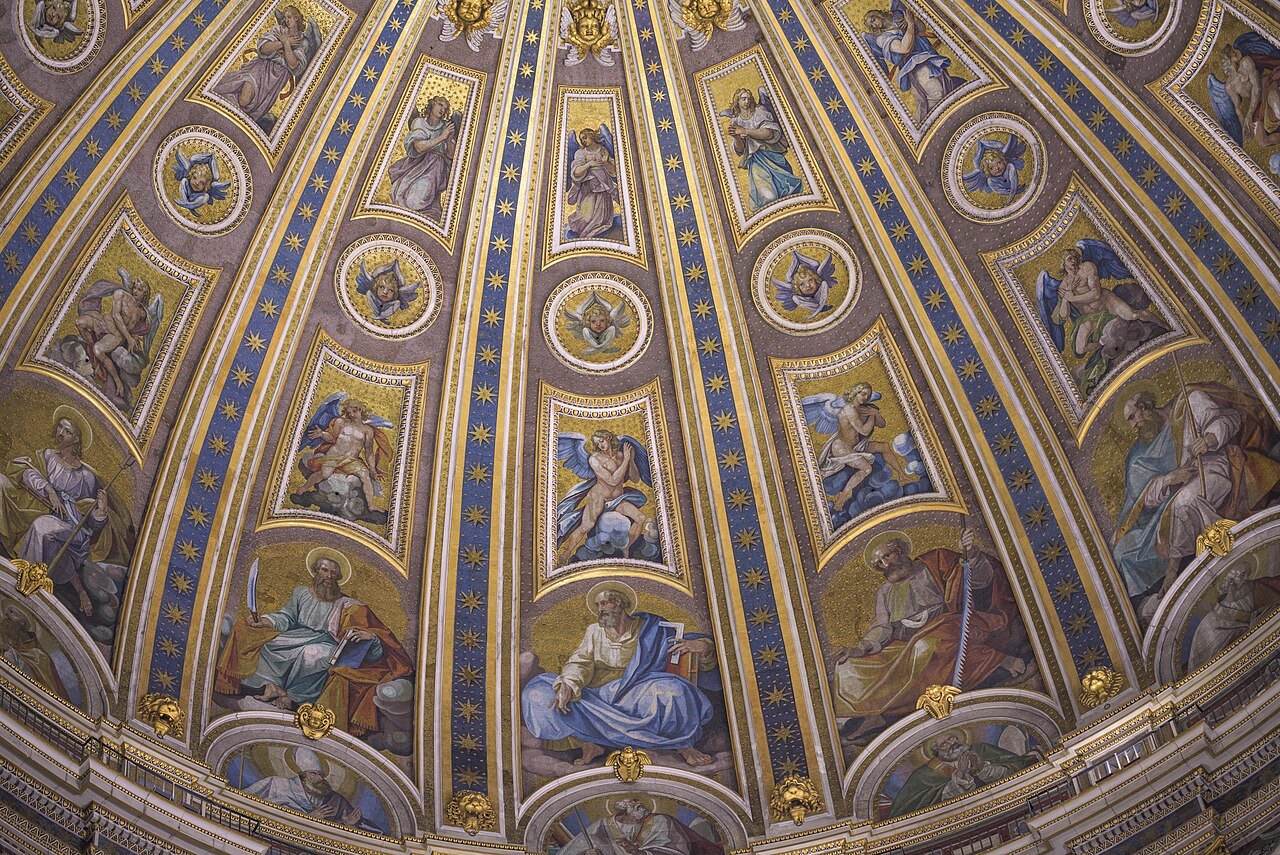
The mosaics of the dome of St. Peter's seen from below, figures in gilded panelsWilfredor, Wikimedia Commons, CC0 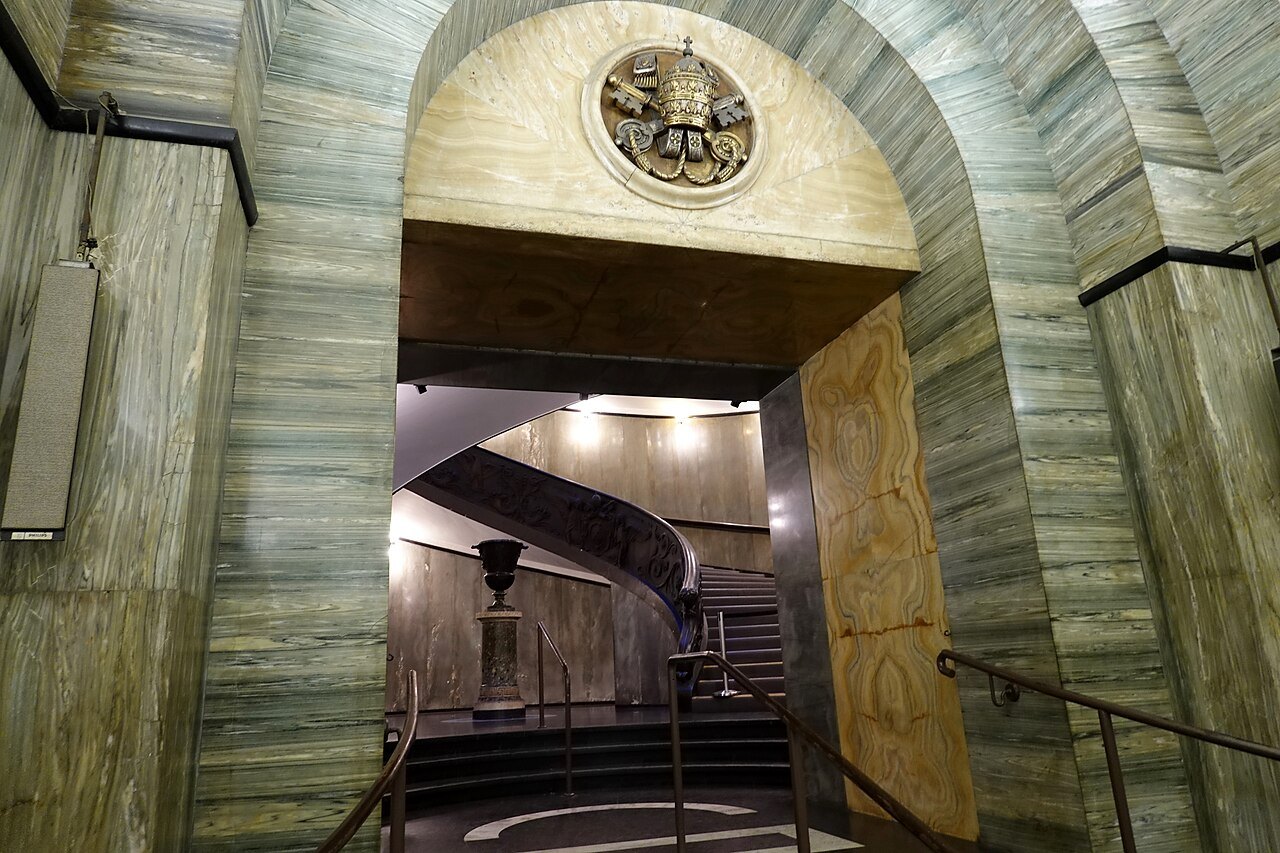
The entrance to the Vatican Museums, a stair spiraling down beyond the bronze doorwayRichard Mortel from Riyadh, Saudi Arabia, Wikimedia Commons, CC BY 2.0