Home · Sights · St. Peter's Basilica and Square
What you are looking at
St. Peter's Basilica and Square
Vatican City
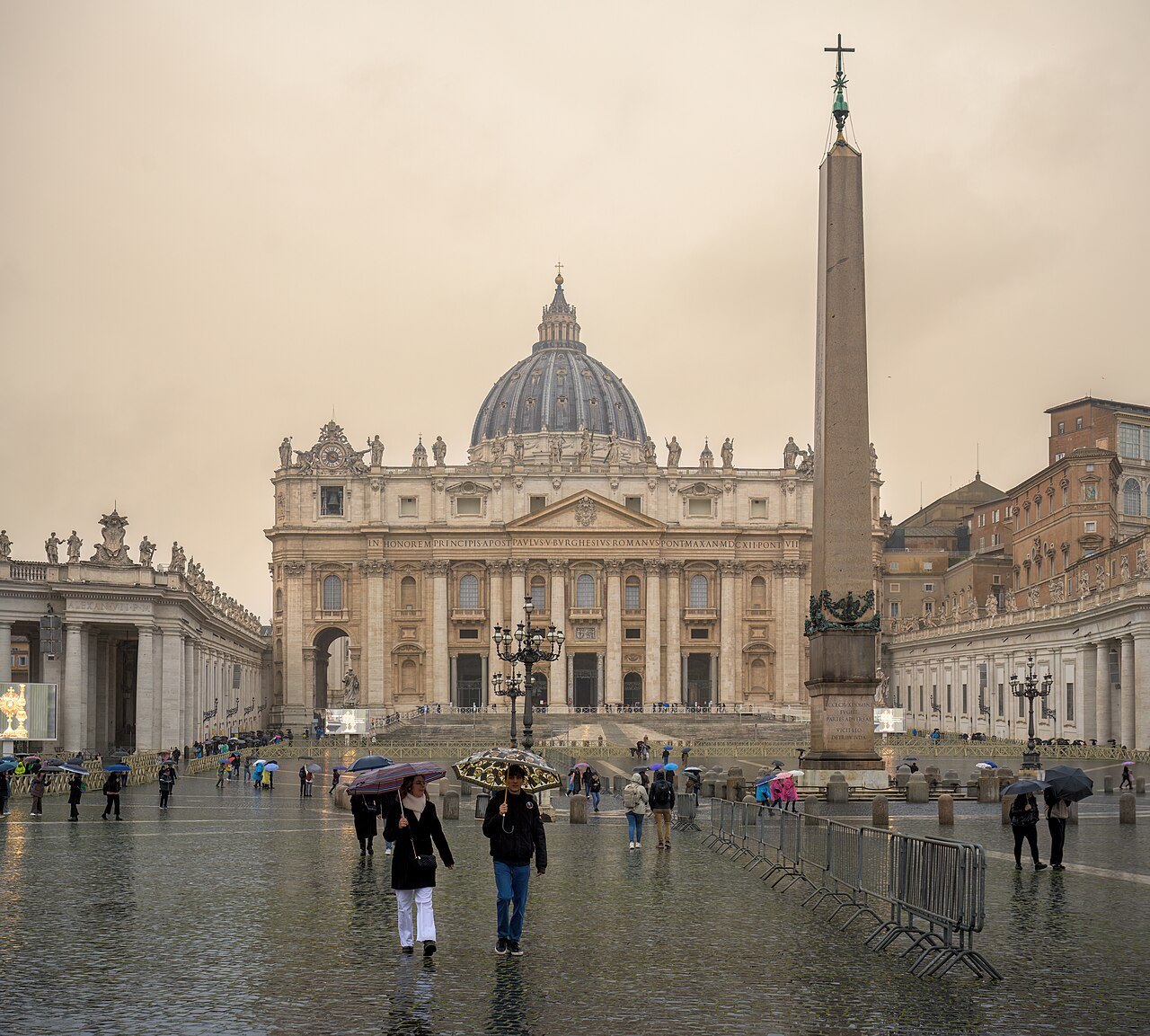
- IThe squareBernini's piazza of 1656 to 1667, two sections framed by colonnades like reaching arms.
- IIThe obeliskThe Witness, the only Egyptian obelisk never toppled since it came to Rome, moved here in 1586.
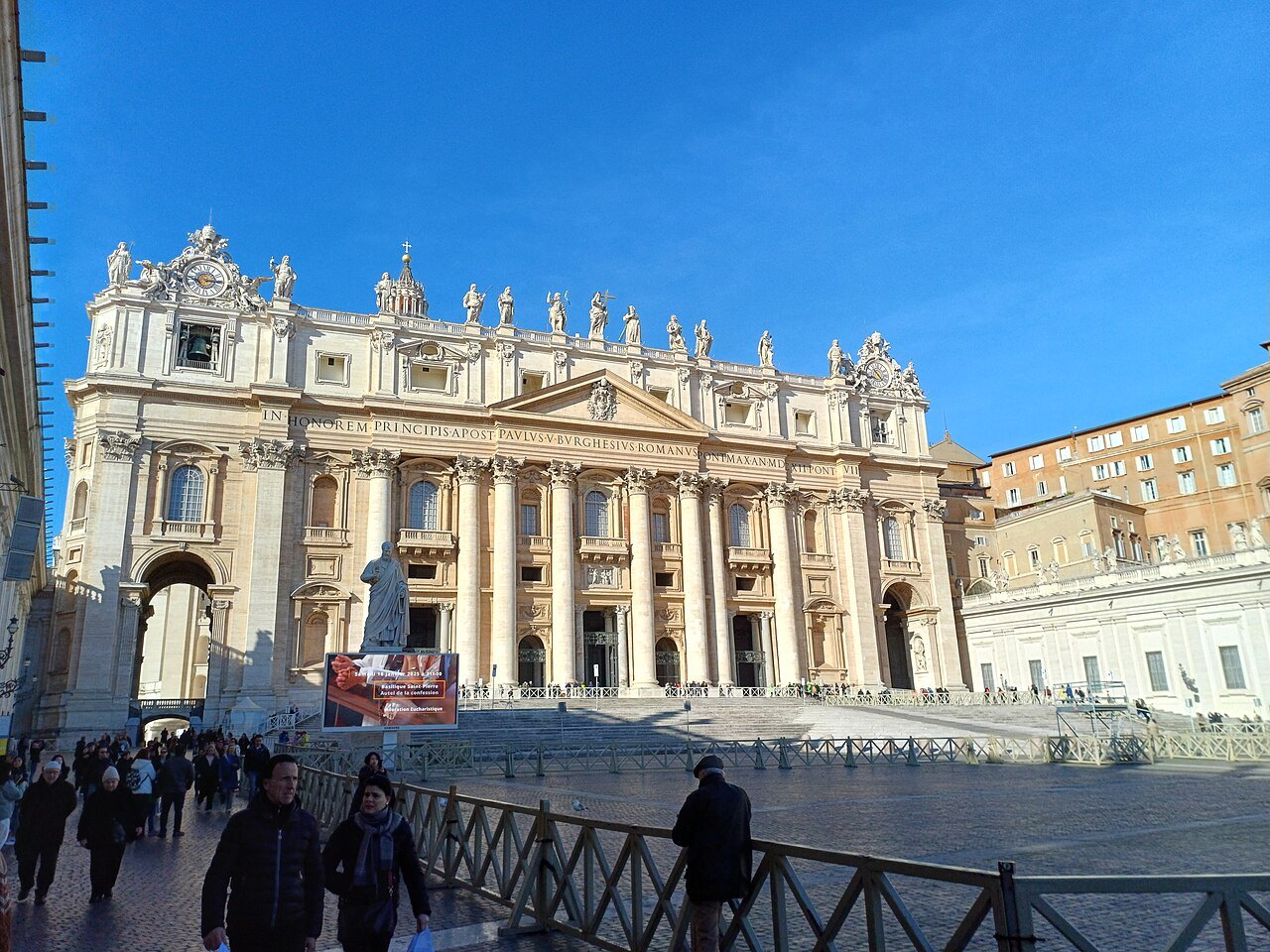
- IIIThe façadeMaderno's travertine front of 1612, with thirteen statues along its top.
- IVThe PietàMichelangelo's marble Virgin with the dead Christ, in the first chapel of the north aisle.
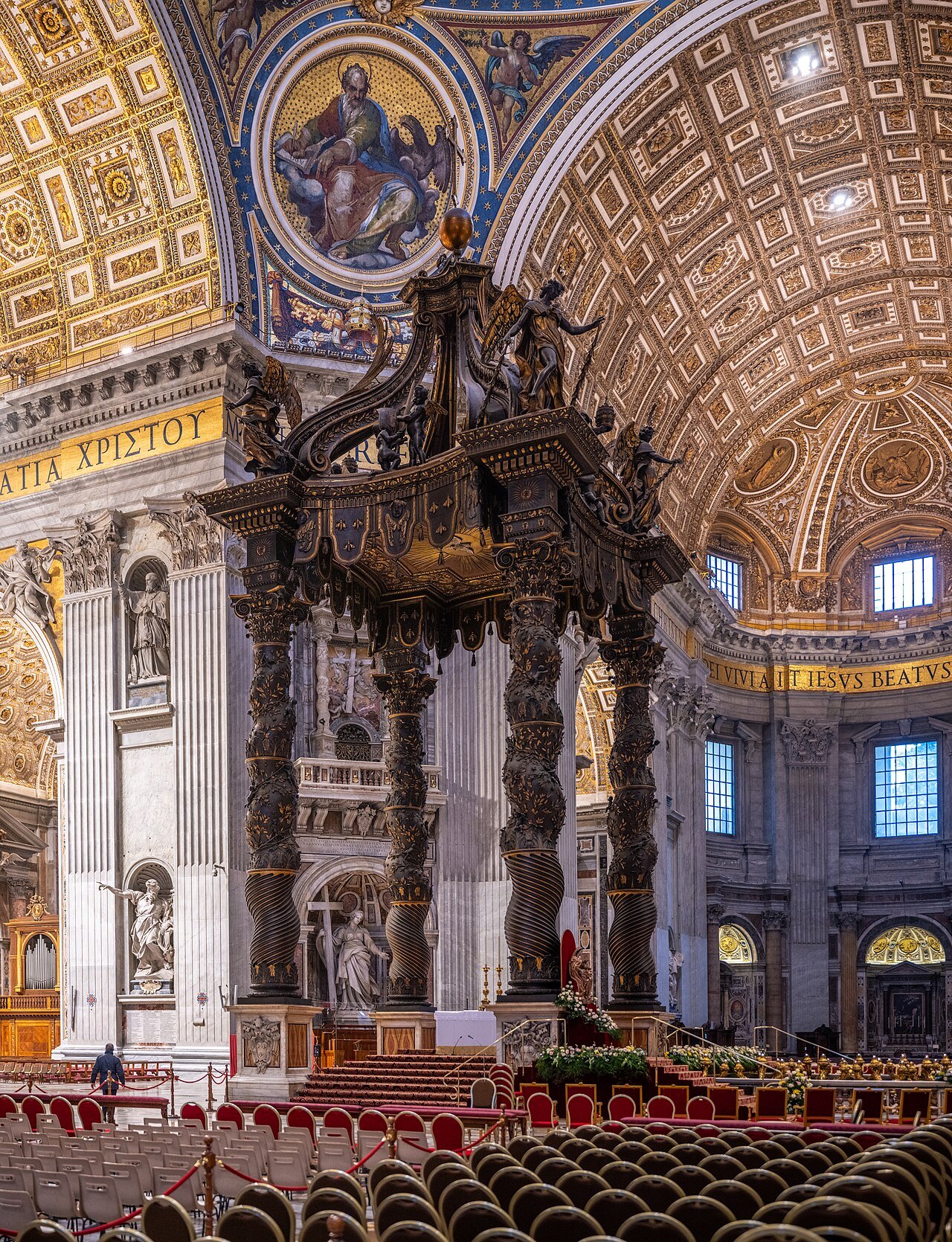
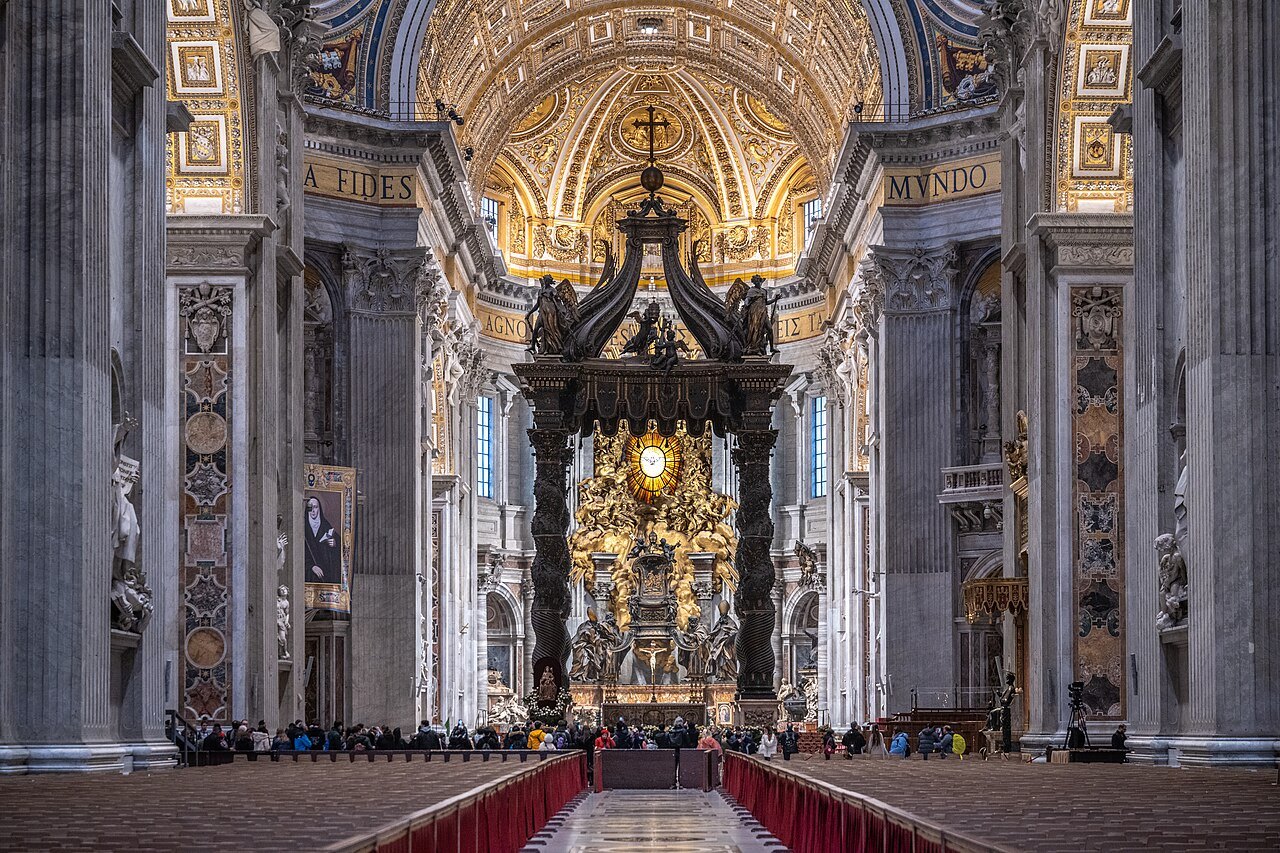
- VThe baldachinBernini's bronze canopy over the papal altar, about 94 feet high, on twisted columns.
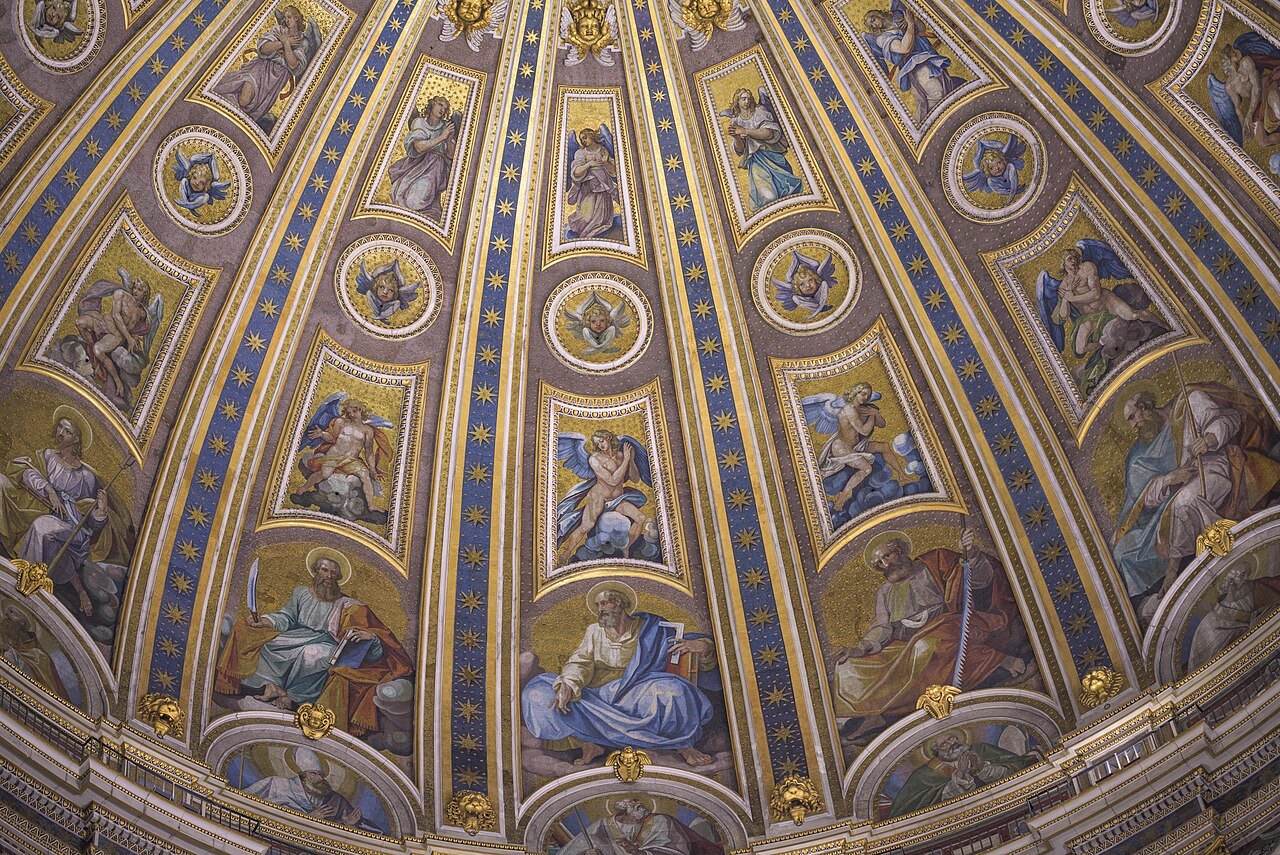
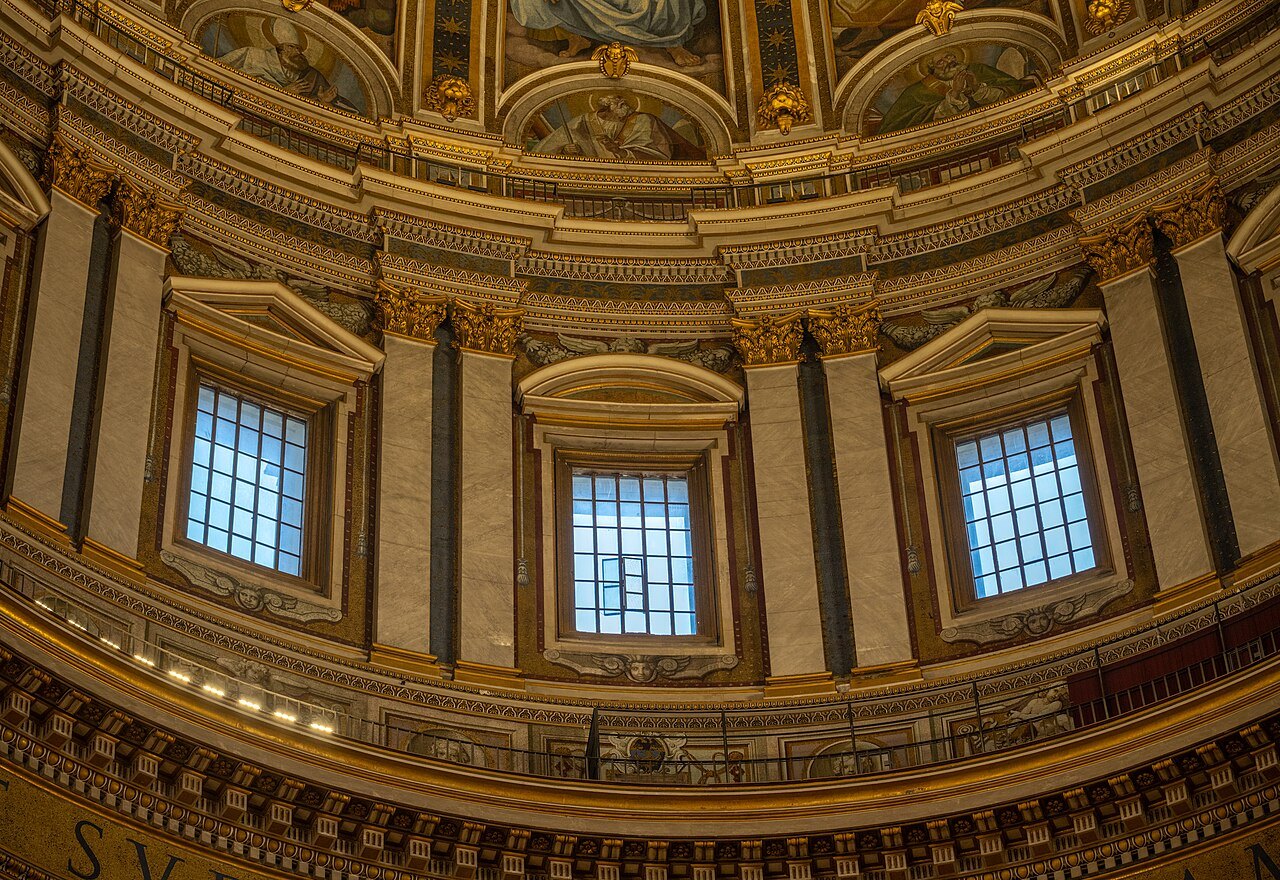
- VIThe domeMichelangelo's design, finished in 1590, climbable by elevator or stairs to its outer ring.
The sight in full
Reading the place
Why it matters
St. Peter's is one of the holiest places in Christianity, traditionally the burial place of Saint Peter, the leader of the apostles and, in Catholic teaching, the first bishop of Rome. It is the largest church in the world by interior measure and one of the most renowned works of Renaissance architecture, and its dome is a feature of the skyline of the whole city.
It is also in another country. Unlike Rome's other major basilicas, St. Peter's stands wholly within the territory and sovereign jurisdiction of Vatican City, a state separate from Italy. Vatican City became an independent state by the Lateran Treaty of 1929 and is the smallest country in the world, about 109 acres, an enclave inside Rome. You cross no border post, but the square and the basilica are Vatican ground.
Saint Peter and the old basilica
Catholic tradition holds that Peter came to Rome and was martyred there under Nero, after the Great Fire of 64; according to Jerome, he was crucified head downward. The emperor Constantine built the first basilica here between 319 and 333, over a small shrine believed to mark Peter's grave. It was over 340 feet long, entered through a colonnaded courtyard.
By the Renaissance the old church was ageing, and popes from Nicholas V to Julius II planned to replace it. Construction of the new basilica began on 18 April 1506 and ended on 18 November 1626. Part of the cost was met by selling indulgences, and the scandal over one preacher's methods helped set off the Protestant Reformation.
The square
The approach is Bernini's St. Peter's Square, built between 1656 and 1667. He inherited an obelisk and a fountain already in place and made a piazza in two parts: nearest the church a trapezoid that narrows toward the façade, making the building look nearer and taller, and beyond it a great ellipse enclosed by colonnades of paired Tuscan columns. The colonnades do not close the circle: they reach out in two curves, the arms of the Church welcoming the faithful.
At the center stands the obelisk known as the Witness, about 83 feet tall, 130 with its base and cross. It is the only obelisk that has stayed standing since it was brought from Egypt, and it once stood in the Circus of Nero, where it is thought to have witnessed Peter's crucifixion. Domenico Fontana moved it here for Pope Sixtus V in 1586. When the ropes began to smoke from the strain, Benedetto Bresca, a sailor from Sanremo, is said to have saved the day, and his town was granted the privilege of supplying the palms for Palm Sunday.
The façade and the nave
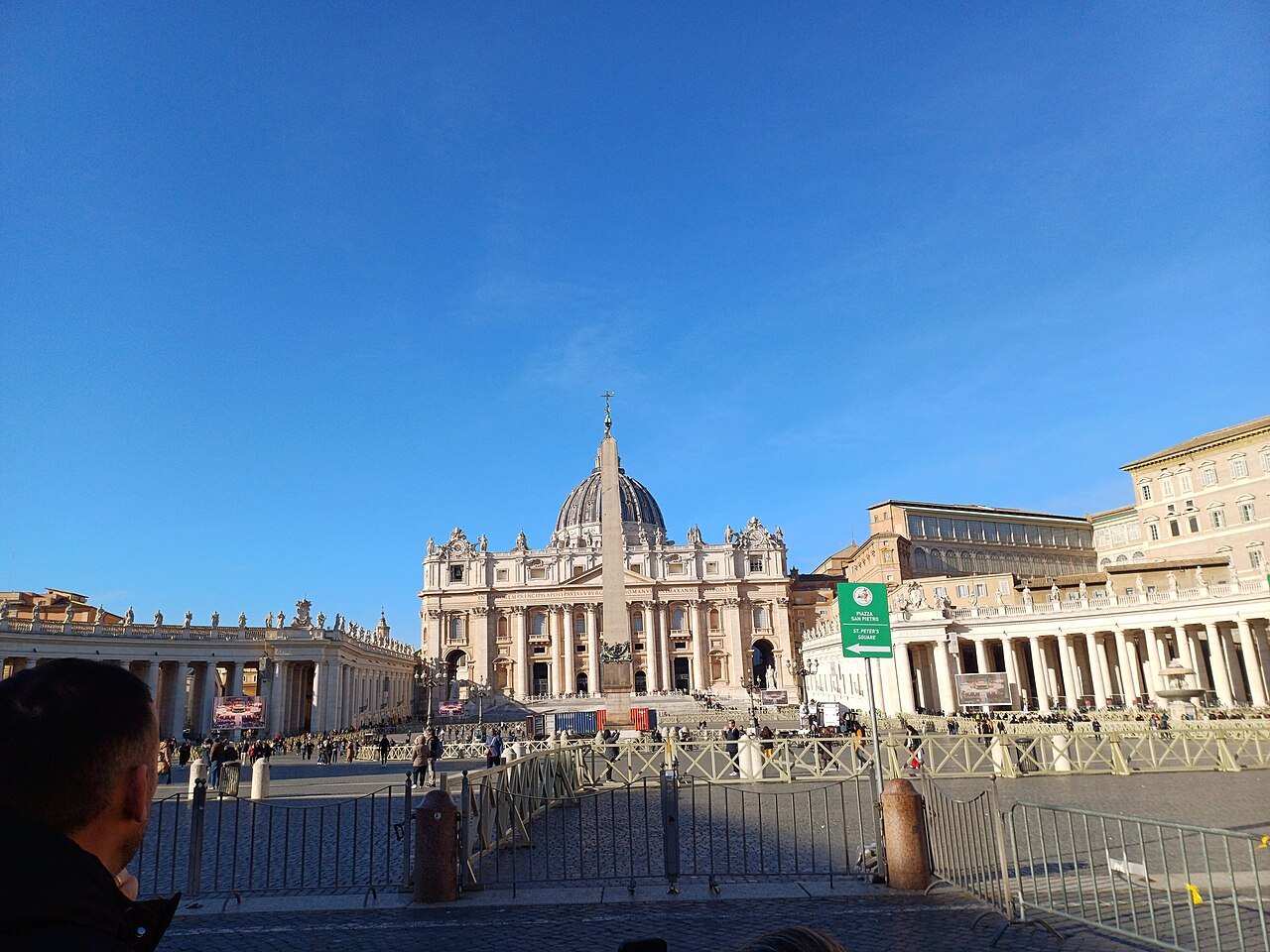
Carlo Maderno's façade of travertine, finished in 1612, is about 376 feet wide and 149 feet high, with giant Corinthian columns and, along the top, thirteen statues with Christ at the center. Its width is often called the least satisfying part of the design, because it hides the dome from anyone standing close.
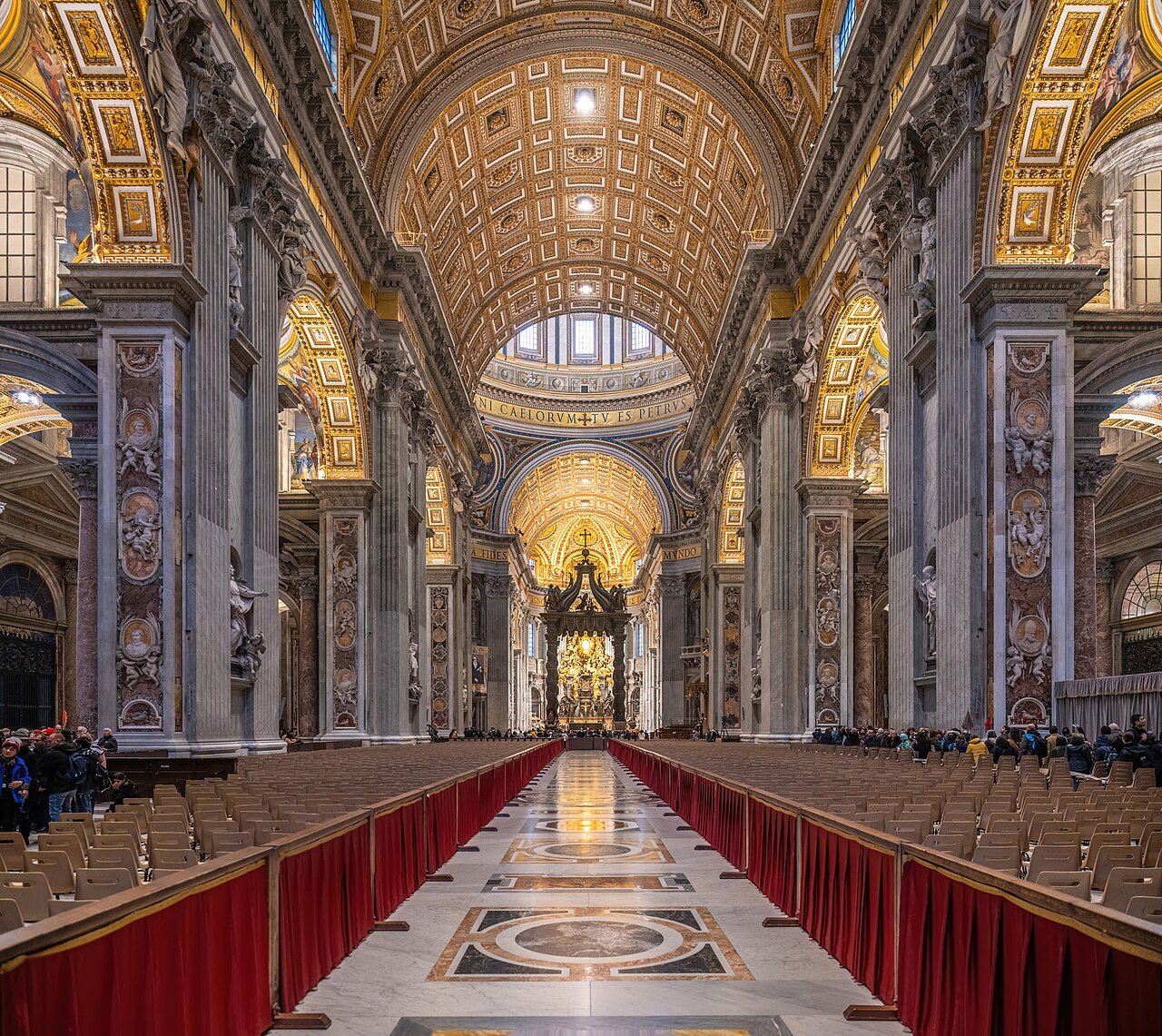
Inside, in the first chapel of the north aisle, is Michelangelo's Pietà, the Virgin holding the dead Christ across her knees. The nave leads to the crossing under the dome, where Bernini's bronze baldachin, about 94 feet tall, stands over the papal altar on four twisted columns modeled on ancient ones from the old basilica. Beyond it, in the apse, Bernini's Chair of Saint Peter enshrines a wooden throne long said to be the apostle's, held up by bronze Doctors of the Church under a window of yellow alabaster.
The dome
The dome was designed by Michelangelo and completed by Giacomo della Porta and Domenico Fontana in 1590. When cracks appeared in the eighteenth century, iron chains were placed between its two shells to bind it like the hoops of a barrel. Its lantern and cross crown the skyline of Rome.
Visitors can climb it. According to the basilica's own site, the dome is visited on a booked time slot, with a choice of the elevator to the terrace level or the stairs, and the visit includes the inner ring, looking down into the church, and the outer ring, looking over the square and the city.
How to visit
Entry to the basilica itself is booked through the basilica's own website, which also sells the dome and guided visits; guided tours are otherwise arranged at the Tour Desk in the Welcome Area. There is no cloakroom in the basilica, so bring only a small bag. The dress code is strict and applies to everyone: knees covered, shoulders covered, no hats. Inside, visitors are asked not to take photographs, to keep phones silent and to speak quietly, because the basilica is above all a place of prayer, and a separate entrance path is kept for people coming to pray or to attend Mass.
If you visit the Vatican Museums on the same day, note the museums' warning: bags left in their cloakroom stay there, so do not plan to carry a large bag on to the basilica. Allow at least an hour inside, and more with the dome.
Myths worth setting aside
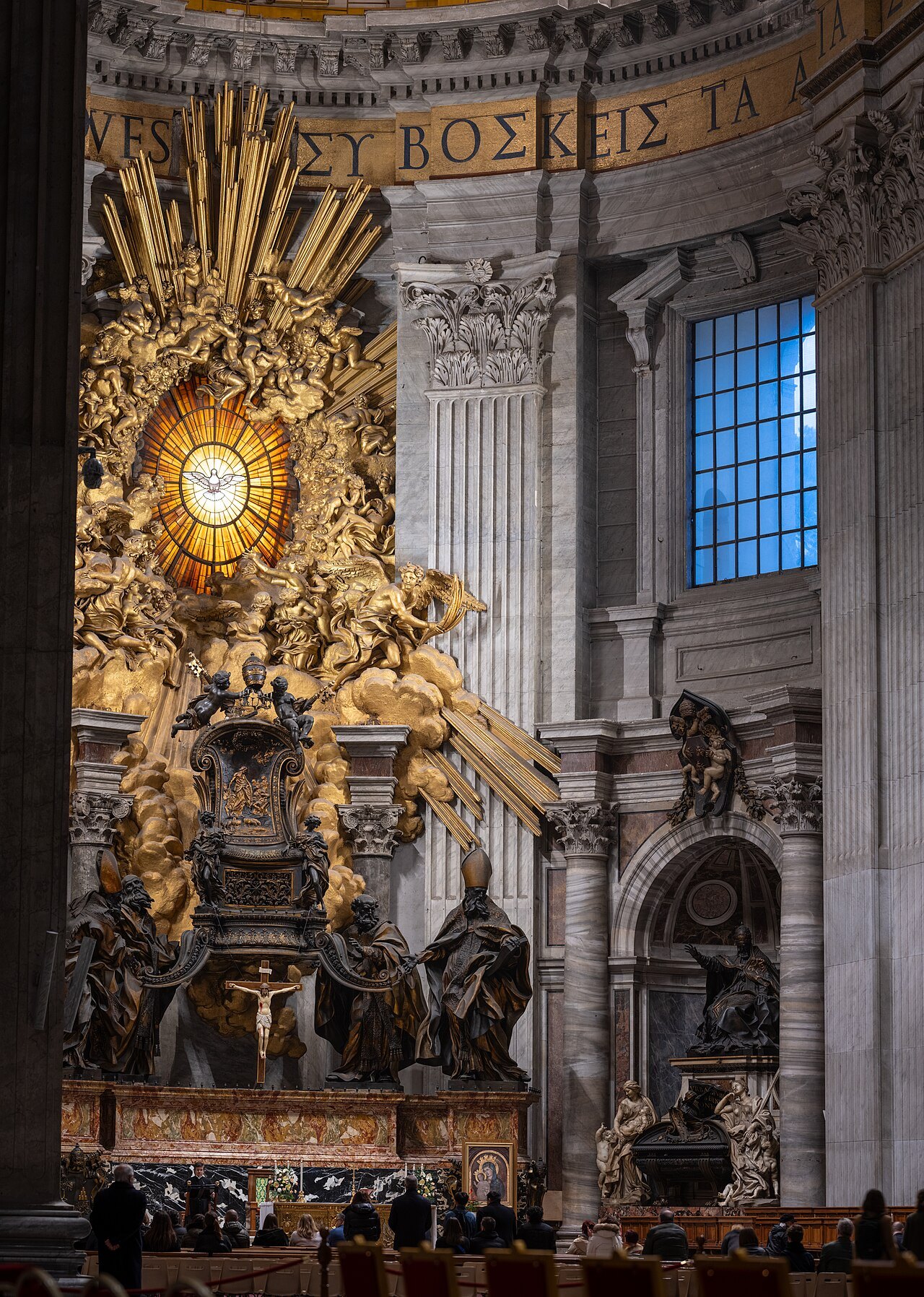
St. Peter's is often called the pope's cathedral. It is not: the cathedral of the bishop of Rome is St. John Lateran, and St. Peter's is a papal basilica and a shrine. Nor is the wooden chair enclosed in Bernini's bronze throne Peter's own: it is recorded as a gift from the emperor Charles the Bald to Pope John VIII in 875.
Where to go next
Nearby
- Nearby · Vatican CityThe Vatican Museums and the Sistine ChapelFive centuries of papal collecting in the palaces of Vatican City, a separate state: ancient sculpture around the Belvedere courtyards, Raphael's rooms, a gallery of painted maps, and at the end of the route Michelangelo's Sistine Chapel.Read the page →
- Nearby · XIV · BorgoCastel Sant'AngeloHadrian's mausoleum, raised on the right bank of the Tiber between 134 and 139, then a fortress, a papal refuge and a prison, and since 1901 a museum, reached across the bridge Hadrian built for it, lined with Bernini's angels.Read the page →
- Nearby · XIII · TrastevereTrastevereThe thirteenth rione, trans Tiberim, beyond the Tiber: a maze of cobbled lanes between the river and the Janiculum, with one of the oldest churches to the Virgin in Rome, Raphael's frescoes in a banker's villa, and the city's best view from the hill above.Read the page →