What you are looking at
The Pantheon
IX · Pigna
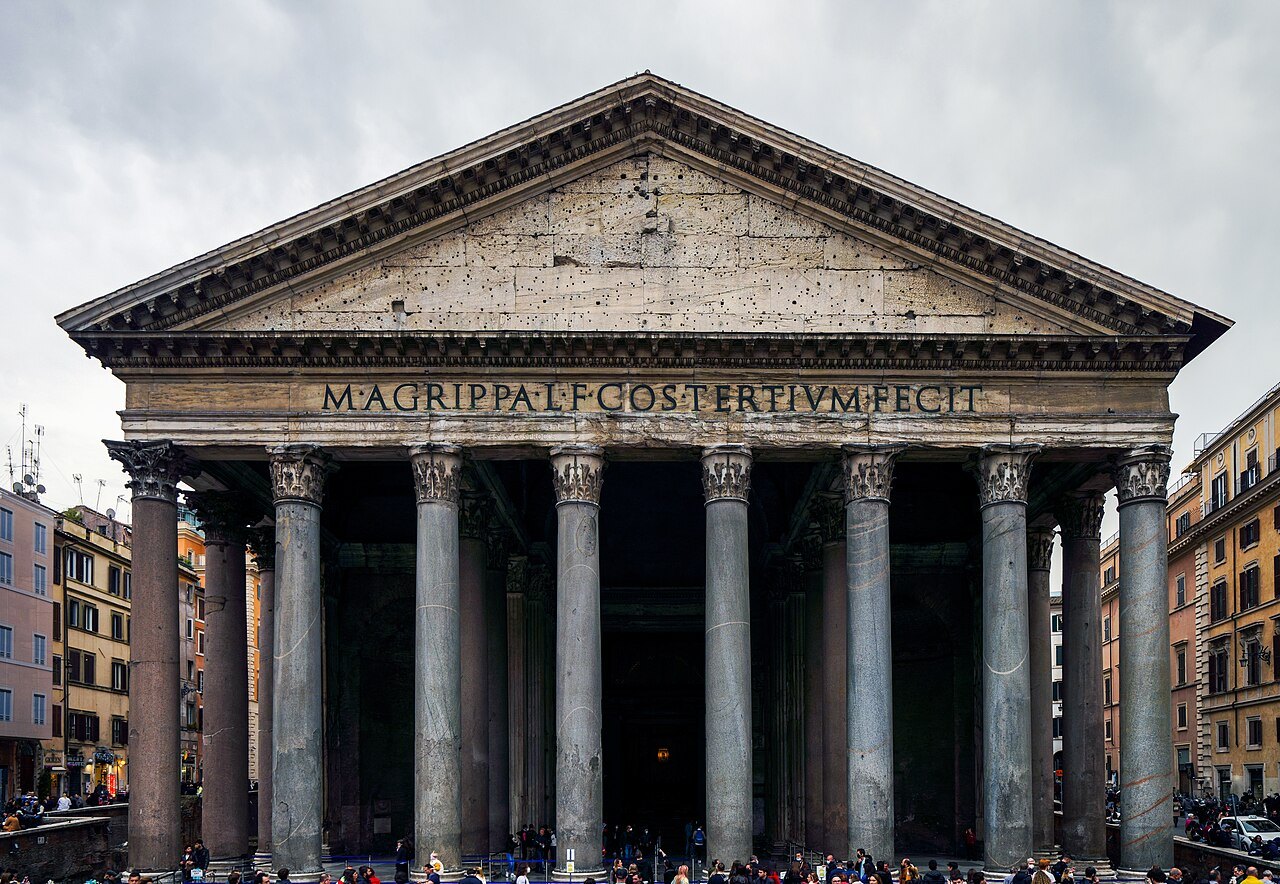
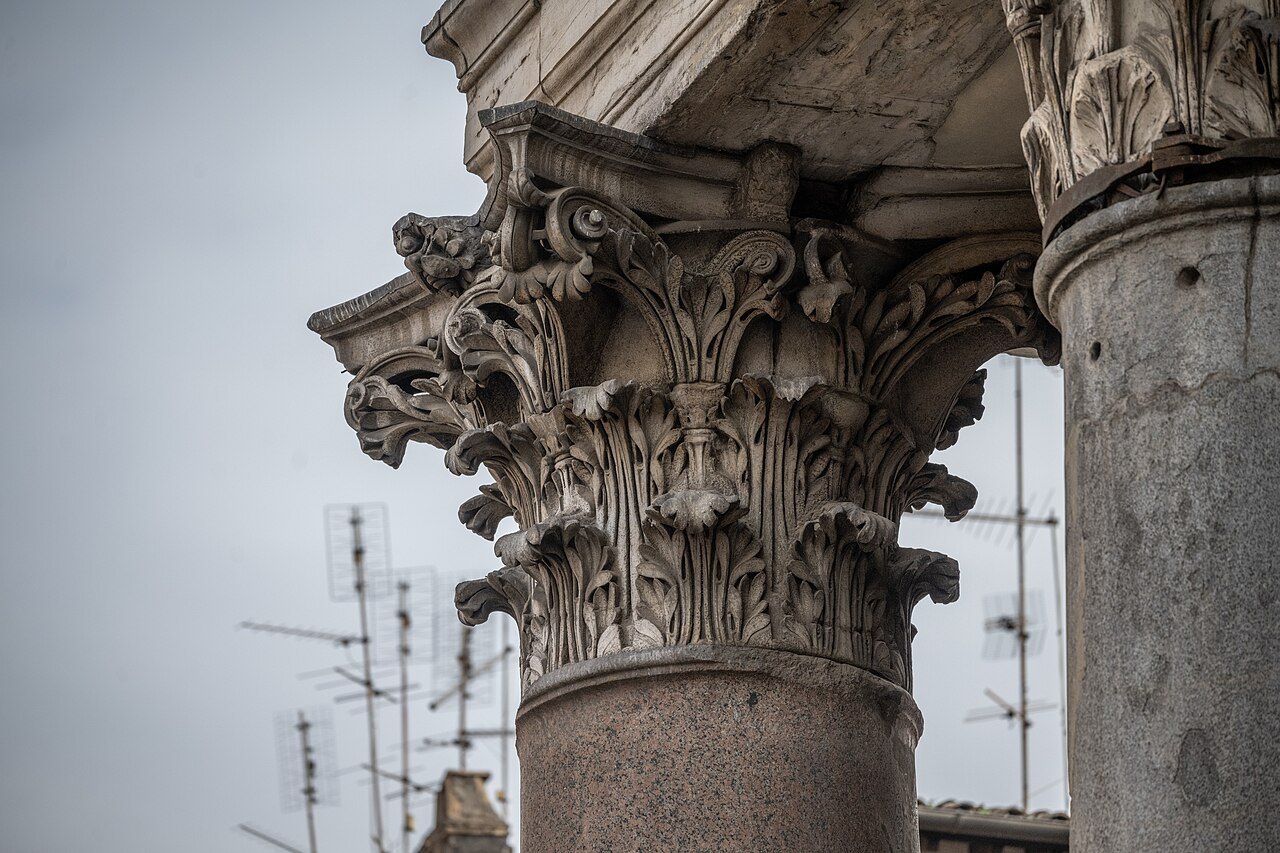
- IThe porticoSixteen granite Corinthian columns under a pediment carrying Agrippa's name, not Hadrian's.
- IIThe doorsThe entrance to the rotunda, and with the oculus the only natural source of light inside.
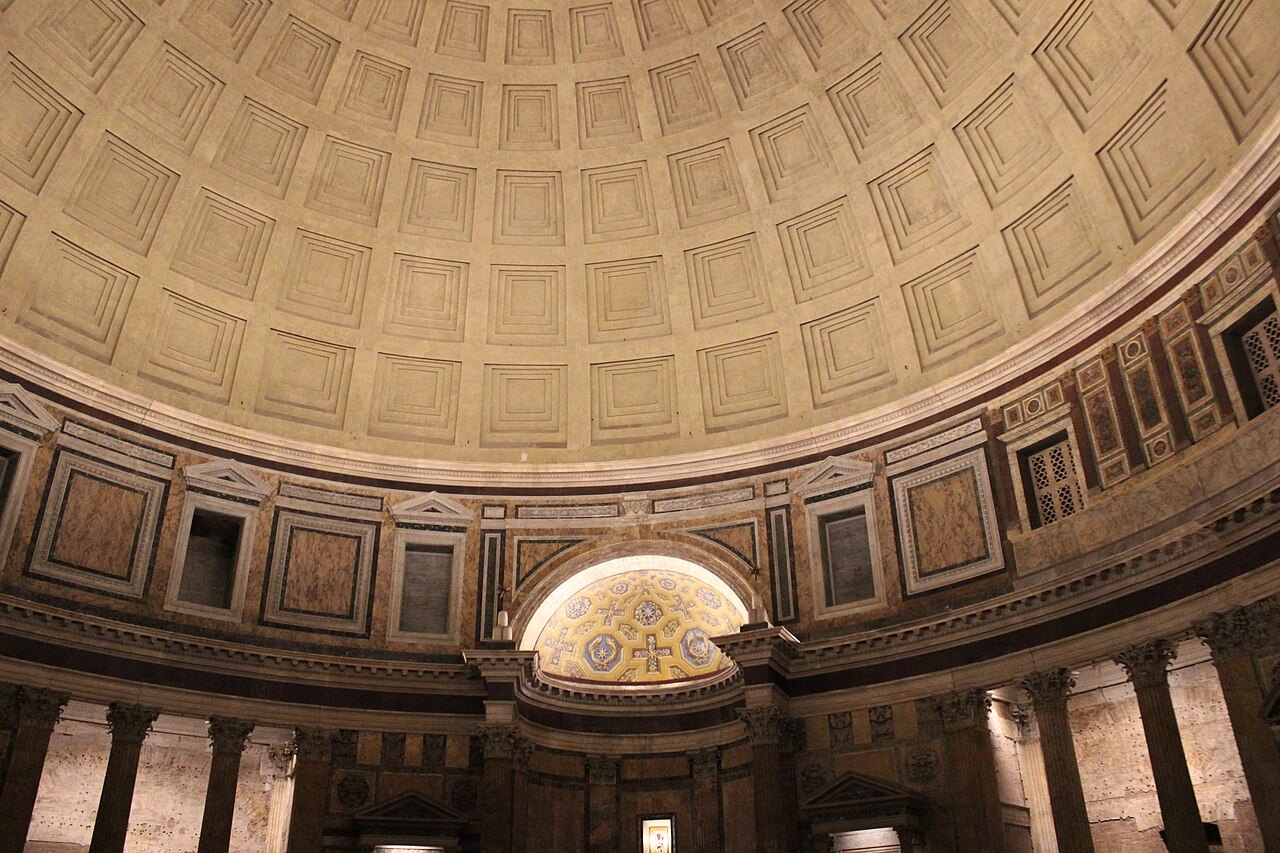
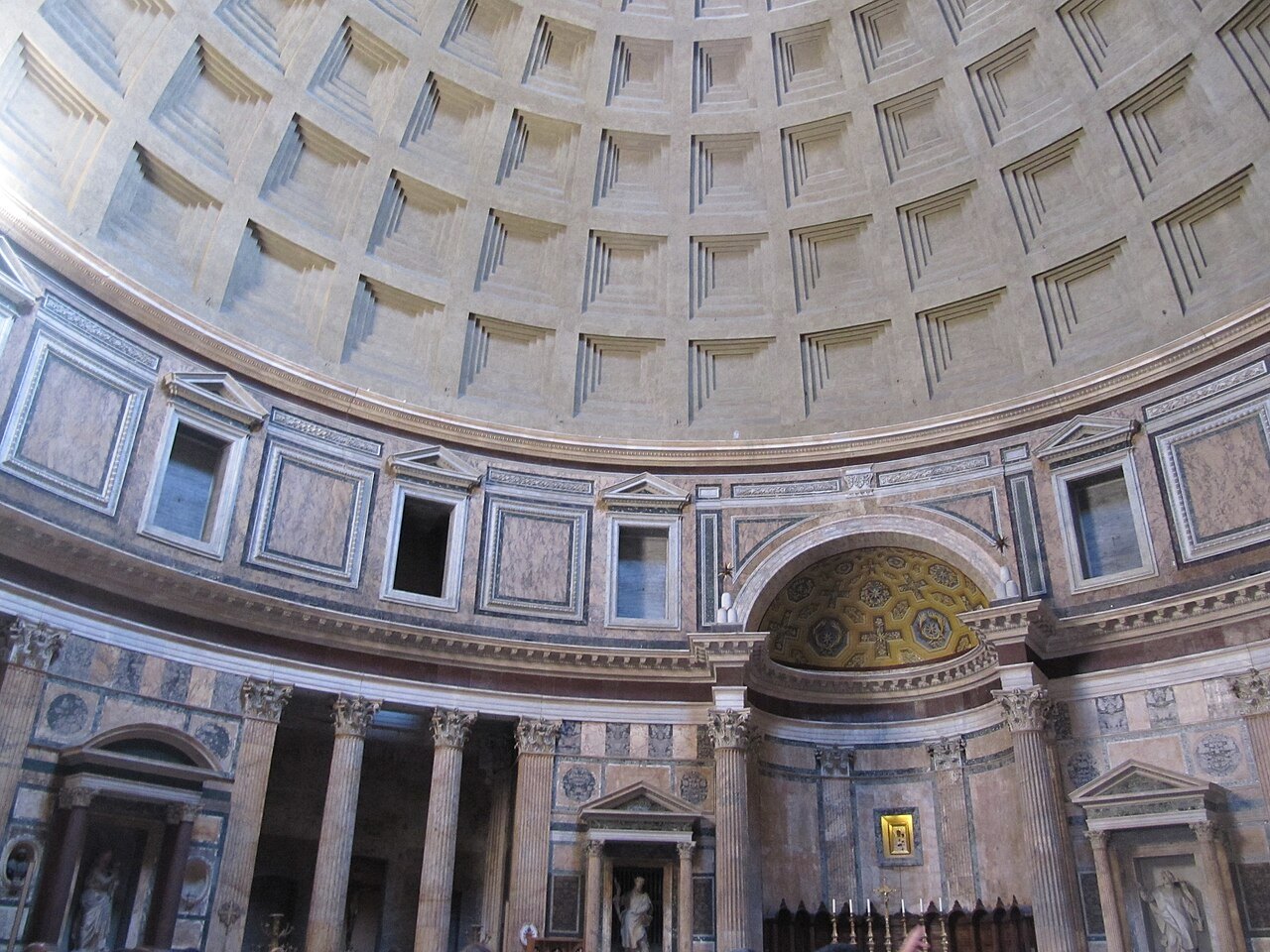
- IIIThe domeFive rings of 28 coffers, the concrete thinning as it rises toward the opening.
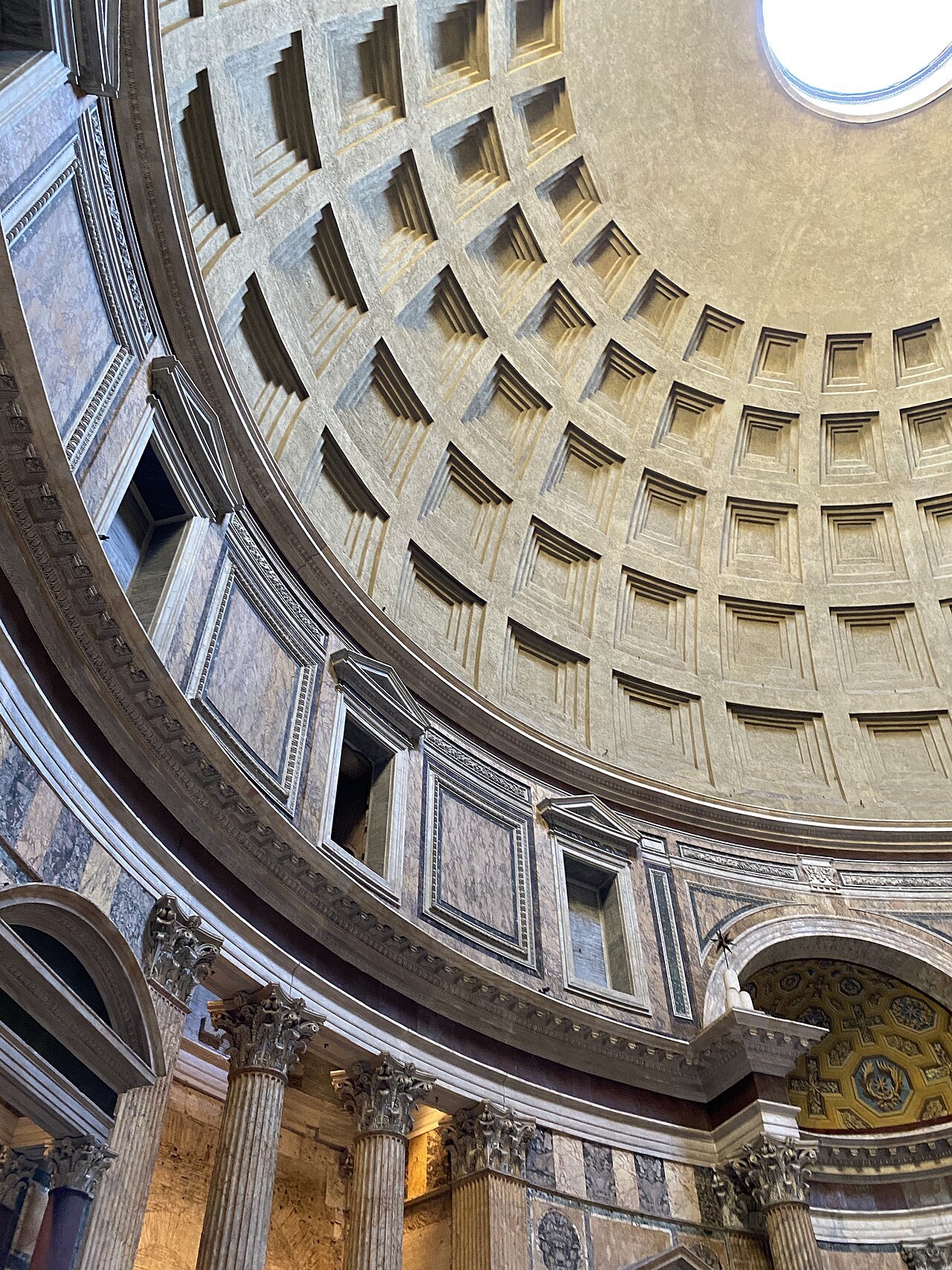
- IVThe oculusAn opening about 30 feet across, never covered; rain falls straight onto the sloping floor.
- VThe tombsRaphael, Annibale Carracci, Corelli, and two kings and a queen of Italy.
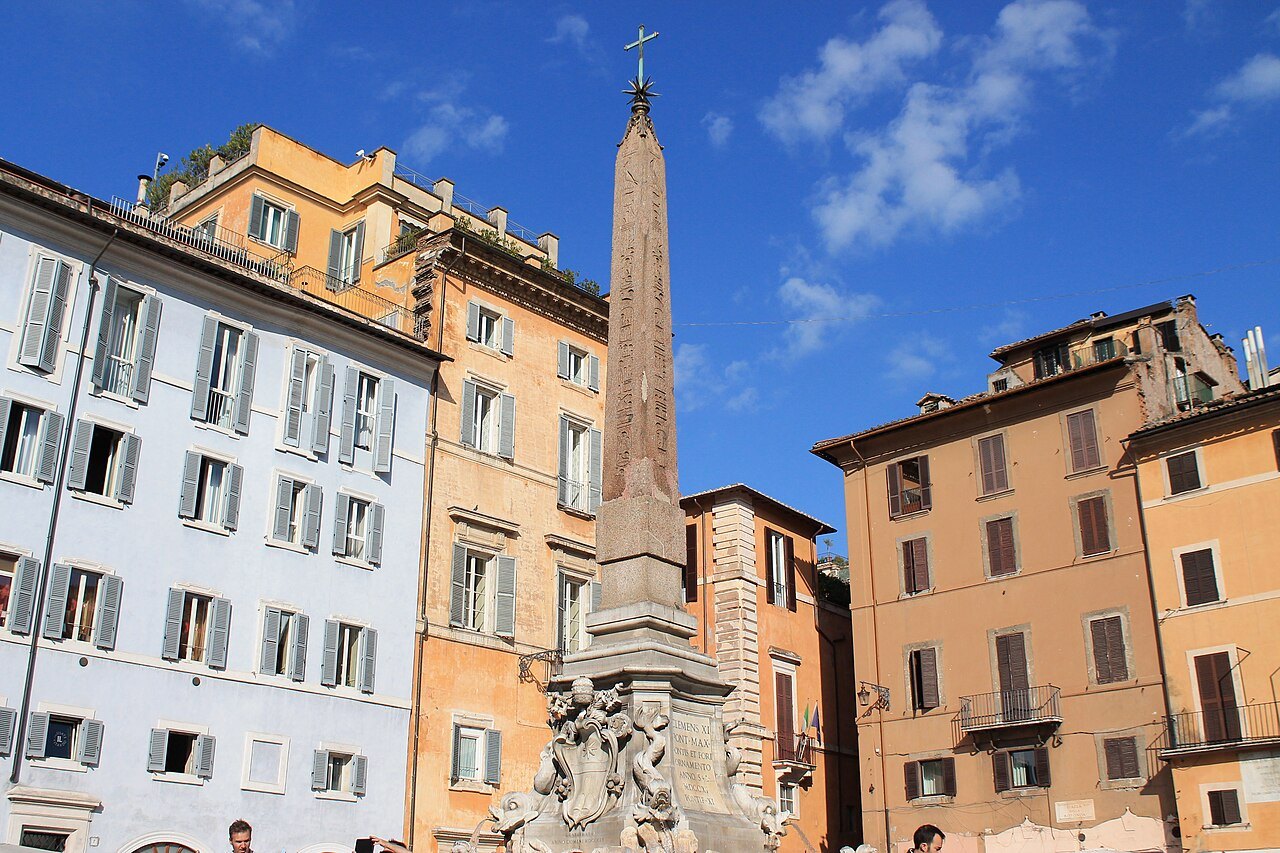
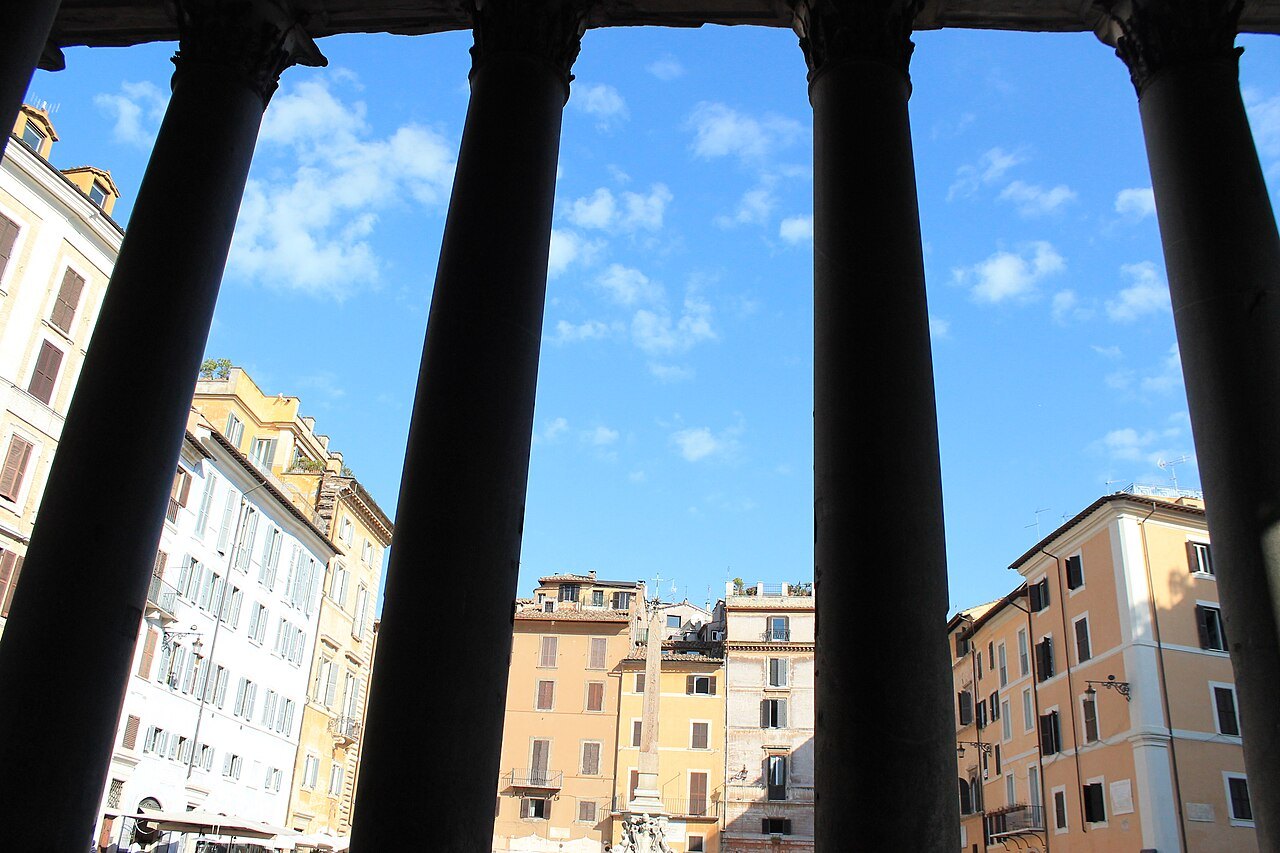
- VIThe piazzaThe Piazza della Rotonda outside, with its fountain and obelisk.
The sight in full
Reading the place
Why it matters
The Pantheon is the best-preserved building of ancient Rome and perhaps the most influential round building ever made. It stands in the rione of Pigna, in the middle of the old city, a short walk from Piazza Navona and the Trevi Fountain. Almost two thousand years after it was built, its coffered dome is still the largest unreinforced concrete dome in the world.
Its survival has one cause: in 609 it became a church. The Byzantine emperor Phocas gave the building to Pope Boniface IV, who consecrated it on 13 May 609 to Saint Mary and the Martyrs, and it has been a church ever since. That saved it from the abandonment and stripping that destroyed most of the ancient city.
Agrippa's name, Hadrian's building
The first Pantheon was built by Marcus Agrippa, Augustus's right-hand man, as part of a group of buildings on his own land in the Campus Martius between 29 and 19 BC. That building burned down. The one standing now was completed under the emperor Hadrian, probably dedicated around AD 126, and Hadrian had Agrippa's original dedication cut again across the new front. That is why the inscription names Agrippa, and why the building's date was so long uncertain.
The name comes from the Greek for of all the gods, and the simplest explanation is that it was a temple to all the gods. Even that is questioned: the Roman historian Cassius Dio thought the name might come from the statues of many gods around it, or from the way the dome resembles the heavens.
What you see: the portico
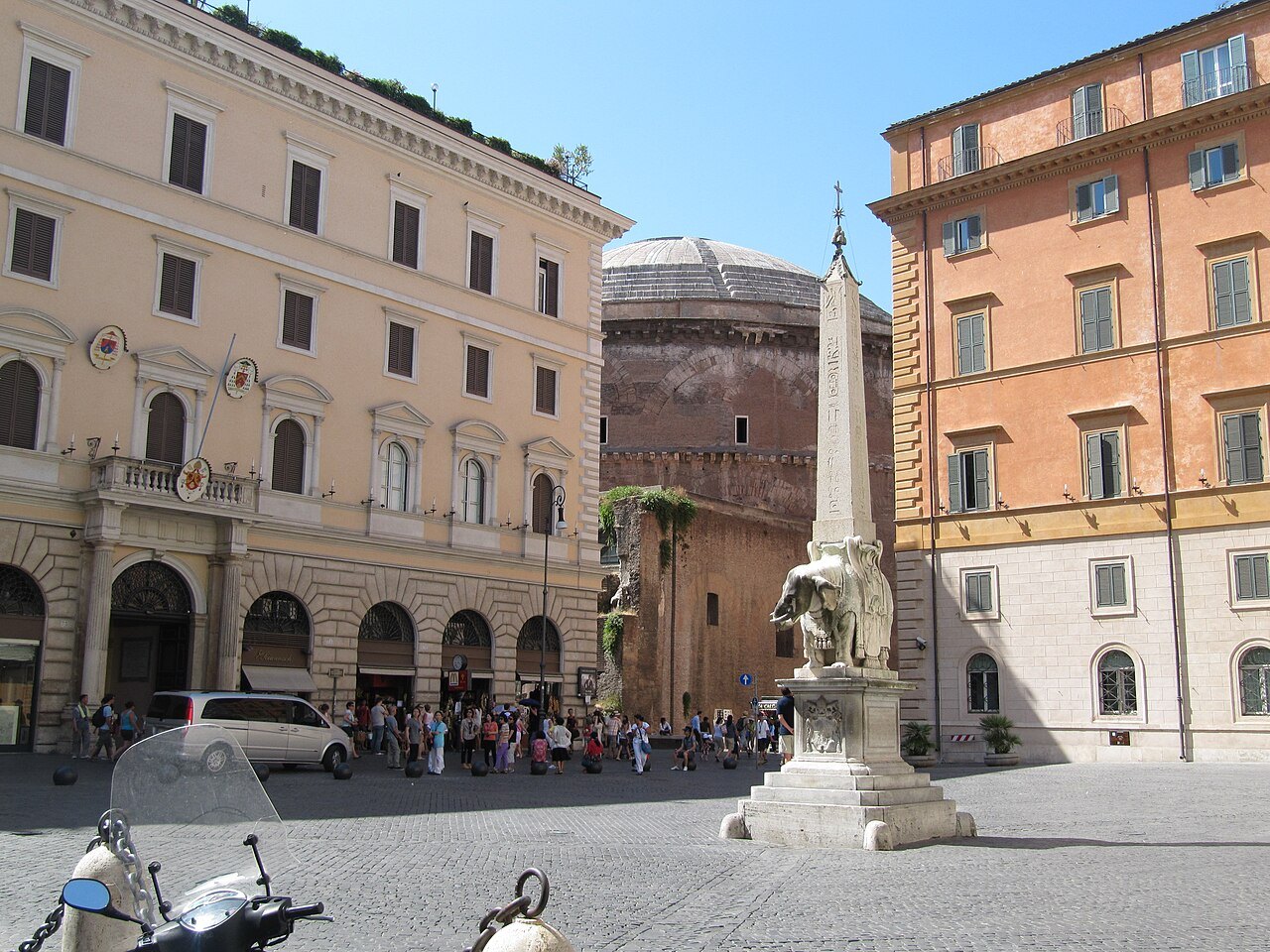
The portico has large granite Corinthian columns, eight across the front and two groups of four behind, under a pediment that once carried a bronze relief, probably an eagle in a wreath. A block between the portico and the rotunda carries the remains of a second, higher pediment, which suggests the portico was built shorter than first planned. The floor of the portico once stood seven steps above the square; floods of the Tiber and failing drains raised the ground until most of the steps were buried.
The bronze trusses that held up the portico roof are gone. Pope Urban VIII had them removed and melted down in the seventeenth century, most of the metal going to make cannon for Castel Sant'Angelo.
What you see: the rotunda
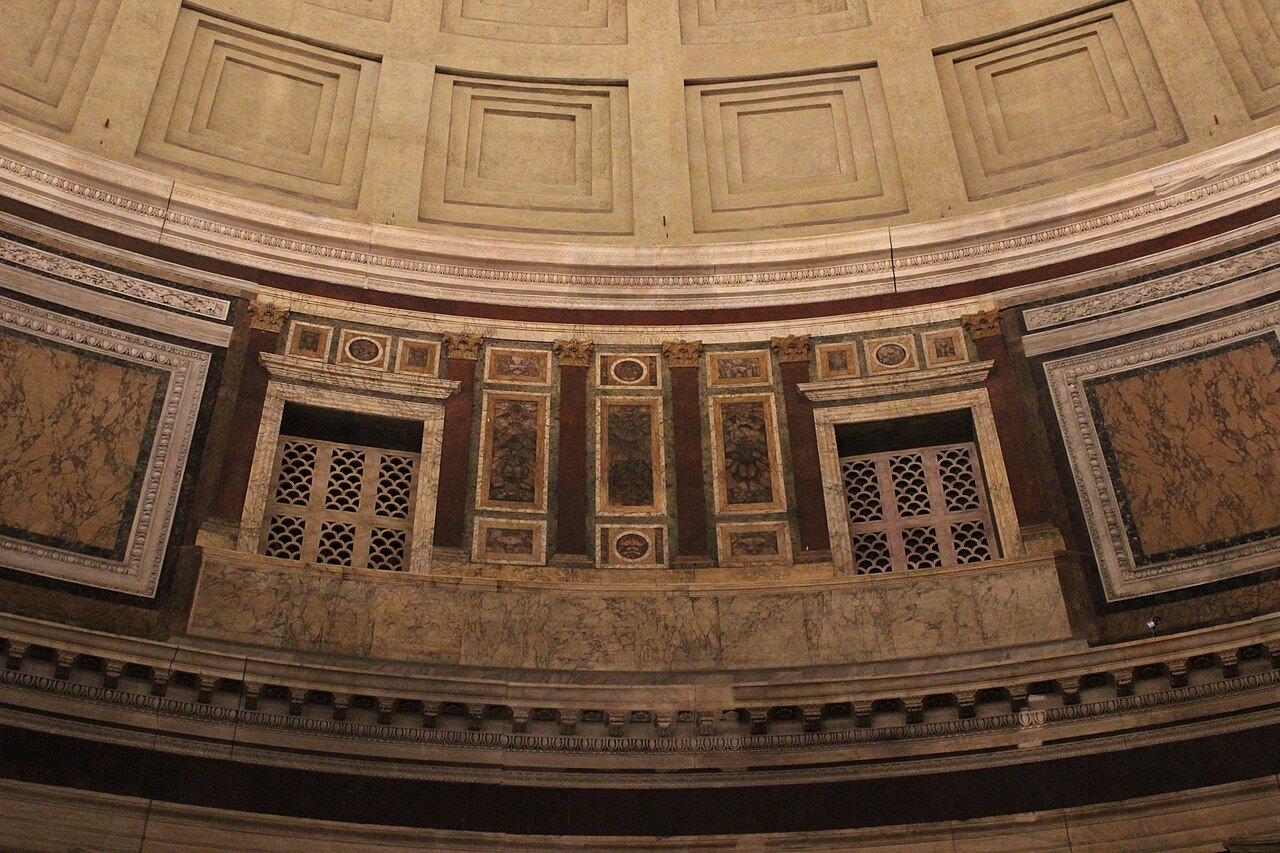
Through the doors is one enormous round room. Its height to the oculus and the diameter of its floor are the same, about 142 feet, so a perfect sphere would fit inside. The coffers are set in five rings of 28, an even layout that was hard to achieve. The weight of the concrete dome rests on a ring of stone around the oculus and is carried down through eight barrel vaults inside the drum wall, which is about 21 feet thick. The dome itself thins from about 21 feet at the base to under four feet at the top, and its concrete changes as it rises, from travertine at the bottom to light porous pumice near the opening.
The oculus, about 30 feet across, has never been covered. It and the door are the only natural sources of light, and a patch of sunlight moves around the walls through the day like a sundial marking time with light. Rain falls straight in; the floor slopes about a foot toward drains. At Pentecost, firefighters on the roof pour red rose petals through the opening.
The tombs
Since the Renaissance the Pantheon has been a place of important burials: the painters Raphael and Annibale Carracci, the composer Arcangelo Corelli and the architect Baldassare Peruzzi lie here. After Italy was unified, it became the burial place of its kings: Victor Emmanuel II, who died in 1878, and Umberto I lie in chapels on opposite sides, with Queen Margherita. The monarchy was abolished in 1946, and the last two kings, who died in exile, were not buried here. An honor guard still stands at the royal tombs.
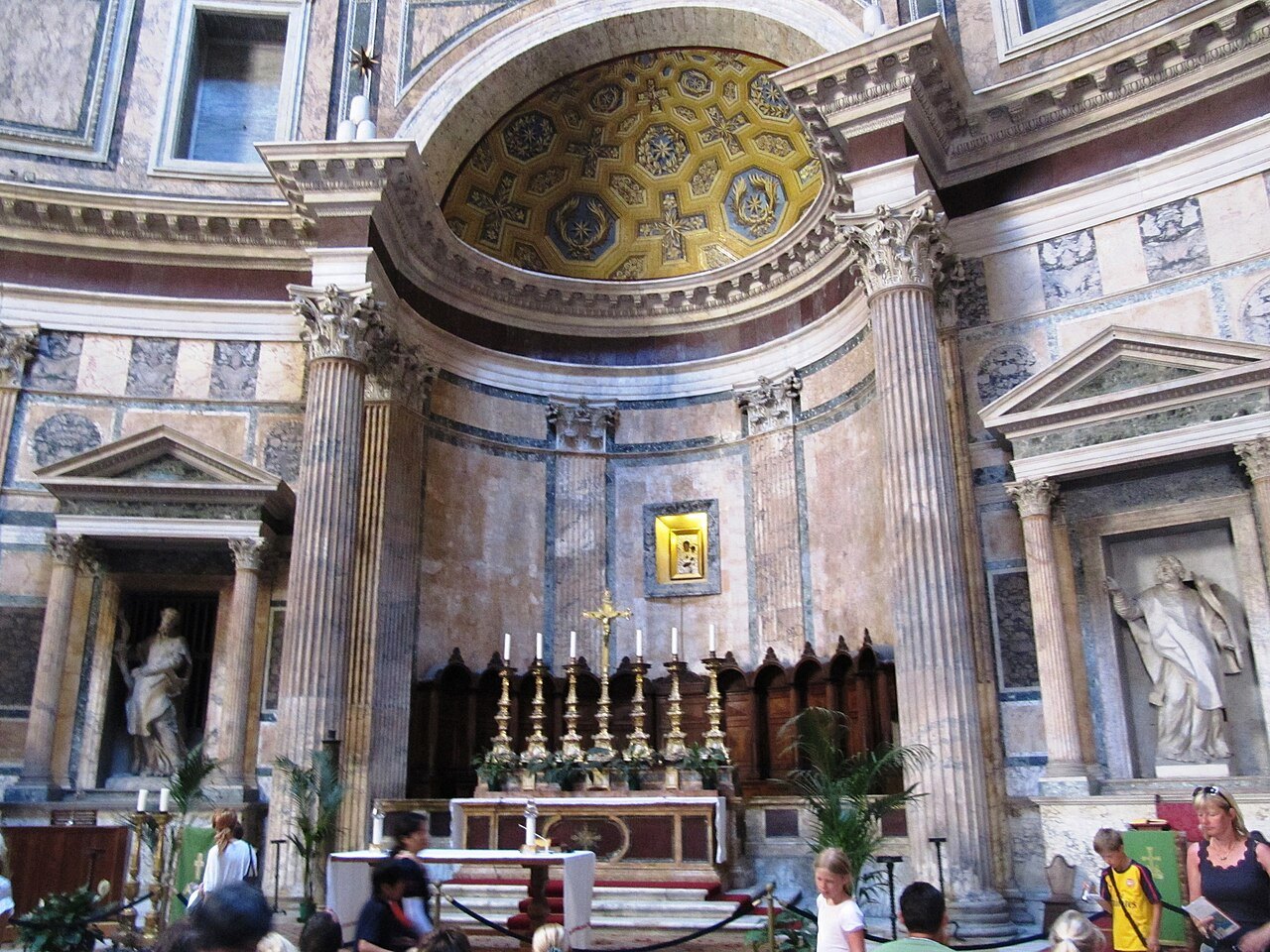
Above the high altar is a seventh-century Byzantine icon of the Virgin and Child, given by Phocas to Boniface IV for the dedication of 609. The high altar and apse were designed in the early eighteenth century.
How to visit
The Pantheon is a working church, and since July 2023 visitors have paid for entry, while worshippers keep free access for services. Buy from the official channel only, and treat the building as a church: speak quietly and dress with respect. The booking ahead page gathers what to check before going.
Half an hour inside is enough to see the dome, the tombs and the light; longer on a day of passing clouds, when the beam from the oculus comes and goes. The Piazza della Rotonda outside, with its fountain and obelisk, is a good place to look at the portico from a distance.
Myths worth setting aside
Rome has long said that Urban VIII melted the portico's bronze to make Bernini's canopy over the altar of St. Peter's, and a Roman satirist quipped that what the barbarians did not do, the Barberini did. The pope's own accounts, studied by the archaeologist Carlo Fea, show that about 90 percent of the bronze went into cannon, and that the bronze for the canopy came from Venice. And the Pantheon was never simply abandoned: it was a church within a century and a half of the end of the western empire.
Where to go next
Nearby
- Nearby · VI · ParionePiazza Navona and Campo de' FioriThe long oval of Domitian's stadium, remade in the seventeenth century as Rome's Baroque showpiece with three fountains and Borromini's church, and a few streets south the old market square of Campo de' Fiori.Read the page →
- Nearby · II · TreviThe Trevi FountainNicola Salvi's fountain of 1732 to 1762, the largest Baroque fountain in the world, marks where the water of an aqueduct first built in 19 BC arrives in the city, filling a small square at the meeting of three streets.Read the page →
- Nearby · X · CampitelliThe Capitoline Hill and its MuseumsThe seat of the city's government since the Middle Ages: a square Michelangelo turned to face the new Rome, and two palaces holding one of the oldest public museums in the world.Read the page →