What you are looking at
Trastevere
XIII · Trastevere
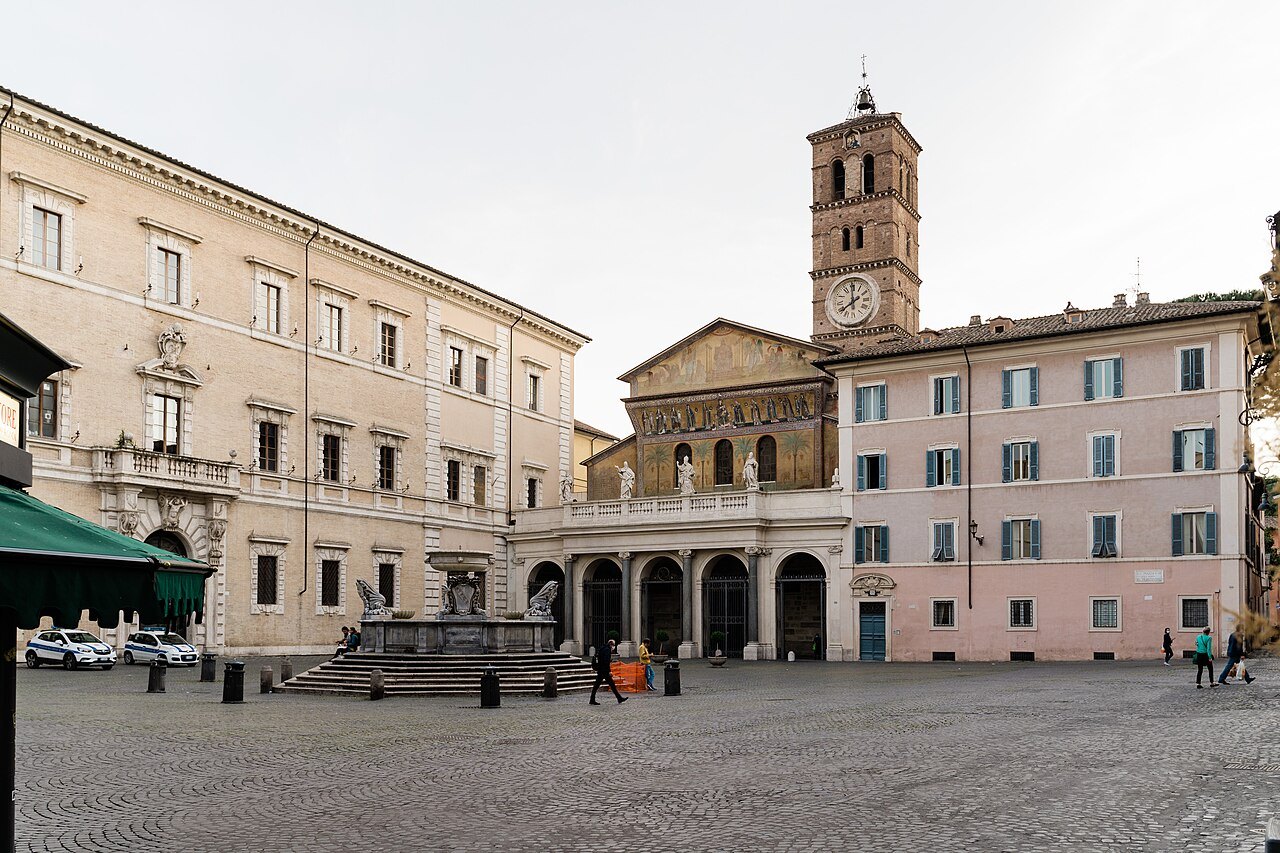
- ISanta Maria in TrastevereOne of the oldest churches in Rome, rebuilt in the 1140s, with gold mosaics in its apse.
- IIThe piazza and fountainThe square in front of the church, its octagonal fountain already on a map of 1472.
- IIISanta CeciliaThe church of the patron saint of music, with Stefano Maderno's marble of the saint as she was found.
- IVThe Villa FarnesinaA banker's summer villa of 1506 to 1510, with Raphael's Galatea and Cupid and Psyche.
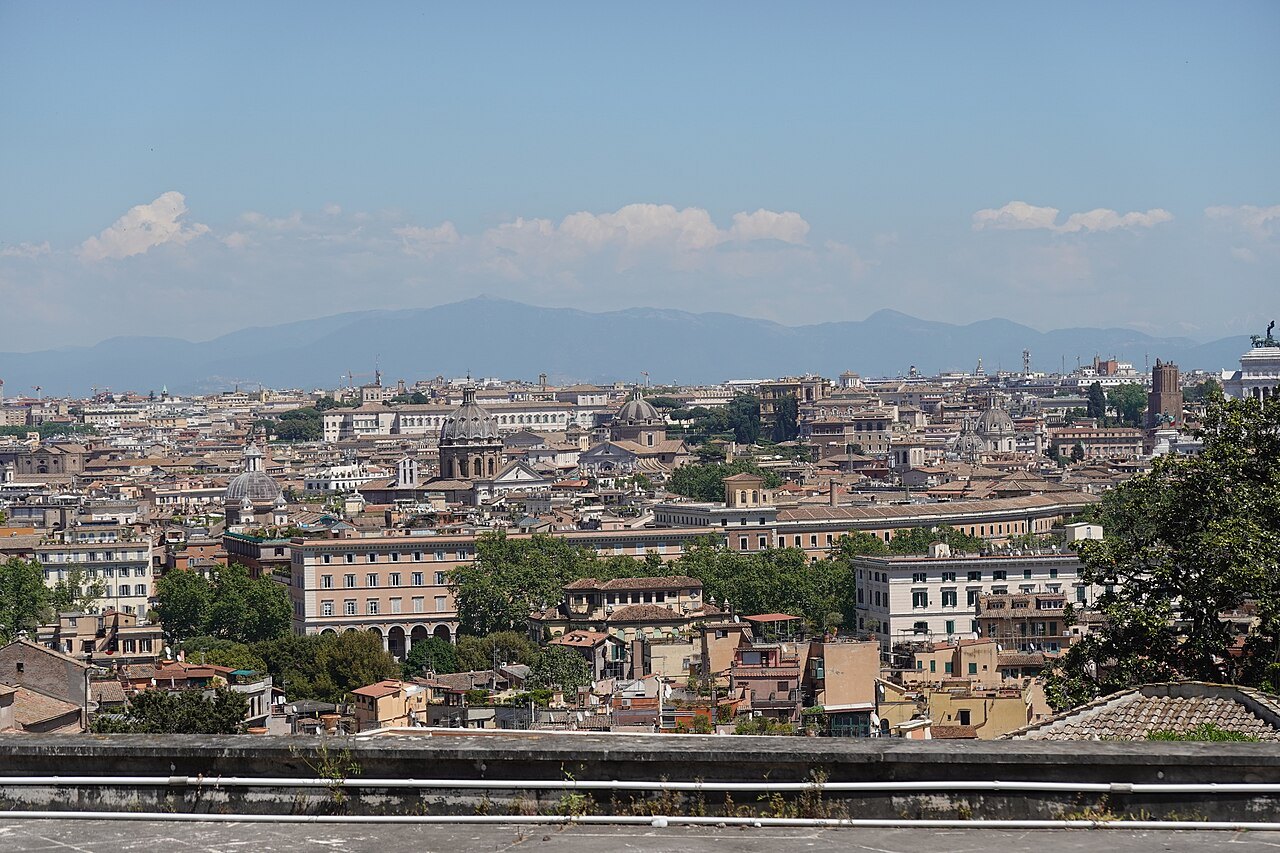
- VThe JaniculumThe hill above the rione, not one of the seven, with a view over all the domes of Rome.
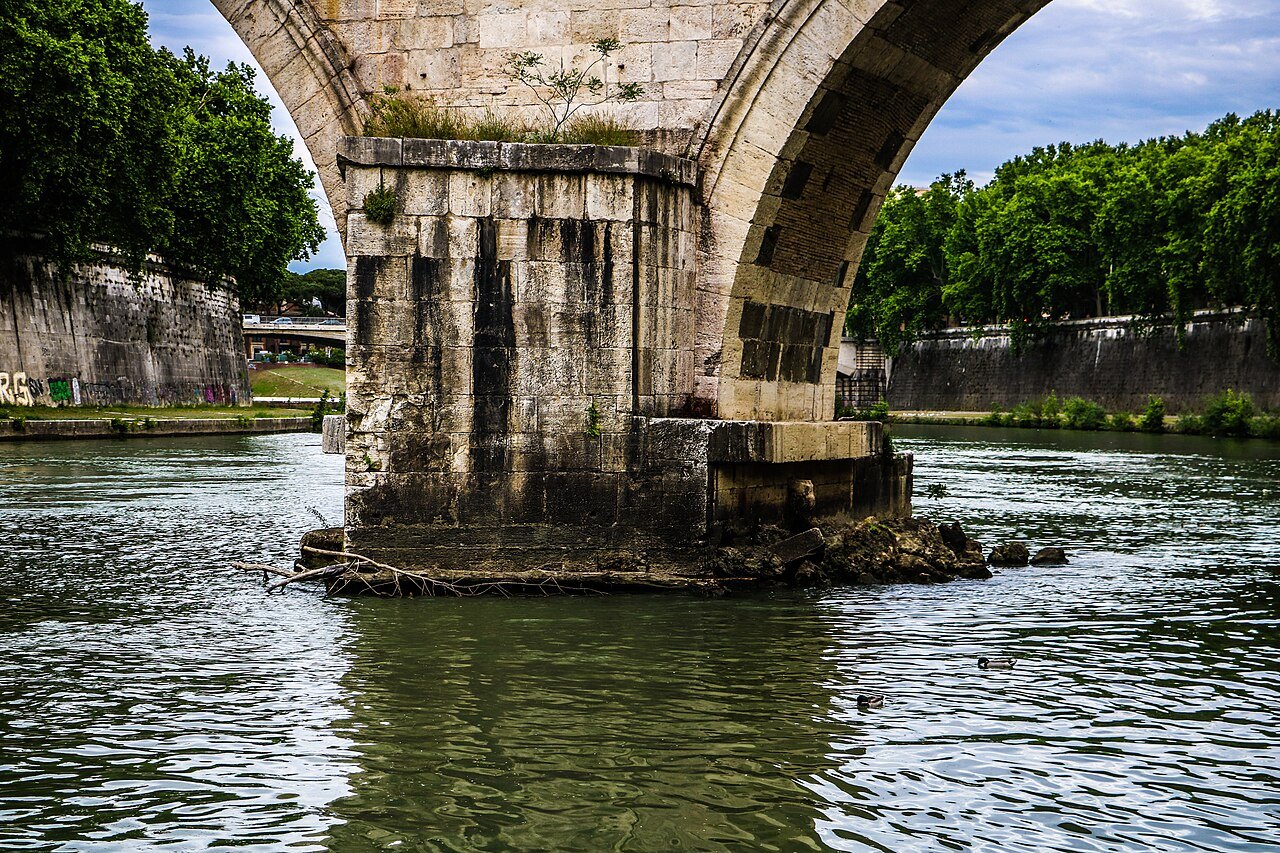
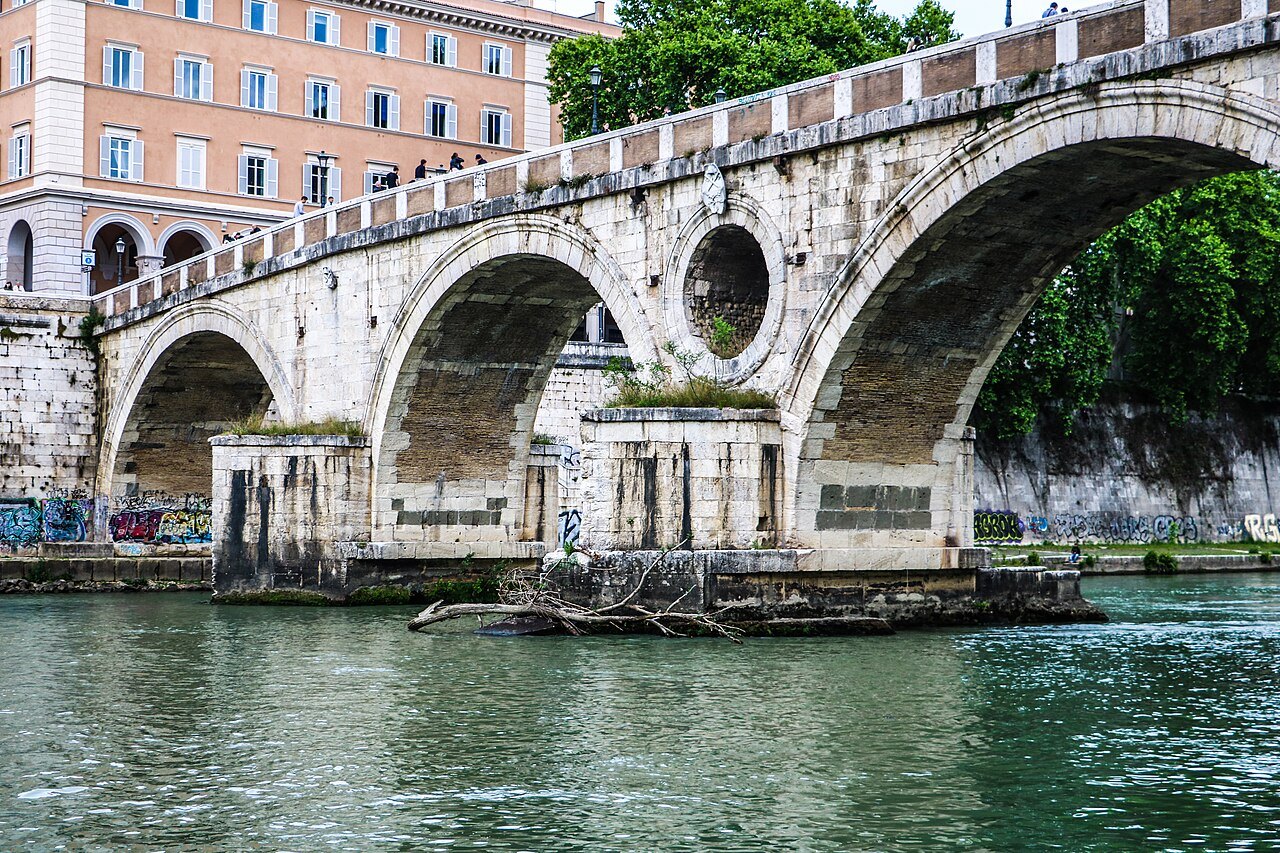
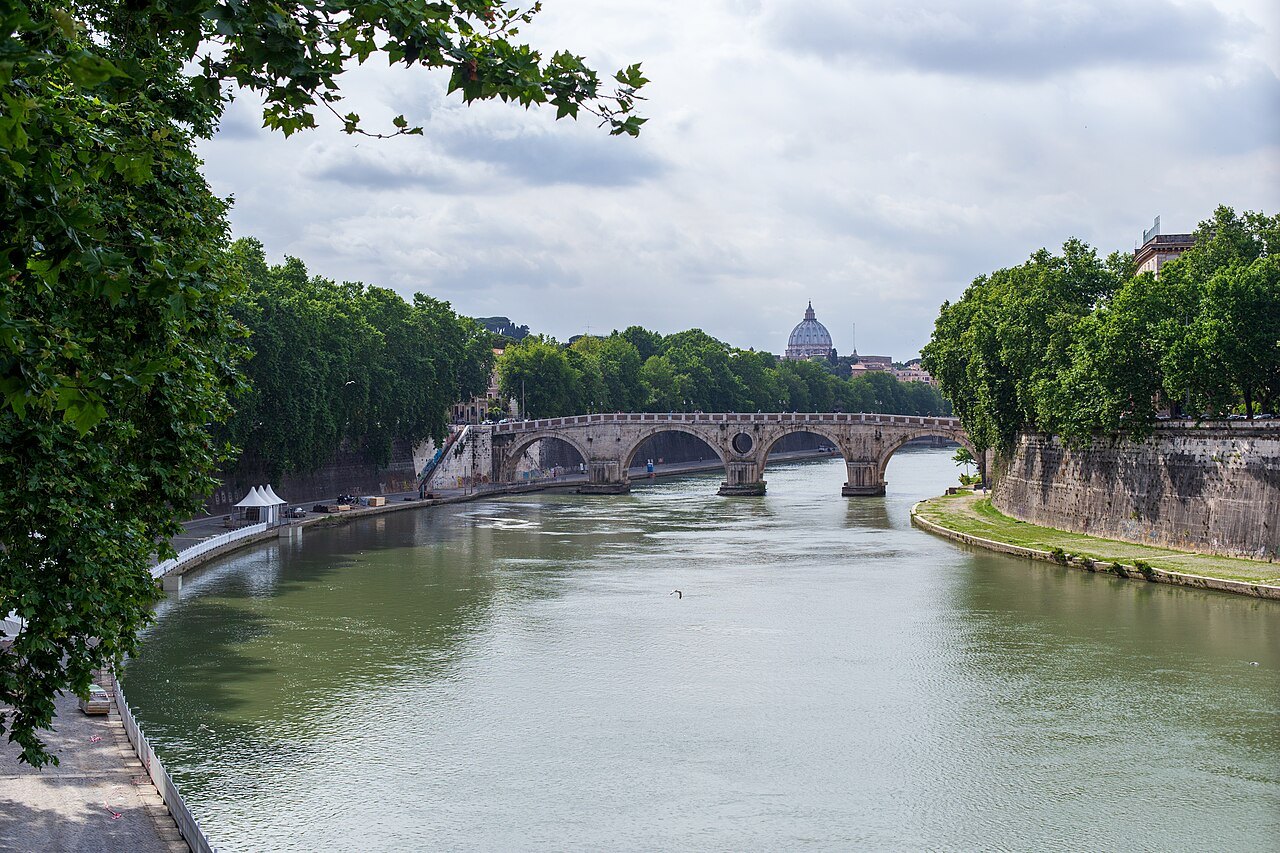
- VIPonte SistoThe pedestrian bridge of the 1470s that joins Trastevere to the old city at Piazza Trilussa.
The sight in full
Reading the place
Why it matters
Trastevere is the thirteenth rione of Rome, marked R. XIII on its street plaques, and its name is the Latin trans Tiberim, beyond the Tiber. It lies on the west bank, south of Vatican City, on the flat ground between a bend of the river and the Janiculum Hill. Its coat of arms is a golden lion's head on red, and nobody is sure why.
It keeps its character in narrow cobbled streets lined with old houses, and much of its old character survives, even as the rione has drawn artists, expatriates and foreign universities; the film director Sergio Leone grew up here, and a marble plaque marks his building. By night the lanes fill with Romans and visitors alike, heading for its many bars and restaurants.
The Etruscan bank
In the age of the kings the land across the river belonged to the Etruscans, and the Romans called it the Etruscan bank. Rome took it to control both sides of the river but did not build on it, and for a long time the only link was a small wooden bridge on piles, the Pons Sublicius. Under the Republic sailors and fishermen settled here, and immigrants from the East, mainly Jews and Syrians. Augustus counted it as a region of the city, the fourteenth, and Aurelian brought part of it inside his wall.
For centuries it was also the heart of an important Jewish community. Rome's oldest surviving synagogue building stands here, built in 980 and made a synagogue in 1073 by the scholar Nathan ben Yechiel; its use ended in the sixteenth century, when the Jews were forced across the river into the ghetto. The people of the rione, the Trasteverini, developed a culture of their own, helped by their partial isolation and a population mixed since antiquity.
Santa Maria in Trastevere
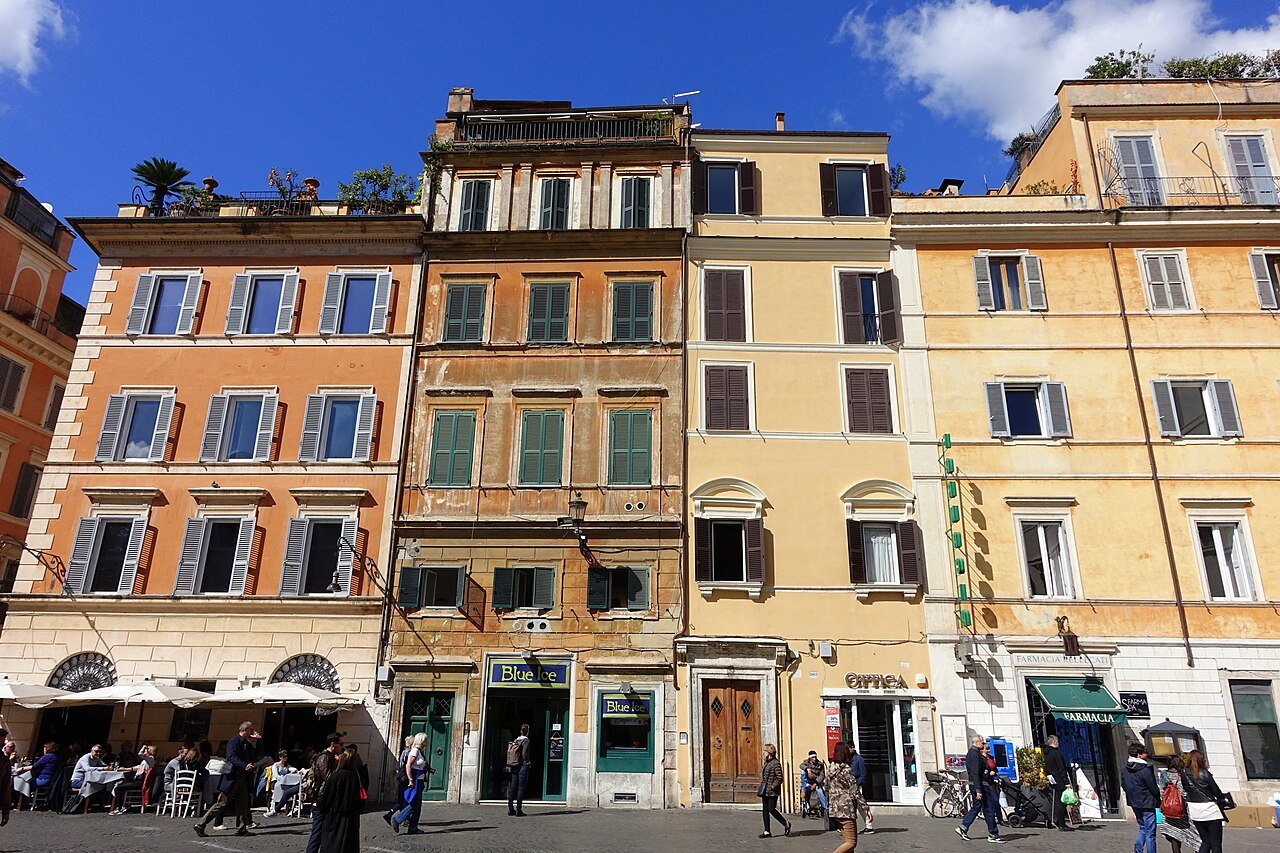
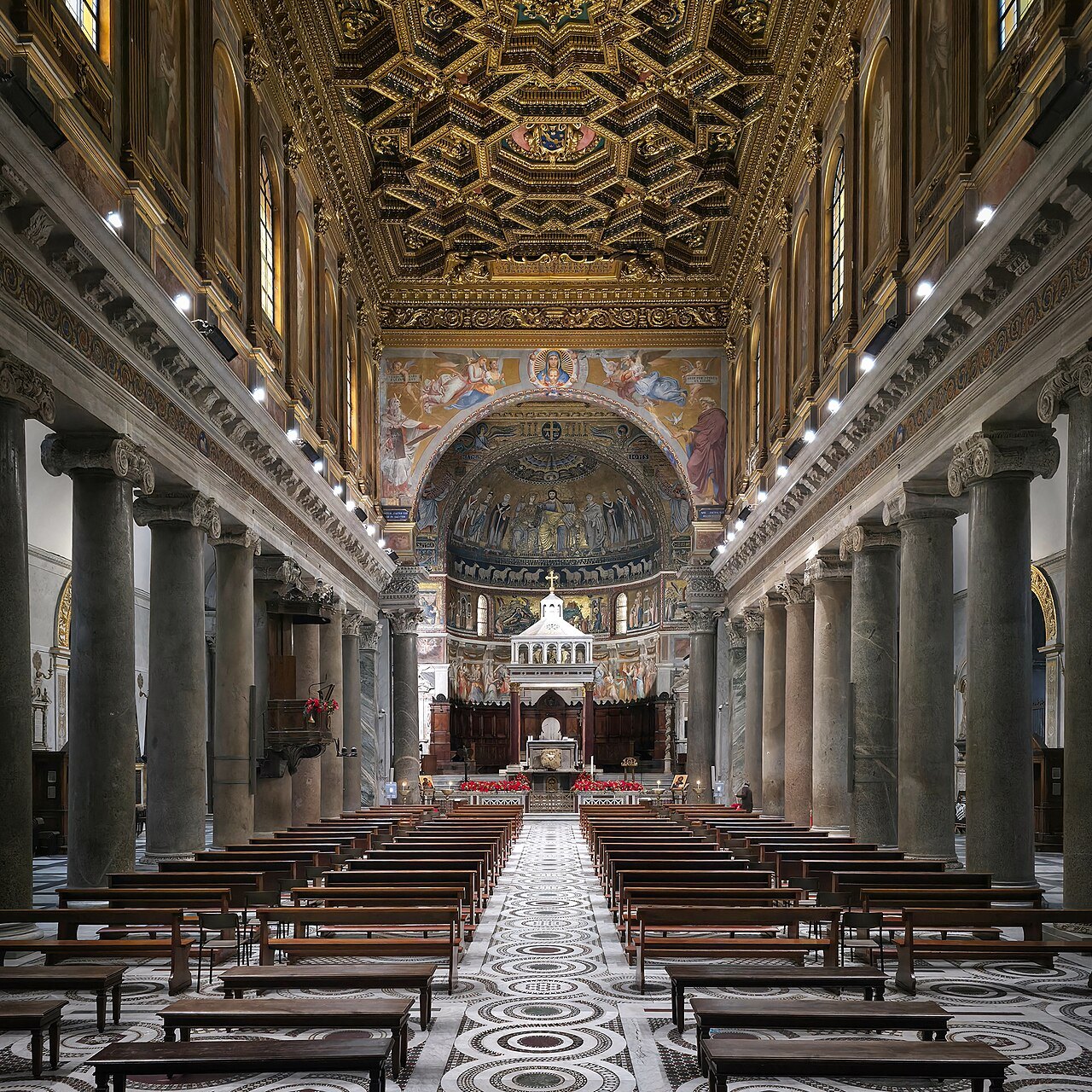
The rione's great church stands on its central square. An inscription on its episcopal throne claims it as the first church in Rome dedicated to the Virgin Mary, a claim that Santa Maria Maggiore disputes; it is certainly one of the oldest churches in the city. Tradition says Pope Callixtus I founded a house-church here about 220, on the site of a refuge for retired soldiers. It was rebuilt in 340 and re-erected on its old foundations in 1140 to 1143.
On the façade, a thirteenth-century mosaic shows the Madonna nursing the Child between ten women holding lamps. Inside, twenty-two granite columns taken from the ruins of the Baths of Caracalla divide the nave; when scholars identified Egyptian gods among the faces on their capitals, the faces were hammered off in 1870. In the apse, a mosaic of the Coronation of the Virgin shows Innocent II holding a model of the church, and below it are Pietro Cavallini's scenes of the Life of the Virgin of 1291. The octagonal fountain in the square appears on a map of 1472.
Santa Cecilia
Across the rione, toward the river, is the church of Saint Cecilia, the patron saint of music, a young Roman woman said to have been martyred in the third century. Tradition holds that the church rises over her house, and remains of a Roman house have been found beneath it. The present church was rebuilt in the ninth century.
Before the altar lies Stefano Maderno's marble Saint Cecilia of 1600. A slab in front of it records the sculptor's sworn statement that he carved her as he saw her when the tomb was opened in 1599. In the nuns' choir survives part of Pietro Cavallini's fresco of the Last Judgment, of 1289 to 1293.
Along the Lungara
North of the square, the long straight Via della Lungara leads toward the Vatican past two great houses. The Villa Farnesina was built between 1506 and 1510 for Agostino Chigi, the rich Sienese banker of Pope Julius II, as an airy summer pavilion. Raphael painted the Triumph of Galatea, one of his few purely secular paintings, in its loggia, and the story of Cupid and Psyche in another; a vault shows the planets on the banker's birthday. It belongs to the Italian state, and its main rooms can be visited.
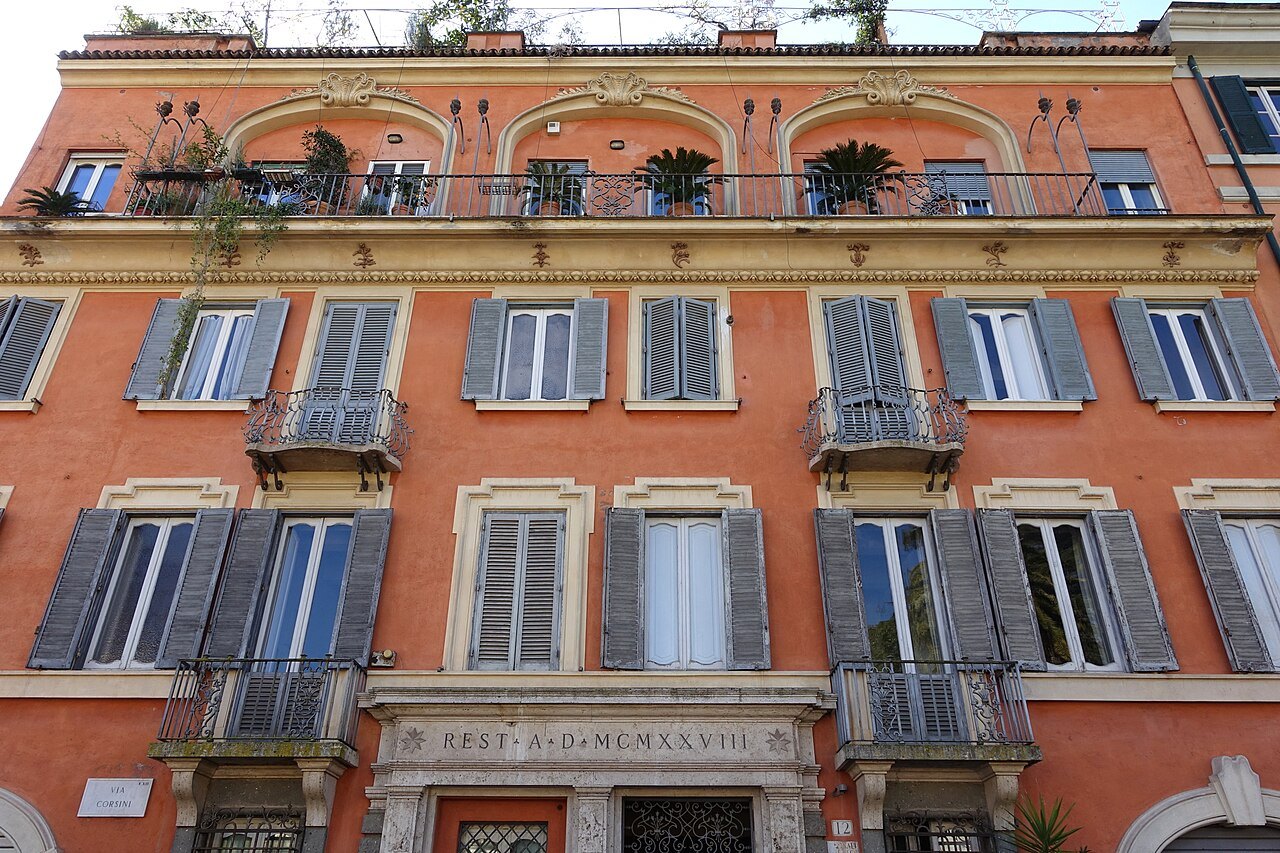
Across the street is Palazzo Corsini alla Lungara, the seat of Rome's botanical garden.
The Janiculum
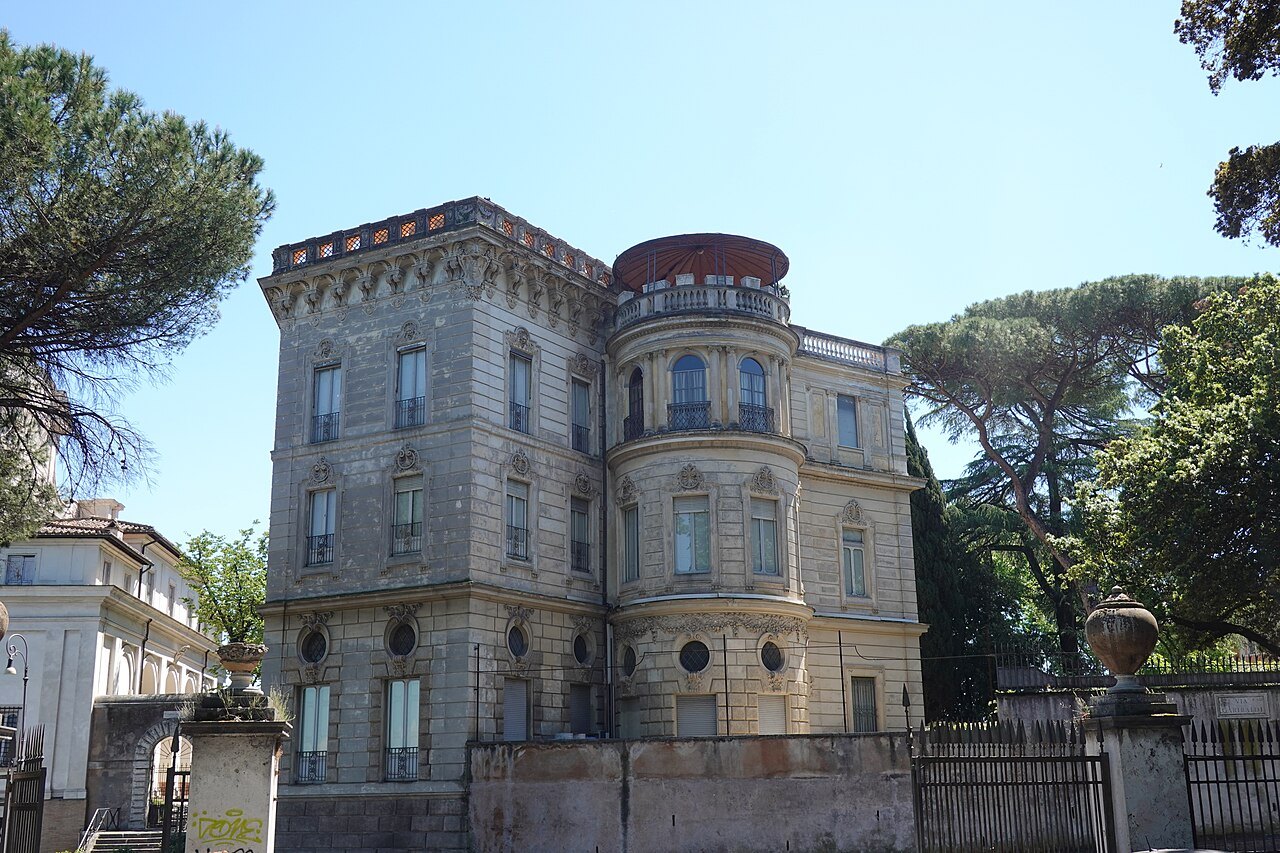
Above the rione rises the Janiculum. It is the second-highest hill in the modern city, but it is not one of the Seven Hills, because it lies west of the Tiber, outside the ancient city. It is one of the best places for a view of central Rome and its domes and bell towers. On the way up stands San Pietro in Montorio, on a site once believed to be where Peter was crucified, with Bramante's small round Tempietto marking the spot.
Higher still is the Fontana dell'Acqua Paola, the big fountain built in 1612 to mark the end of an aqueduct restored by Pope Paul V, the first major fountain on the right bank. In 1849 the hill saw the battle between Garibaldi's defenders of the Roman Republic and the French troops sent to restore the pope's rule; an equestrian monument to Garibaldi of 1895 crowns the ridge.
How to visit
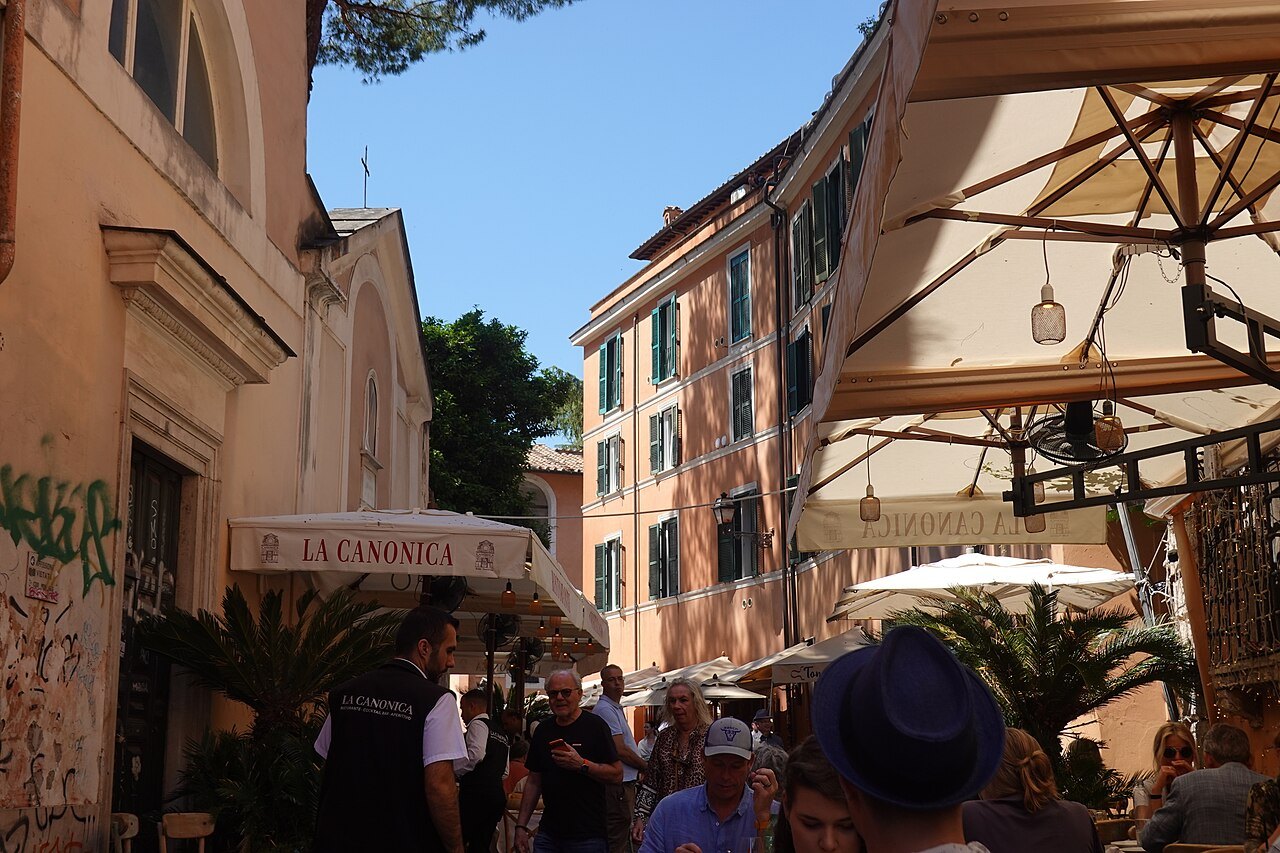
Trastevere is a neighborhood, not a ticketed site: walk it. Cross the Ponte Sisto, a bridge of the 1470s reserved for pedestrians, into Piazza Trilussa, then wander to Santa Maria in Trastevere. Churches are places of worship, so dress with respect. A flea market is held on Sundays around the Porta Portese, the gate of 1644 at the southern edge of the rione. The neighborhoods page places Trastevere among the other rioni.
Where to go next
Nearby
- Nearby · XIV · BorgoCastel Sant'AngeloHadrian's mausoleum, raised on the right bank of the Tiber between 134 and 139, then a fortress, a papal refuge and a prison, and since 1901 a museum, reached across the bridge Hadrian built for it, lined with Bernini's angels.Read the page →
- Nearby · VI · ParionePiazza Navona and Campo de' FioriThe long oval of Domitian's stadium, remade in the seventeenth century as Rome's Baroque showpiece with three fountains and Borromini's church, and a few streets south the old market square of Campo de' Fiori.Read the page →
- Nearby · Vatican CitySt. Peter's Basilica and SquareBuilt from 1506 to 1626 over the traditional tomb of Saint Peter, to designs by Bramante, Michelangelo and Maderno, the largest church in the world by interior measure stands wholly inside Vatican City, a separate state, behind Bernini's colonnaded square.Read the page →