Home · Sights · Piazza Navona and Campo de' Fiori
What you are looking at
Piazza Navona and Campo de' Fiori
VI · Parione
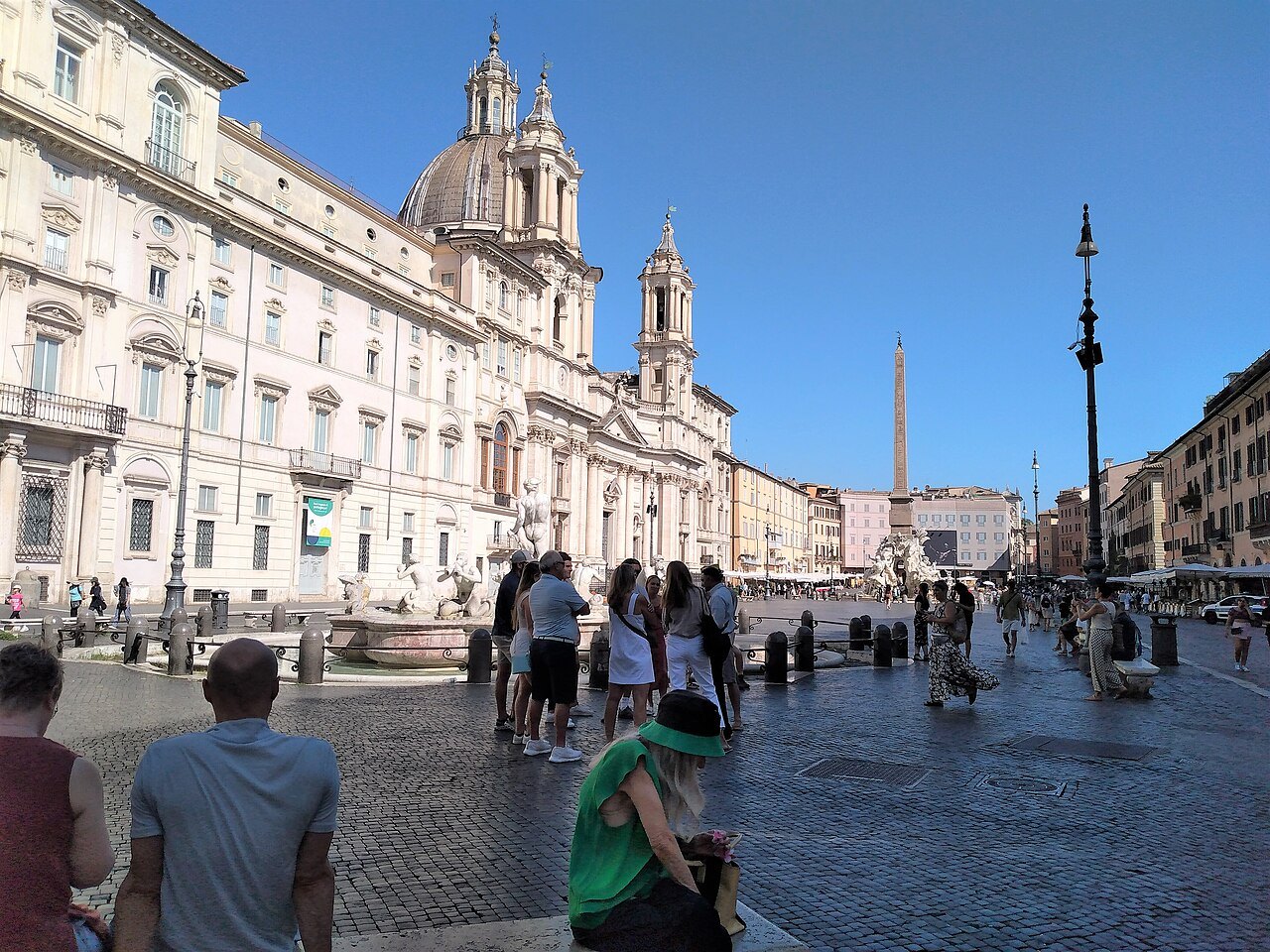
- IThe Fountain of the Four RiversBernini's rocks and river gods of 1651, carrying an ancient obelisk topped by a dove.
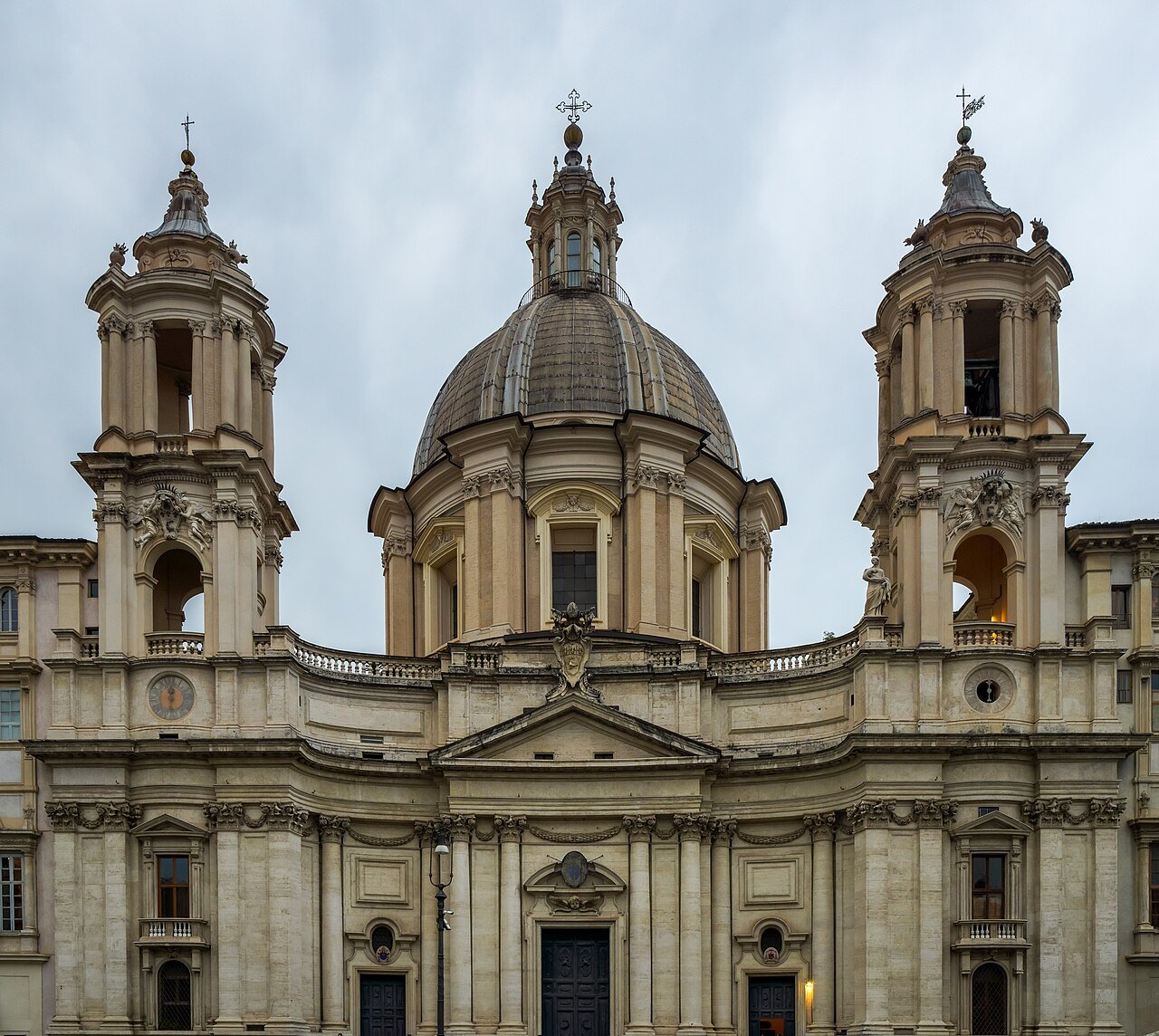
- IISant'Agnese in AgoneThe church begun in 1652 on the spot where tradition says Saint Agnes was martyred.
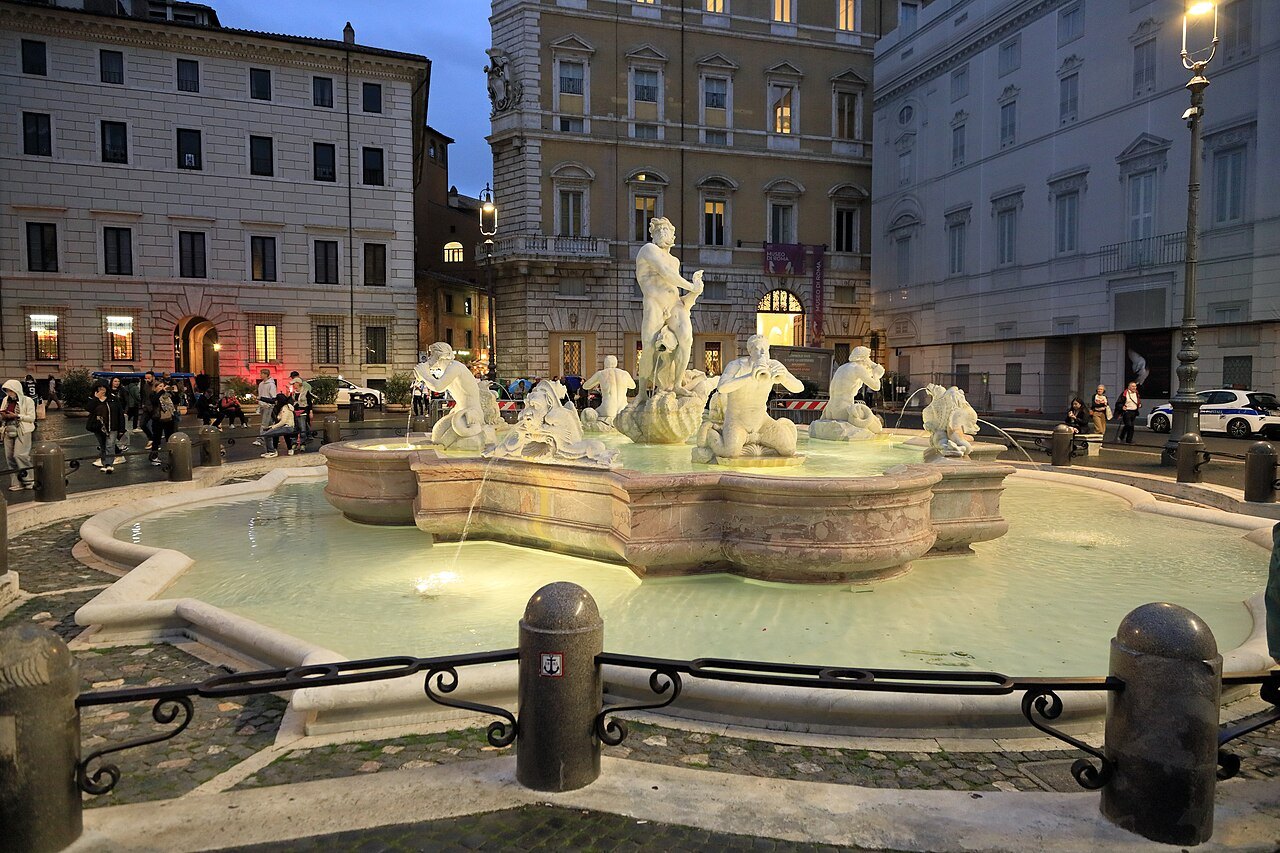
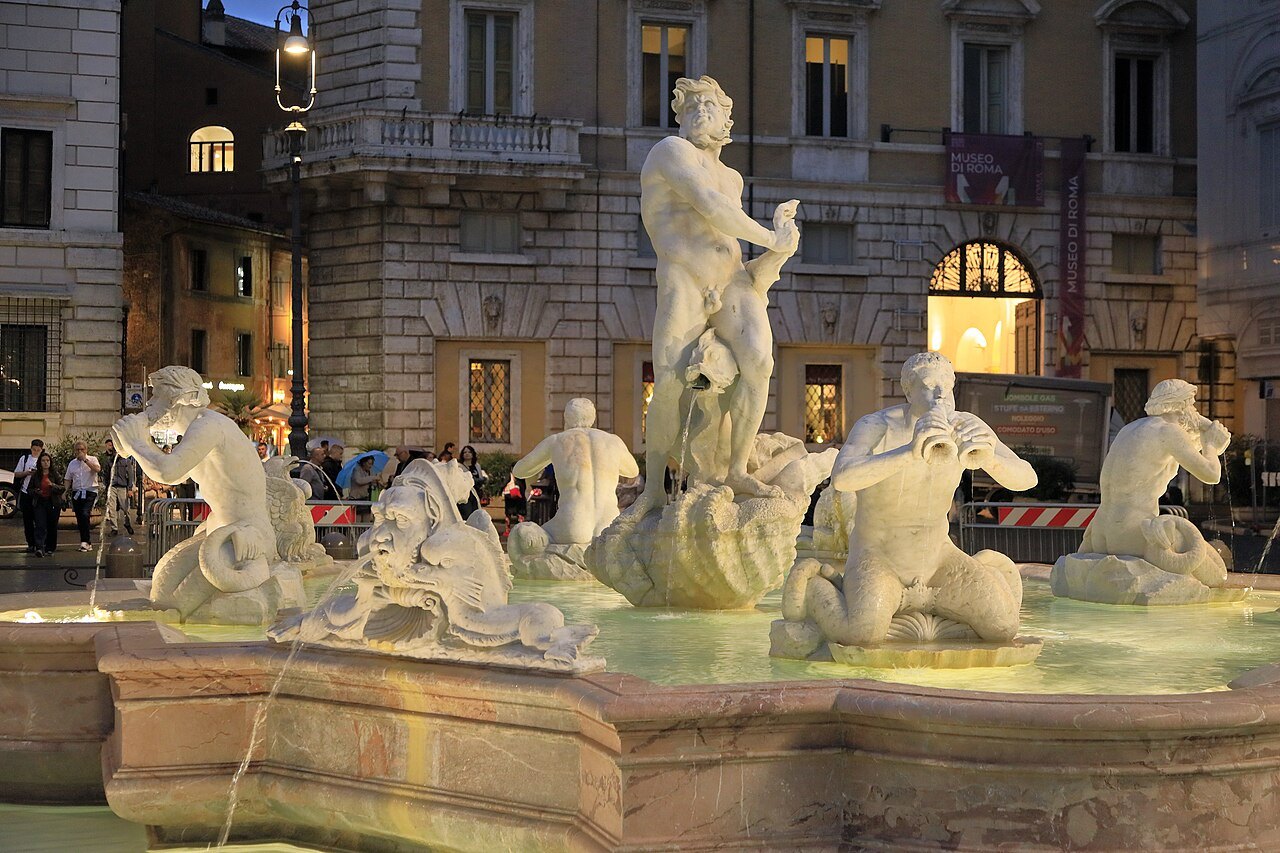
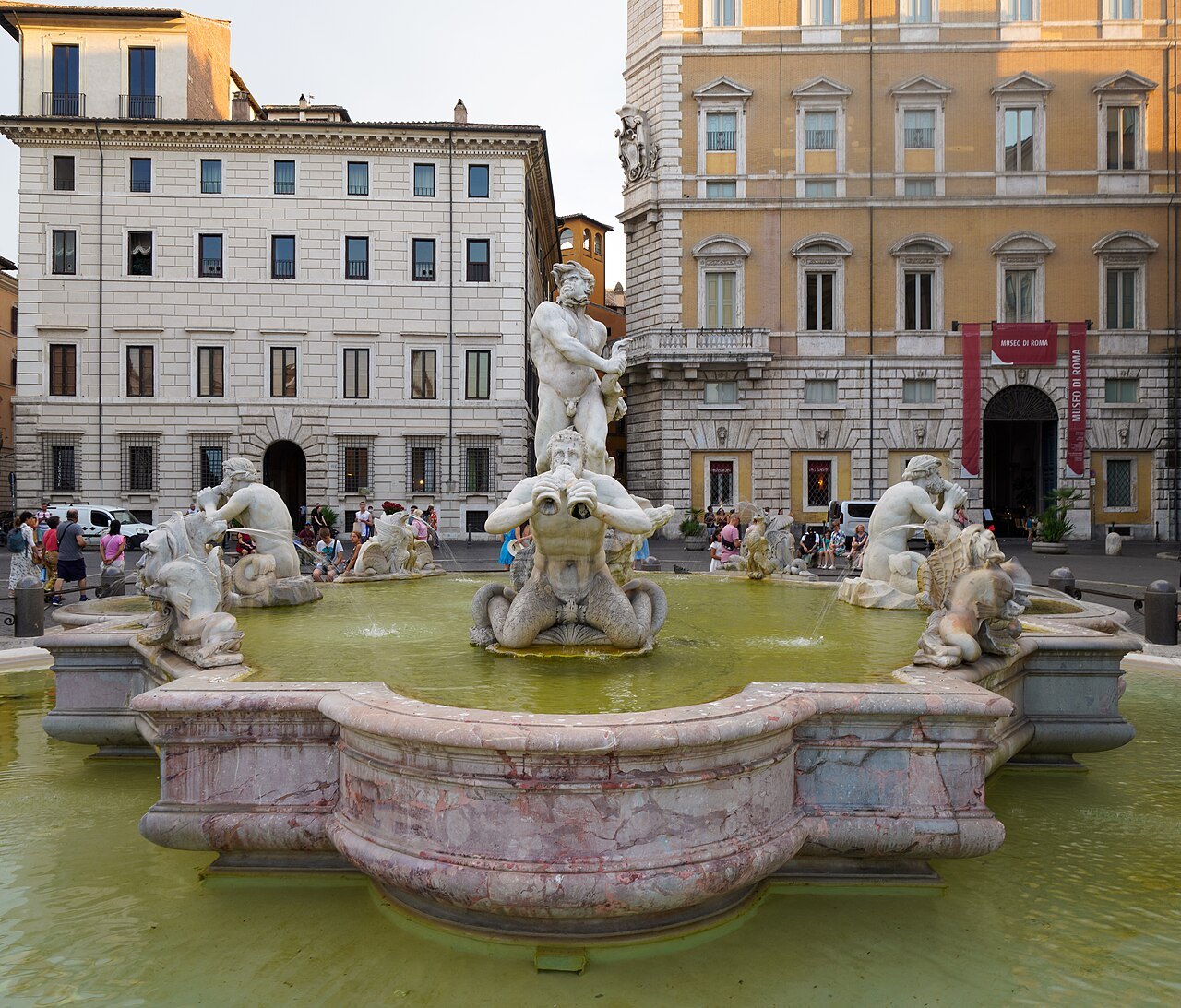
- IIIThe Fontana del MoroAt the southern end: Giacomo della Porta's Tritons, with Bernini's Moor added in 1673.
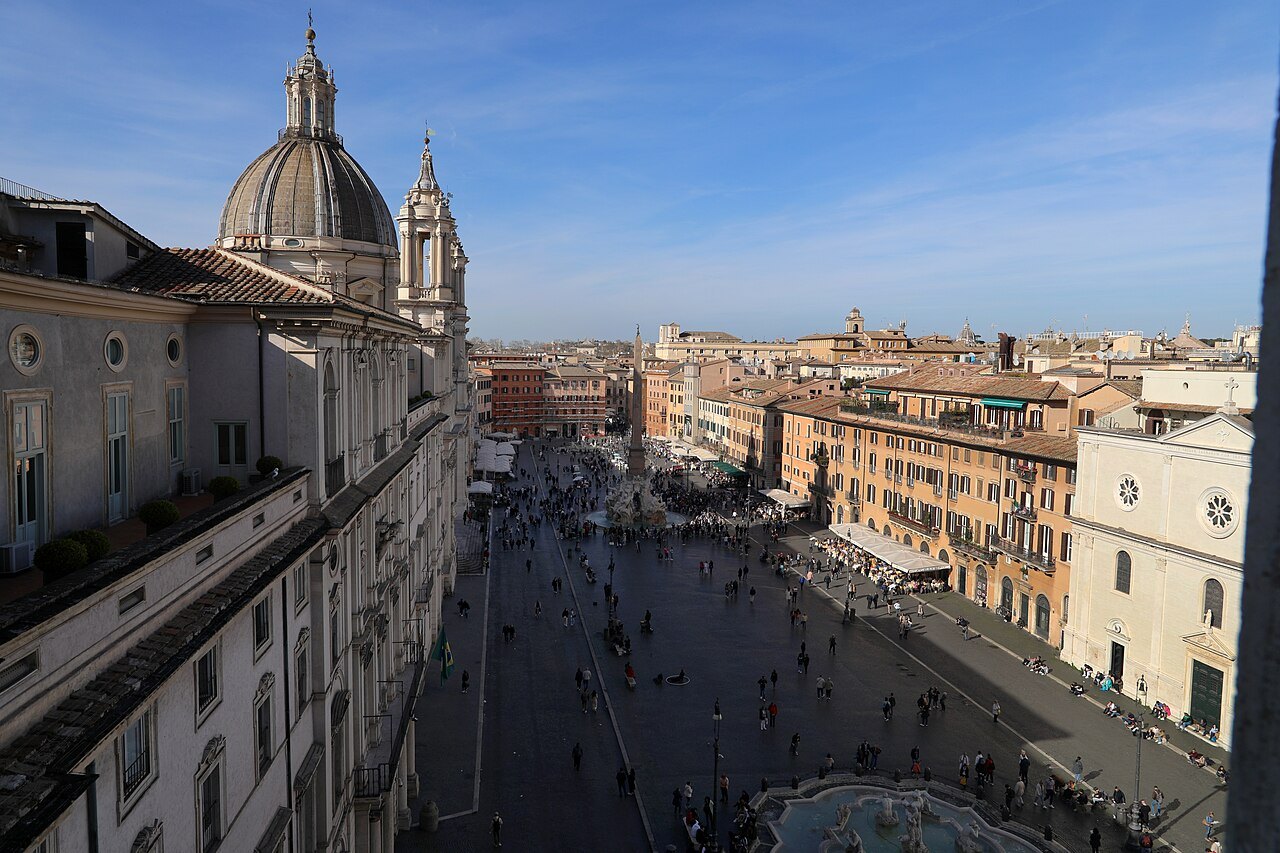
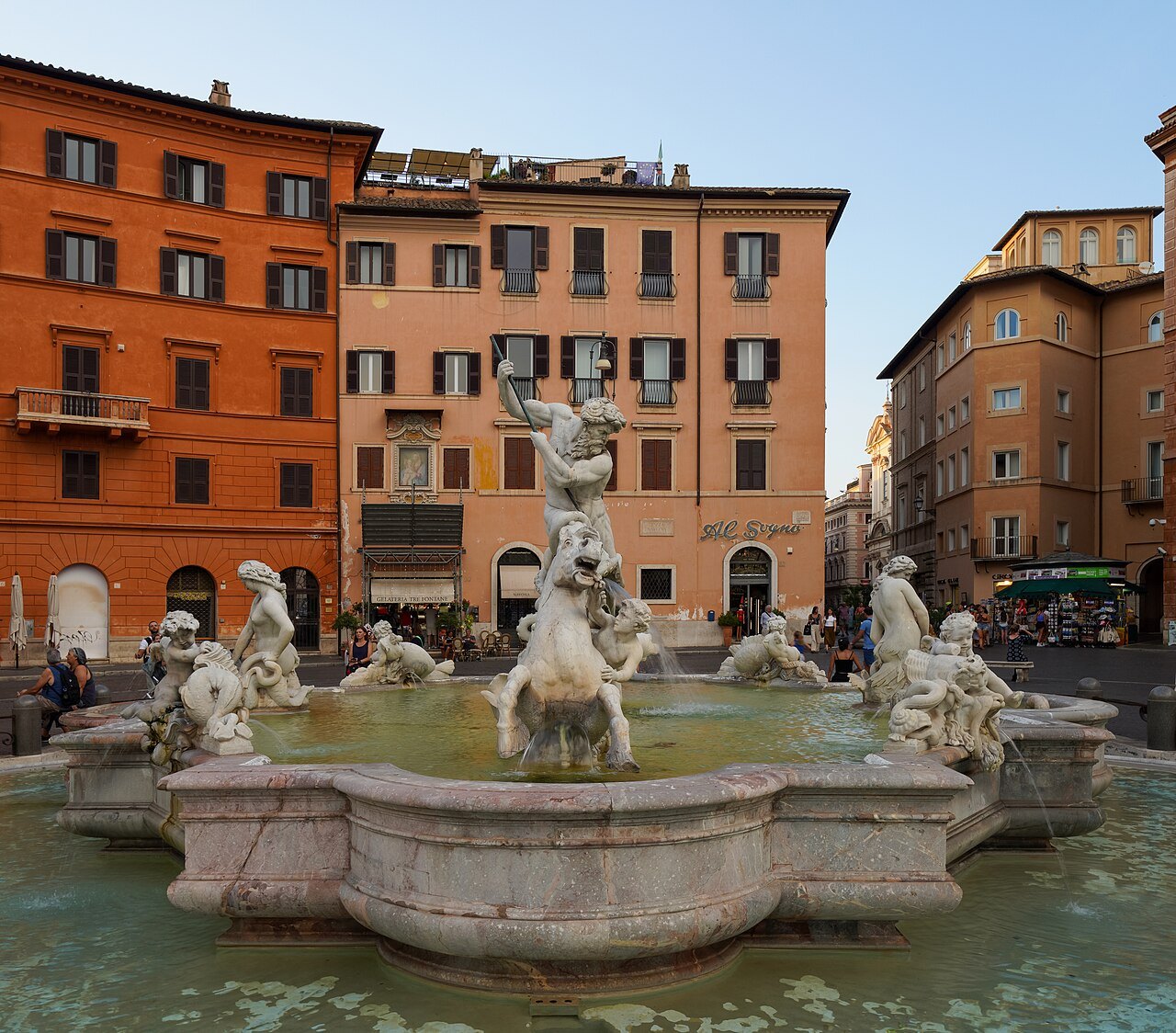
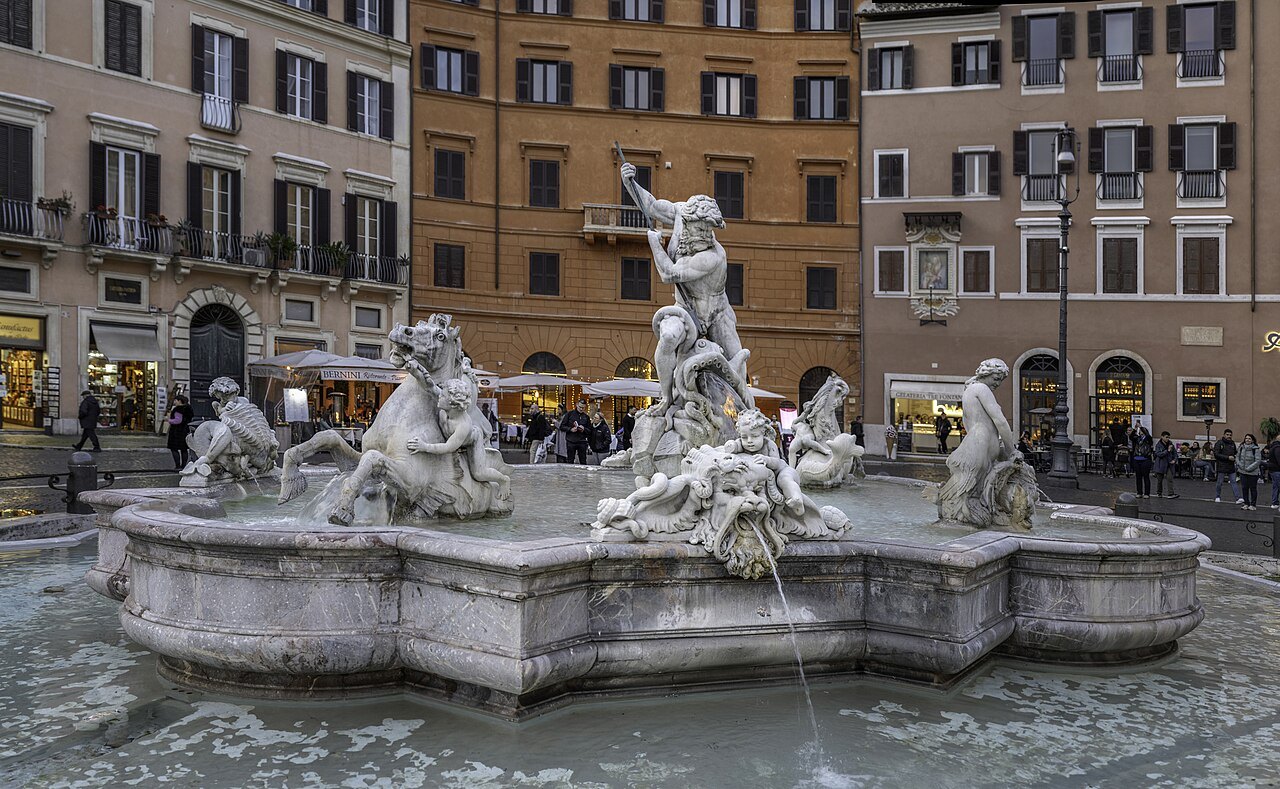
- IVThe Fountain of NeptuneAt the northern end: della Porta's basin, with Neptune added only in 1878.
- VThe Stadium of DomitianThe ancient stadium whose outline the square still follows, its remains built into the houses around it.
- VICampo de' FioriThe market square to the south, with the statue of Giordano Bruno burned there in 1600.
The sight in full
Reading the place
Why it matters
Piazza Navona keeps the exact shape of an ancient stadium. Its long oval is the outline of the Stadium of Domitian, built around AD 80 and used almost entirely for athletic contests, and the Romans who came to watch the games gave it the name Circus Agonalis, the competition arena. From in agone, in the games, popular speech made Navona. It stands in the rione of Parione, a few minutes west of the Pantheon.
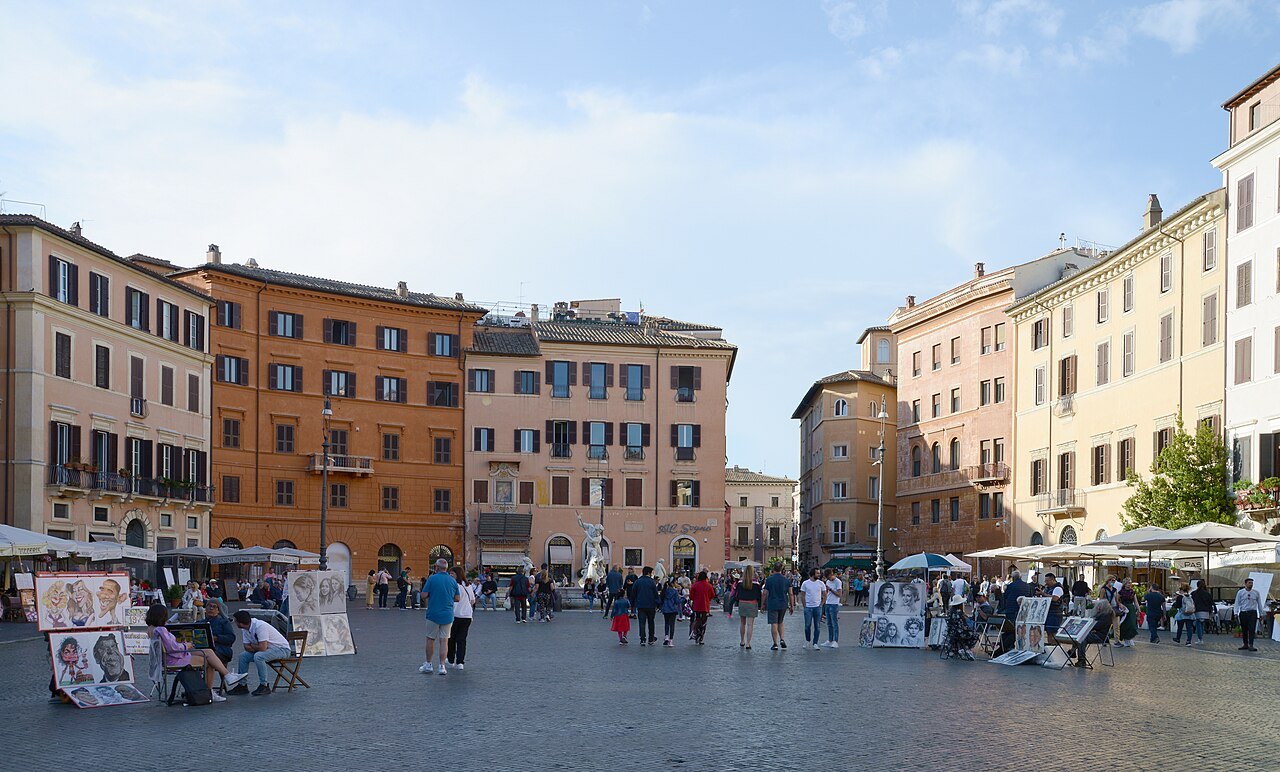
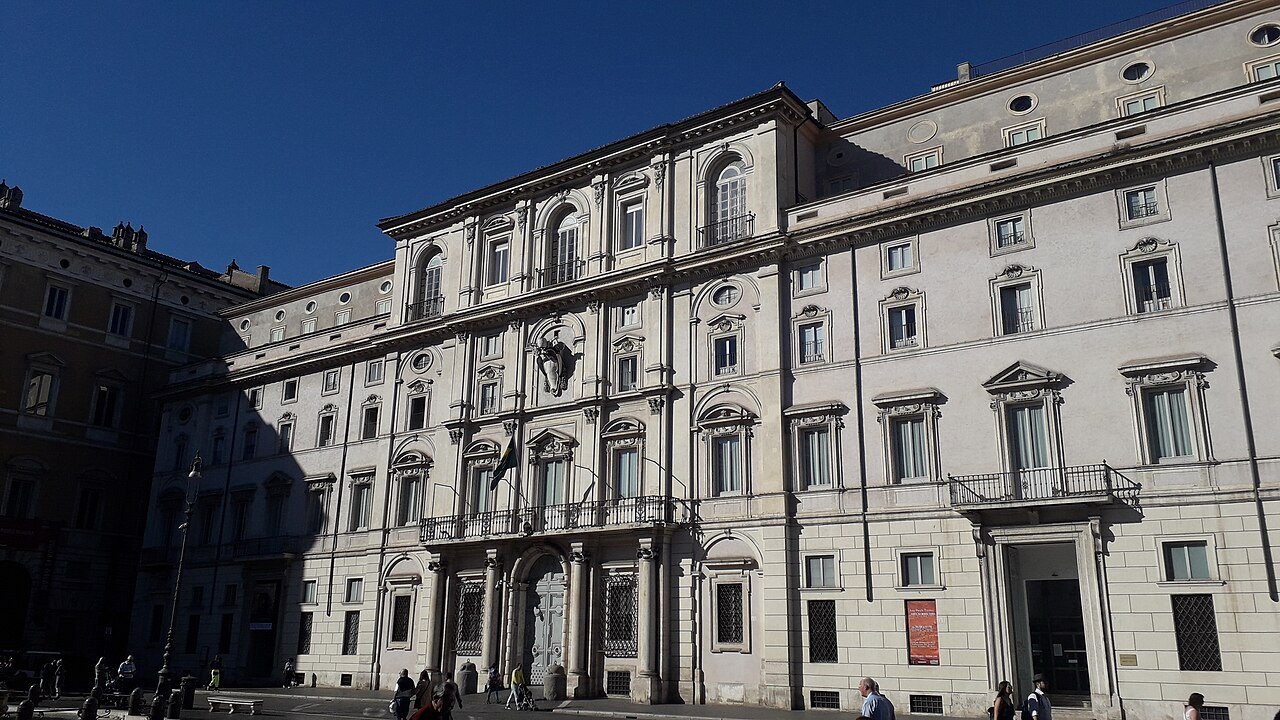
In the seventeenth century it became the showcase of Roman Baroque. Pope Innocent X, who reigned from 1644 to 1655 and whose family palace, the Palazzo Pamphilj, faced the square, turned it into a stage for Bernini and Borromini. Few places in Rome show so clearly how the ancient city shaped the later one.
From stadium to market to showpiece
The stadium was patterned on Greek stadiums and seated about 30,000. After the fall of the western empire it fell into ruin and was quarried for stone, and only a few remains survive, taken into the buildings that follow its outline. Christian tradition places the martyrdom of Saint Agnes here.
The space became a public square in the last years of the fifteenth century, when the city market moved here from the Capitoline. It stayed a market until 1869, when the market moved to nearby Campo de' Fiori. From 1652 until 1866 the square was flooded on the Saturdays and Sundays of August for the festivities of the Pamphili family, and its pavement was raised in the nineteenth century.
The Fountain of the Four Rivers
In the center stands Bernini's Fountain of the Four Rivers, designed in 1651 for Innocent X after a competition. From a basin rise travertine rocks carrying four river gods, and above them an obelisk, a Roman copy of an Egyptian one, brought in pieces from the Circus of Maxentius on the Appian Way and crowned with the Pamphili dove holding an olive twig.
The four gods stand for four great rivers of the four continents through which papal authority had spread: the Nile for Africa, the Danube for Europe, the Ganges for Asia and the Río de la Plata for the Americas. The story goes that rivals had turned the pope against Bernini, and that a model was secretly placed where Innocent would pass it; admiring it, the pope said that whoever did not want to use Bernini's designs had better not look at them.
The church and the two other fountains
Facing the central fountain is the church of Sant'Agnese in Agone, begun in 1652 by Girolamo Rainaldi and his son Carlo; after many quarrels the other main architect was Borromini. Beside it stands the Palazzo Pamphilj, with a long gallery designed by Borromini and painted by Pietro da Cortona.
At the southern end, the Fontana del Moro has a basin and four Tritons carved by Giacomo della Porta in 1575, to which Bernini added in 1673 a Moor wrestling a dolphin. At the northern end, della Porta's Fountain of Neptune of 1574 waited three centuries for its statue: Neptune was added only in 1878, to balance the Moor. Beside the square, the Palazzo Braschi holds the Museo di Roma, the museum of the city's history from the Middle Ages to the nineteenth century.
Campo de' Fiori
A few streets south, on the border of the rioni of Parione and Regola, lies Campo de' Fiori, the field of flowers, named for the meadow it was in the Middle Ages. In ancient Rome it was empty ground between the Theatre of Pompey and the flood-prone Tiber; it was paved only in 1456. It has never been given a formal architecture. New streets under Sixtus IV put it on the Via Papale, the road a newly elected pope rode from the Vatican to the Lateran to take possession of the city. The streets around it are named for the trades that worked there: crossbow-makers, coffer-makers, hat-makers, key-makers and tailors. Since 1869 it has held the daily vegetable and fish market that used to be in Piazza Navona.
Executions were once held here. On 17 February 1600 the philosopher Giordano Bruno was burned alive for heresy in this square, and in 1889 a statue of him by Ettore Ferrari was raised on the spot, his figure turned defiantly toward the Vatican. A plaque placed in 2011 recalls the burning of the Talmud here by the Holy Office in 1553. The old fountain called the Terrina, the soup bowl, was replaced by a copy, and the market uses it to keep cut flowers fresh.
How to visit
Both squares are public spaces and cost nothing to walk into. The market at Campo de' Fiori is held in the morning; in the afternoon the square turns over to café tables. The Museo di Roma in the Palazzo Braschi and the church are entered separately.
Look at the fountains from all sides: the river gods face different ways, and each is carved with its continent's animals and plants. The Pantheon is a short walk east, and Castel Sant'Angelo lies across the river to the northwest along the old papal road.
Myths worth setting aside
Guides like to say that Bernini's Nile covers his eyes so as not to see Borromini's church, as if it might collapse on him. The fountain was finished several years before Borromini began work on the church. The Nile's head is covered for another reason: its source was unknown when the statue was carved.
Where to go next
Nearby
- Nearby · IX · PignaThe PantheonA Roman temple rebuilt under Hadrian and a church since 609: a portico of granite columns, then a round hall under the largest unreinforced concrete dome in the world, lit only by the open oculus at its top.Read the page →
- Nearby · XIV · BorgoCastel Sant'AngeloHadrian's mausoleum, raised on the right bank of the Tiber between 134 and 139, then a fortress, a papal refuge and a prison, and since 1901 a museum, reached across the bridge Hadrian built for it, lined with Bernini's angels.Read the page →
- Nearby · XIII · TrastevereTrastevereThe thirteenth rione, trans Tiberim, beyond the Tiber: a maze of cobbled lanes between the river and the Janiculum, with one of the oldest churches to the Virgin in Rome, Raphael's frescoes in a banker's villa, and the city's best view from the hill above.Read the page →