Home · Sights · The Borghese Gallery and its Gardens
What you are looking at
The Borghese Gallery and its Gardens
Outside the walls · Pinciano
- IThe SaloneThe great hall, its ceiling painted by Mariano Rossi so skillfully that it seems to open upward.
- IIApollo and DaphneBernini's nymph turning into a laurel tree as the god catches her, carved in 1622 to 1625.
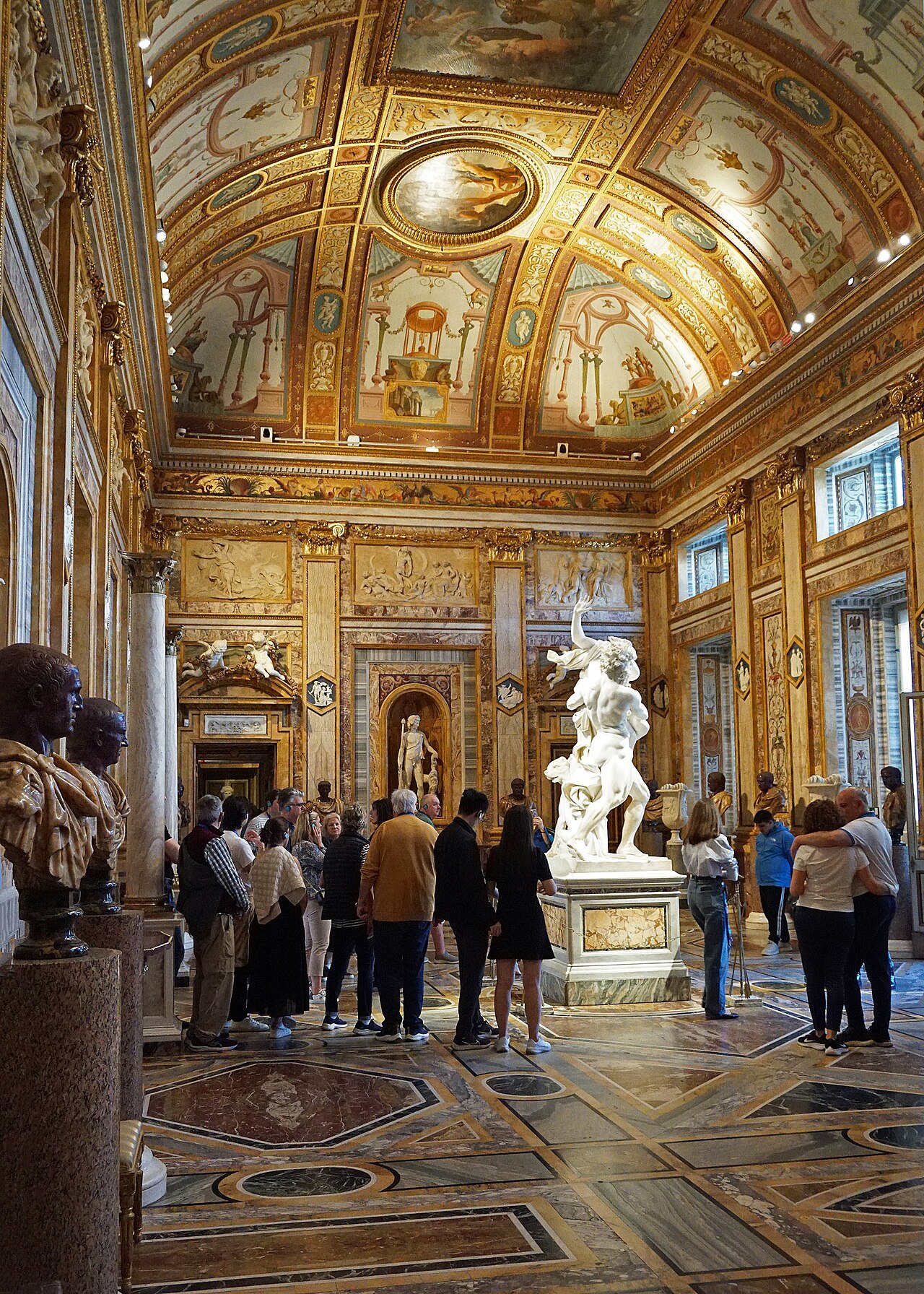
- IIIThe Rape of ProserpinaBernini's Pluto seizing Proserpina, his fingers pressing into marble as if into skin.
- IVPauline BorgheseCanova's portrait of Napoleon's sister reclining as Venus Victrix.
- VThe Caravaggio roomSix paintings by Caravaggio in one room, from the Boy with a Basket of Fruit to David with the Head of Goliath.
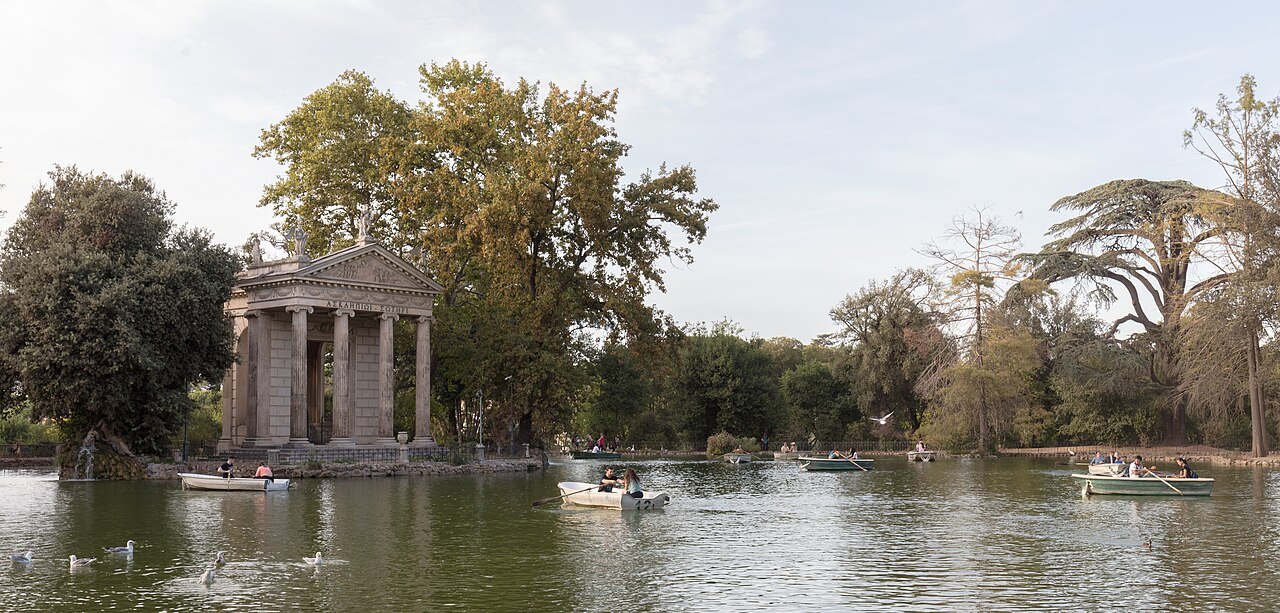
- VIThe gardensAvenues, a lake with a small temple, and the terrace of the Pincio at one edge.
The sight in full
Reading the place
Why it matters
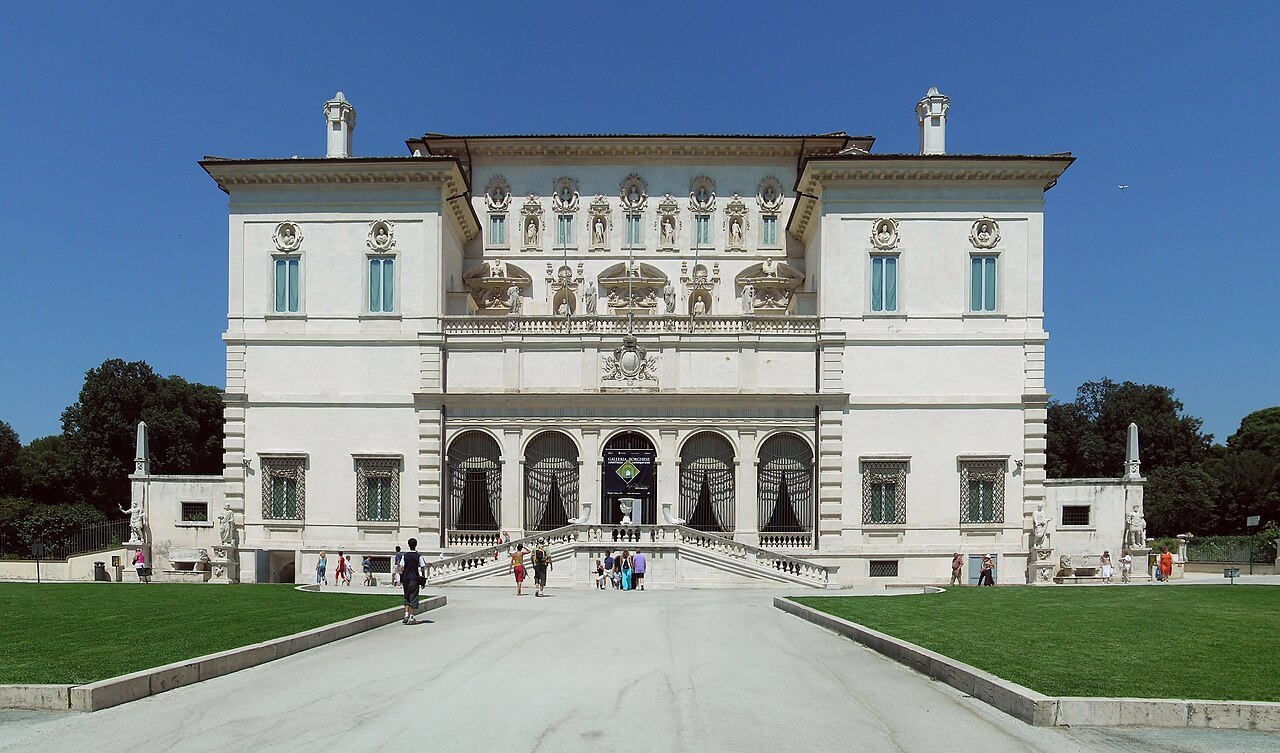
The Borghese Gallery is one of the world's great collections of art in one of Rome's most perfect settings. It fills the Villa Borghese Pinciana, the villa that Cardinal Scipione Borghese, nephew of Pope Paul V, built at the edge of the city as a villa suburbana, a country house for entertaining, and to house his collection. It stands outside the old walls in the park of the same name, beyond the Pincio.
Scipione was an early patron of Bernini and an avid collector of Caravaggio, and both are here in depth: several of Bernini's greatest secular sculptures, many still in the rooms they were made for, and six Caravaggios in a single room. Add Canova, Raphael, Titian, Rubens and Correggio, and the result is a museum small enough to see in a visit and rich enough to remember for a lifetime.
The villa and its fortunes
The main building was designed by the Flemish architect Giovanni Vasanzio, working from sketches by Scipione himself, in an area that in the seventeenth century lay outside the walls. The grounds then ran for nearly three miles around. In 1644 the English diarist John Evelyn called it an Elysium of delight, with fountains, groves, streams and an aviary of ostriches, peacocks and swans.
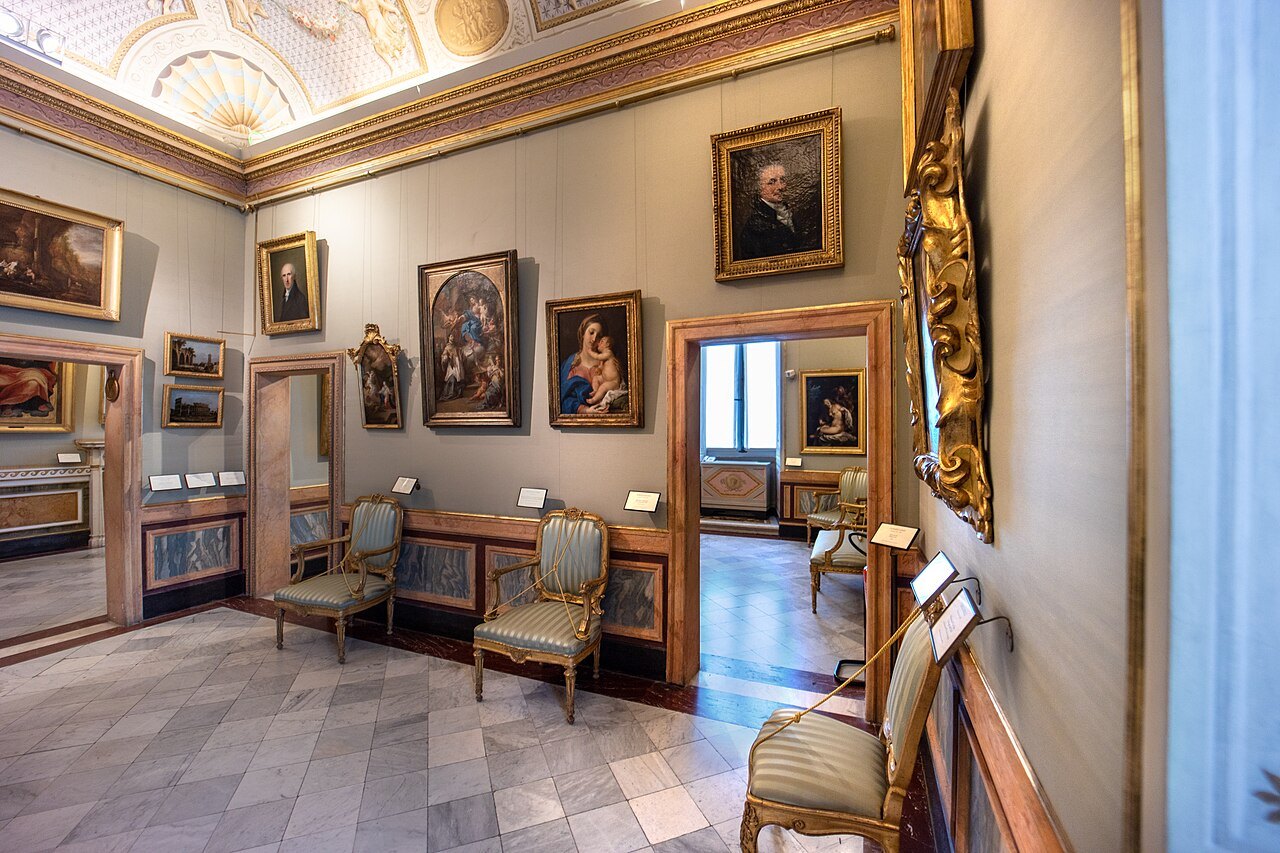
About 1775 Prince Marcantonio IV Borghese had the architect Antonio Asprucci redecorate the villa and rearrange the sculptures by theme, creating many of the painted and marbled rooms you see. In 1808 Prince Camillo Borghese, Napoleon's brother-in-law, was forced to sell much of the ancient sculpture to the emperor, which is why the famous Borghese Gladiator is now in the Louvre. The Italian state bought the villa, the collection and the park in 1902.
What you see: the main floor
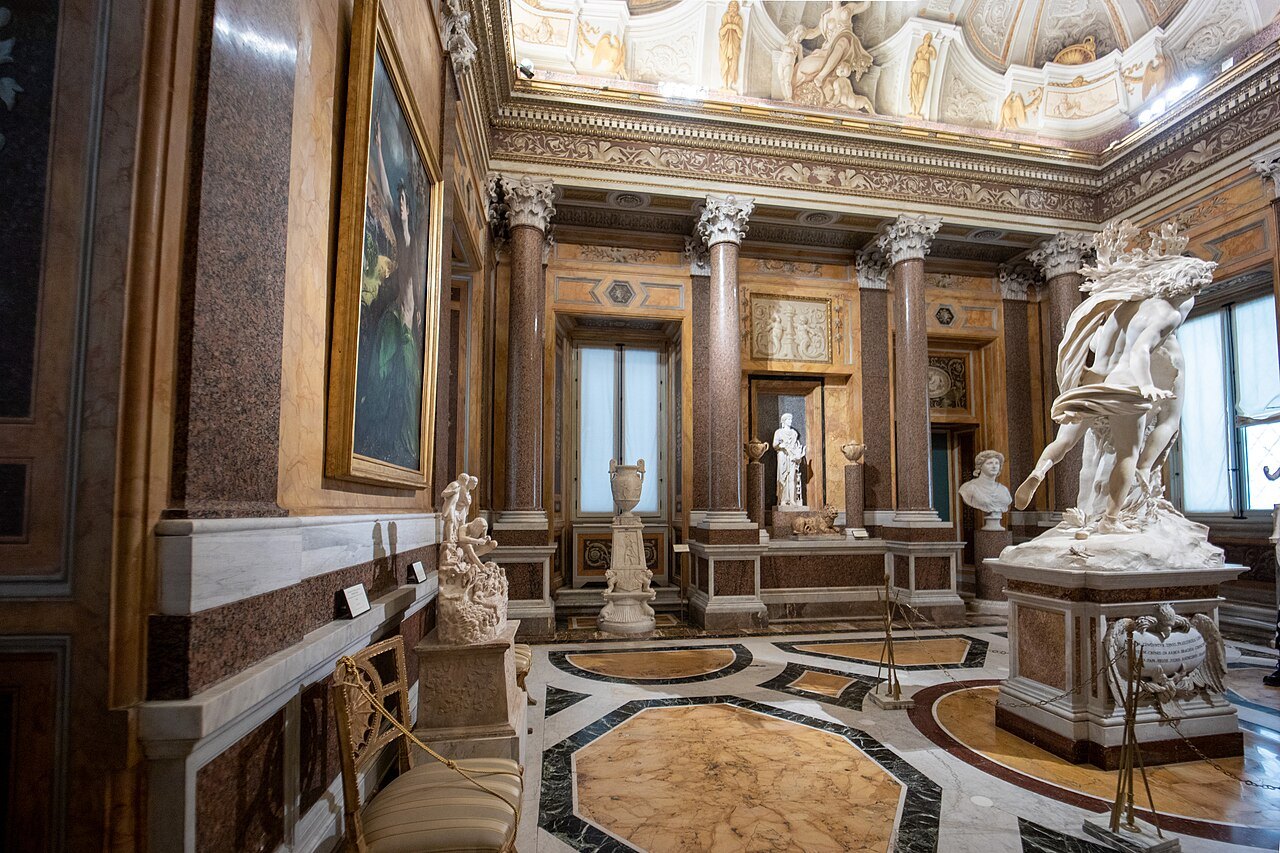
The gallery has twenty rooms on two floors. The main floor holds sculpture, ancient and modern. In the entrance hall are a Roman statue of Augustus and a mosaic of gladiators of about 320 found on the family's estate. The portico was built with pieces of an ancient arch of Claudius that once stood on the Via Flaminia. The Salone beyond has a ceiling by the Sicilian painter Mariano Rossi, showing Camillus lifting the siege of the Capitoline by the Gauls, painted with such foreshortening that it seems three-dimensional.
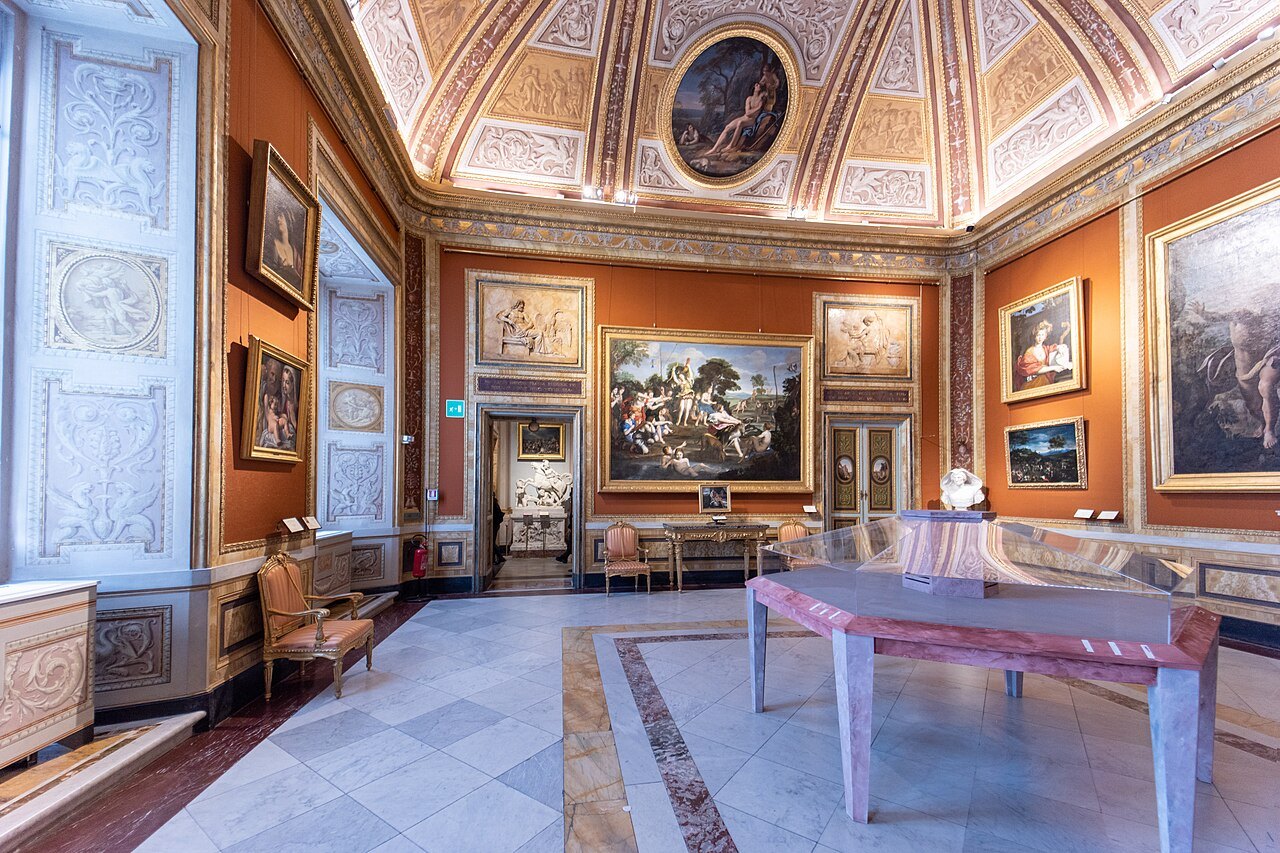
Then the rooms of Bernini. His David, of 1623, stands in the room named for it, caught in the instant before the throw. In the next room Apollo reaches Daphne as bark climbs her legs and leaves sprout from her fingers. In the Room of the Emperors, decorated by Asprucci between 1778 and 1780 in stucco, marble and fresco, with Roman busts along the walls, Pluto seizes Proserpina, his fingers pressing into her thigh; Bernini's bronze Neptune stands nearby. Bernini made two portrait busts of Scipione himself, the second after a crack was found in the marble of the first.
In the first room Canova's Pauline Borghese, Napoleon's sister, reclines as Venus Victrix. Farther on, the Egyptian Room that Asprucci designed between 1778 and 1782 mixes ancient statues with painted scenes of Antony and Cleopatra, a sign of the taste for the exotic in the late eighteenth century, and its floor keeps a Roman mosaic calendar of the third century.
What you see: the paintings
One room on the main floor, the Room of Silenus, holds six masterpieces by Caravaggio: the Boy with a Basket of Fruit, the Young Sick Bacchus, the Madonna and Child with Saint Anne, Saint Jerome, Saint John the Baptist, and David with the Head of Goliath.
The picture gallery upstairs is dedicated to Italian and foreign painters of the Renaissance and after. Raphael's Young Woman with a Unicorn and his Entombment, Titian's Sacred and Profane Love, a tondo by Botticelli, Correggio's Danaë and Cranach's Venus with Cupid stealing honey are among the works, and the Lanfranco gallery, once an open loggia over the gardens, keeps Giovanni Lanfranco's fresco of the Council of the Gods.
The gardens
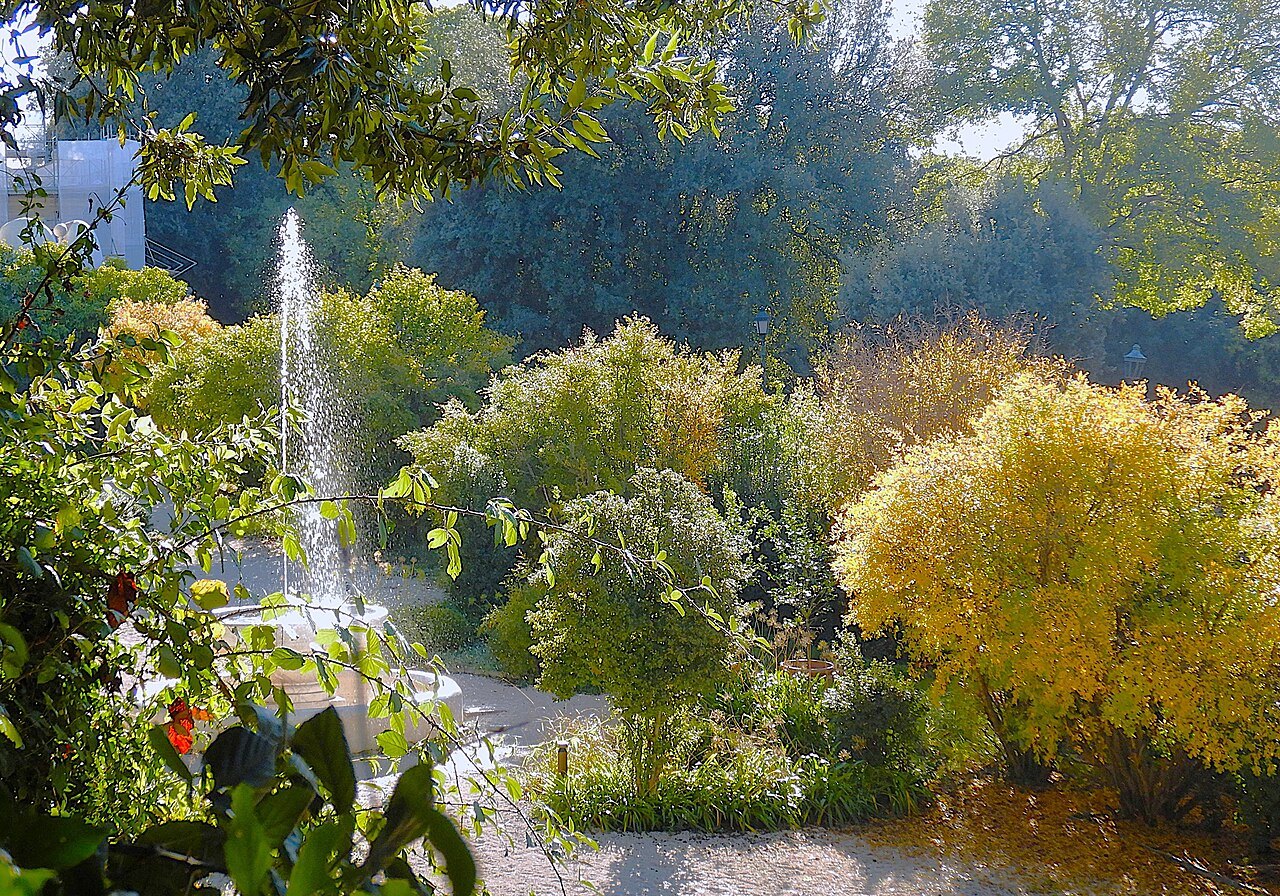
In 1605 Scipione began turning a former vineyard into the most extensive gardens built in Rome since antiquity, on ground identified with the gardens of Lucullus, the most famous of the late Republic. Remade in the late nineteenth century as a landscape park, the Villa Borghese is now the third-largest public park in Rome, about 198 acres, after the Villa Doria Pamphili and the Villa Ada.
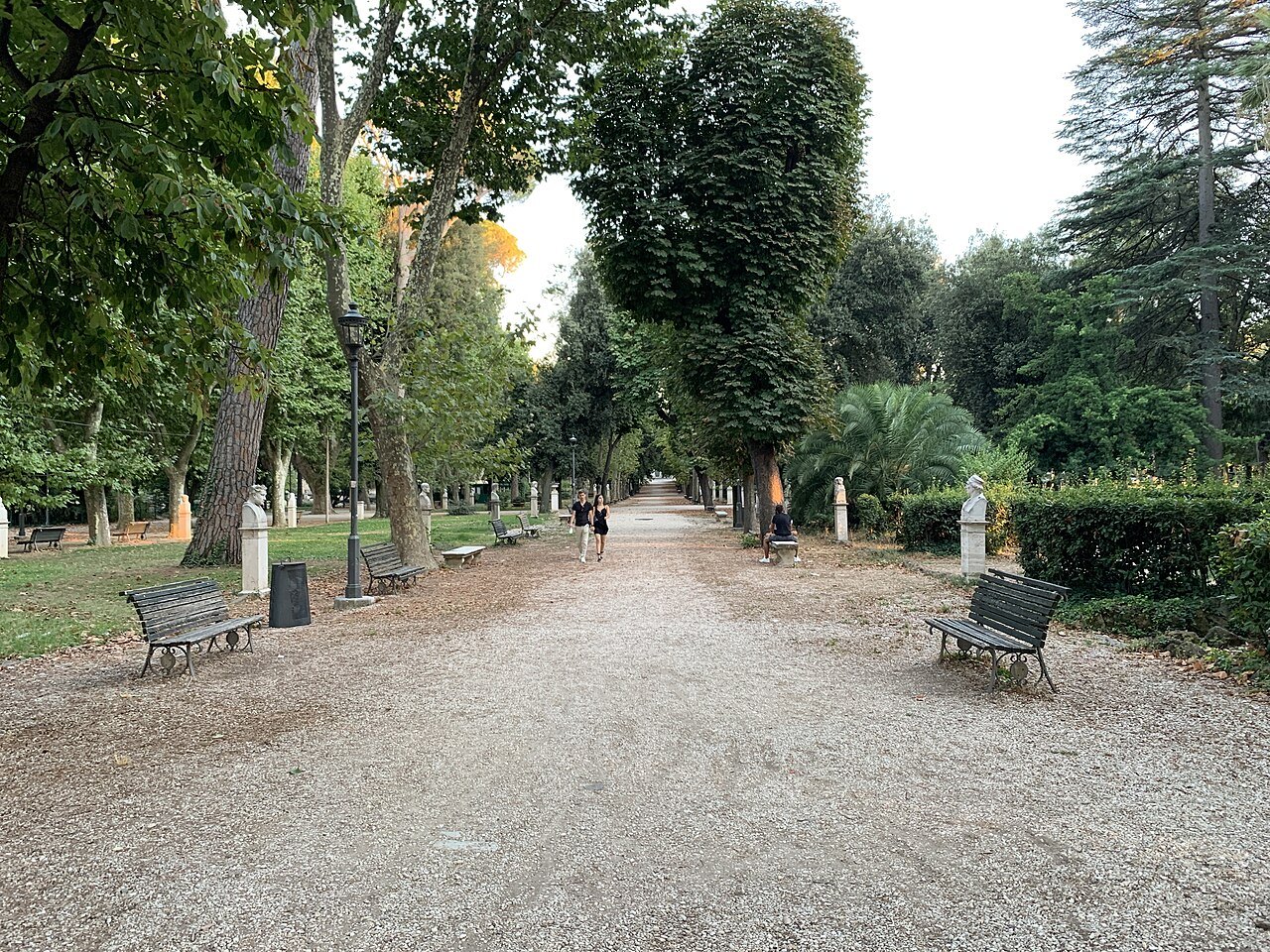
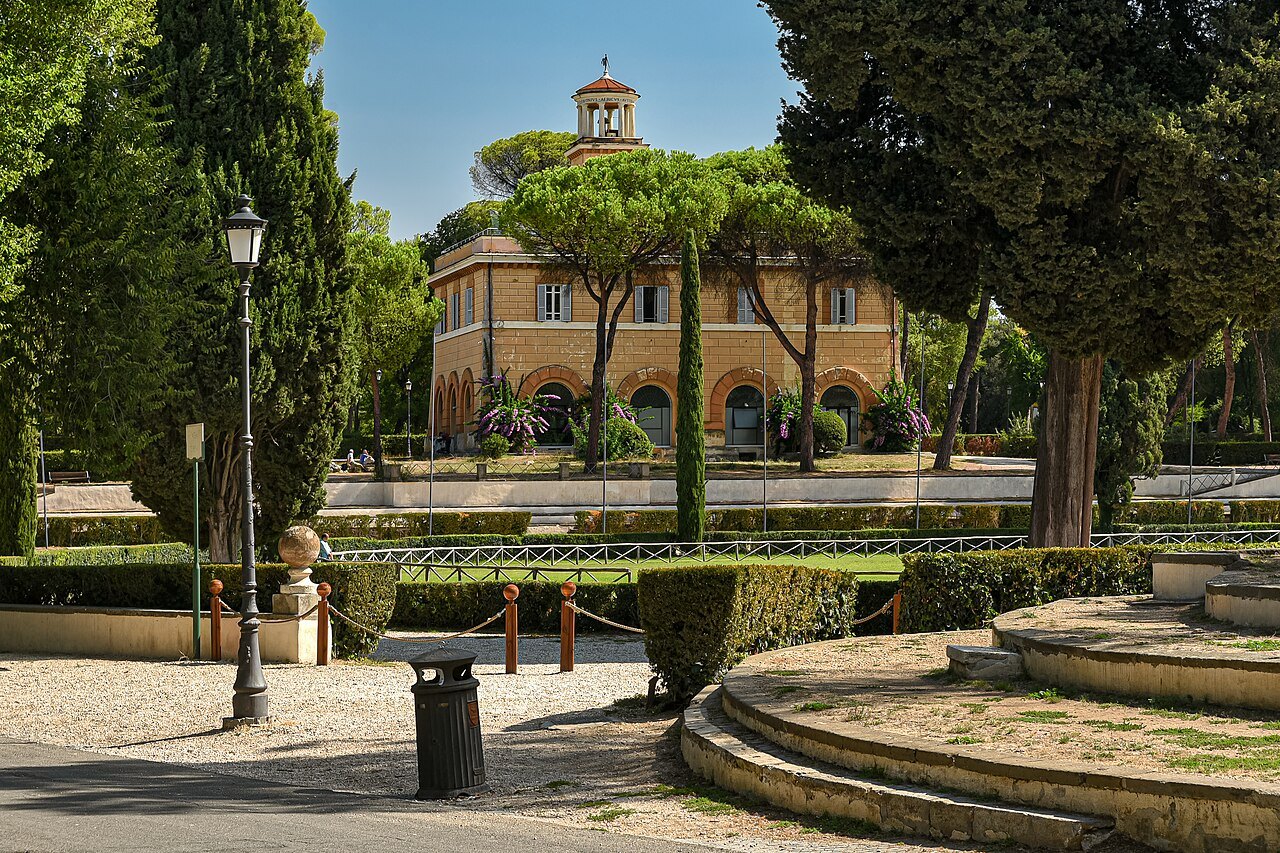
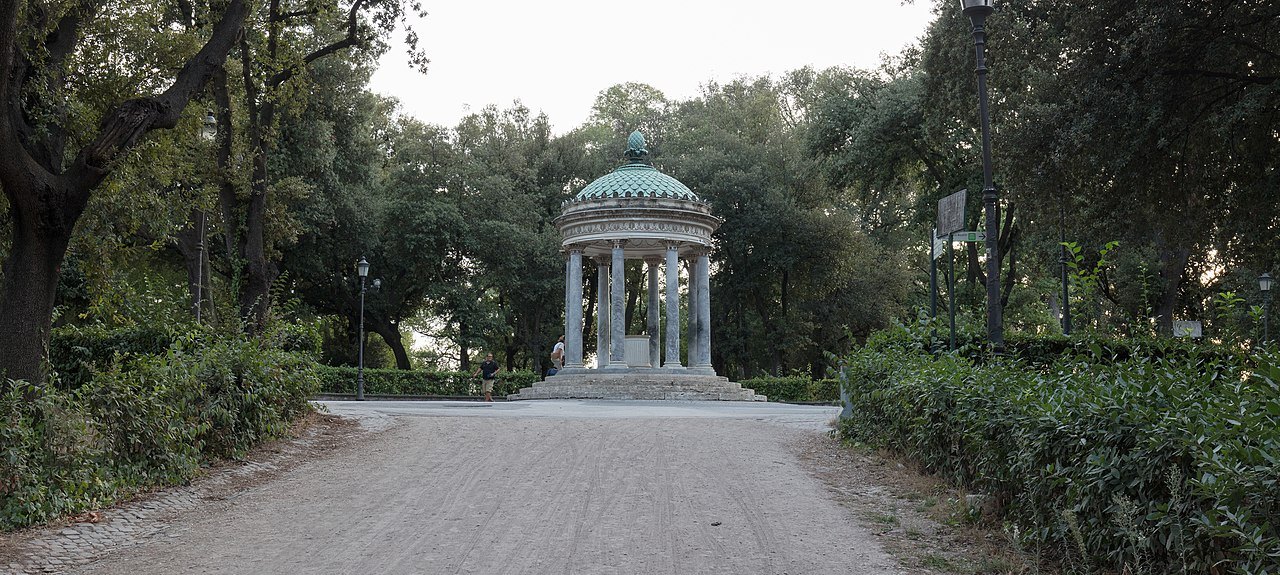
Its avenues of pines and plane trees lead to a small lake with a temple to Aesculapius, to the Casina dell'Orologio with its clock, to other museums in the park and to the terrace of the Pincio above Piazza del Popolo. The park itself is a public space and costs nothing to walk.
How to visit
Buy tickets only from the gallery's official website, and read its visiting rules there before you go, including how long a visit lasts and what you may bring inside; the booking ahead page collects the other monuments whose tickets are best arranged in advance. The gallery is small, and the sculpture rooms reward a slow walk more than a long one.
Walk up through the park from Piazza del Popolo and the Pincio, or from the top of the Spanish Steps; allow time before or after for the gardens.
Myths worth setting aside
The Borghese collection is often imagined as complete. Much of its ancient sculpture went to France after the sale of 1808, including the Borghese Gladiator and the Sleeping Hermaphrodite's more famous twin; the Hermaphrodite in the gallery today is another copy, whose marble mattress was carved for it by Bernini.
Where to go next
Nearby
- Nearby · IV · Campo MarzioPiazza del Popolo and the PincioThe great oval square inside Rome's northern gate, where the road from the north entered the city: an Egyptian obelisk older than the city itself, twin churches, three streets fanning south, and the Pincio's terrace above.Read the page →
- Nearby · IV · Campo MarzioThe Spanish StepsOne hundred and thirty-five steps climbing a steep slope from the Piazza di Spagna to the French church of Trinità dei Monti, designed after a competition of 1717 and paid for with a French diplomat's legacy.Read the page →
- Nearby · II · TreviThe Trevi FountainNicola Salvi's fountain of 1732 to 1762, the largest Baroque fountain in the world, marks where the water of an aqueduct first built in 19 BC arrives in the city, filling a small square at the meeting of three streets.Read the page →