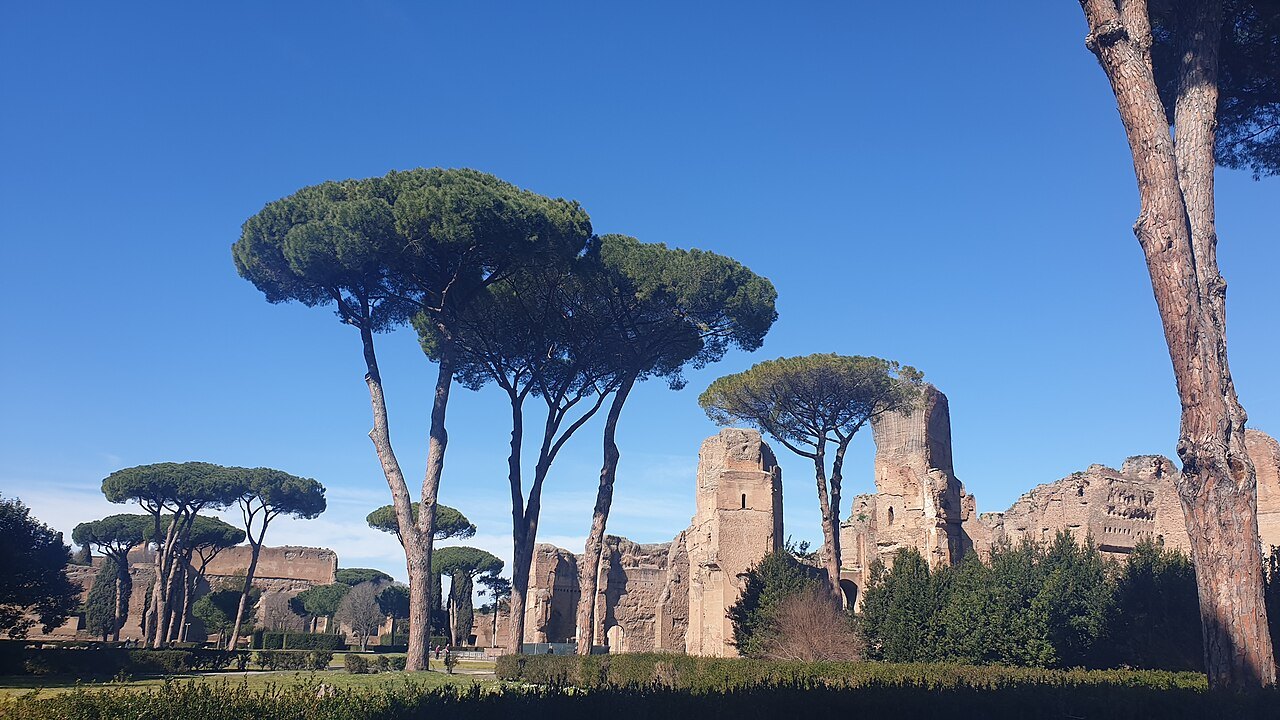
Home · Sights · The Baths of Caracalla
What you are looking at
The Baths of Caracalla
XXI · San Saba
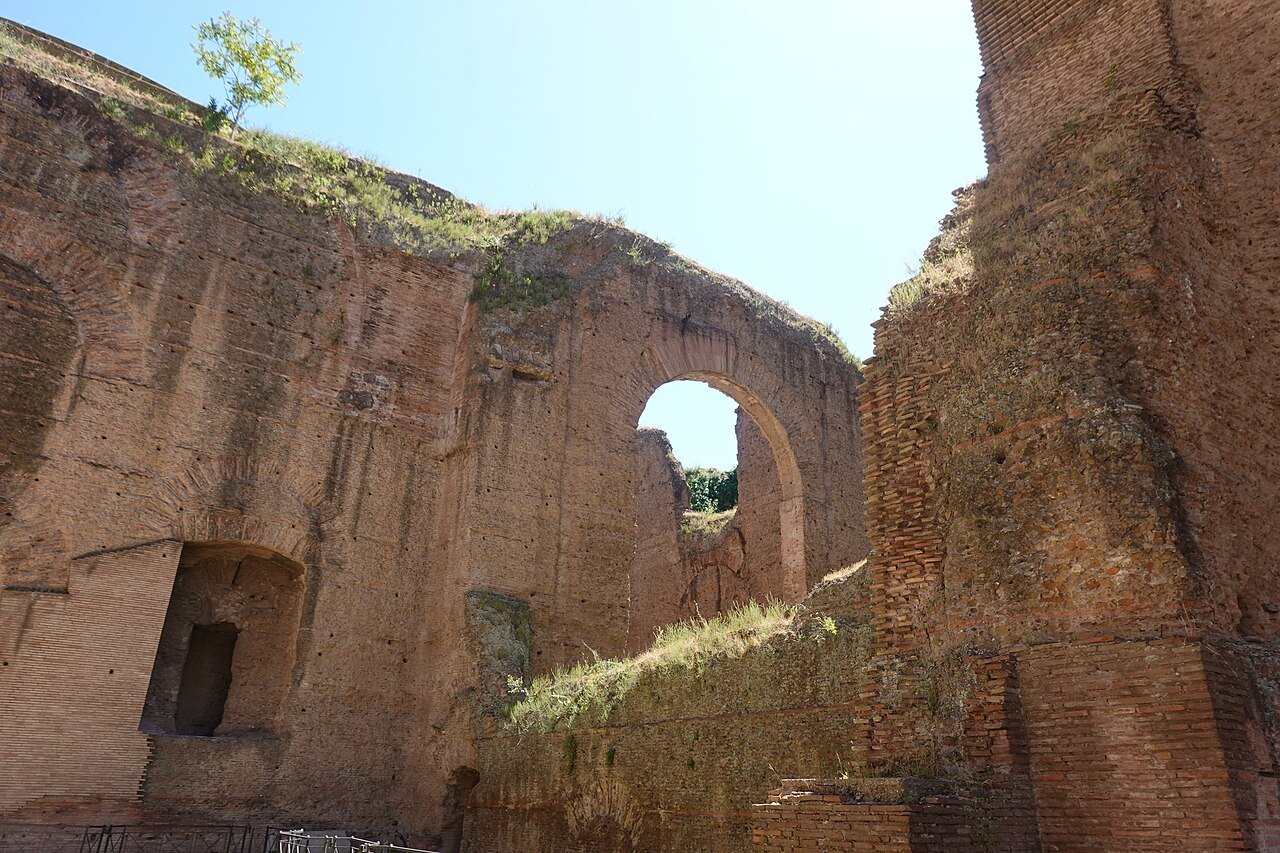
- IThe frigidariumThe great cold hall at the center, once roofed by three vaults about 108 feet high.
- IIThe caldariumThe circular hot room, about 115 feet across, with seven pools and saunas beside it.
- IIIThe palaestrasTwo open courts on either side, used for exercise, wrestling and boxing.
- IVThe mosaicsFloors found in the caldarium and the western palaestra in 1878 and 1879.
- VThe libraryOne of two symmetrical libraries in the outer wall, with thirty-two niches for the books.
- VIThe MithraeumThe largest documented meeting room of the god Mithras, found underground in 1912.
The sight in full
Reading the place
Why it matters
The Baths of Caracalla were counted in late antiquity among the seven wonders of Rome, and their ruins are still one of the clearest ways to see how the Romans lived. They were the city's second-largest public baths, after the Baths of Diocletian, and far more than a place to wash: a leisure center where Romans could walk, read, study, exercise and take care of their bodies, with two libraries, great exedras and shops. Entry was free.
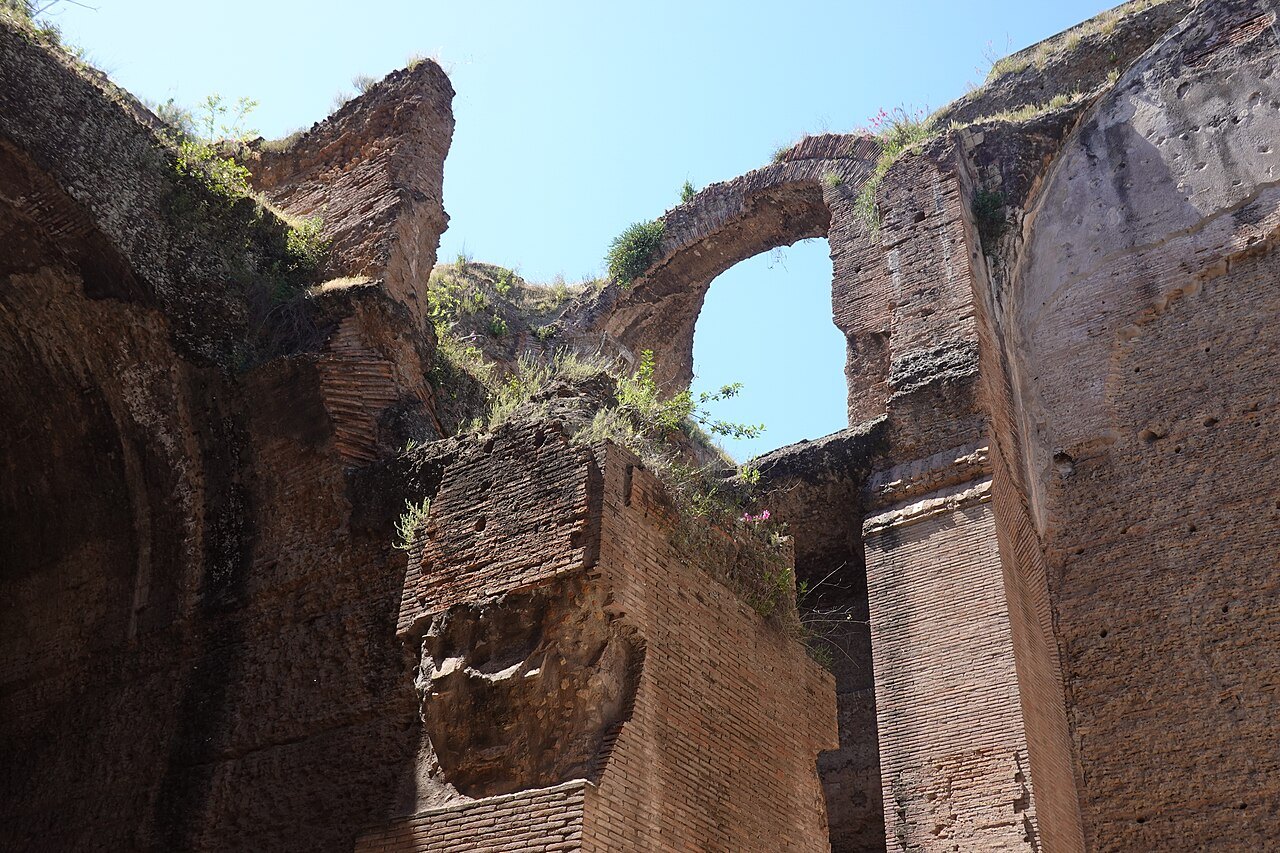
The scale is still overwhelming. The complex covered about 62 acres, a rectangle of roughly 1,100 by 1,080 feet, and used several million bricks and at least 252 columns, sixteen of them over 39 feet tall. The ruins stand in the south of the old city, in the rione of San Saba, on the road out toward the Appian Way.
Built in six years
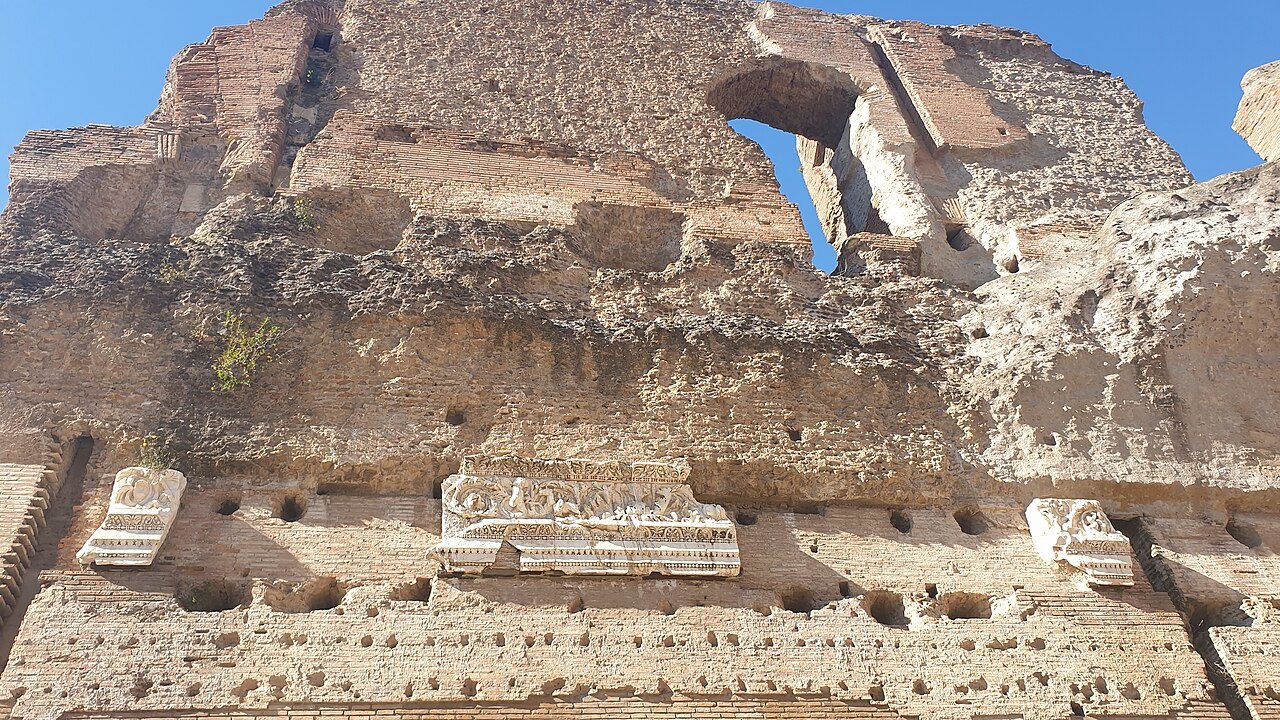
Construction was probably begun by the emperor Septimius Severus and completed under his son Caracalla, who opened the baths in 216. The site had been a garden estate of the Augustan age, and the buildings on it were demolished, filled with earth and built into the foundations. Deep below the baths lies a two-story house of Hadrian's reign with frescoed ceilings and a shrine to Roman and Egyptian gods, which has been opened to visitors.
To finish most of the work in the time of Caracalla, builders would have had to set more than 2,000 tons of material every day for six years. Decoration went on under his successors, and the baths were largely complete by 235. A new aqueduct, the Aqua Antoniniana, a branch of the Aqua Marcia, was built to feed them, filling eighteen cisterns in the south wall, and the water was heated by furnaces burning wood and coal under the floors.
A day at the baths
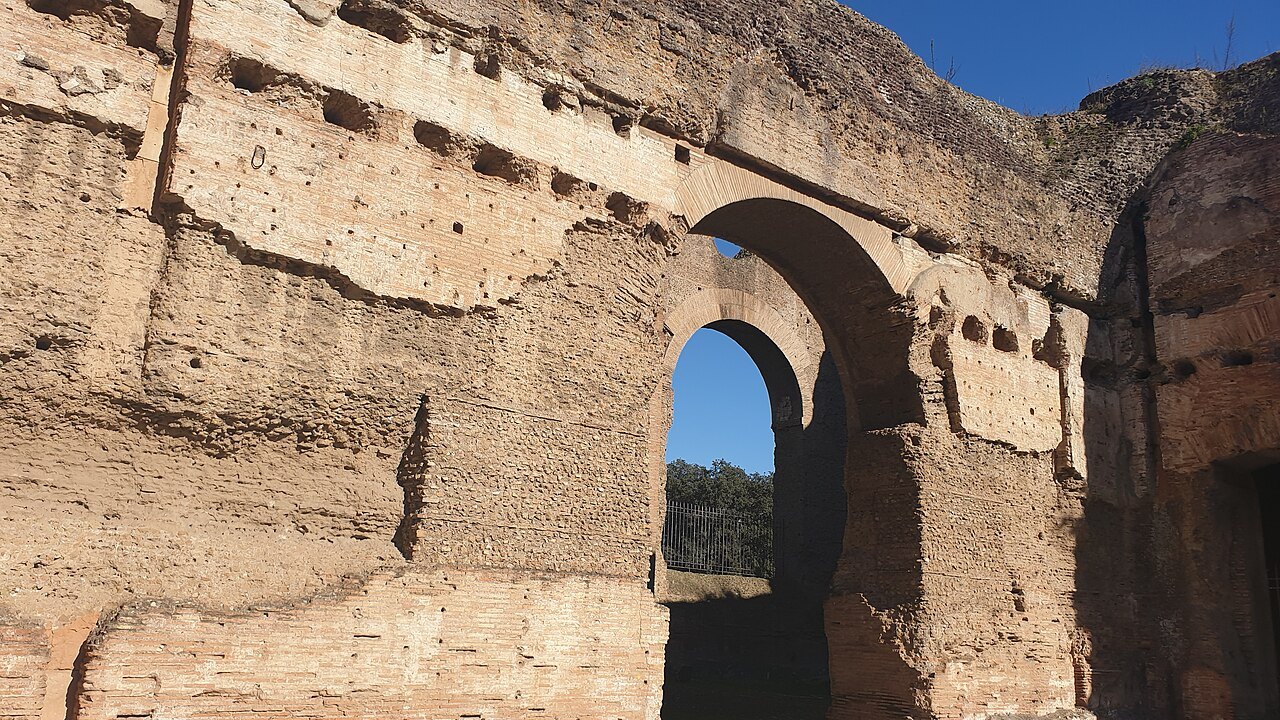
At the center stood the frigidarium, the cold hall, about 190 by 79 feet under three vaults about 108 feet high, carried on eight giant columns of Egyptian granite. Beyond it lay the tepidarium, with its two warm pools, and the circular caldarium, the hot room, about 115 feet across, with seven pools and saunas alongside. At the northeastern end was the natatio, the open swimming pool, and on either side of the bath block were two palaestras, courts for exercise, wrestling and boxing.
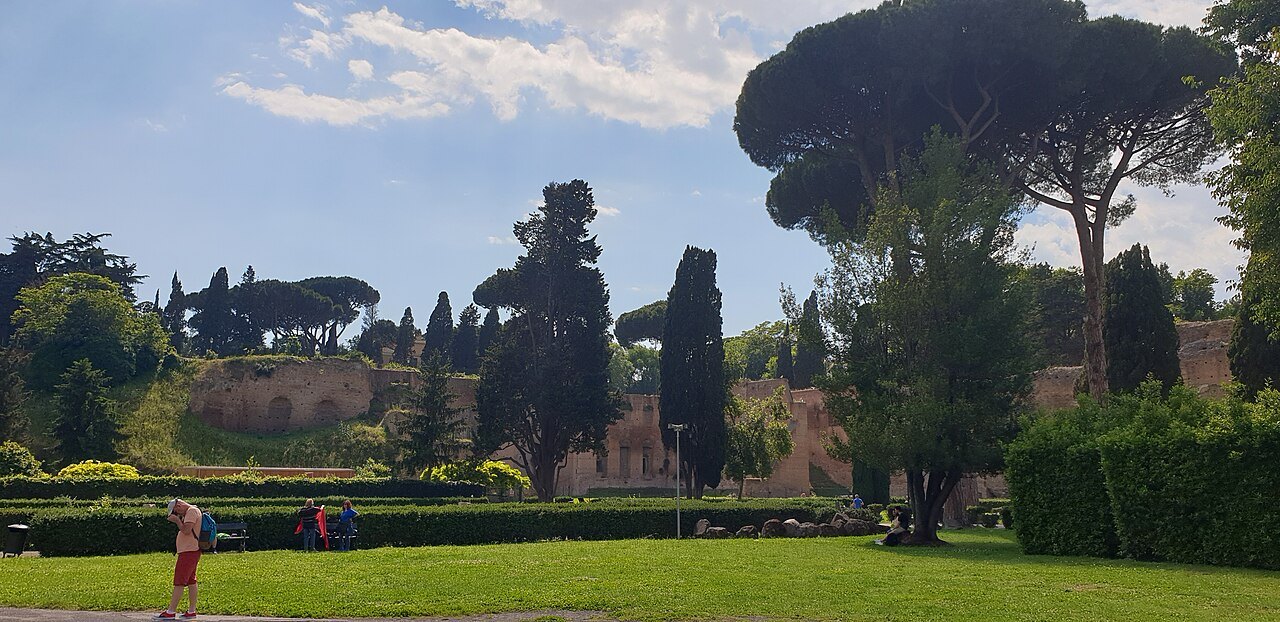
In the fifth century the baths were still fully working and counted among the seven wonders of Rome. A writer of the time gives a capacity of 1,600, taken to mean bathers at any one time; the daily total is thought to have been six to eight thousand. Beneath it all ran tunnels that heated the baths and carried away the water, and in them was a Mithraeum, discovered in 1912, the largest known meeting room of the cult of Mithras, a god favored by soldiers.
Ruin, quarry and treasure
In 537, during the Gothic War, the Ostrogoth king Vitiges besieged Rome and cut its aqueducts, and the baths were abandoned soon after. In the sixth and seventh centuries pilgrims who died in a nearby hospice were buried among the ruins, and simple tombs from that time have been found inside. The earthquake of 847 brought much of the building down. From the twelfth century they were a quarry: columns went to Santa Maria in Trastevere, where twenty-two of them still line the nave, and to the cathedral of Pisa, and in the fifteenth century stone went into a loggia at St. Peter's.
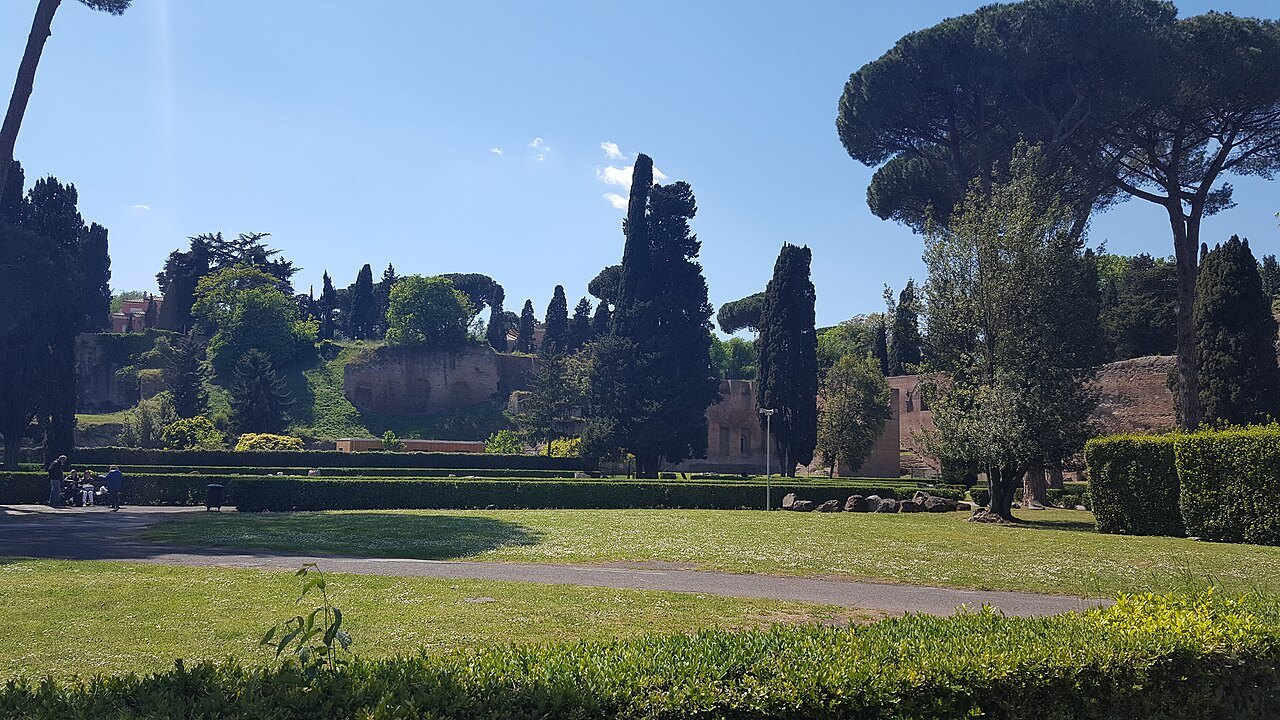
In 1545 to 1547, Pope Paul III, a Farnese, dug here and found so many statues, fragments and gems that a museum was created for them. Among the finds were the Farnese Bull and the Farnese Hercules, which left Rome in the late eighteenth century with the rest of the Farnese collection. Mosaics found in 1824 are now in the Vatican Museums. Paul III gave the grounds to the Jesuits' Roman seminary, and they became a playground for children; Philip Neri, who may have brought the boys of his oratory here, is believed to have commissioned the fresco of the Madonna held up by an angel that is still in the swimming pool.
Opera, gymnasts and a train station
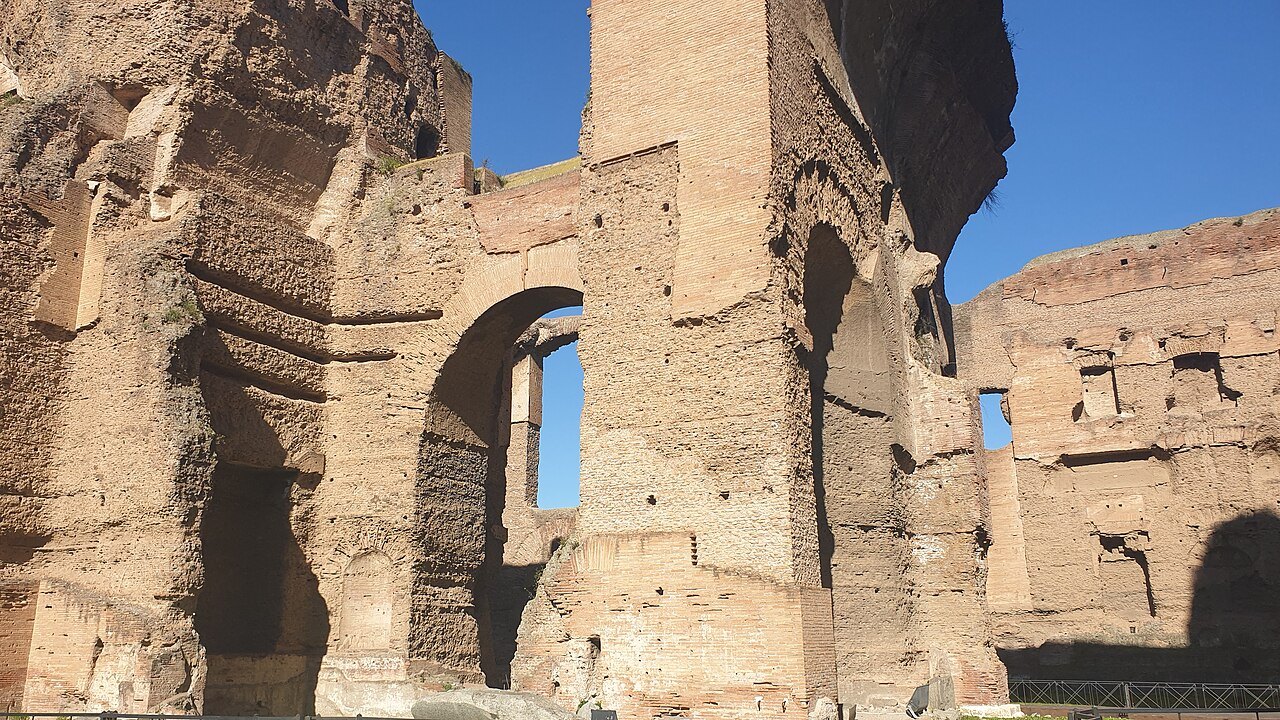
The ruins have had an unusual modern life. From 1937 to 1993 the caldarium was the summer home of the Rome Opera, with a stage built into the ancient hall; the stage was taken down in 1998 and 1999, when visitor facilities were added, and the baths reopened in 2001. Earthquakes still reach them: the ruins were the only ancient site in Rome damaged by the L'Aquila earthquake of 2009. At the 1960 Summer Olympics, the site hosted the gymnastics events.
Their architecture traveled too. The baths inspired the Baths of Diocletian and the Basilica of Maxentius in antiquity and, in modern times, the original Pennsylvania Station in New York, Chicago Union Station and the Senate of Canada Building.
How to visit
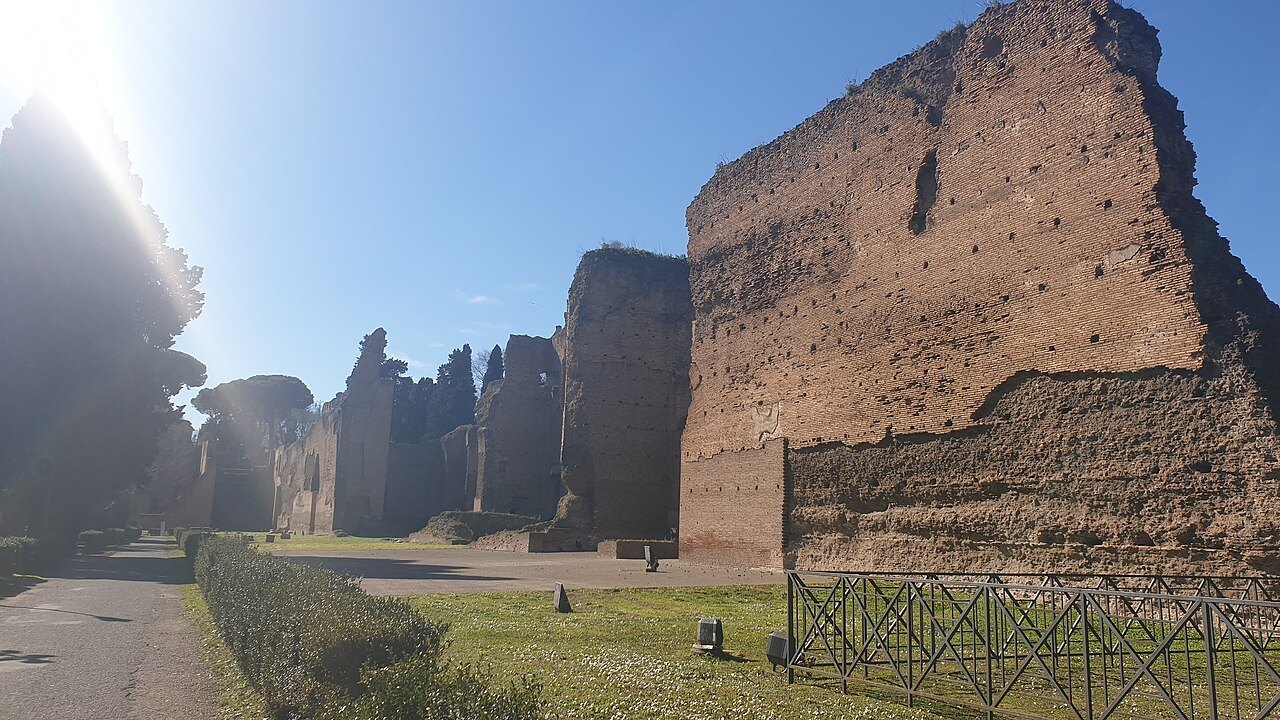
The baths belong to the Italian state; buy tickets only from the official channels and check the site's own rules before you go. Give yourself time to walk around the whole bath block, look down for the mosaics, and find the library in the outer wall, one of the first public libraries in any Roman baths: the surviving room, about 125 by 72 feet, has thirty-two niches that once held the books. The booking ahead page lists which sights are best arranged in advance.
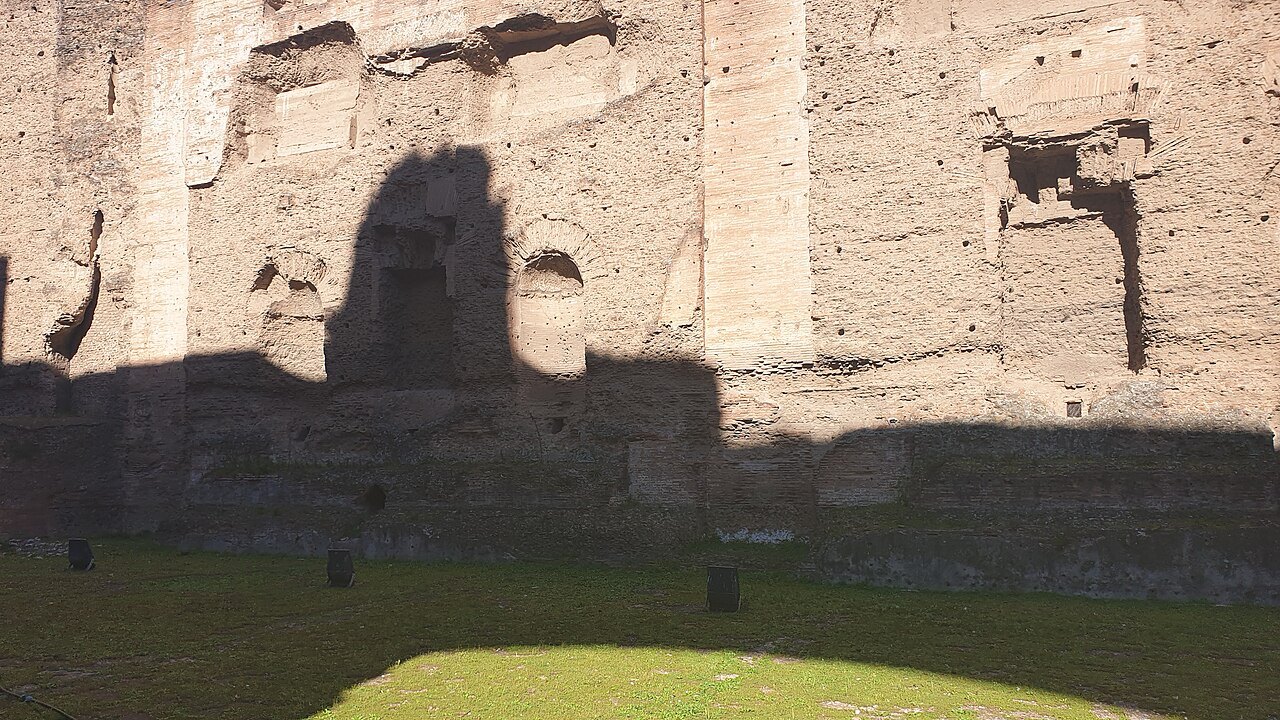
The ruins are a short walk south of the Circus Maximus, below the Palatine, and a natural first stop on the way out to the Appian Way.
Where to go next
Nearby
- Nearby · XIX · CelioThe ColosseumBegun under Vespasian in 72 and opened under his son Titus in AD 80 on the site of Nero's private lake, the largest amphitheater ever built still stands at the center of Rome, three tiers of arches and an attic high.Read the page →
- Nearby · X · CampitelliThe Palatine Hill and the Circus MaximusThe centermost of the seven hills, where Rome began and where the emperors lived: the palaces of Augustus, Tiberius and Domitian above, and below them the long green hollow of the Circus Maximus, the city's great racetrack.Read the page →
- Nearby · Outside the wallsThe Appian WayThe road that Appius Claudius began in 312 BC to march Rome's armies south, leaving the city by the Porta San Sebastiano between tombs, catacombs and an emperor's circus, walkable today for about ten miles on its old paving stones.Read the page →