Five days out of the city: the port of ancient Rome at Ostia, the two great villas of Tivoli, the hill towns and lakes of the Castelli Romani, Orvieto on its rock, and the Etruscan tombs of Cerveteri, all within a short trip of the center.
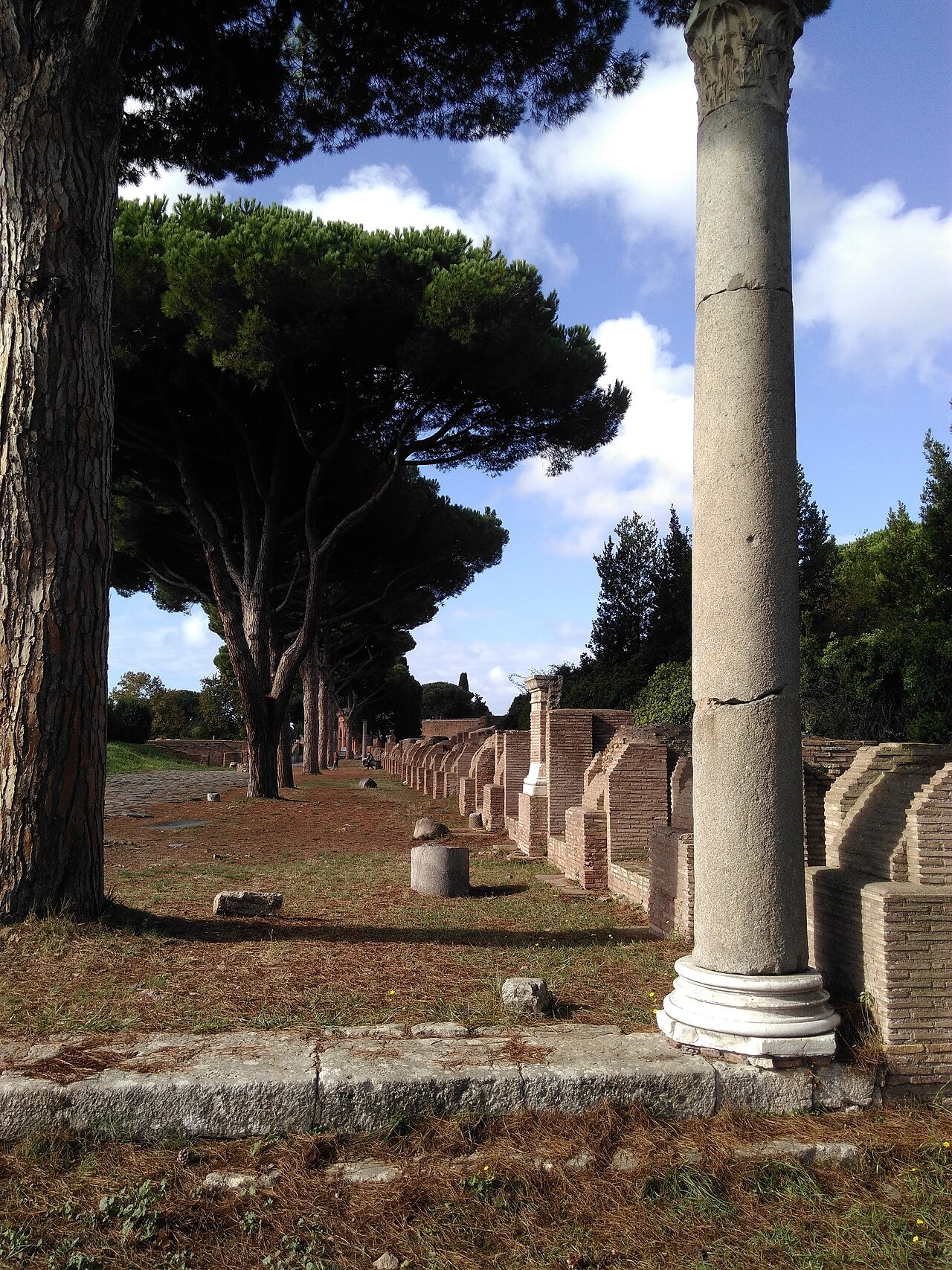
A column and pines beside a line of brick ruins along the main street of Ostia AnticaG41rn8, Wikimedia Commons, CC BY-SA 4.0Rome–Lido railway from Porta San Paolo, beside PiramideOstia AnticaThe port city of ancient Rome at the old mouth of the Tiber, preserved under sand dunes: streets, a theater, baths and mosaics.
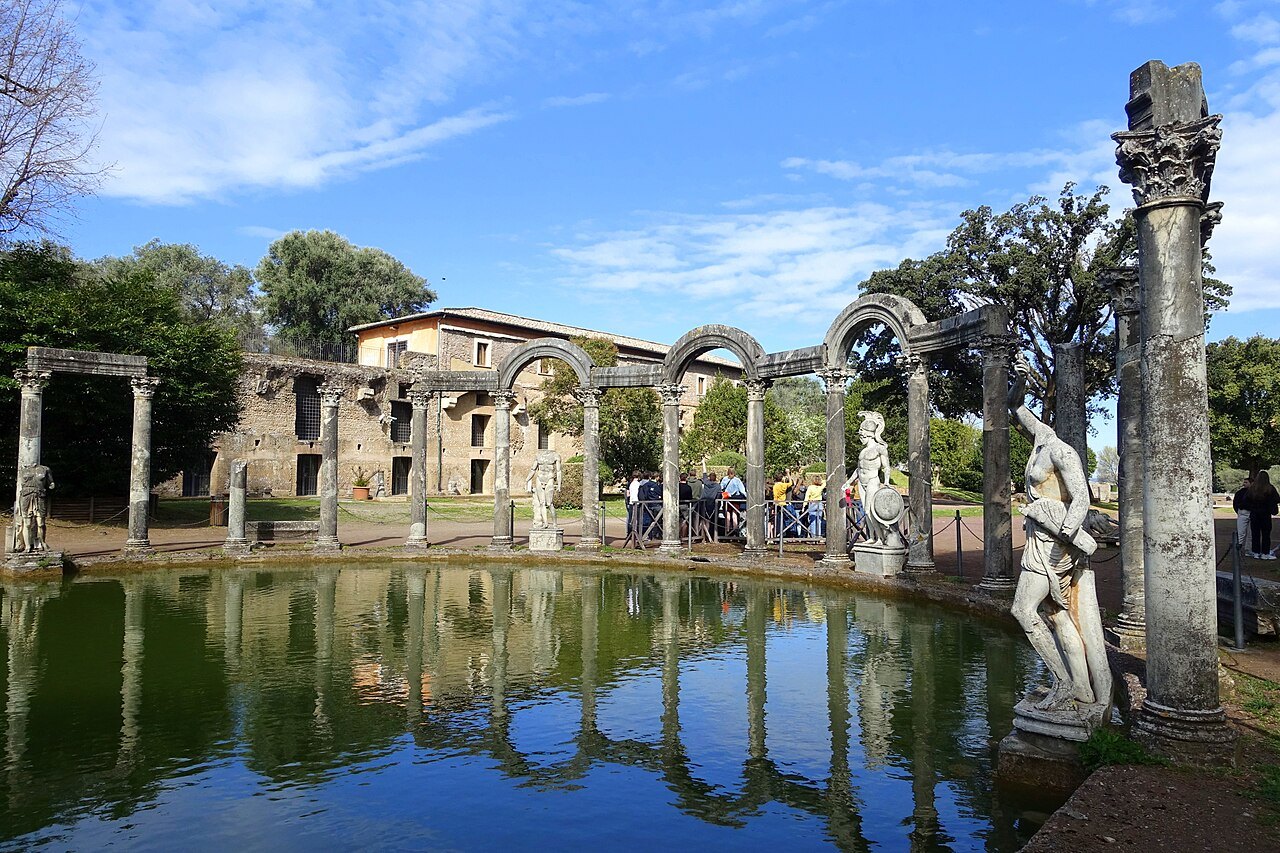
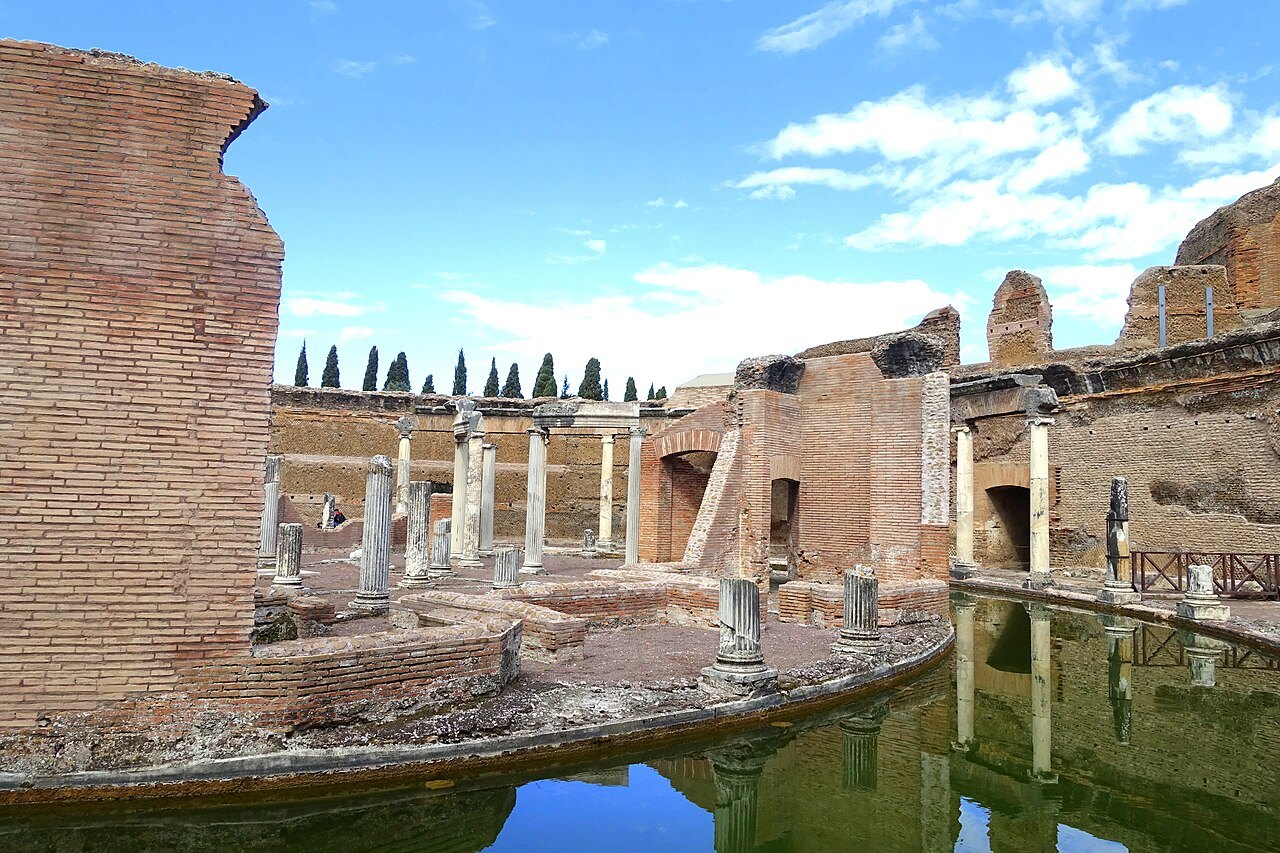
The round Maritime Theatre at Hadrian's Villa, its moat and columns inside brick wallsDaderot, Wikimedia Commons, Public domainNortheast along the Via Tiburtina, about nineteen milesTivoliTwo UNESCO villas above the Roman plain: Hadrian's palace complex of the second century and the Renaissance fountains of the Villa d'Este.
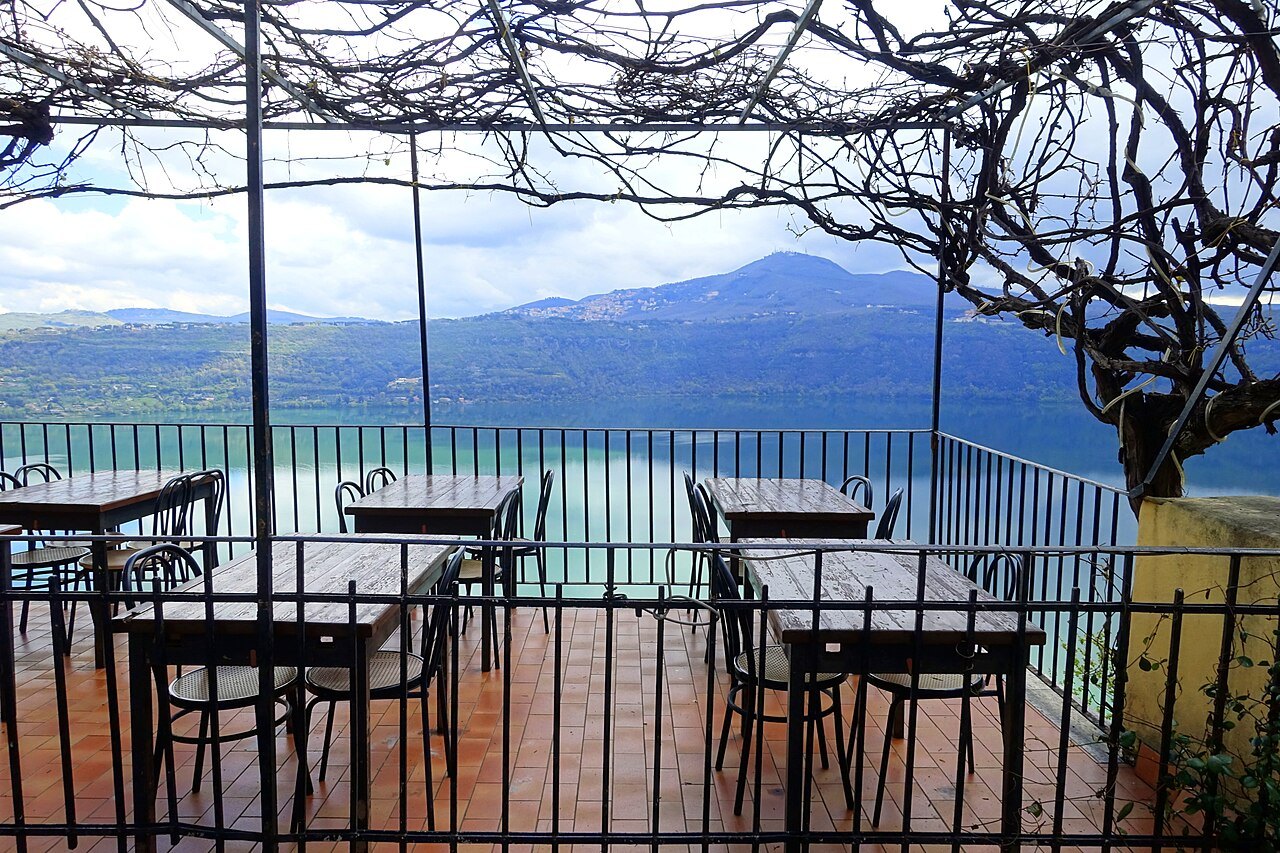
A terrace with tables under a vine in Castel Gandolfo, above Lake AlbanoDaderot, Wikimedia Commons, CC0Southeast into the Alban Hills; the old railway to FrascatiThe Castelli RomaniHill towns around two crater lakes, Albano and Nemi: Frascati and its white wine, Castel Gandolfo and the popes' summer palace.
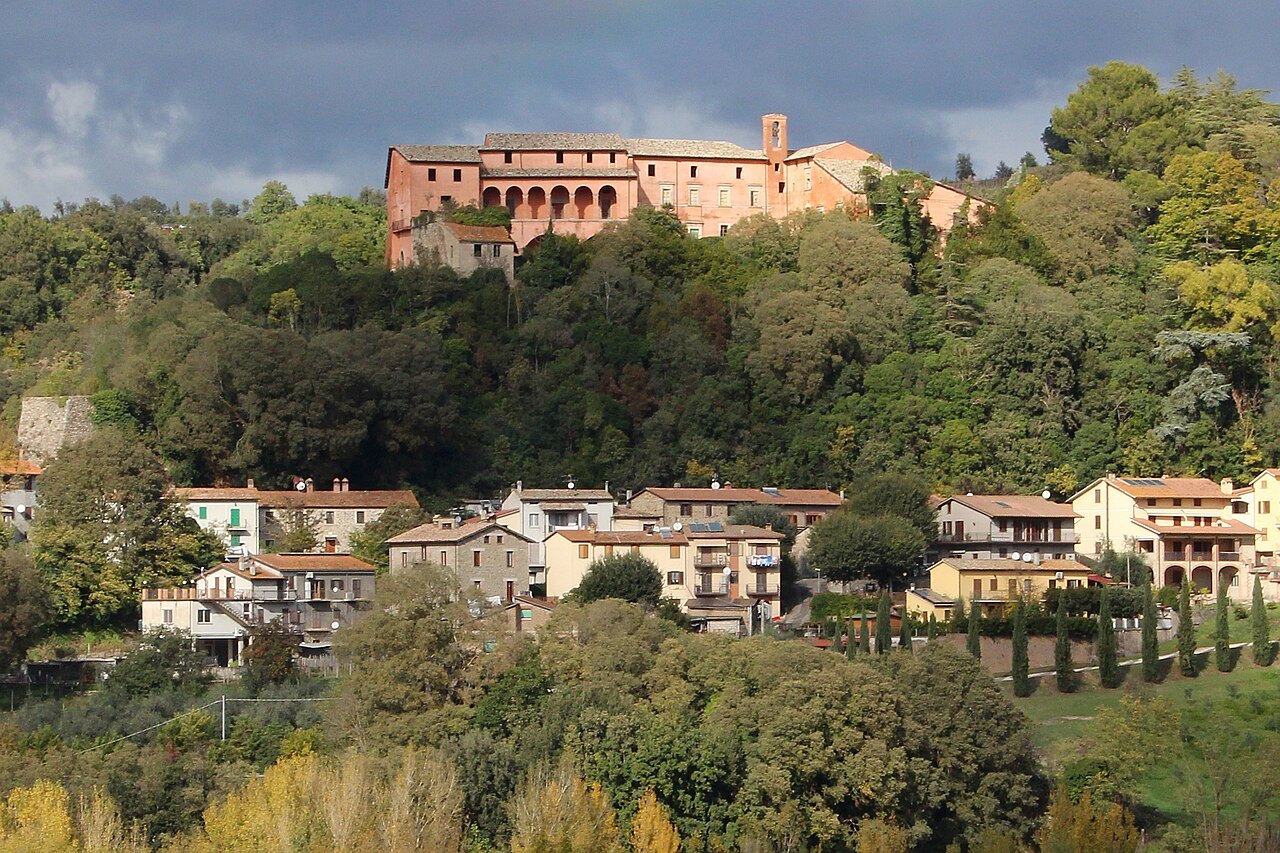
The hill town of Orvieto above woods and houses, its buildings on the edge of the rockLigaDue, Wikimedia Commons, CC BY-SA 4.0North on the Rome–Florence railway, then the funicularOrvietoA medieval city on a cliff of volcanic tuff in Umbria, with one of the great Gothic cathedral fronts of Italy.
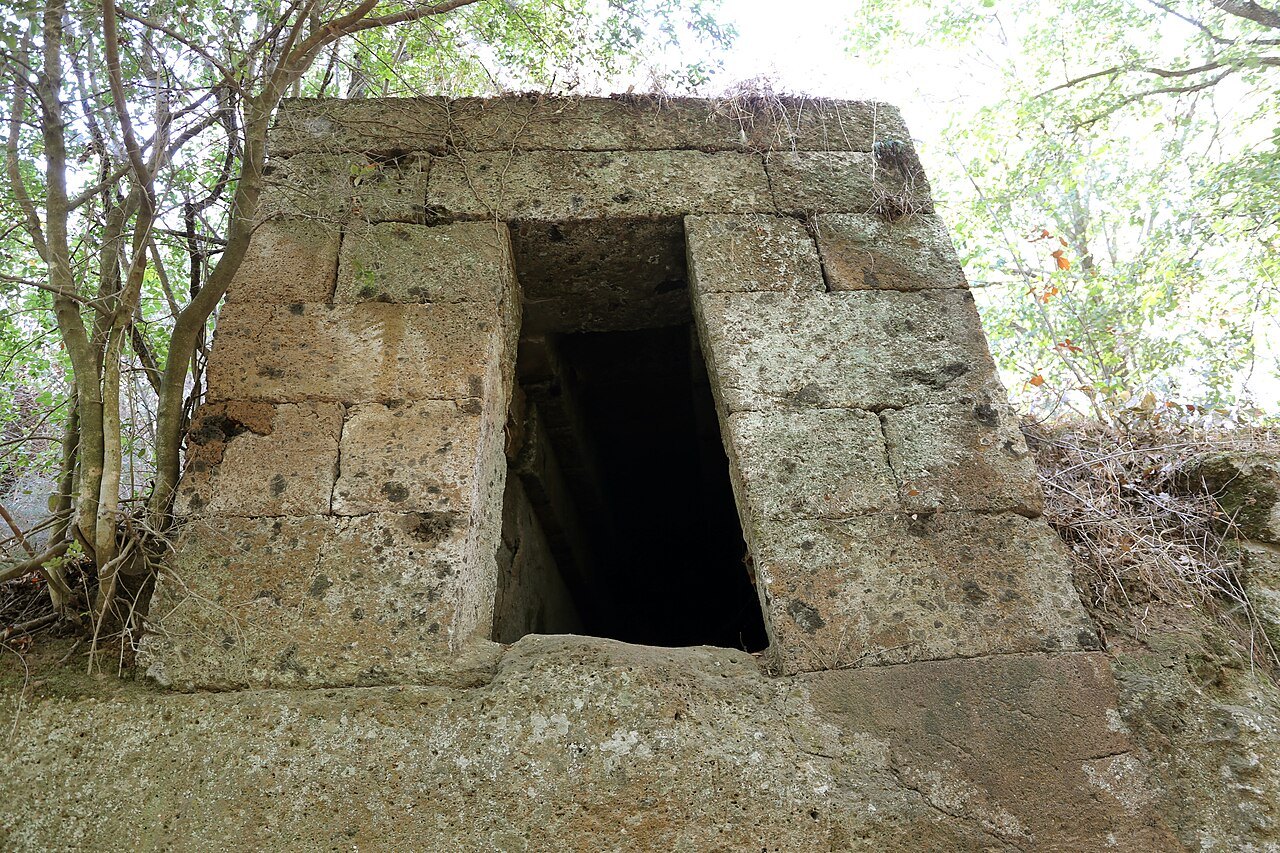
The stone entrance of an Etruscan tomb in the Banditaccia necropolis at CerveteriSailko, Wikimedia Commons, CC BY 3.0Northwest toward the coastCerveteriThe Banditaccia necropolis of the Etruscan city of Caere: round tombs of tuff carved inside as houses of the dead.
II
In full
Day Trips
Why go beyond the city
Rome is surrounded by places that explain it. The port that fed it, the villa of the emperor who rebuilt the Pantheon, the hill towns where its nobles and popes spent their summers, and the tombs of the Etruscans who ruled the land before Rome did are all within a short trip of the center. Each makes a full day, and each gives the city's monuments a context you cannot get inside the walls.
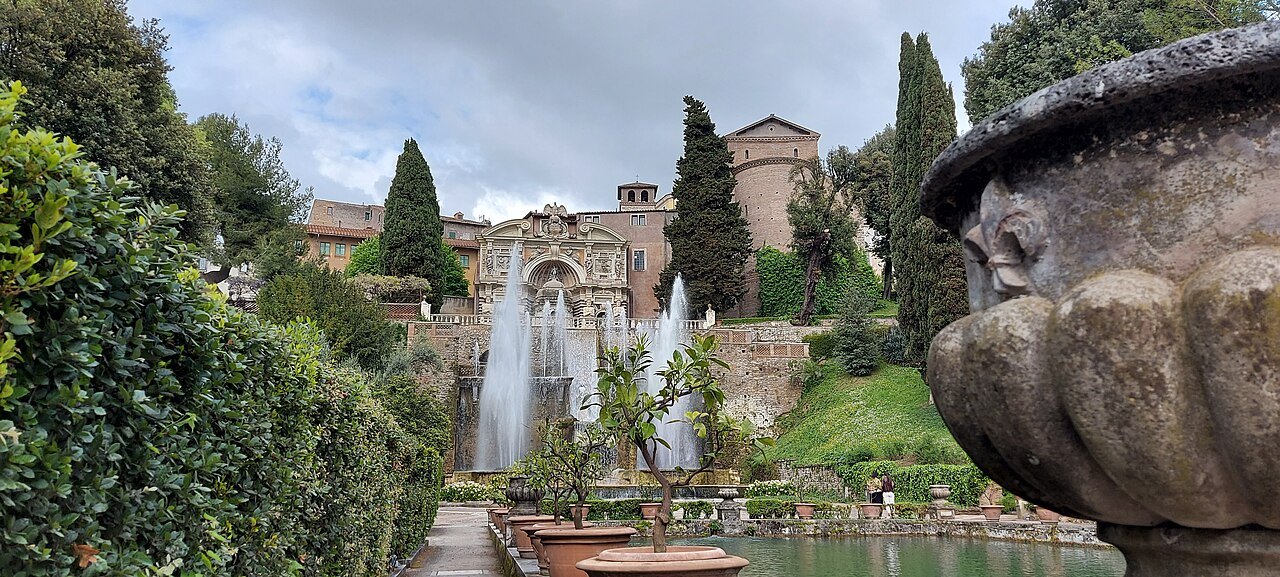
The Fountain of the Organ in the gardens of the Villa d'Este, water jets and cypressesAnna Eden 86, Wikimedia Commons, CC BY-SA 4.0
Plan transport before you go, and check each site's official website for its rules and closures; like the monuments in Rome, several are state museums with their own ticketing.
Ostia Antica
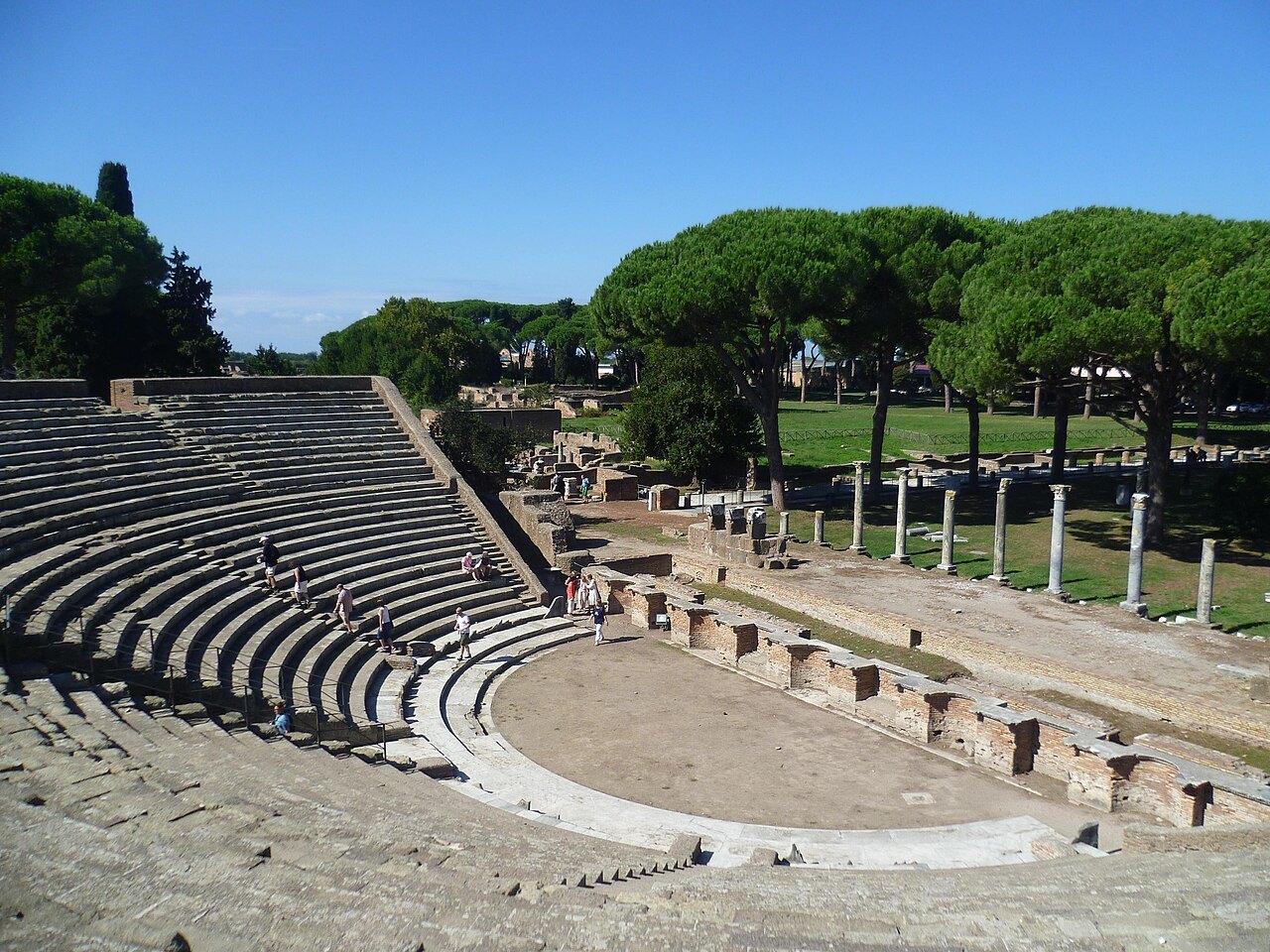
Ostia was the port city of ancient Rome, at the mouth of the Tiber about sixteen miles southwest of the city; its name comes from the Latin os, mouth. Silt has since pushed the coast two miles away. After it was abandoned, sand dunes covered the town and preserved it so well that only Pompeii and Herculaneum surpass it, and its streets show details of Roman city life that cannot be seen in Rome itself.
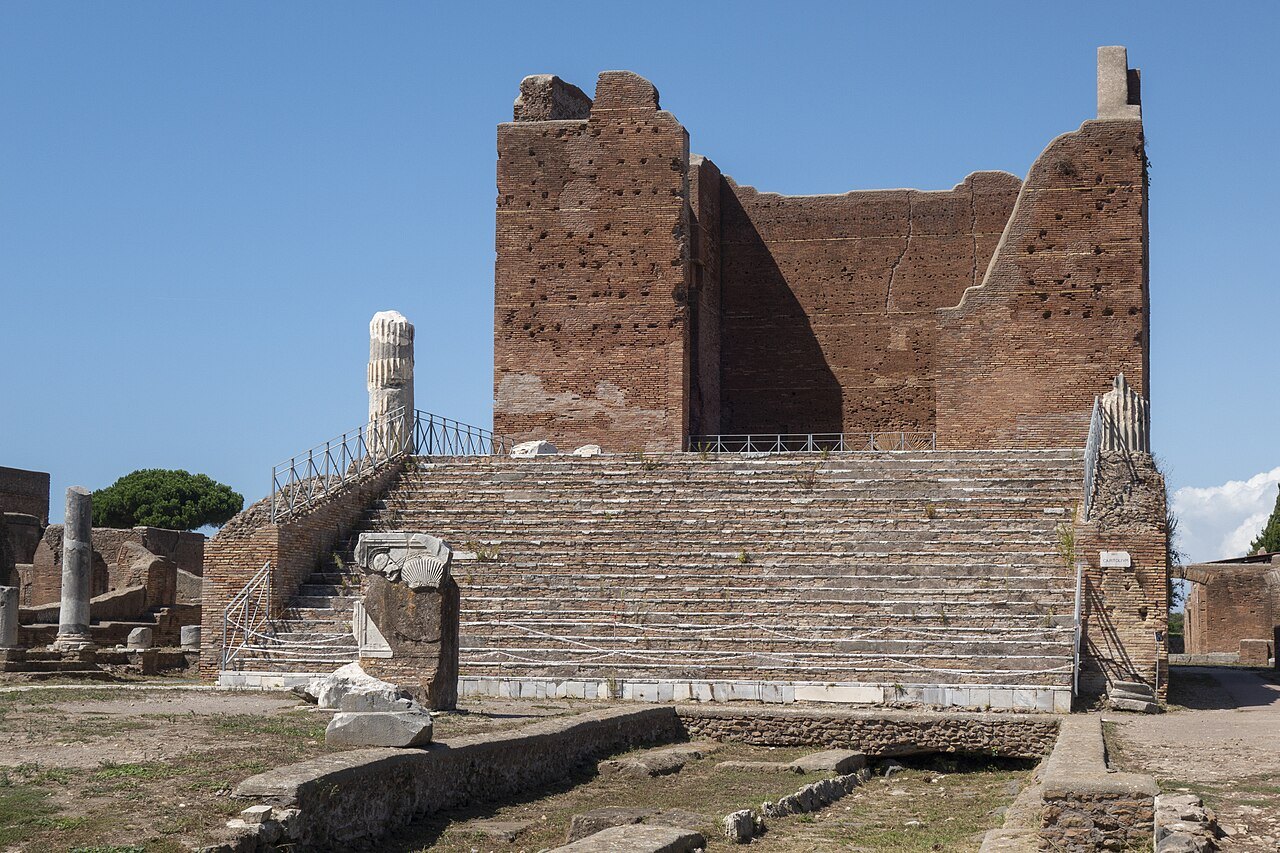
Look for the theater built under Agrippa, the Capitolium, the baths, the taverns and the mosaics, and for the Ostia Synagogue, of the late first century, the earliest yet identified in Europe. The town grew with Rome: Agrippa built its theater between 18 and 12 BC, the forum probably dates from Tiberius, and Caligula gave it an aqueduct. The Rome–Lido railway, called Metromare, runs from Porta San Paolo station, next to the Piramide stop on Metro line B, through Ostia Antica on its way to the sea.
Tivoli
The brick walls and steps of the Capitolium at Ostia Antica against a blue skyNicholas Hartmann, Wikimedia Commons, CC BY-SA 4.0
Tivoli, the ancient Tibur, stands about nineteen miles northeast of Rome at the falls of the Aniene, with a wide view over the Roman Campagna, and it holds two World Heritage Sites. Below the town lies Hadrian's Villa, built around 120 by the emperor who also rebuilt the Pantheon: more than thirty buildings on terraces among gardens and pools, covering an area larger than Pompeii. Its Canopus, a long reflecting pool named for a city on the Nile, and the round Maritime Theatre are masterpieces of Roman architecture, and the curving, concrete-built forms of its halls were unrivaled until the Baroque; Borromini, the architect of Sant'Agnese in Piazza Navona, studied them for inspiration. Much of the site is still unexcavated.
In the town, the Villa d'Este, built for Cardinal Ippolito II d'Este, grandson of Pope Alexander VI, is the model of the Renaissance terraced garden. The river Aniene was diverted to feed its pools, jets, channels, fountains and cascades, and it is a state museum, listed by UNESCO since 2001. Tivoli itself repays a walk: above the falls stand two small ancient temples, one a rotunda long associated with Vesta; the ruins of the Sanctuary of Hercules Victor, of the second century BC, were among the largest structures in central Italy; and the Rocca Pia is a fortress built by Pope Pius II in 1461 to end the feuds of the Colonna and Orsini.
The Castelli Romani
Southeast of Rome, at the foot of the Alban Hills, lie the Castelli Romani, a group of towns in a fertile volcanic landscape whose old crater holds two lakes, Albano and Nemi. Since antiquity the nobles of Rome came here for the cooler summers, and the popes followed; the Apostolic Palace of Castel Gandolfo, above Lake Albano, has been the summer residence of most popes since 1626, and the pope returned to it in 2025. Like the papal basilicas in Rome, it has extraterritorial status as a property of the Holy See.
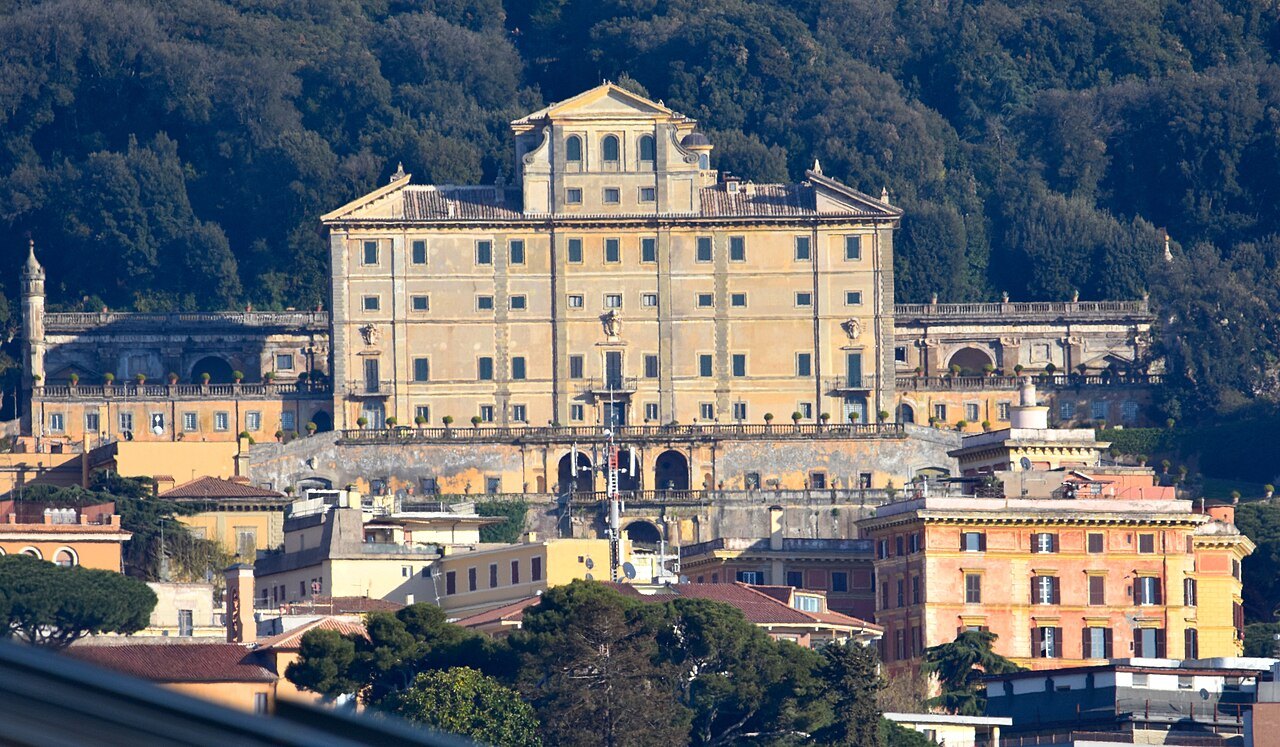
The Villa Aldobrandini above the rooftops of FrascatiScozia73, Wikimedia Commons, CC BY-SA 4.0
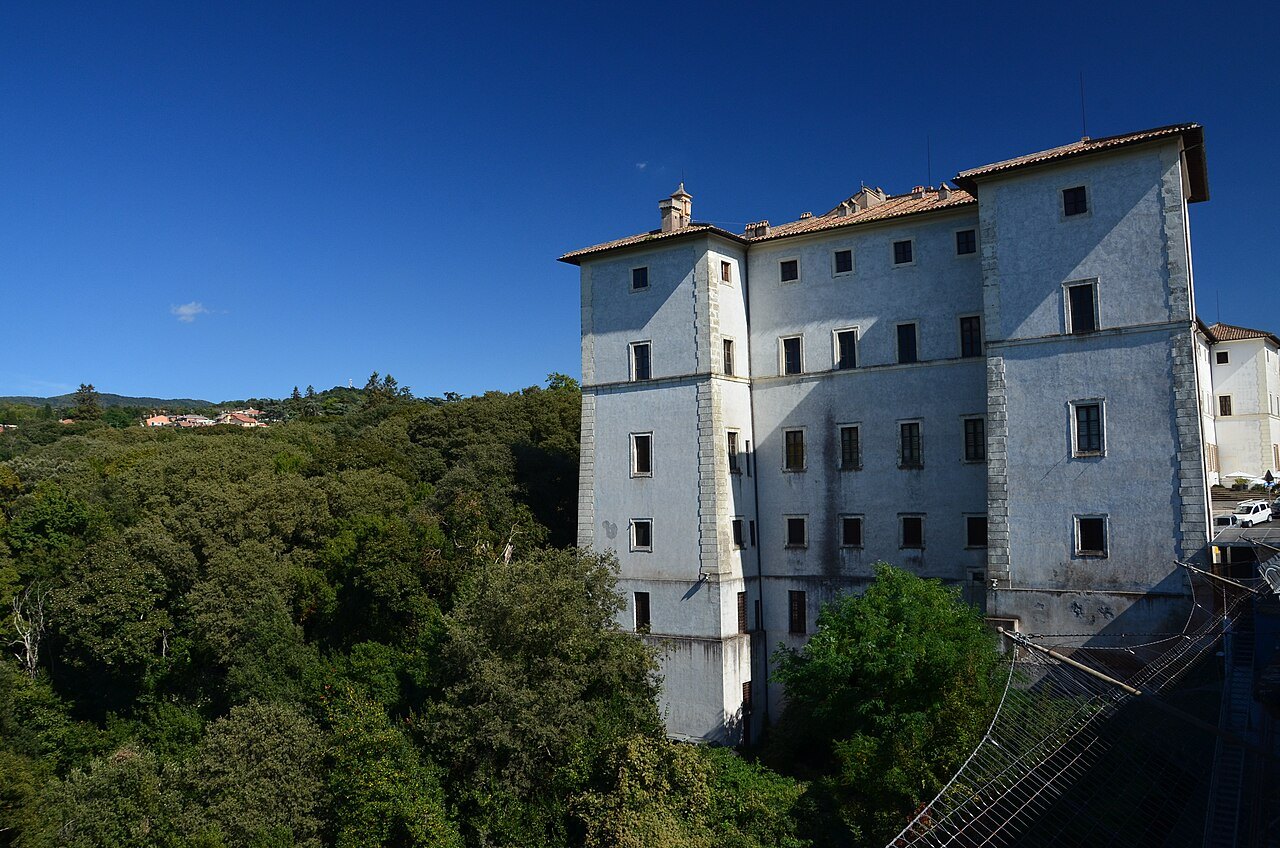
Frascati gives its name to the white wine of the hills and is ringed by the villas of great Roman families, among them the Villa Aldobrandini. In 1856 it was chosen as the terminus of the Rome–Frascati railway, the first line built by the Papal State. The town most associated with porchetta is Ariccia, in the same hills, and the Appian Way runs toward them from Rome.
Orvieto
Orvieto, in Umbria, rises on the flat top of a great block of volcanic tuff, its cliffs finished by walls of the same stone. It was the Etruscan city of Volsinii, and its name comes from urbs vetus, the old city. It lies on the old direct railway between Rome and Florence, completed in 1875 with the section from Orte to Orvieto, and a funicular climbs from the station to the historic center.
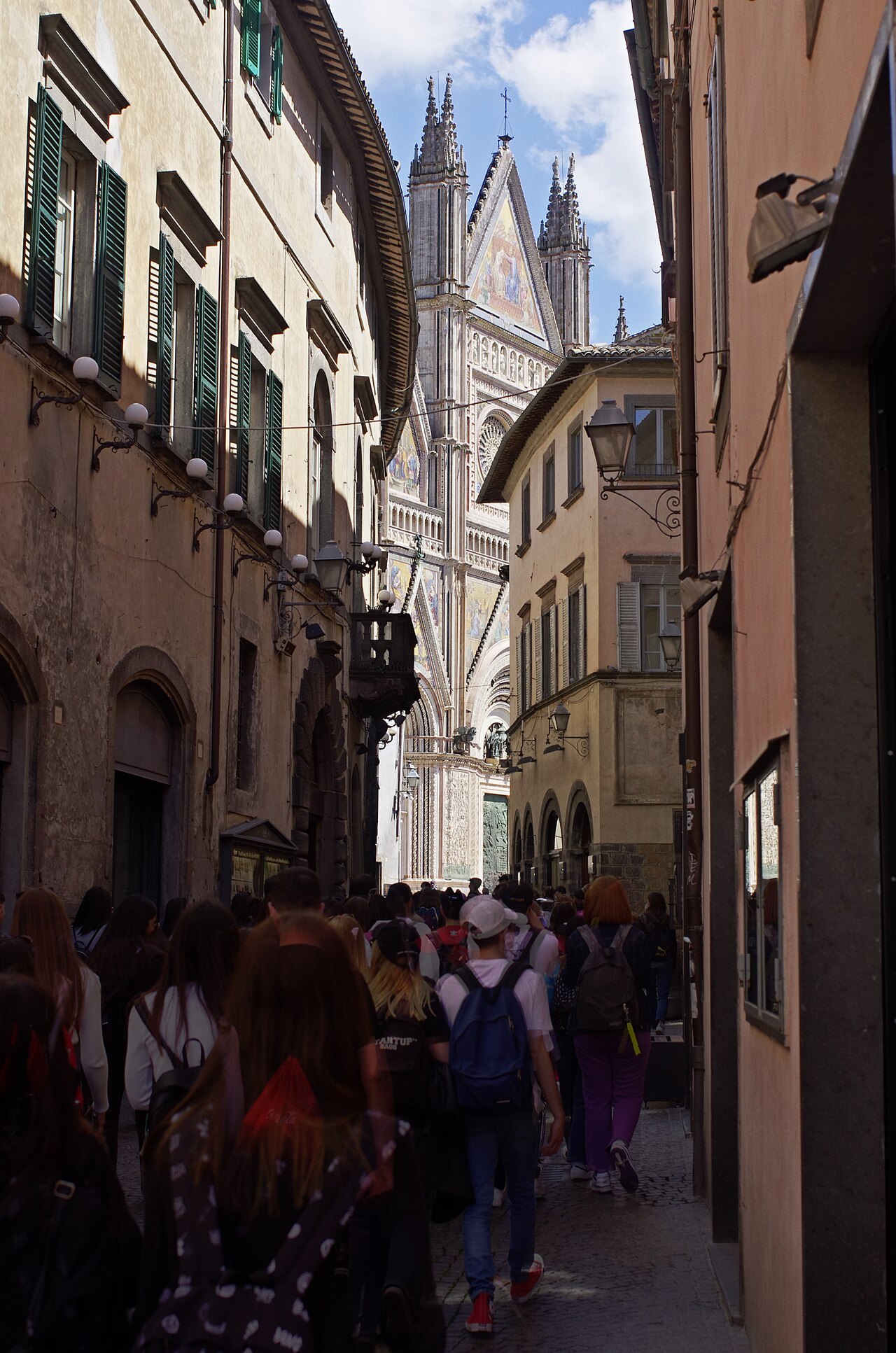
A narrow street in Orvieto leading to the striped side of the cathedralPaolo Villa, Wikimedia Commons, CC BY-SA 4.0
Its cathedral was built for Pope Urban IV to house the relic of a miracle said to have happened at nearby Bolsena in 1263. The Sienese architect Lorenzo Maitani gave it its three-gabled façade, covered in golden mosaics and reliefs, one of the great Gothic fronts of Italy.
Cerveteri
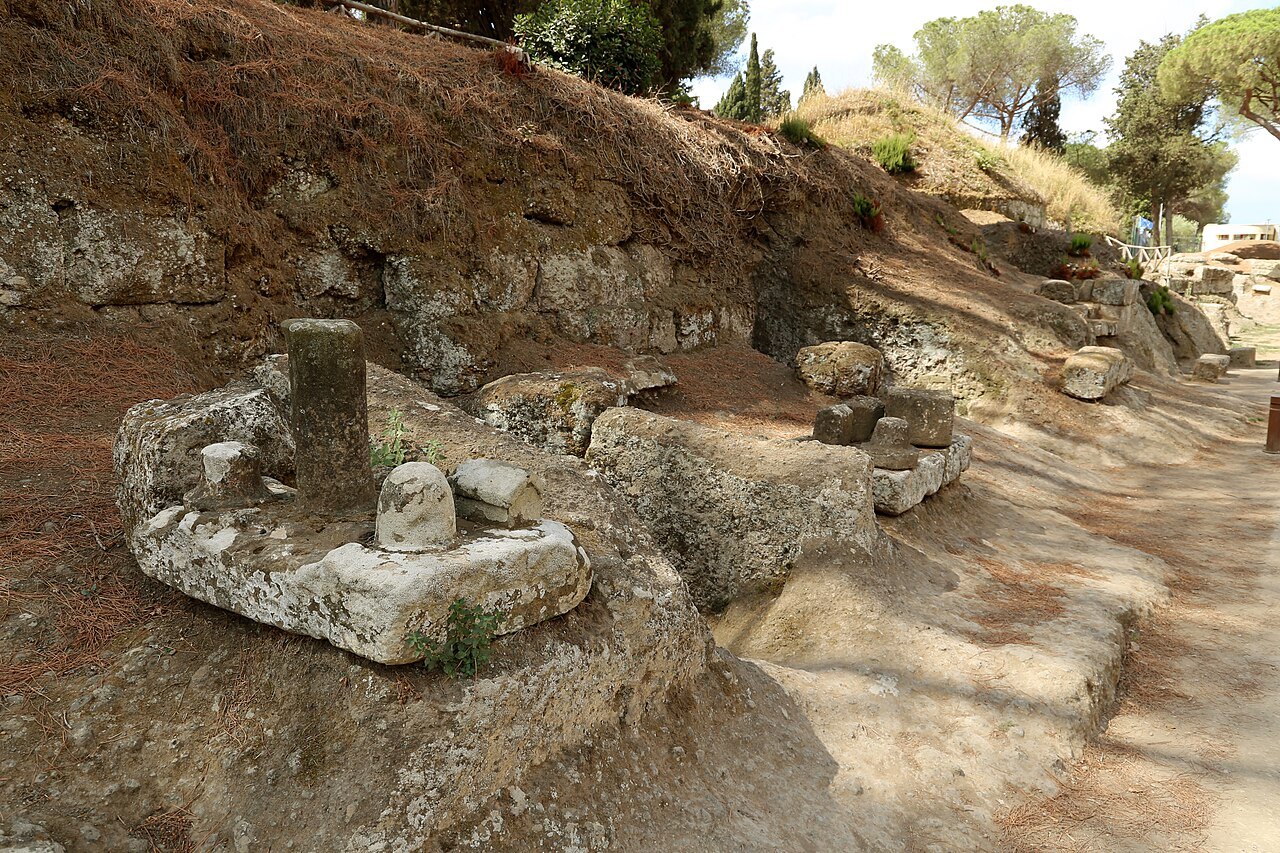
Cerveteri was the Etruscan city of Caere, one of the most important of the Etruscan League, perhaps home to twenty-five to forty thousand people around 600 BC, about four miles from the sea. Its fame today is the Banditaccia necropolis, listed by UNESCO with the necropolis of Tarquinia: streets of round tumulus tombs built of tuff, their interiors carved from the rock as houses of the dead, with a corridor, a central hall and rooms.
Among the most important are the Regolini-Galassi Tomb, with rich gold finds of the seventh century BC, , the Tomb of the Capitals and the Tomb of the Shields and Chairs, both of the mid-sixth century BC. The odd name Banditaccia comes from the bando, the leasing of plots of land to the townspeople by local landowners. Caere's wealth came from trade and iron, and its city was more than fifteen times larger than the modern town.
Planning a day out
A path through the Banditaccia necropolis at Cerveteri, carved stones and tufa wallsSailko, Wikimedia Commons, CC BY 3.0
Start early, carry water and wear shoes for uneven ground: Ostia, Hadrian's Villa and the Banditaccia are large open sites. Check the official site of each for its rules and closures, and check train and bus times with Trenitalia and with Cotral, the regional bus company of Lazio, before you set out. The getting around page explains the city's own network, and the when to come page the seasons.
III
Seen on the way
More photographs
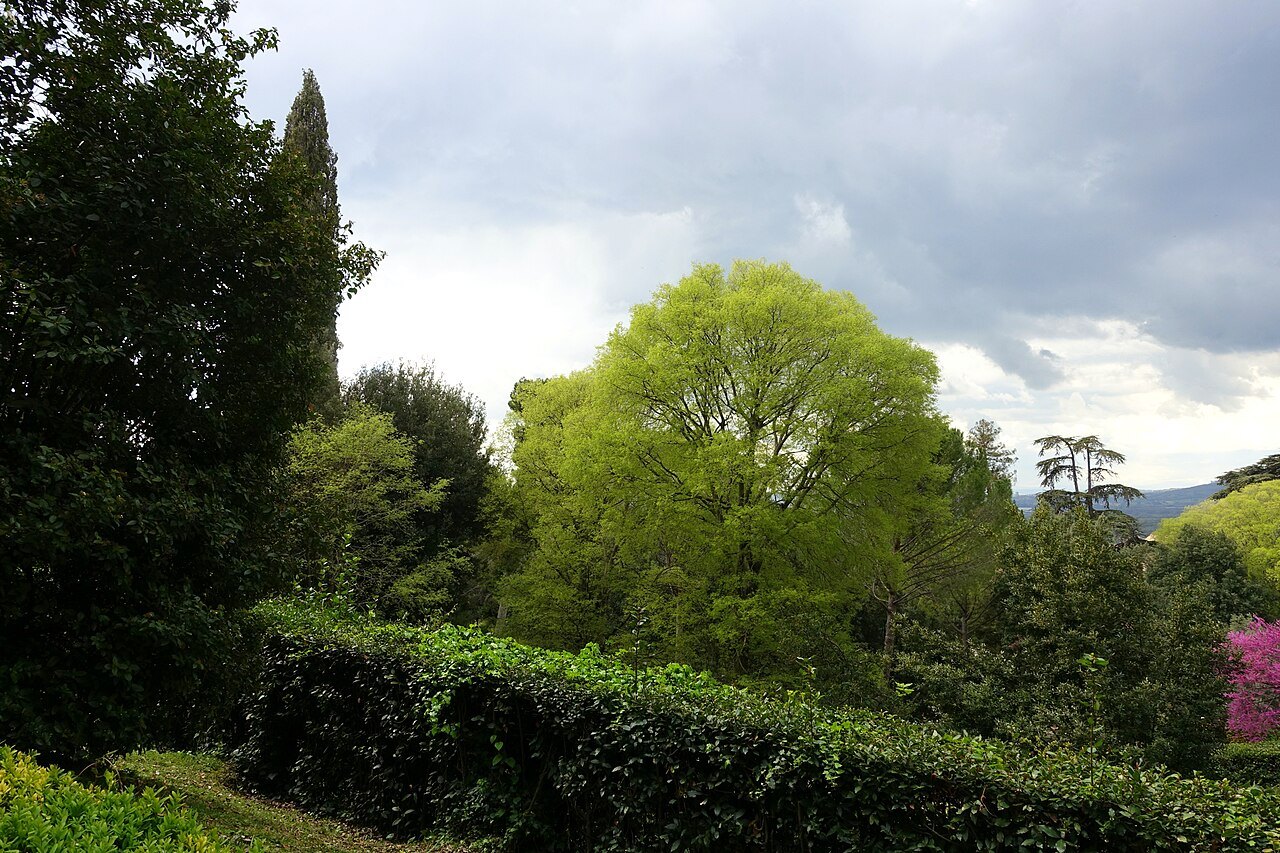
A green view from the gardens of the Villa d'Este at Tivoli, trees and hedges under a cloudy skyDaderot, Wikimedia Commons, Public domain
The theater of Ostia Antica, its curved stone seats facing the stage, pines beyondRadosław Botev, Wikimedia Commons, CC BY 3.0 pl
The Palazzo Chigi at Ariccia, white above the woods of the Alban HillsGafforio, Wikimedia Commons, CC BY-SA 4.0