Home · Sights · Castel Sant'Angelo
What you are looking at
Castel Sant'Angelo
XIV · Borgo
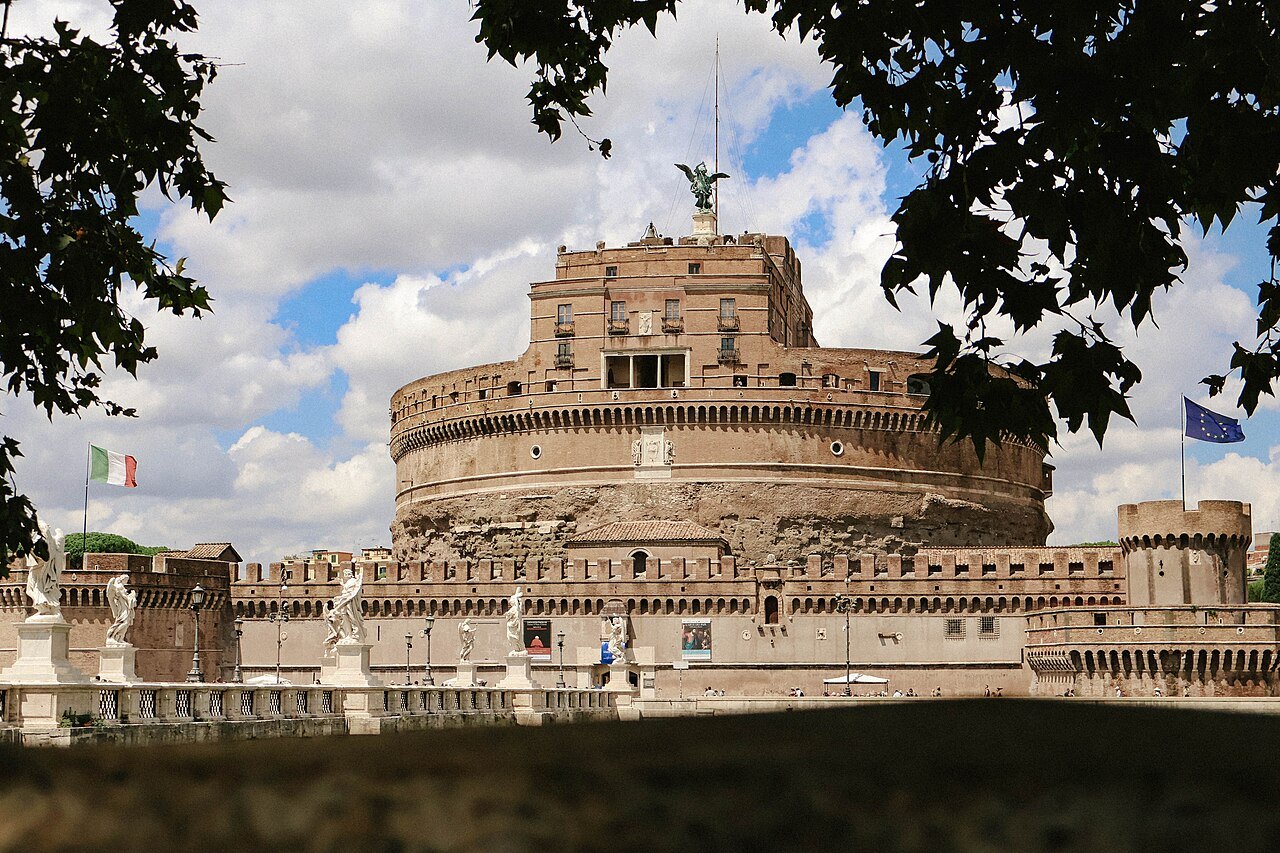
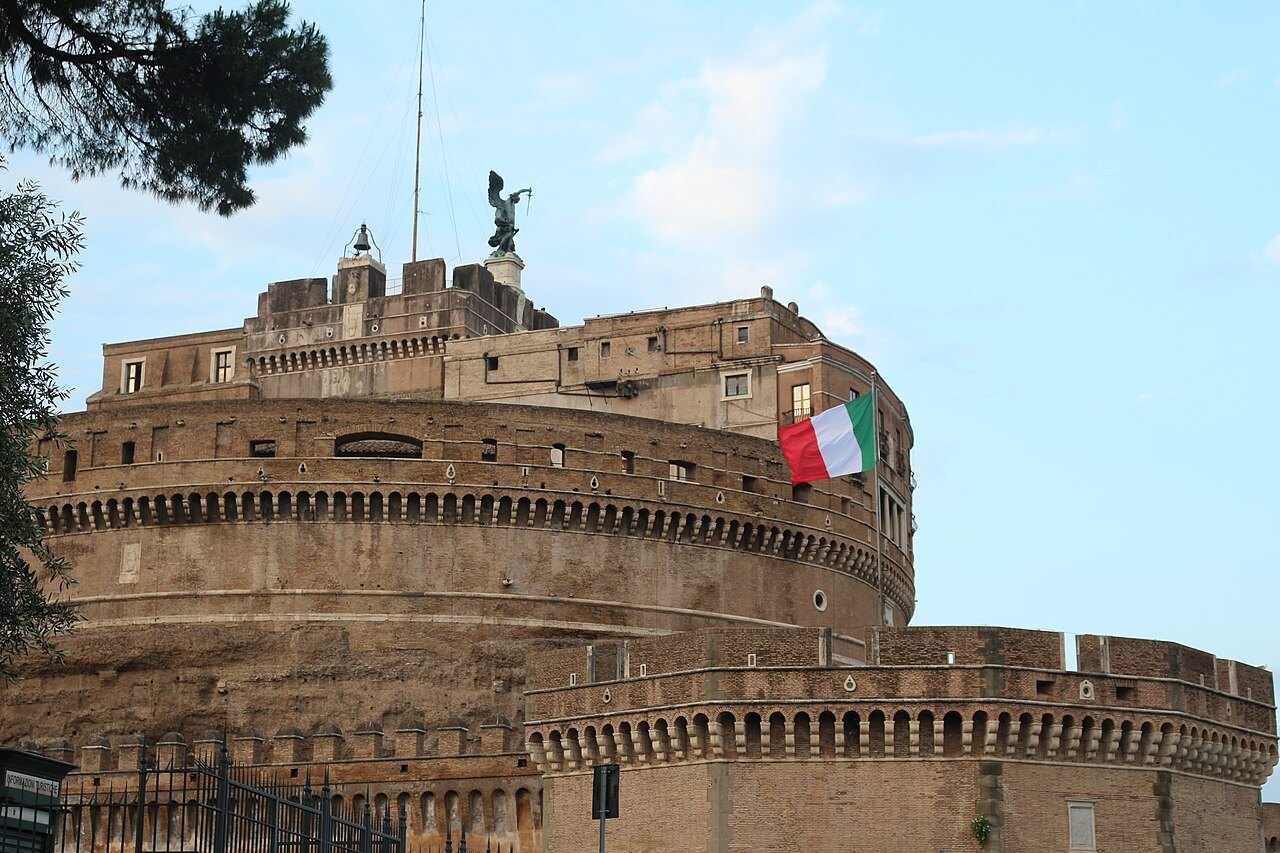
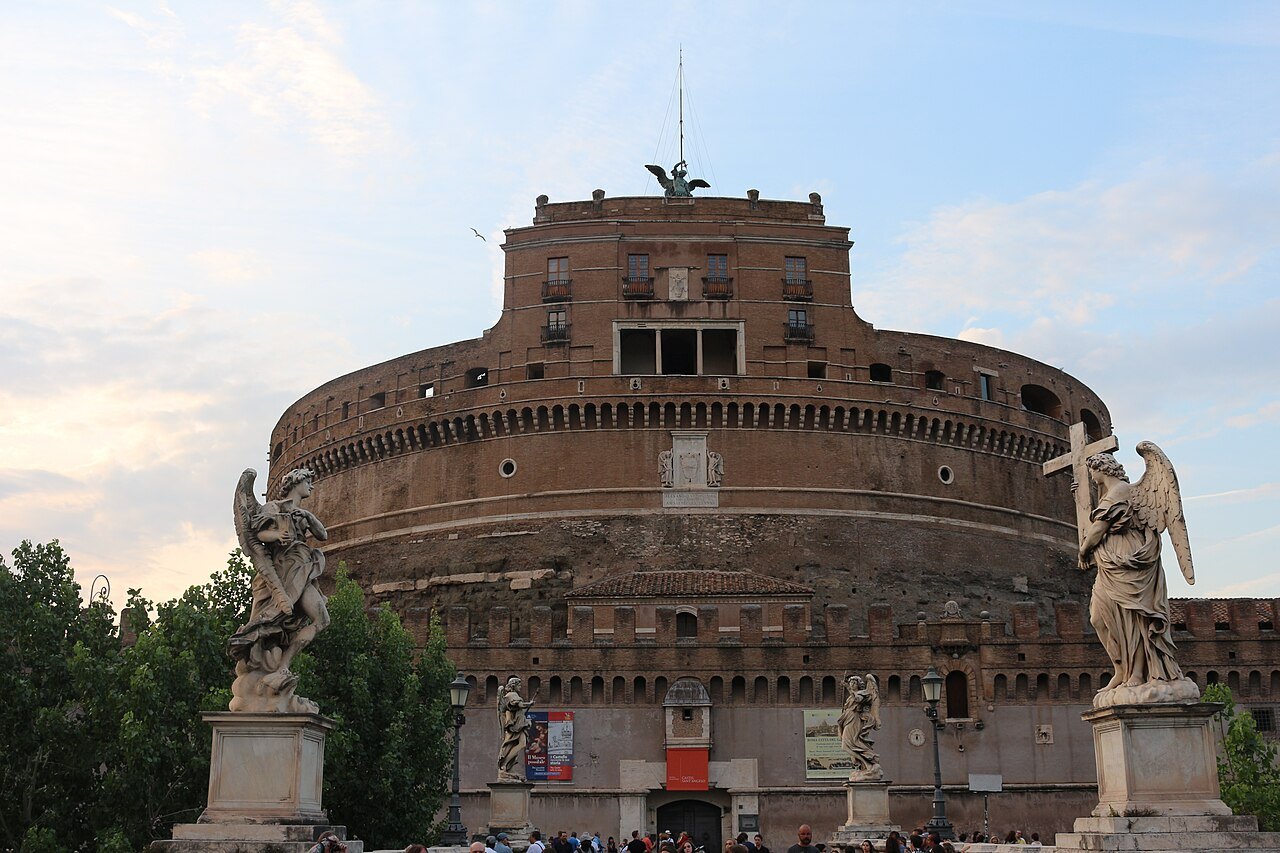
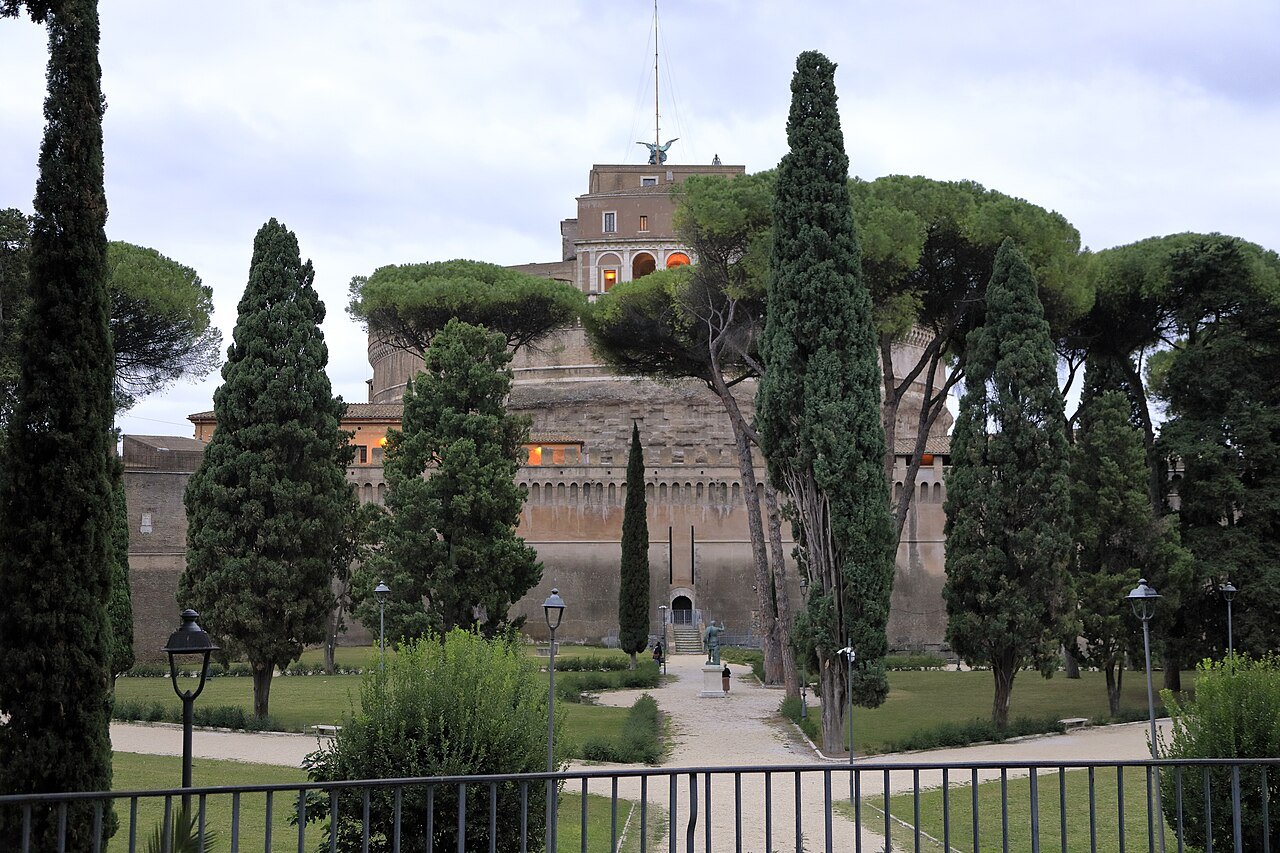
- IThe drumHadrian's great cylinder of a tomb, later ringed with bastions and ramparts.
- IIThe angel on topA bronze Saint Michael sheathing his sword, by Peter Anton von Verschaffelt, set up in 1753.
- IIIThe PassettoThe covered corridor on the walls linking the castle to the Vatican.
- IVThe papal apartmentsRooms Paul III had decorated so that a pope under siege could live in style.
- VThe terraceThe top of the fortress, with views over the Tiber and toward St. Peter's.
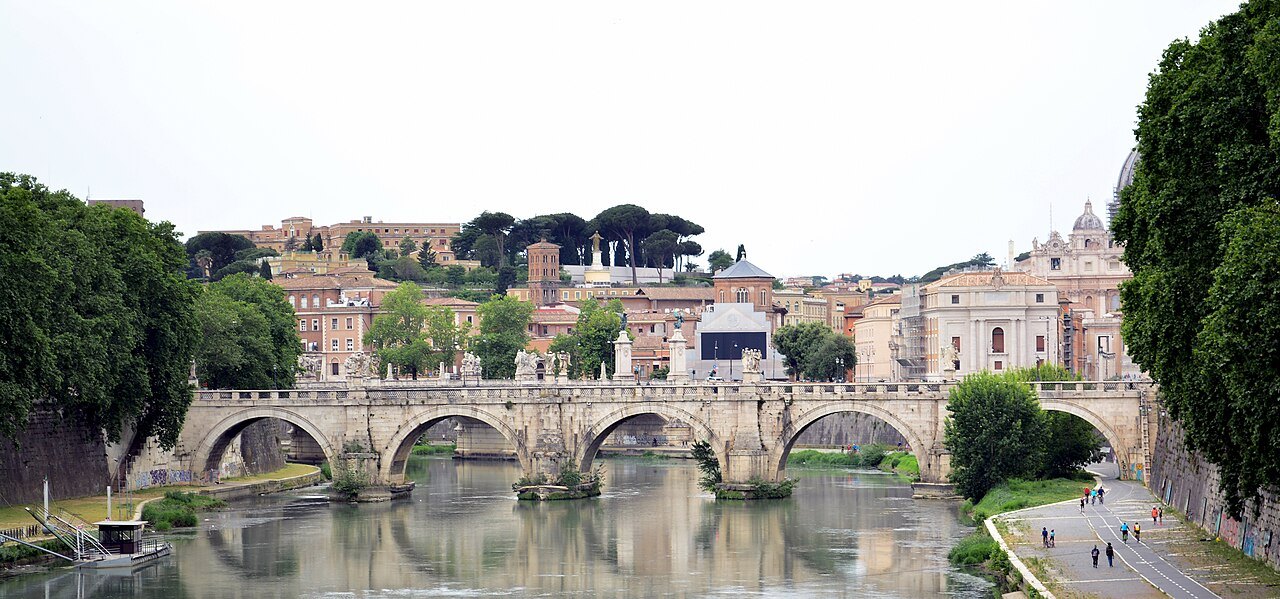
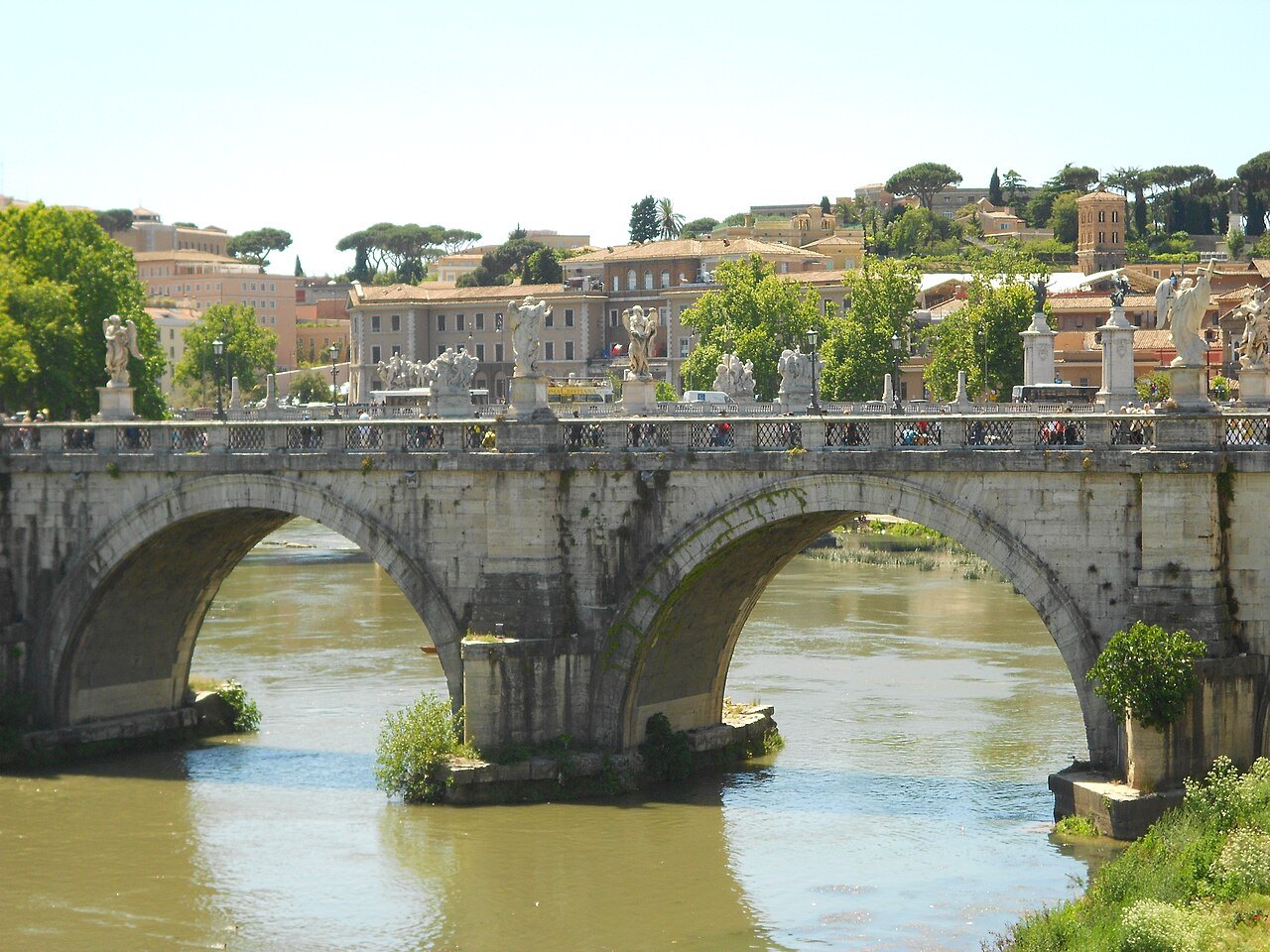
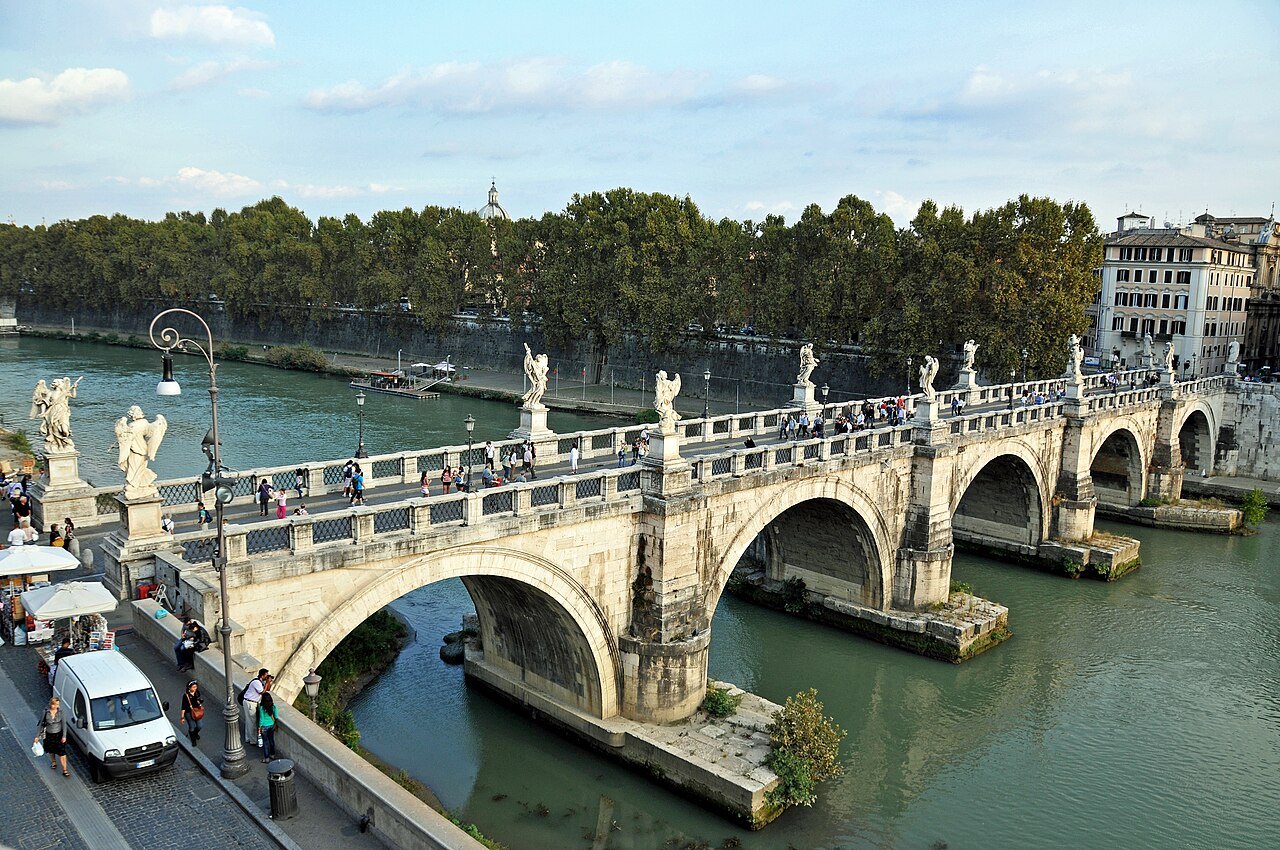
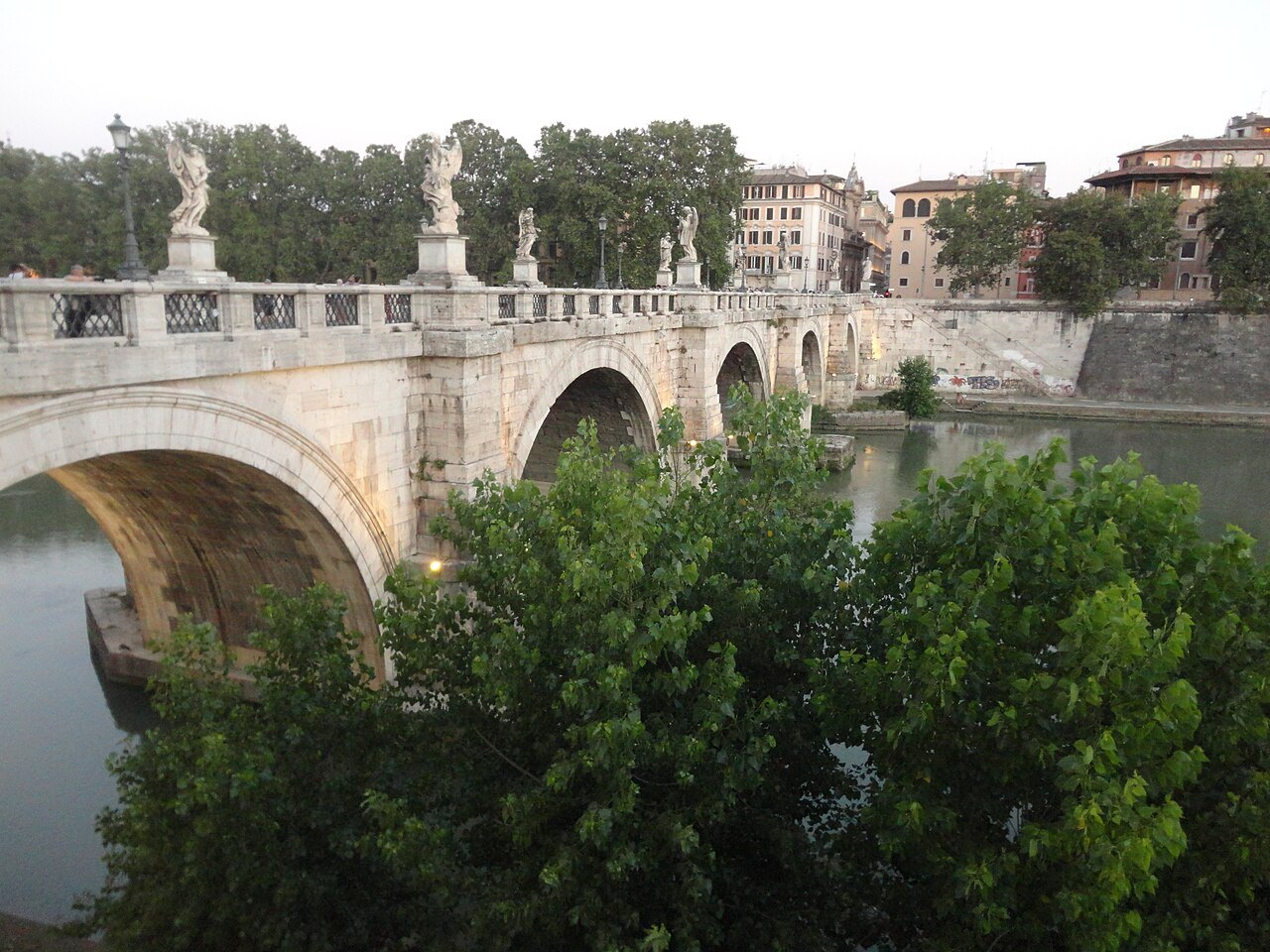
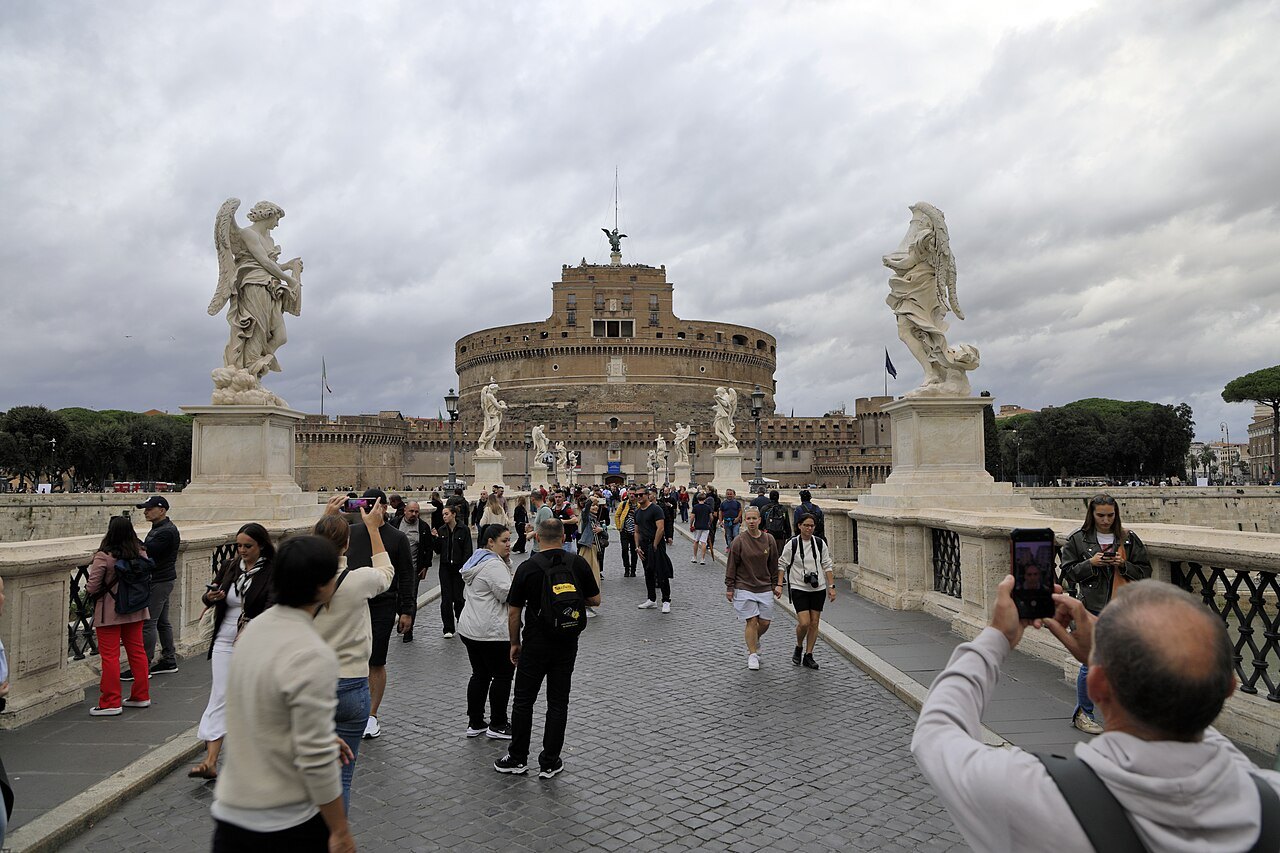
- VIThe Ponte Sant'AngeloHadrian's bridge of 134, lined with ten angels designed by Bernini's workshop.
The sight in full
Reading the place
Why it matters
Castel Sant'Angelo is the massive round fortress that faces the old city across the Tiber, a short walk east of St. Peter's. It began as the tomb of the emperor Hadrian, and its long life as tomb, fortress, refuge, prison and museum is the history of Rome in one building. It stands in the rione of Borgo, once the tallest building in Rome.
It also belongs to one of the finest approaches in the city. Hadrian built a bridge to lead to his tomb, the Pons Aelius, and it still brings you straight to the castle's front across the river, under the watch of Baroque angels.
Hadrian's tomb
The mausoleum was built on the right bank of the Tiber between 134 and 139. It was originally a decorated cylinder with a garden on top and a golden four-horse chariot. Hadrian's ashes were placed here a year after his death in 138, with those of his wife Sabina and of his adopted son Lucius Aelius. Later emperors were laid here too; the last recorded was Caracalla, in 217. The urns probably stood in what is now called the Treasury Room, deep inside the building.
Little of the decoration survived. The tomb became a military fortress in 401 and part of the city walls; Alaric's Visigoths scattered the ashes in the sack of 410, and when the Goths besieged Rome in 537 the defenders threw the statues down on the attackers. One survivor is the lid of a funerary urn, probably Hadrian's, which went to St. Peter's and ended up as part of a Renaissance baptismal font there.
Why an angel
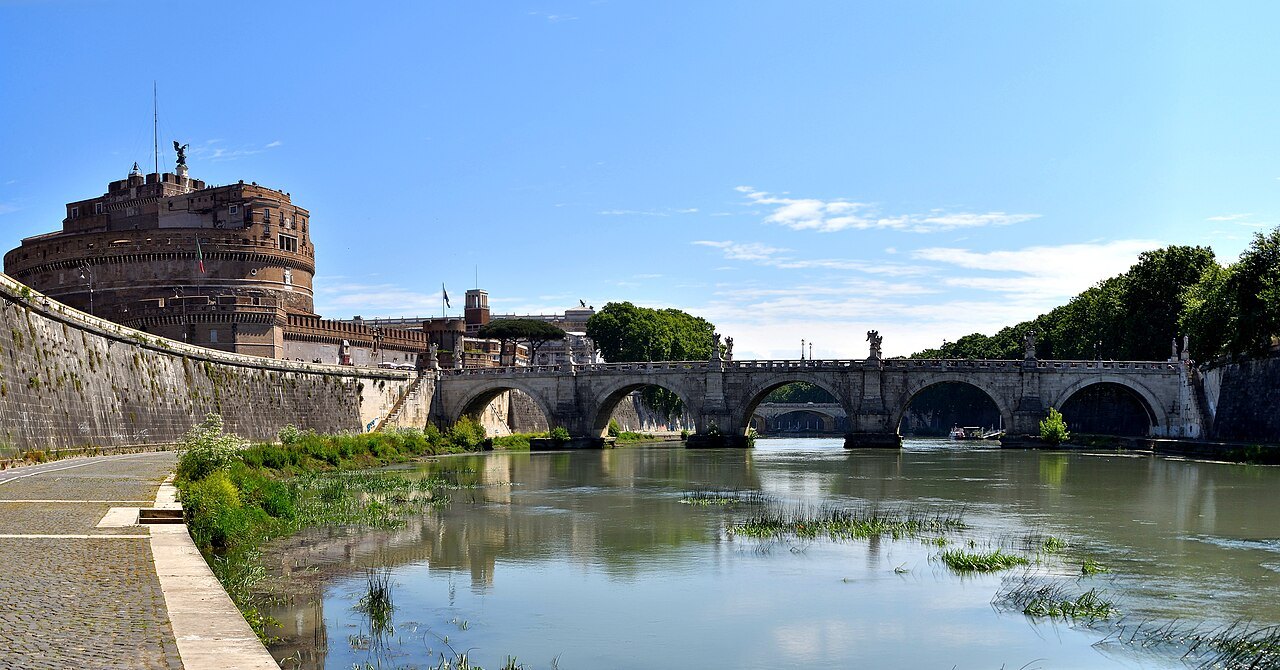
The name comes from a legend of the plague of 590. Pope Gregory I, the story goes, was leading a procession to pray for the end of the plague when he saw the Archangel Michael on top of the mausoleum, sheathing his sword as a sign that the plague was over. Both the castle and the bridge took the name of the holy angel.
An angel has stood on the summit ever since. In 1536 Raffaello da Montelupo carved a marble Saint Michael holding his sword; in 1753 it was replaced by the bronze by the Flemish sculptor Peter Anton von Verschaffelt that stands there now. Montelupo's marble angel can be seen in an open courtyard inside the castle.
Fortress, refuge and prison
The popes turned the building into a castle from the fourteenth century. Pope Nicholas III linked it to St. Peter's by a covered, fortified corridor along the walls, the Passetto di Borgo. When the troops of Charles V sacked Rome in 1527, Pope Clement VII took refuge here, and the goldsmith Benvenuto Cellini later described walking the ramparts and shooting at enemy soldiers. Leo X built a chapel, and Paul III a rich apartment so that a pope under siege would have somewhere fitting to stay.
The papal state also used it as a prison. The philosopher Giordano Bruno was held here for six years before he was burned in Campo de' Fiori, and Cellini and the adventurer Cagliostro were prisoners too; executions took place in a small inner courtyard. Puccini set the last act of his opera Tosca of 1900 here, and the heroine leaps to her death from its ramparts.
What you see
The visit climbs from the ancient core to the papal fortress on top. A spiral ramp rises inside Hadrian's drum; above it come the courtyards, the papal rooms, the loggias, the Treasury Room and the ramparts, and finally the terrace under the bronze angel, with the Tiber below and St. Peter's dome across the rooftops of Borgo. Since 1901 the castle has been the Museo Nazionale di Castel Sant'Angelo, which received more than 1,200,000 visitors in 2016.
Outside, the Ponte Sant'Angelo is solely for walkers. Hadrian completed it in 134, faced in travertine; three of its five arches are Roman. In 1535 statues of Saints Peter and Paul were placed at its end, and in 1669 Pope Clement IX commissioned ten angels, each holding an instrument of the Passion, to a program by Bernini, one of his last large projects; he carved only two of the originals himself.
The bridge of Saint Peter
After a neighboring ancient bridge fell into ruin, pilgrims going to St. Peter's had to cross here, and in the Middle Ages it was known as the bridge of Saint Peter. Dante wrote in the Divine Comedy of the crowds crossing it during the Jubilee of 1300. For centuries the bridge was also where the bodies of people executed nearby were displayed. The Roman ramps at each end were demolished for the building of the river embankments at the end of the nineteenth century.
How to visit
The castle is a state museum. Buy tickets only from its official channels and check its rules before you go; the booking ahead page gathers what to check. Allow a good hour and a half to climb through the whole building and linger on the terrace.
Cross the Ponte Sant'Angelo from the old city for the classic view, then walk west along Via della Conciliazione to St. Peter's. The castle is also the natural end of a walk from Piazza Navona, a few streets away on the other bank.
Myths worth setting aside
The Passetto is often called a secret passage. It is a covered, fortified corridor along the top of a wall, built to join the Vatican to the castle. The castle's strength was real: fortifications added under Alexander VI let Clement VII hold out here for seven months when the imperial troops began the sack of Rome on 6 May 1527.
Where to go next
Nearby
- Nearby · Vatican CitySt. Peter's Basilica and SquareBuilt from 1506 to 1626 over the traditional tomb of Saint Peter, to designs by Bramante, Michelangelo and Maderno, the largest church in the world by interior measure stands wholly inside Vatican City, a separate state, behind Bernini's colonnaded square.Read the page →
- Nearby · VI · ParionePiazza Navona and Campo de' FioriThe long oval of Domitian's stadium, remade in the seventeenth century as Rome's Baroque showpiece with three fountains and Borromini's church, and a few streets south the old market square of Campo de' Fiori.Read the page →
- Nearby · XIII · TrastevereTrastevereThe thirteenth rione, trans Tiberim, beyond the Tiber: a maze of cobbled lanes between the river and the Janiculum, with one of the oldest churches to the Virgin in Rome, Raphael's frescoes in a banker's villa, and the city's best view from the hill above.Read the page →