Home · Sights · The Spanish Steps
What you are looking at
The Spanish Steps
IV · Campo Marzio
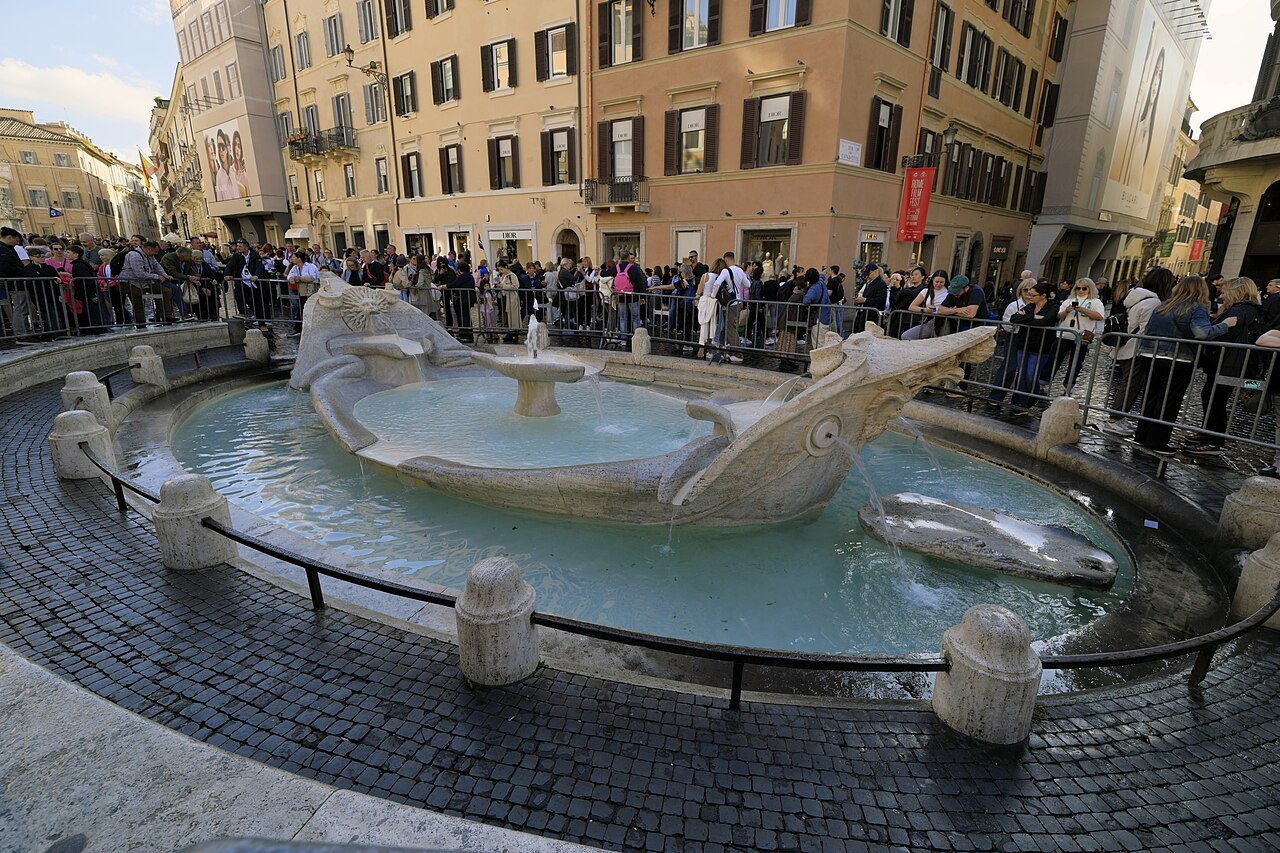
- IThe BarcacciaThe half-sunken boat fountain at the foot of the steps, built in 1627 to 1629.
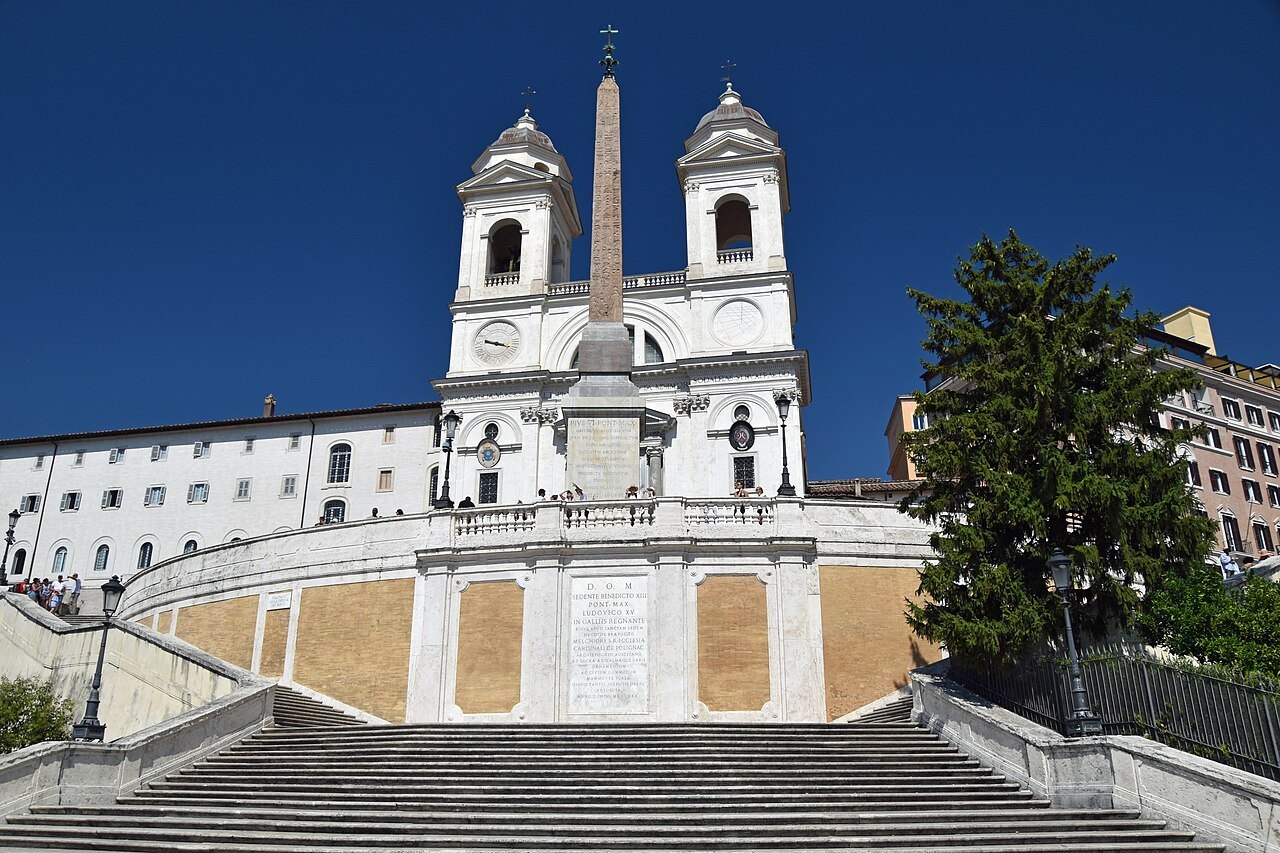
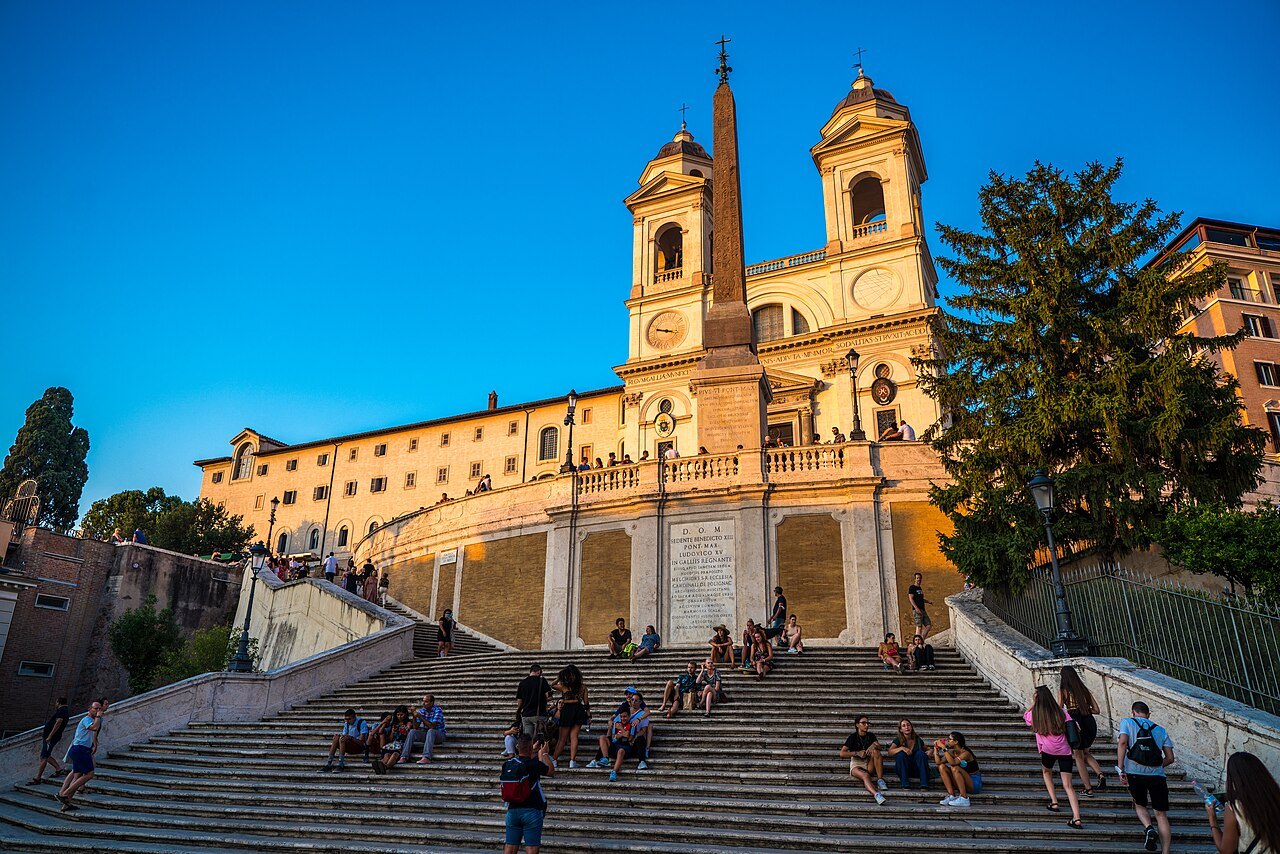
- IIThe stepsA single stair that divides and rejoins around terraces, 135 steps up a slope of about 95 feet.
- IIITrinità dei MontiThe church at the top, begun in 1502 for French friars, one of Rome's French-speaking churches.
- IVThe Sallustian obeliskA Roman imitation of an Egyptian obelisk, set before the church in 1789.
- VThe Keats houseThe corner house where the poet John Keats died in 1821, now a museum.
- VIThe piazzaThe Piazza di Spagna, named for the Spanish embassy to the Holy See beside it.
The sight in full
Reading the place
Why it matters
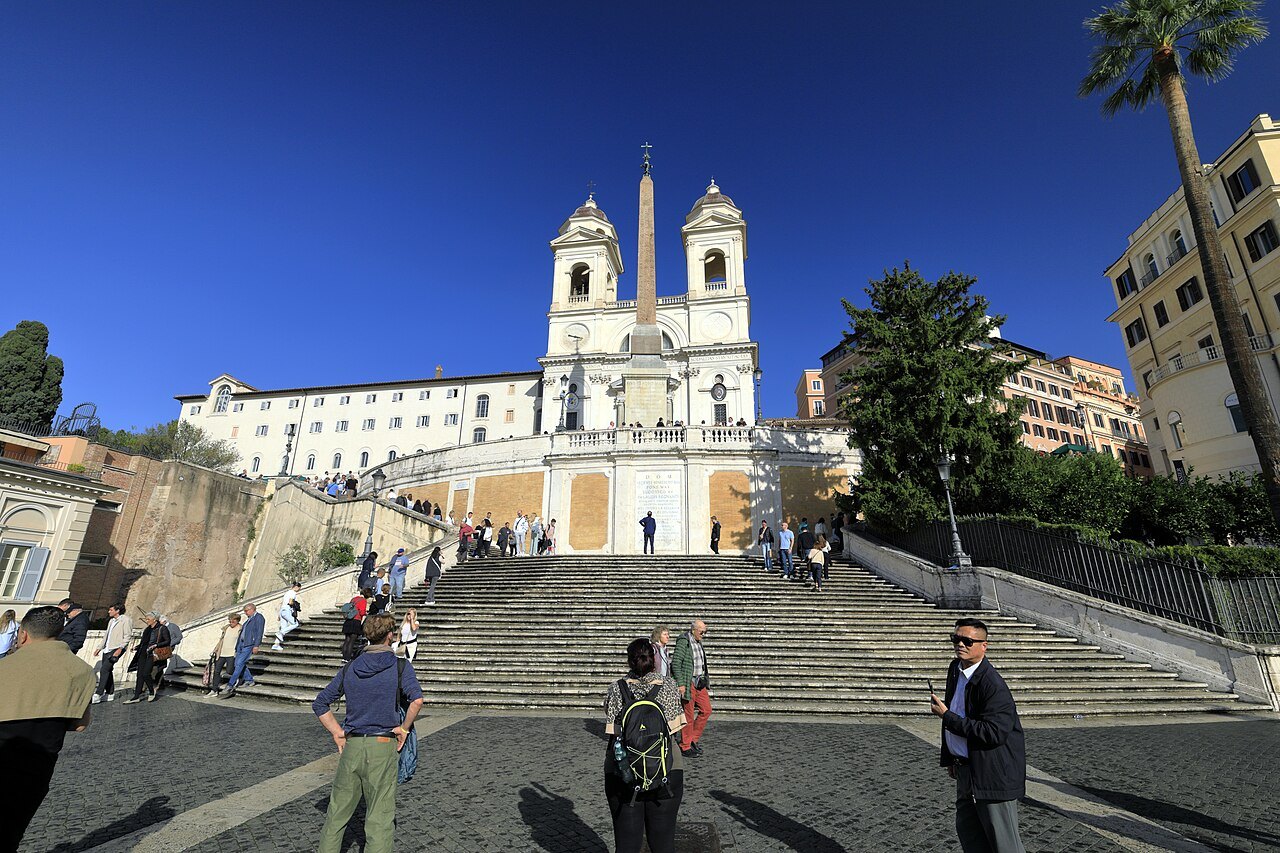
The Spanish Steps are one of Rome's great meeting places and one of its most photographed views. The stair climbs a steep slope, about 95 feet high, from the Piazza di Spagna at the bottom to the Piazza Trinità dei Monti at the top, where the twin-towered church of Trinità dei Monti closes the view. It stands in the rione of Campo Marzio, at the foot of the Pincian Hill.
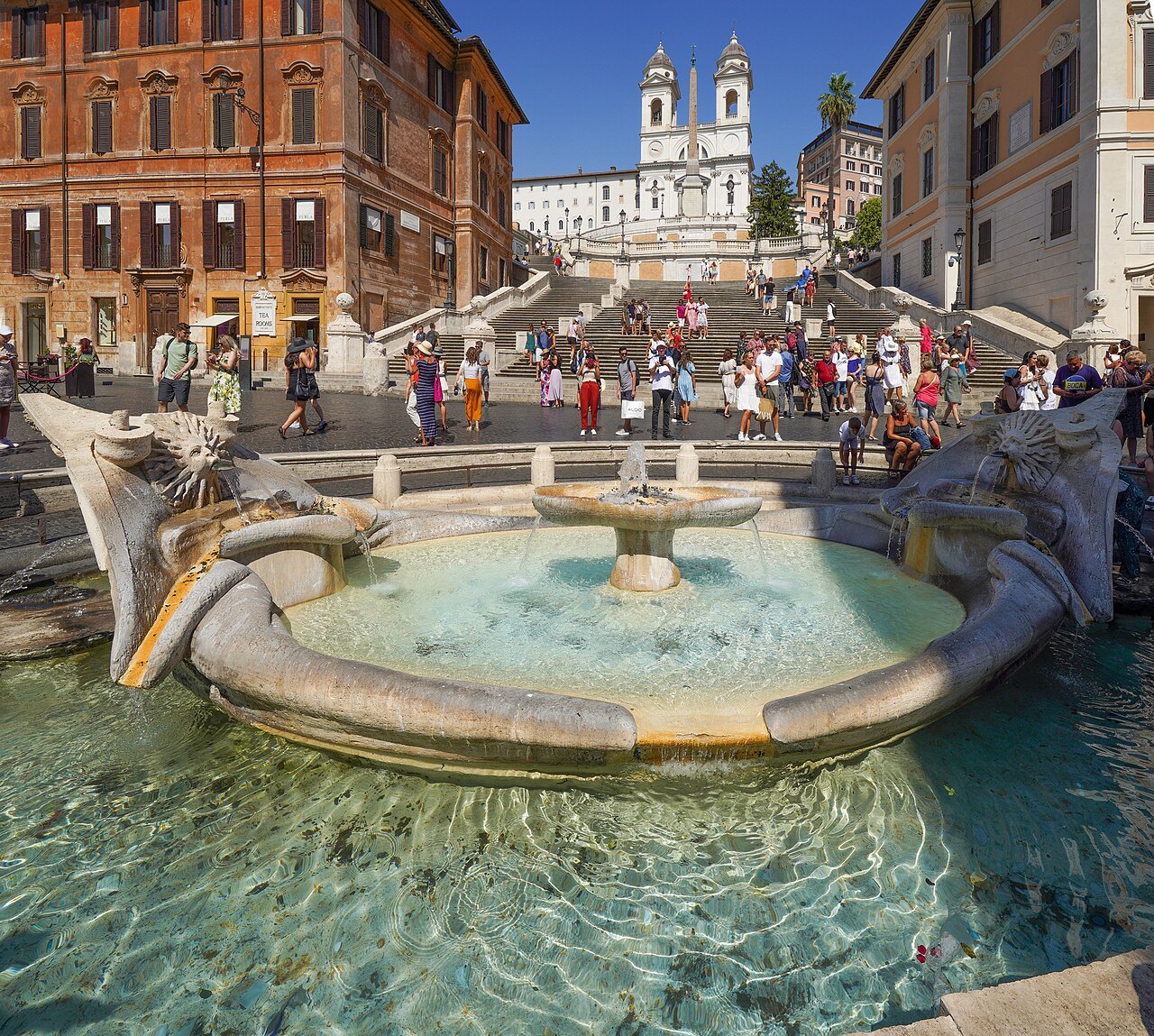
Its Italian name is the Scalinata di Trinità dei Monti, the stair of the church. The English name comes from the square at its foot, which takes its name from the Spanish embassy to the Holy See in the Palazzo Monaldeschi there. The stair itself is French in almost every other respect: it leads to a French church, under the patronage of the Bourbon kings of France.
A stair debated for a century
Generations argued about how to dress the slope below the church. Drawings from the 1580s show that Pope Gregory XIII wanted a stair up to its newly finished front. When the French diplomat Étienne Gueffier died in 1660, he left part of his fortune for the stairs, and Cardinal Mazarin took up the project; his agent's plan included an equestrian statue of Louis XIV, and a French king's monument on the approach to a papal city caused a furor. Mazarin died in 1661, Gueffier's nephew contested the will, and the project slept.
Pope Clement XI revived it early in the eighteenth century. A competition in 1717 was won by Francesco de Sanctis, although Alessandro Specchi was long credited with the design, and the stair was built soon after. The Bourbon fleur-de-lis and the eagle and crown of Pope Innocent XIII are carefully balanced in the carving, a small record of the long negotiation between France and the papacy.
What you see
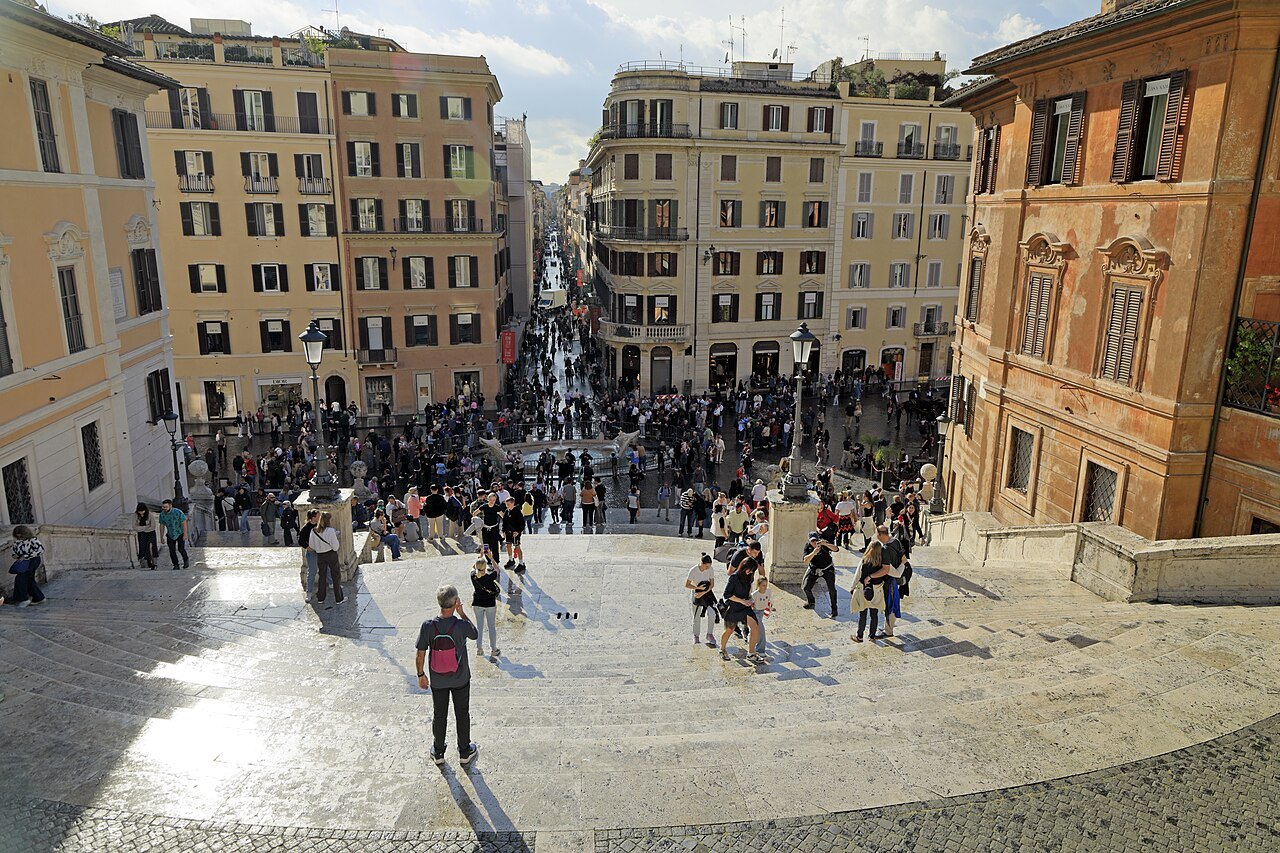
The design is a garden stair blown up to the scale of a city: flights that divide and meet again around landings and terraces, in the manner of the divided stairs Bramante designed for the Vatican's Belvedere Courtyard and the curved steps of Michelangelo's library vestibule in Florence. From the bottom the stair seems to fan out; from the top it gathers toward the square below.
At the foot lies the Barcaccia, the fountain of the old boat, built in 1627 to 1629 and often credited to Pietro Bernini, father of Gian Lorenzo, who may have helped with its decoration. The elder Bernini was the pope's architect for the Acqua Vergine, the aqueduct that feeds it and the Trevi Fountain. Legend says Pope Urban VIII put it here after a flood of the Tiber left a boat in the square.
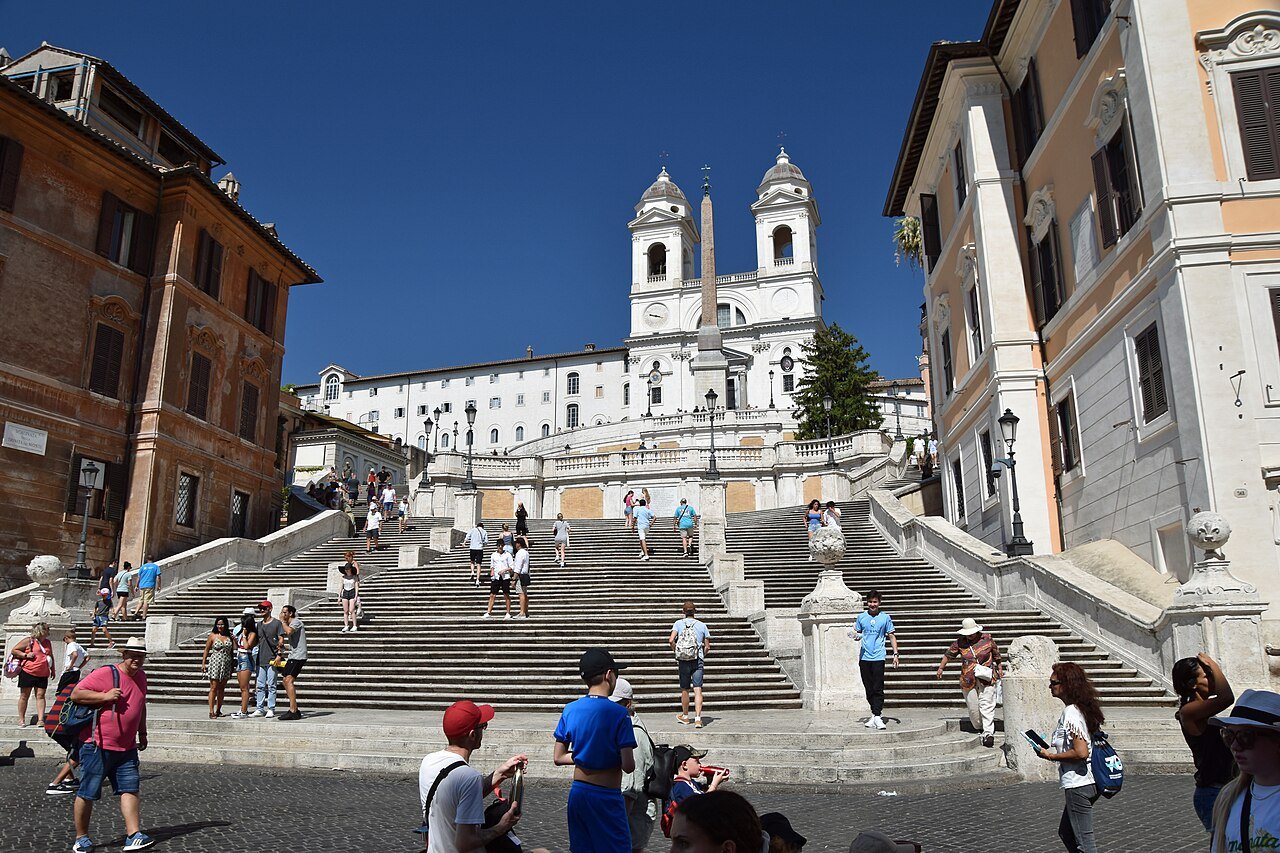
At the top, in front of the church, stands the Sallustian obelisk, a Roman imitation of an Egyptian obelisk made for the Gardens of Sallust; its hieroglyphs were copied from the obelisk now in Piazza del Popolo. It was moved here in 1789.
The church at the top
Trinità dei Monti stands on land that King Charles VIII of France bought in 1494, part of the ancient Gardens of Lucullus, for a monastery of French friars of the Minim order. Louis XII began the church in 1502 to celebrate his invasion of the Kingdom of Naples. It remained in French hands except during the Revolution, and it is still one of the five French-speaking Catholic churches in Rome.
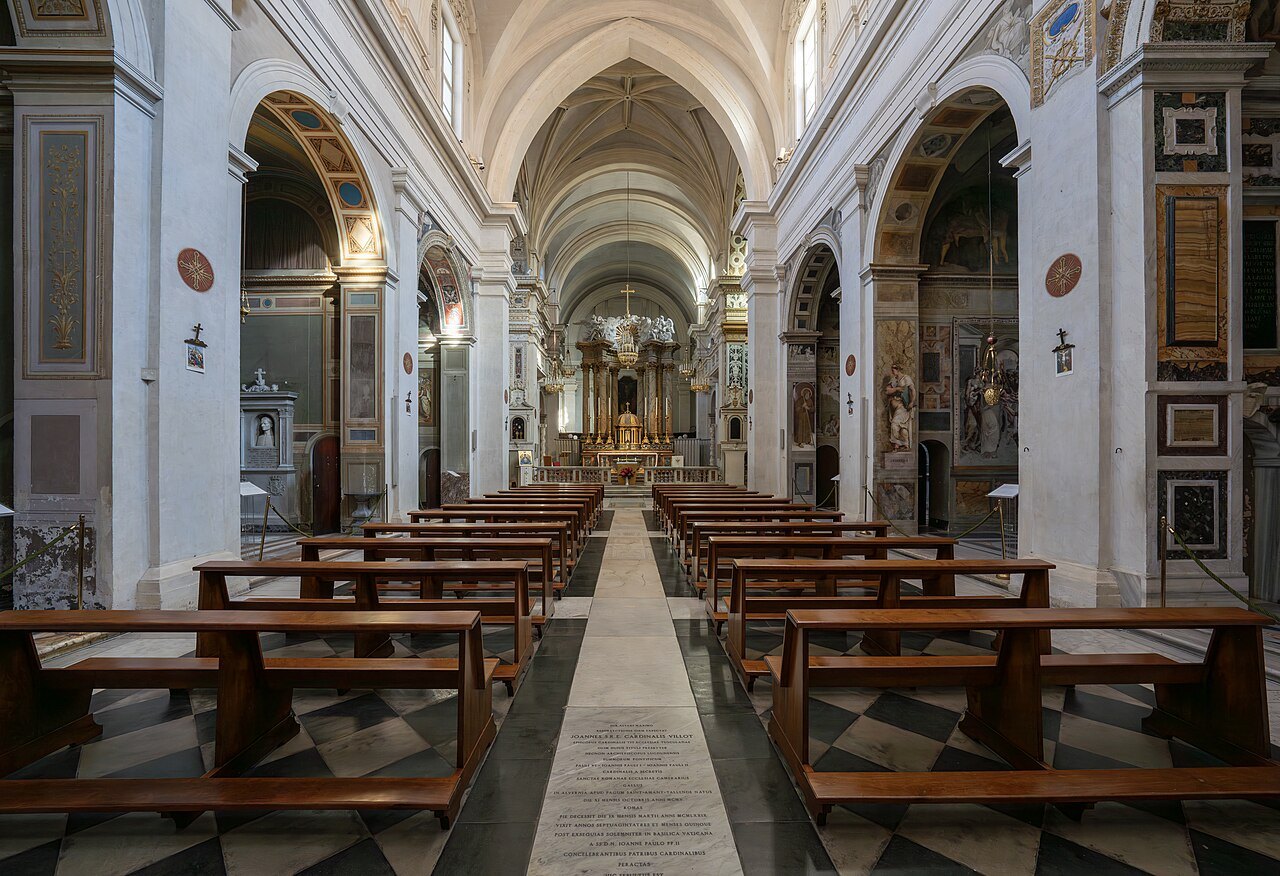
From the terrace in front of it, Rome opens out below you, and the Villa Medici can be reached along the top of the Pincian Hill.
The square below
At the corner on the right as you begin to climb is the house where the English poet John Keats lived and died in 1821. It is now the Keats–Shelley Memorial House, a museum with one of the world's largest collections of letters, manuscripts and memorabilia of Keats, Shelley, Byron and the English Romantics in Rome. Via dei Condotti opens off the square, the street where Bulgari, which sponsored the latest restoration of the steps, keeps its Italian flagship store.
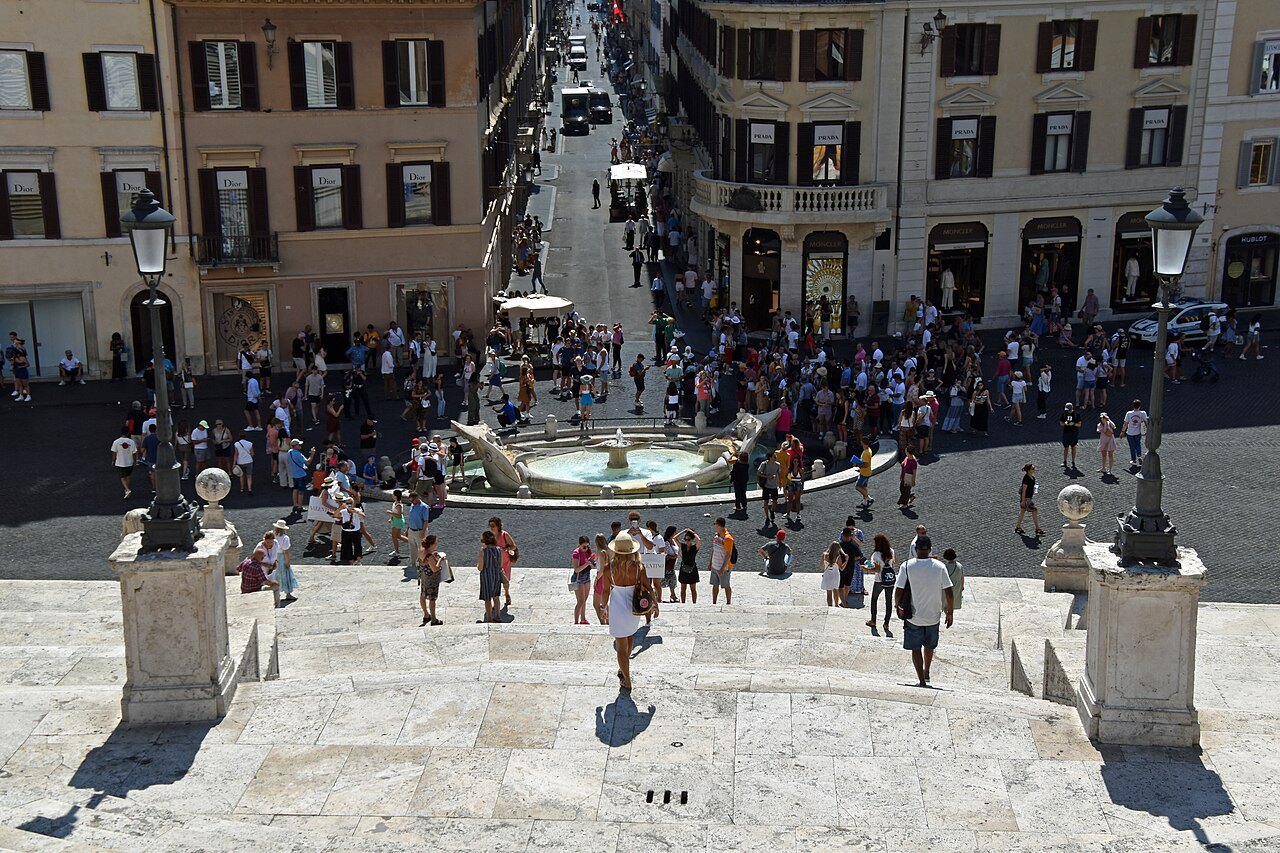
The steps have been restored many times since mid-eighteenth-century writers already found them in poor condition, most recently from October 2015 to September 2016, when some 32,300 square feet of travertine, brick and marble were cleaned and repaired.
How to visit
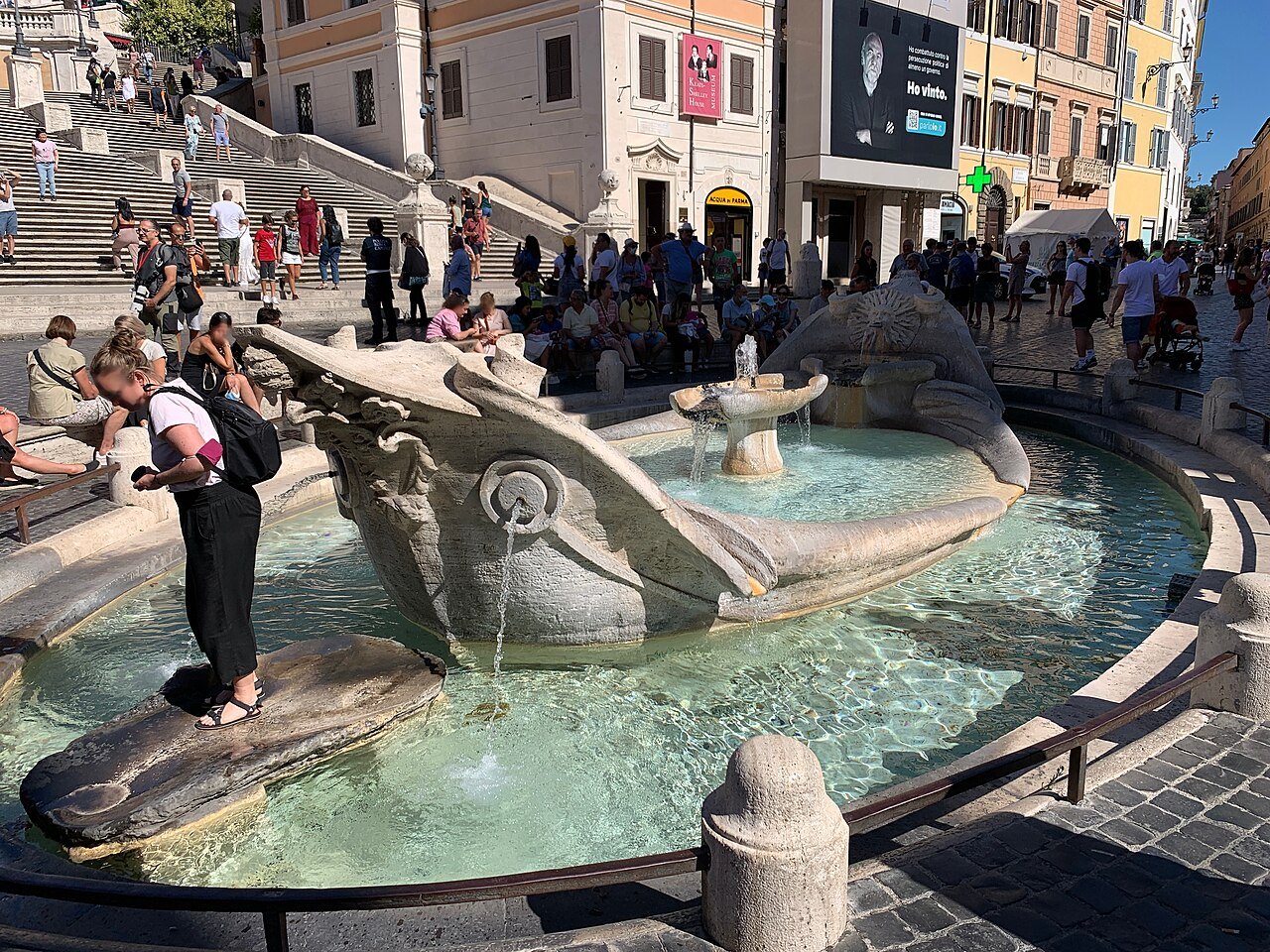
The steps are a public street and cost nothing to climb. Since July 2019 a city ordinance has forbidden sitting on them, eating on them and pushing strollers up or down them, as part of an effort to protect the monument, and the city can penalize visitors who break it. Come to look and to climb, not to picnic.
Before the anniversary of Rome's founding on 21 April, part of the steps is covered with pots of azaleas, which stay into early May, and at Christmas a nineteenth-century crib is set up on the first landing. The Trevi Fountain is a short walk south, and the Pincio's gardens begin at the top of the steps.
Myths worth setting aside
The Spanish Steps were not built by Spain: they were paid for from the legacy of a French diplomat, designed after a French-backed competition and built to reach a French church; only the square is Spanish. And the steps are not a place for lunch, however many photographs suggest otherwise. They have a place in food history all the same: the opening of Italy's first McDonald's near the steps in March 1986 moved Carlo Petrini and his friends to found the organization that became the Slow Food movement. The steps' place in film is older still, from the 1952 film named for the girls of the Piazza di Spagna to Roman Holiday the following year.
Where to go next
Nearby
- Nearby · II · TreviThe Trevi FountainNicola Salvi's fountain of 1732 to 1762, the largest Baroque fountain in the world, marks where the water of an aqueduct first built in 19 BC arrives in the city, filling a small square at the meeting of three streets.Read the page →
- Nearby · IV · Campo MarzioPiazza del Popolo and the PincioThe great oval square inside Rome's northern gate, where the road from the north entered the city: an Egyptian obelisk older than the city itself, twin churches, three streets fanning south, and the Pincio's terrace above.Read the page →
- Nearby · Outside the walls · PincianoThe Borghese Gallery and its GardensCardinal Scipione Borghese's villa at the edge of old Rome, built to show off his collection: Bernini's marbles in the rooms made for them, six Caravaggios, Canova's Pauline, and around it the third-largest public park in the city.Read the page →