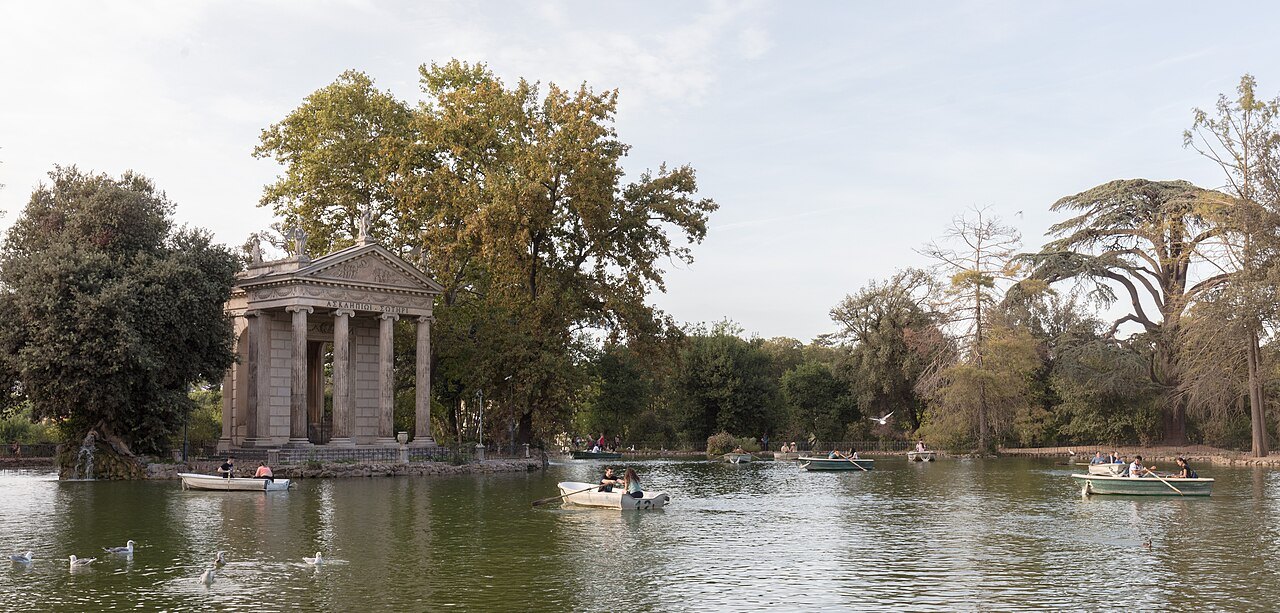
BERNINI'S MARBLE MADE FLESH
How did Bernini make marble look like skin?
Inside the Borghese Gallery, where Bernini carved marble into skin, bark, and breath.
The answer in full
Read on
A sculptor at the start of his career
Cardinal Scipione Borghese, nephew of Pope Paul V, built the Villa Borghese Pinciana at the edge of seventeenth-century Rome as a villa suburbana, a country house for entertaining and for showing off his collection. He was also an early patron of a young sculptor named Gian Lorenzo Bernini, and several of Bernini's greatest secular works remain today in the very rooms they were carved for.
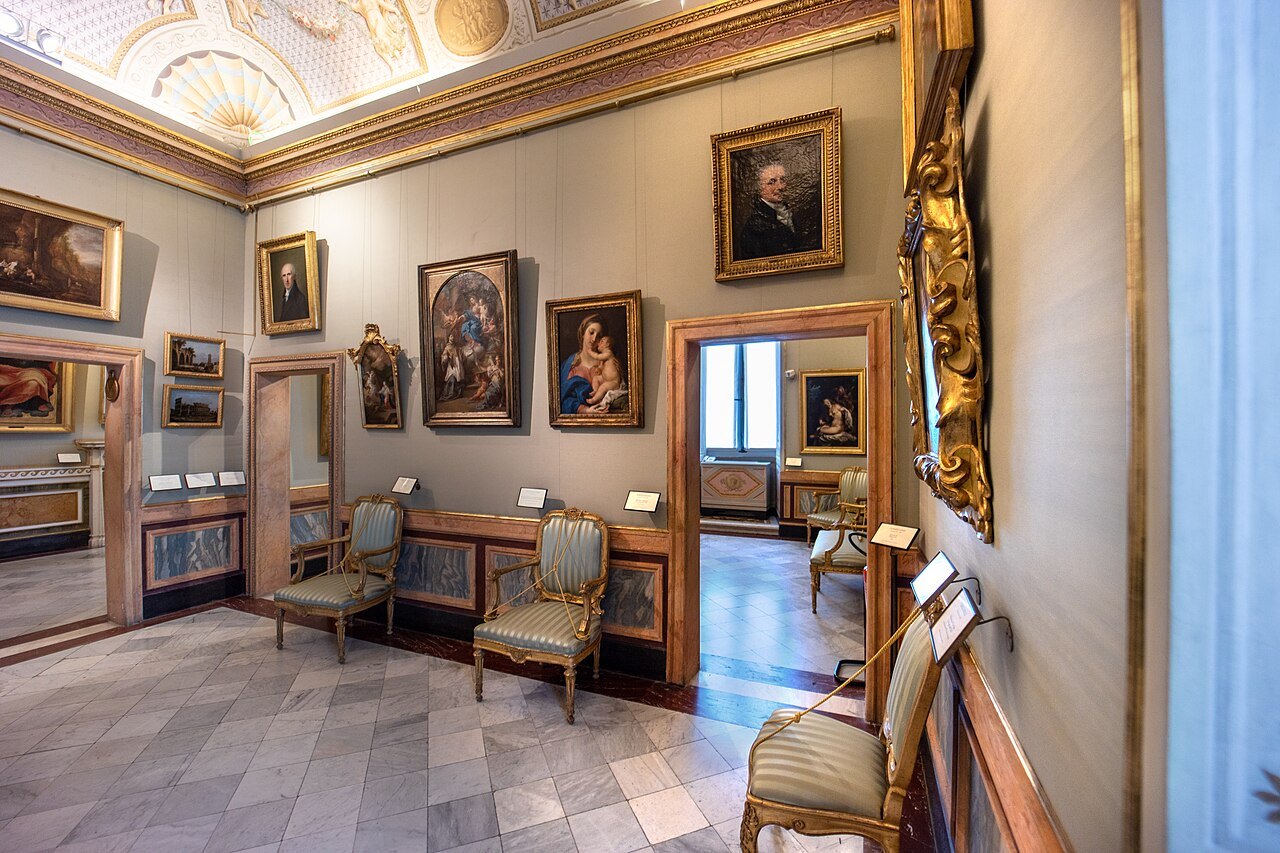
Visitors who stand close to these pieces often ask the same question: how did a block of marble, a stone that is cold, hard, and opaque, come to look like skin under pressure, bark climbing a leg, or hair caught mid-fall? The Borghese Gallery is the best place in Rome to study the answer, because so many examples sit in one small museum.
None of the works stand alone. They form a sequence across rooms on the main floor, moving from the entrance hall and the Salone through spaces built or redecorated later to display them, so the story of Bernini's skill can be followed almost room by room.
David, caught mid-motion
Bernini's David, carved in 1623, stands in the room named for it. Unlike earlier versions of the same subject, Bernini shows the moment before the stone leaves the sling, the body twisted, the face set in concentration, the muscles tensed as if the marble itself were holding its breath.
The effect depends on how the surface is finished. Bernini varied the polish across a single figure: smoother and more reflective where skin stretches over muscle, rougher and left with visible tool marks where hair, drapery, or the sling fall away from the body, so the eye reads soft flesh against harder material without any paint.
Visitors can test this for themselves by circling the figure slowly in the room named for it, stopping at different angles rather than looking for one ideal view, which is how Bernini intended his dramatic works to be seen in the round, unlike the more frontal statues of earlier generations.
Apollo and Daphne, flesh turning to bark
In the next room, Bernini's Apollo and Daphne catches an even more extreme instant: the god has just reached the nymph as she turns into a laurel tree to escape him. Bark begins to climb her legs, her fingers sprout leaves, and her skin, in places, has already stopped being skin at all.
The transformation is carved as a gradient rather than a single break. Smooth stone flesh at the shoulders and torso gives way gradually, through transitional passages of bark-like texture at the thighs, to the sharply cut, overlapping leaves at the fingertips, so the eye follows the change the way it would follow a scene unfolding.
Reaching this effect meant cutting some sections of the marble almost to the point of transparency, thin enough that drilled recesses between fingers and leaves read as shadow and depth rather than solid stone, a method that lets light do part of the work that paint would do on canvas.
Visitors should take the time to walk around this group as well; the two figures read completely differently from the front, where the chase is still visible, and from behind, where the transformation into tree has already gone further, the robe and hair dissolving into branches.
Pluto and Proserpina, fingers in stone
In the Room of the Emperors, decorated by Antonio Asprucci between 1778 and 1780 in stucco, marble, and fresco, with Roman busts along the walls, Bernini's Pluto and Proserpina shows the god of the underworld seizing the young woman as she struggles against him, Bernini's bronze Neptune standing nearby.
The most quoted detail in the whole museum is where Pluto's fingers press into Proserpina's thigh, a passage of marble carved so that it appears to compress like living flesh under weight, rather than remaining a flat, unyielding stone surface. Visitors routinely stop to look at this single passage.
The illusion works partly through contrast: the surrounding surface, Pluto's forearm and torso, is left harder and more muscular in finish, so that the one soft, dented patch of thigh stands out by comparison, much as a sculptor can imply distance on a flat relief by changing only the depth of a cut.
Two faces of the same patron
Bernini also made two portrait busts of Scipione Borghese himself, both still in the gallery. The second was carved after a crack was discovered in the marble of the first, evidence that even a sculptor working at speed for a demanding patron could lose a block to a flaw invisible until late in the carving.
Comparing the two gives a different kind of lesson in technique, since portrait busts depend less on dramatic motion than on the texture of a living face: the slight puffiness under the eyes, the loose fold of a collar, the specific directional combing of drilled curls.
Seen side by side, or as close together as the rooms allow, the two busts show how much of Bernini's skin effect in the narrative groups also applies at a smaller scale, to an aging face rather than a fleeing nymph, where a few passages of soft, highly worked stone around the mouth and eyes do most of the work of suggesting a particular, recognizable man.
What to look for in the rooms
The gallery is small, with twenty rooms spread across two floors, and the sculpture rooms reward a slow walk rather than a fast one; visitors hoping to study Bernini's surfaces closely should allow time to circle each major piece rather than glancing and moving quickly to the next room.
Tickets should be booked only through the gallery's own official website, which also sets out its visiting rules, including how long a visit lasts and what visitors may bring inside; the booking ahead page lists other Rome sights where advance booking is equally worth arranging.
The villa stands in the park of the same name, reached on foot from Piazza del Popolo and the Pincio, or from the top of the Spanish Steps; visitors can allow extra time before or after a visit to walk the gardens, which cost nothing to enter.
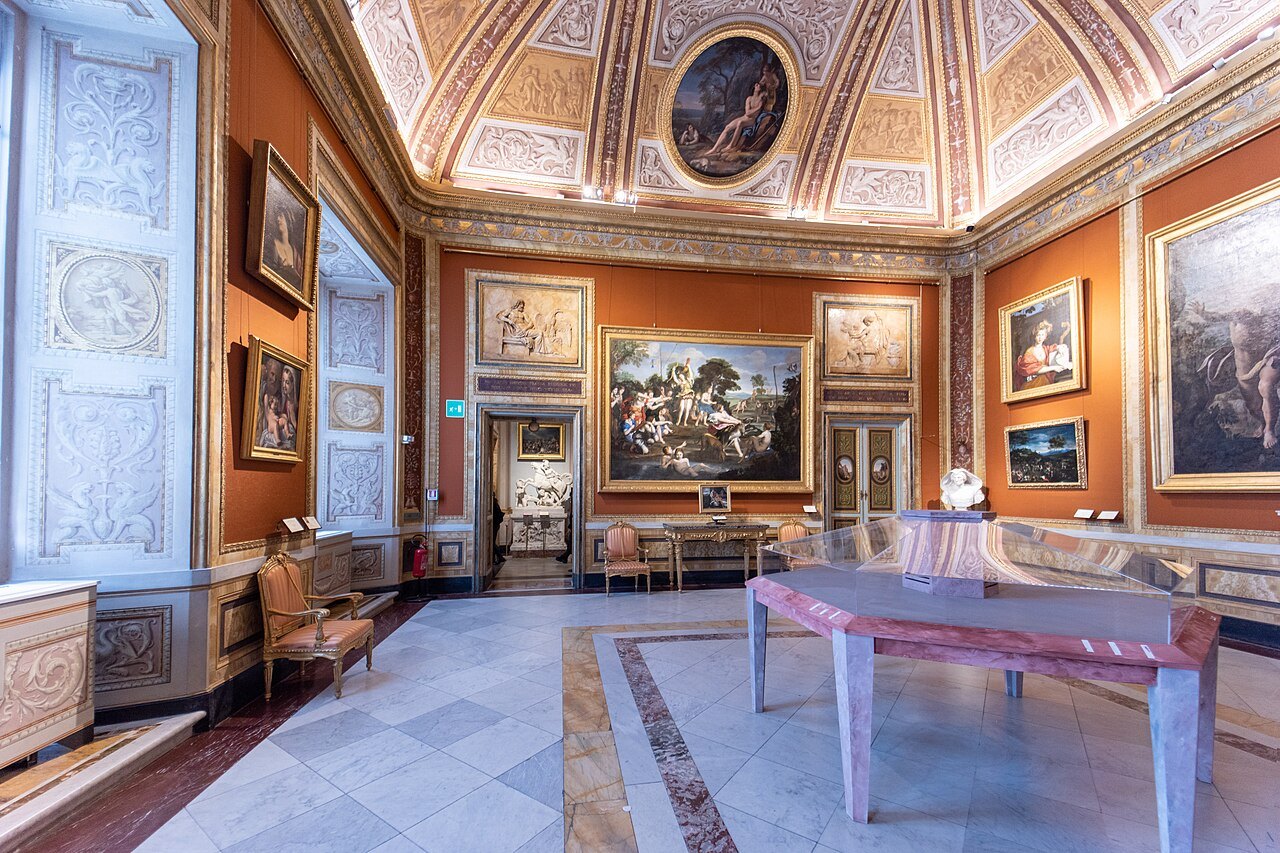
For anyone planning a day that includes the Borghese Gallery alongside other collections, it helps to treat it as one stop within a wider visit to the city's museums, since the marble rooms described here sit alongside six Caravaggios and an upstairs picture gallery that reward equally close attention.
Read next
More from the journal
- Piazza Navona and Campo de' FioriIs the Fountain of the Four Rivers really an insult to Borromini?Why the famous story about Bernini snubbing Borromini at the Fountain of the Four Rivers does not hold up.Read the piece →
- The Capitoline Hill and its MuseumsHow did the statue of Marcus Aurelius survive the Middle Ages?Why the gilded bronze horseman on the Capitoline escaped the melting pots that claimed almost every other Roman emperor.Read the piece →
- Piazza del Popolo and the PincioHow did an Egyptian obelisk come to stand in Piazza del Popolo?How Augustus, Domenico Fontana and Pope Sixtus V brought a pharaoh's obelisk to the center of Piazza del Popolo.Read the piece →