A MYTH ABOUT BERNINI AND BORROMINI
Is the Fountain of the Four Rivers really an insult to Borromini?
Why the famous story about Bernini snubbing Borromini at the Fountain of the Four Rivers does not hold up.
The answer in full
Read on
The Story Visitors Are Told
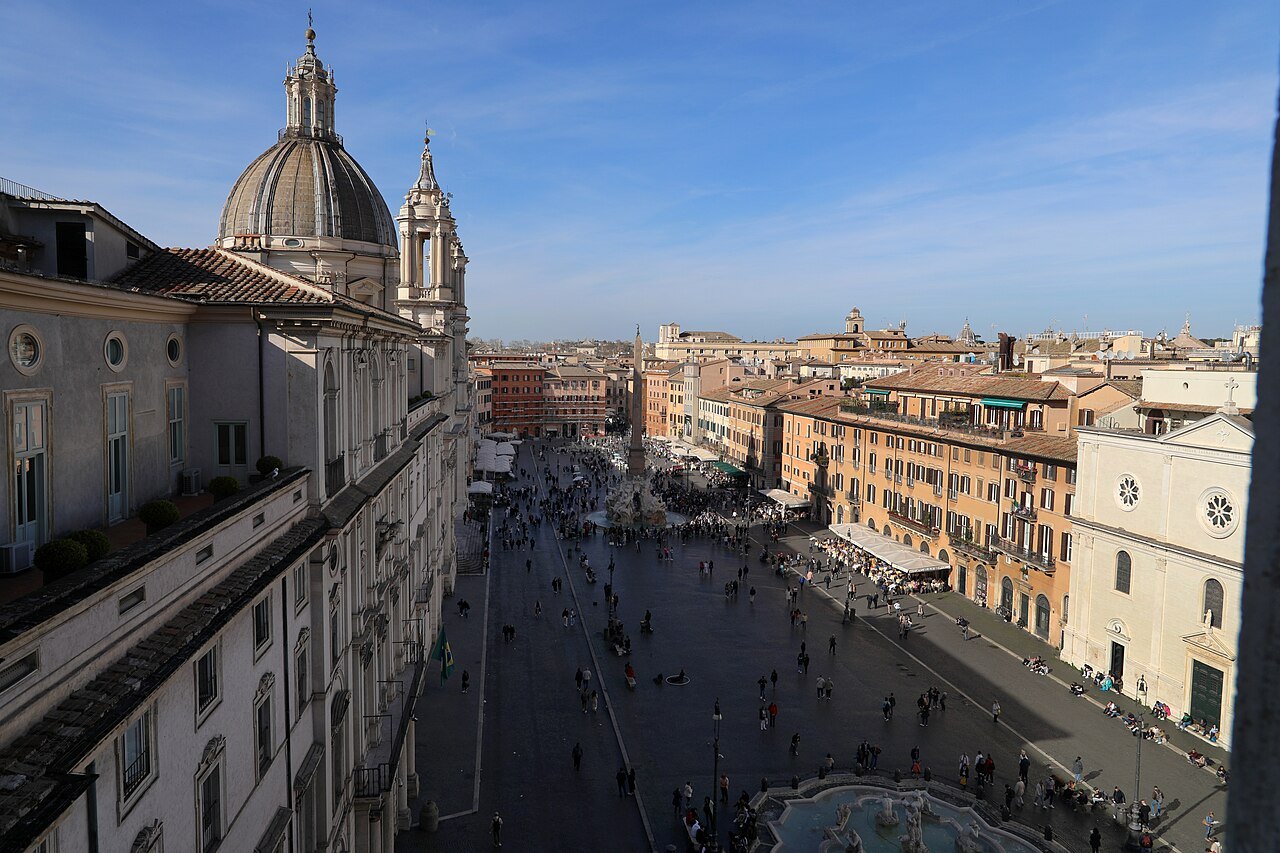
Visitors touring Piazza Navona often hear a dramatic tale: Bernini's river god for the Nile, carved with a hand raised and a cloth draped over his head, is shielding his eyes from Borromini's church of Sant'Agnese in Agone across the square, afraid its façade might collapse. The story casts Bernini as hurling a silent insult at his rival, a gesture frozen in travertine for centuries of tourists to repeat. It makes for a memorable guided tour. It is also not true.
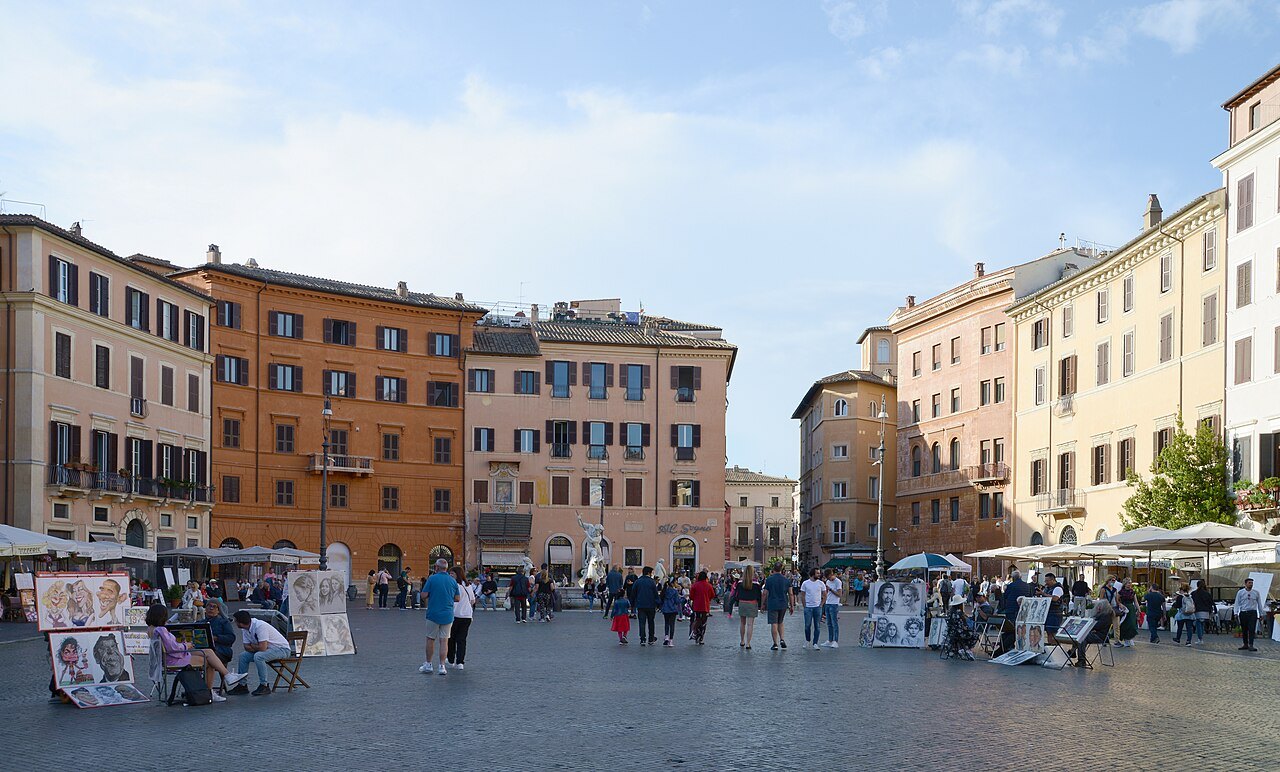
The claim assumes the two architects worked side by side, trading insults across the square while both projects rose at the same time. That fits the popular image of Bernini and Borromini as bitter rivals throughout Rome's Baroque century, each competing for favor under Pope Innocent X. The two men did clash more than once in their careers, but not over this fountain and this church at the same moment.
Guides across the square still point to the Nile's covered head as proof of a grudge, framing it as if the statue might flinch at the sight of a collapsing building. The detail is vivid enough to survive retelling, but it collapses under a simple check of dates, long before any stonework is examined.
A Pope, a Competition, and a Real Rivalry
Pope Innocent X, who reigned from 1644 to 1655, wanted the square facing his family's Palazzo Pamphilj transformed into a showcase worthy of his name, and he turned to both Bernini and Borromini for different parts of the project. The commission for the central fountain went to open competition in 1651, and the story that follows proves rivalry was real, even if the covered eyes were not part of it.
According to tradition, rivals at court had turned the pope against Bernini, hoping to keep the commission away from him. A model of the fountain was placed, the story goes, where Innocent would pass it on his way through the palace. Admiring what he saw before he learned who had made it, the pope is said to have remarked that whoever did not want to use Bernini's designs had better not look at them.
That anecdote, true or embellished, says more about the competitive atmosphere of papal commissions than the myth of the covered eyes ever could. Bernini won the fountain. Borromini, after disputes between the Rainaldis and the Pamphilj family, took charge of the church façade facing it. Both men worked for the same patron, on the same square, within the same decade, which is where the real rivalry lived.
The Dates That Undo the Myth
The timeline alone rules out any gesture of contempt between the two men. Bernini's Fountain of the Four Rivers was designed in 1651 and largely completed within the following few years. The church of Sant'Agnese in Agone was not begun until 1652, under Girolamo Rainaldi and his son Carlo, and Borromini only took charge of the project after the Rainaldis quarreled with the Pamphilj family and left the commission.
By the time Borromini's hand shaped the façade visitors see today, Bernini's river gods had already been standing in the square for years, finished and admired by Romans and pilgrims alike. A statue cannot be carved to avoid a building that does not yet exist. The sequence of dates, not the sculpture's pose, is the clearest evidence against the story guides repeat so readily.
Anyone wanting to verify this needs only line up the dates: 1651 for the fountain's design, 1652 for the first stone of the church, and a change of architect partway through construction. No version of that sequence leaves room for the insult the legend describes, however satisfying the image might be.
Why the Nile's Head Is Covered
The real explanation is far less theatrical than the legend suggests. Each of the four river gods around the obelisk is carved with plants and animals drawn from its own continent, and each figure is posed to suggest something true about the river it represents. The Nile's head is draped in cloth for a documented reason tied to geography, not to rivalry: in the mid-seventeenth century, its source remained unknown.
Mapmakers and travelers of Bernini's day had no confirmed account of where the Nile began, so the sculptor gave the river god a covered face, a visual shorthand for an unanswered question rather than a message aimed at a rival architect. The Danube, the Ganges and the Río de la Plata carry no such covering, because their sources were known, or believed to be known, at the time.
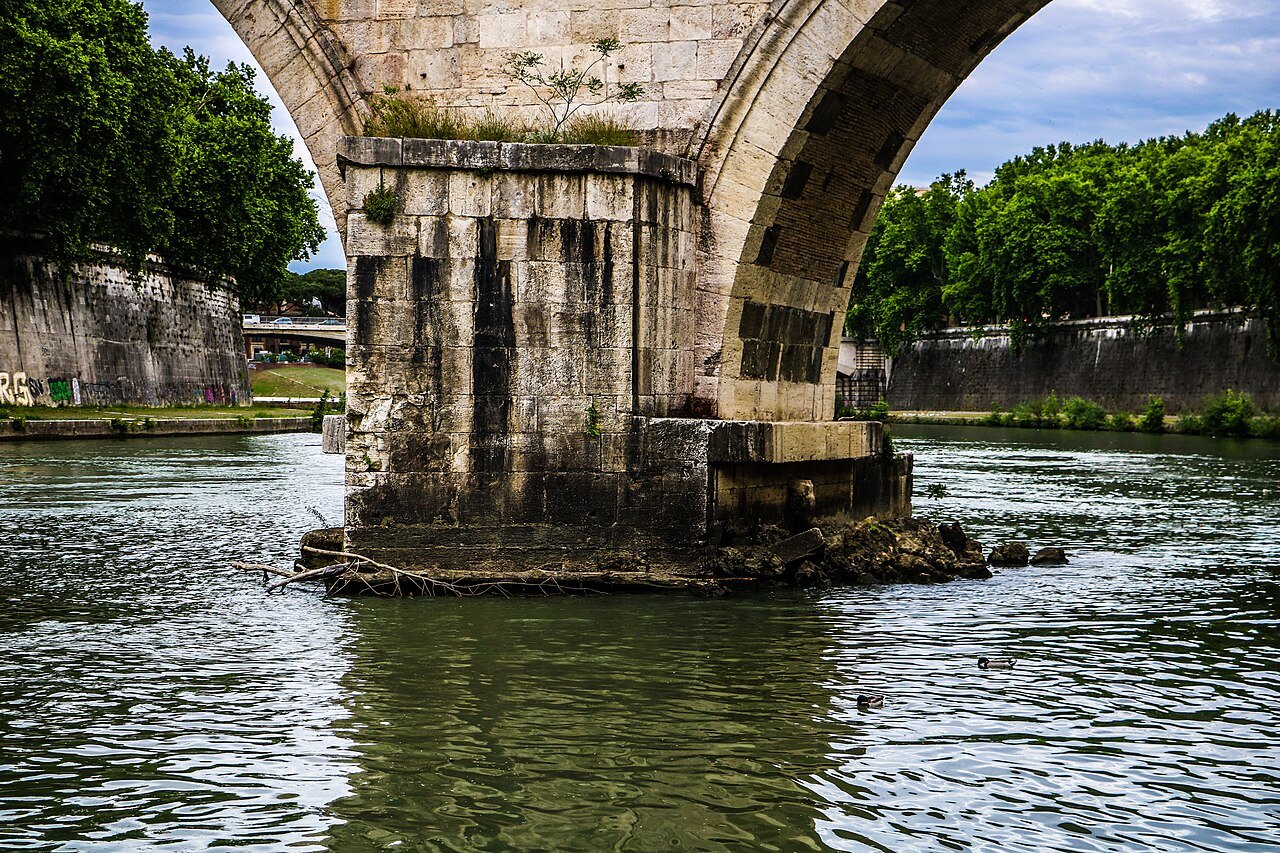
Reading the fountain this way changes what a visitor notices. The covered head becomes a piece of seventeenth-century geography carved in travertine rather than gossip between two architects, and it rewards the kind of close look the square invites: walking the full circuit of the basin to compare how each figure differs from the next.
Reading the Fountain and the Square
The fountain rises from a basin of travertine rocks, the four gods seated or reclining among them: the Nile for Africa, the Danube for Europe, the Ganges for Asia and the Río de la Plata for the Americas, together standing for the four continents papal authority had reached. Above them rises an obelisk, a Roman copy of an Egyptian original, brought in pieces from the Circus of Maxentius on the Appian Way and crowned with the Pamphilj dove holding an olive twig.
At the square's southern end, the Fontana del Moro combines a basin and four Tritons carved by Giacomo della Porta in 1575 with a Moor wrestling a dolphin that Bernini added in 1673. At the northern end, della Porta's Fountain of Neptune, also from 1574, waited roughly three centuries for its statue: Neptune himself was added only in 1878, to balance the Moor at the opposite end.
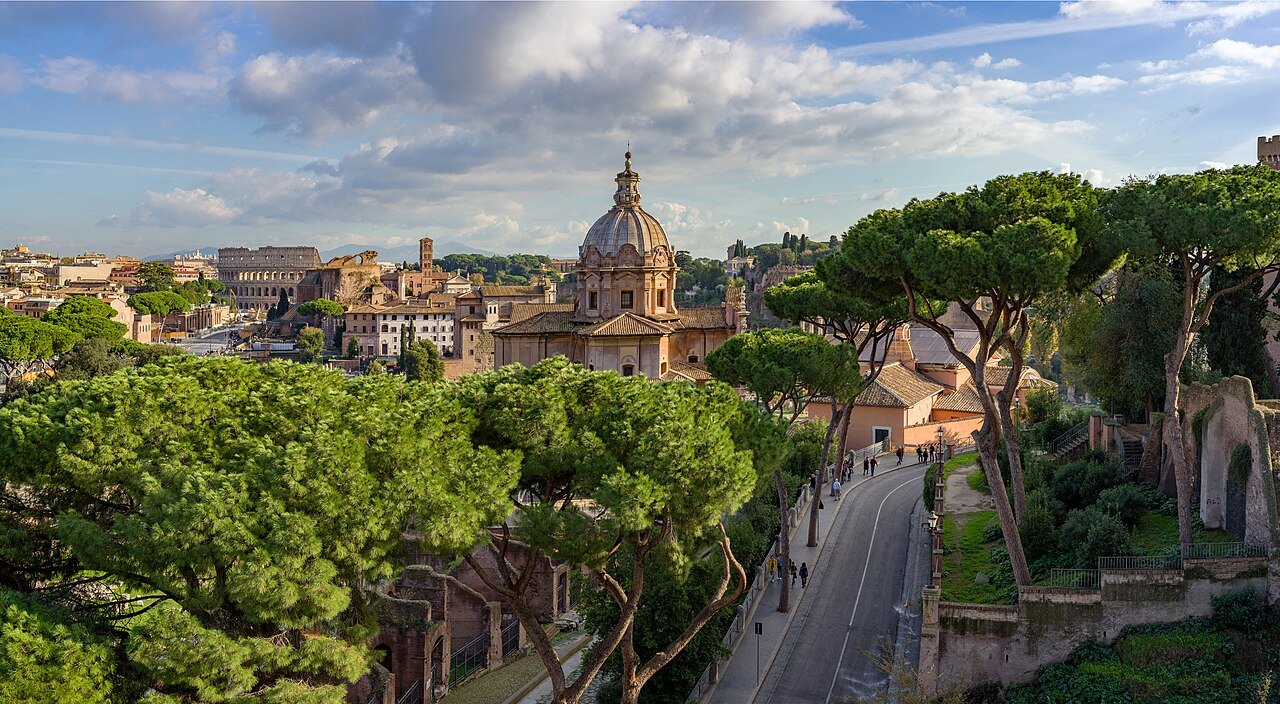
Beside the central fountain stands the church of Sant'Agnese in Agone, and next to it the Palazzo Pamphilj, whose long gallery, designed by Borromini, was painted by Pietro da Cortona. The Palazzo Braschi, on the edge of the square, holds the Museo di Roma, covering the city's history from the Middle Ages to the nineteenth century, for visitors wanting more context on the square's long life.
Visiting Piazza Navona
Piazza Navona costs nothing to enter and stays open to walk through at any hour, since it is a public square that keeps the exact footprint of the ancient Stadium of Domitian. The church of Sant'Agnese in Agone and the Museo di Roma inside the Palazzo Braschi are entered separately, each with its own schedule, so check their own websites before building a visit around them.
The best way to judge the fountain for yourself is to walk all the way around it, since the four river gods face different directions and each carries detail specific to its continent. The square sits in the rione of Parione, a short walk from the Pantheon, and its atmosphere changes between a quieter morning and a busier evening, without any fixed hour marking the shift.
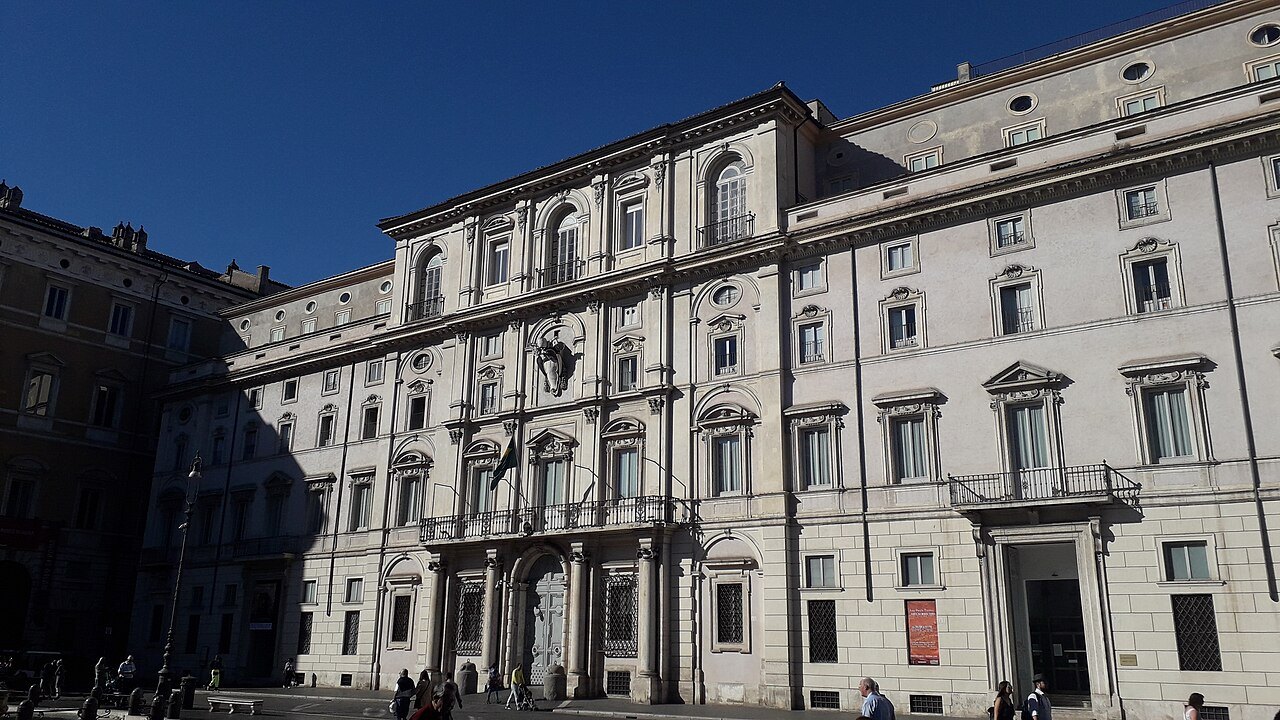
The Pantheon lies a short walk east, and Campo de' Fiori, with its daily market and its own layered history of trade, execution and protest, sits a few streets south, on the border of Parione and Regola. Both make natural extensions to a visit centered on Piazza Navona and its fountains.
Read next
More from the journal
- The RioniWhy are the districts of Rome called rioni?Old Rome is divided into twenty-two rioni, numbered from Monti to Prati, and their names are carved at street corners. Where the word comes from, how fourteen ancient regions became twenty-two modern districts, what the 1744 plaques are, and how to use the numbers to find your way.Read the piece →
- The Palatine Hill and the Circus MaximusWhere does the word palace come from?How the Palatine Hill, home to Rome's emperors for centuries, gave English its word for palace.Read the piece →
- Piazza del Popolo and the PincioHow did an Egyptian obelisk come to stand in Piazza del Popolo?How Augustus, Domenico Fontana and Pope Sixtus V brought a pharaoh's obelisk to the center of Piazza del Popolo.Read the piece →