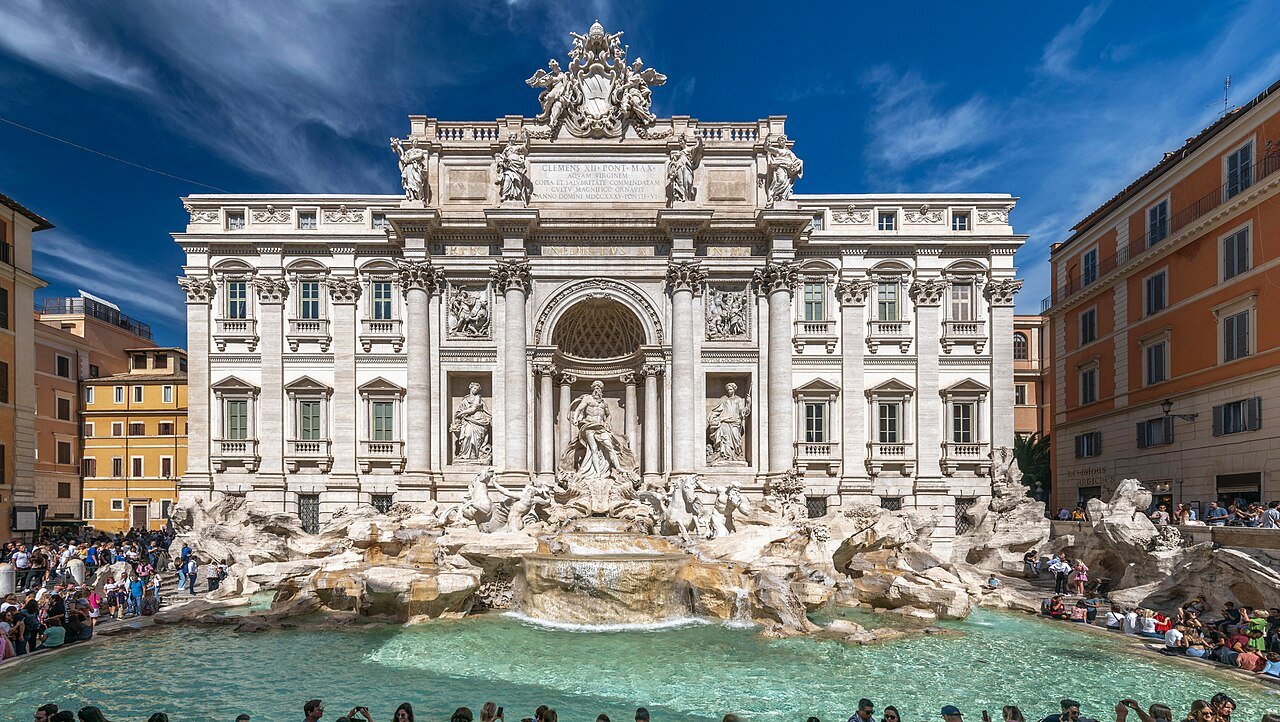
COINS, WISHES, AND A ROMAN AQUEDUCT
Why do people throw coins into the Trevi Fountain?
The story behind Rome's famous coin-throwing tradition at the Trevi Fountain, and how the custom works today.
The answer in full
Read on
Make a wish, leave something behind
The best known tradition at the Trevi Fountain is simple: visitors throw a coin into the water before leaving Rome, in the belief that it will bring them back to the city one day. The customary method is to stand with your back to the fountain and toss the coin with your right hand over your left shoulder, so it lands in the basin without your ever turning to watch it fall.
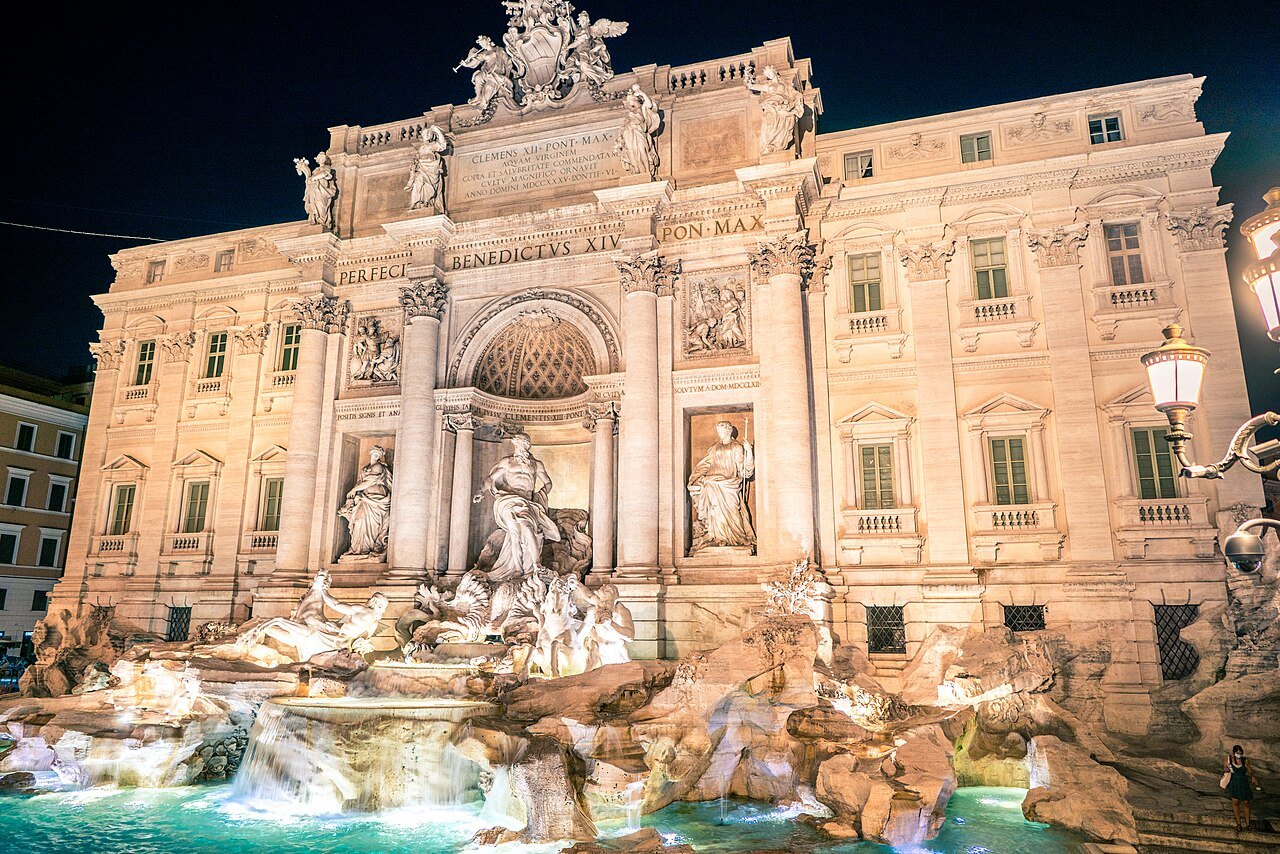
Thousands of euros are estimated to land in the water every single day, tossed by visitors from everywhere who repeat the gesture spontaneously or wait their turn at the edge. The coins are collected on a regular schedule and handed over to Caritas, the Catholic charity, which puts the money toward aid work across the city. Taking coins from the fountain yourself is illegal.
The custom has no single inventor, and the fact base behind it is mostly common knowledge rather than documented history; what is certain is that the fountain sits at the end of a working ancient aqueduct, and that link between flowing water and good fortune is part of why the gesture feels meaningful here rather than at an ordinary fountain.
An aqueduct that never stopped flowing
According to the story carved into one of the fountain's reliefs, in 19 BC Roman engineers searching for a pure water source were led by a young girl to a spring about eight miles from the city. The aqueduct they built to carry it, the Aqua Virgo, took an indirect route of about fourteen miles and fed the Baths of Agrippa near what is now the Pantheon.
The Aqua Virgo served Rome for more than four hundred years before the Gothic siege of 537 damaged the city's water system, yet it kept working through the Middle Ages, with repairs on record from the eighth century onward. Its water, low in calcium, is still gathered about six miles outside Rome and still runs through the same channel to reach the fountain today.
The Trevi Fountain is, in effect, simply the outlet of that two-thousand-year-old aqueduct, dressed up in Baroque marble. The scene of the maiden pointing soldiers toward the spring is carved into one of the reliefs above the statues, a reminder that everything performed here, coin throwing included, happens over water that has been flowing into Rome since before the empire's height.
From a pope's sketch to a finished fountain
The fountain seen today took more than a century to design and build. In 1629 Pope Urban VIII thought the plain older fountain on the site was beneath Rome and asked Gian Lorenzo Bernini to sketch a replacement; the project died with the pope, though traces of Bernini's ideas survive in the fountain eventually built.
A century later, in 1730, Pope Clement XII held a competition for a new design. The Roman public objected when the Florentine architect Alessandro Galilei won, and the commission passed instead to Nicola Salvi, a Roman, who began work in 1732. Salvi built his fountain against the rear of an existing palace, now called Palazzo Poli.
Salvi died in 1751 with the fountain only half finished. Four sculptors completed the figures, among them Pietro Bracci, who carved the central Oceanus, and the architect Giuseppe Pannini finished the project in 1762, replacing planned statues of Agrippa and the maiden with the allegorical figures seen today. Pope Clement XIII inaugurated the completed fountain.
Reading the statues above the water
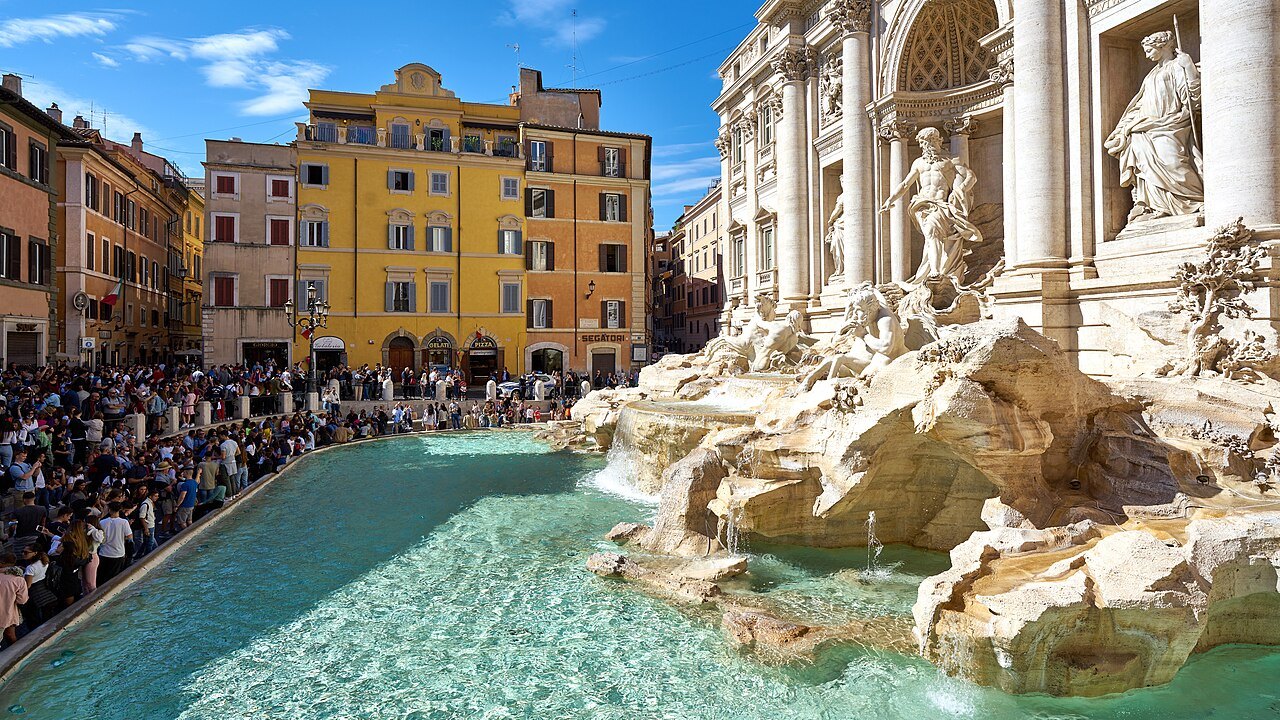
The whole composition is built around a single theme, the taming of the waters. At the center, set into a triumphal arch against the palace wall, Oceanus rides a shell-shaped chariot pulled by sea horses that two Tritons struggle to control, one animal calm and the other rearing against its rider.
In the niches to either side stand Abundance, pouring water from her urn, and Salubrity, holding a cup from which a carved snake drinks; reliefs above them retell the Roman origin story of the aqueduct. The Tritons and horses are paired off against each other, but their moods are set in deliberate contrast, a lively Rococo style already fashionable elsewhere in Europe by 1730.
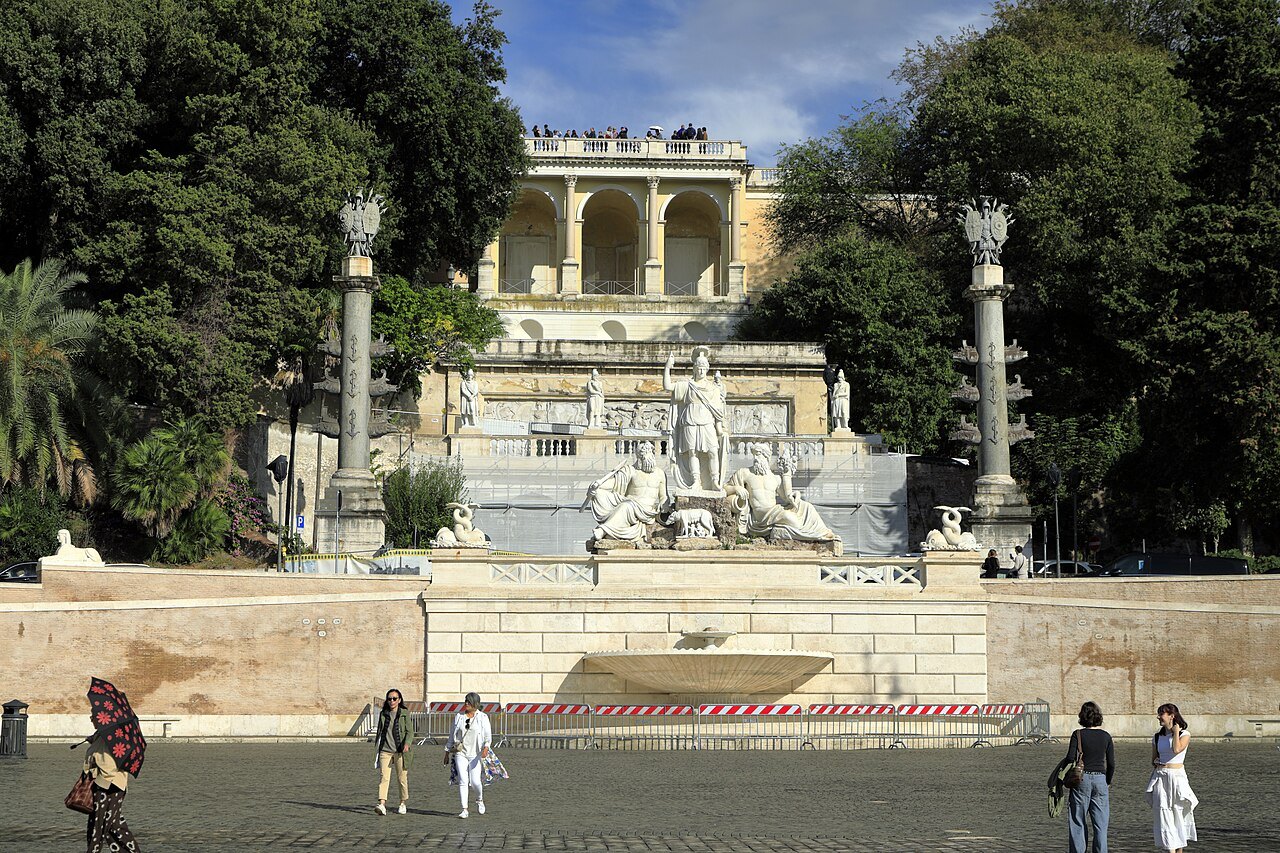
Water and carved rock appear to tumble forward together over a false cliff into the wide basin below, most of it travertine quarried near Tivoli, filling the little square almost entirely. On the right side of the fountain, a large stone vase stands slightly apart from the rest; Salvi placed it there deliberately to block the view of a barber's sign that was spoiling his composition, and Romans still call it the Ace of Cups for its resemblance to the playing card.
A fountain known through film and music
Much of the Trevi Fountain's modern fame comes from the screen rather than from guidebooks. It appears in Roman Holiday in 1953 and gives its name to Three Coins in the Fountain the following year, a film built entirely around the coin-throwing custom and the romantic promise attached to it.
Its best-known scene, though, is from La Dolce Vita in 1960, when Anita Ekberg wades into the basin in an evening gown with Marcello Mastroianni, an image that has become almost as recognizable as the fountain itself. The fountain has its own piece of music too: the third movement of Ottorino Respighi's Fountains of Rome, written in 1916, is named for it.
None of this history changes what the fountain actually is, a piece of working infrastructure dressed as sculpture, but it explains why so many visitors arrive already primed to throw a coin and watch it sink, repeating a gesture that film made famous long before most of them ever saw the square in person.
Visiting the fountain and the coin ritual today
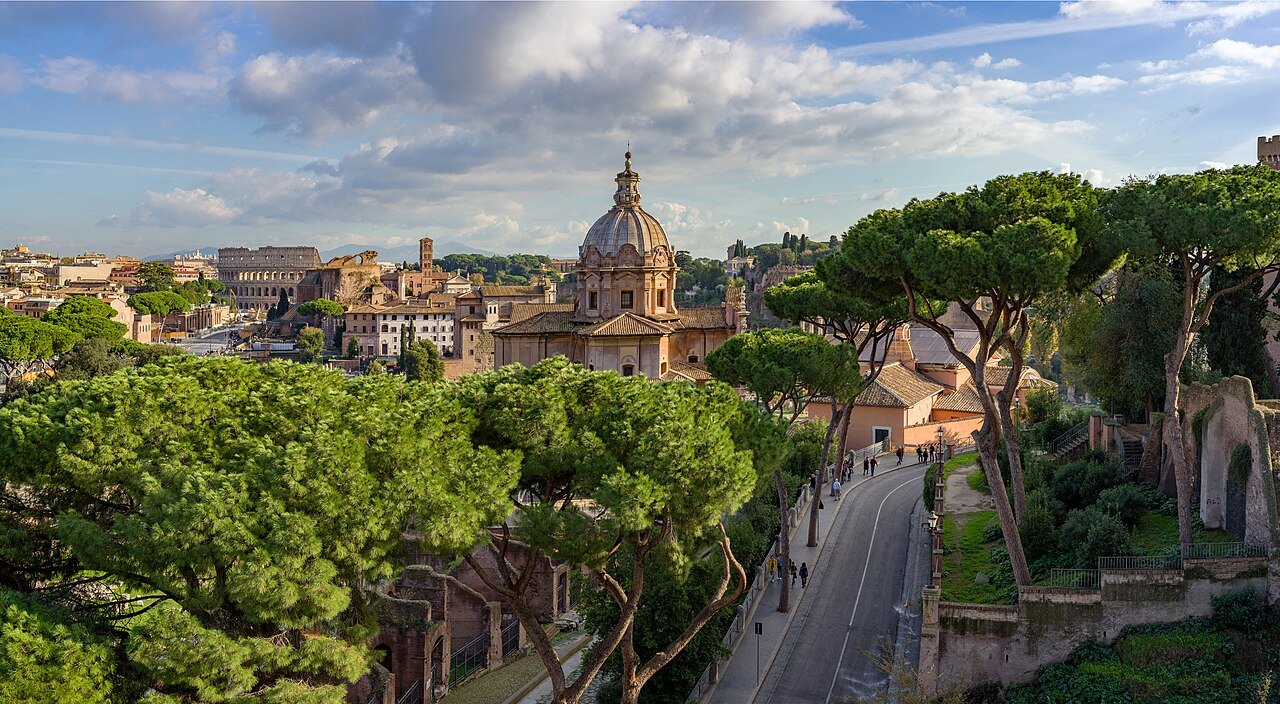
The fountain was restored most thoroughly between June 2014 and November 2015, in a project sponsored by the fashion house Fendi that also added more than a hundred LED lights to its night illumination; it was drained again for three months of further work at the end of 2024. Since it reopened, a queuing system has limited the number of people allowed at the basin at any one time.
Since February 2026, non-resident visitors need a ticket to go down into the basin area itself, the steps beside the water; the fountain and its statues remain visible from the square at all times without one. Tickets are sold on the fountain's official site and at the city's tourist information points and civic museums, with proceeds going toward restoration and stewarding; check current arrangements before you go, as the system is still new.
Inside the basin area, the rules are straightforward: no food or drink, no smoking, no sitting on the fountain's edge, and the coin is the only thing visitors are allowed to throw. Give yourself a few minutes at the top of the square first, to take in the whole façade before joining the crowd at the water's edge.
The Spanish Steps and the Pantheon both lie a short walk away, so the three are easily combined on one walk through the historic center; for planning tickets and timing around the city's major sights, see booking ahead and getting around Rome.
Read next
More from the journal
- Piazza Navona and Campo de' FioriIs the Fountain of the Four Rivers really an insult to Borromini?Why the famous story about Bernini snubbing Borromini at the Fountain of the Four Rivers does not hold up.Read the piece →
- Getting AroundHow does the Rome Metro work for visitors?Rome has only three Metro lines, and none of them runs through the heart of the old center. Which line reaches which sights, where they cross, why building them takes so long, how the Metrebus fare system ties them to the buses and trams, and when walking is simply faster.Read the piece →
- The PantheonWhy does the Pantheon have a hole in its roof?The Pantheon's dome has been open to the sky for nearly nineteen centuries. What the oculus does for the weight of the dome, how the builders made the concrete lighter as it rose, where the rain goes, how the light moves around the hall, and the rose petals that fall through it at Pentecost.Read the piece →