KEATS AND THE SPANISH STEPS
Who lived in the house beside the Spanish Steps?
The house at the foot of the Spanish Steps where John Keats died in 1821 is now a museum of the English Romantics in Rome.
The answer in full
Read on
The house on the corner
At the corner on the right as the stair begins to climb stands the house where the English poet John Keats lived out his final months and died in 1821, in a rented room that looked directly across the Piazza di Spagna toward the steps he could see but never again climb freely.
The building is now the Keats-Shelley Memorial House, a small museum built around that history. It holds one of the world's largest collections of letters, manuscripts and memorabilia connected to Keats, Shelley, Byron and the wider circle of English Romantic writers who spent time in Rome during the nineteenth century.
The house sits squarely within the French-built world the Spanish Steps belong to, though its own story has nothing to do with either France or Spain. It stands beside a stair paid for by a French diplomat's legacy and built to serve a French church, yet it is remembered above all as an English address.
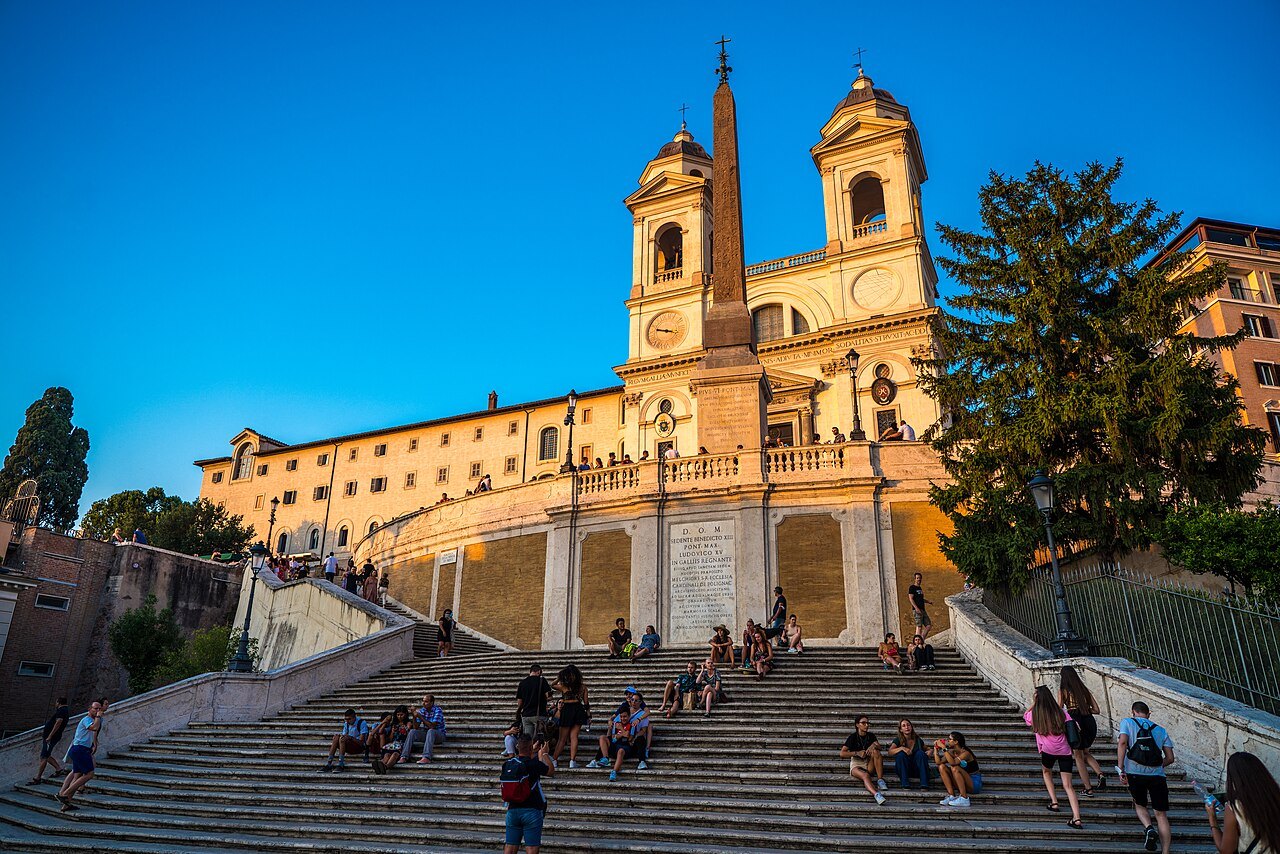
From its windows the view runs straight up the fanning flights of travertine to the twin towers of Trinità dei Monti at the top of the hill. It is the same prospect described in accounts of Keats's last weeks, the stair and the square forming the backdrop to the final chapter of his short life.
Why Keats came to Rome
Keats arrived in Rome already suffering from tuberculosis, the disease that had killed his brother, hoping that a milder climate might slow its course. Travel to Italy for the sake of health was common among the English of his generation, and Rome, with its mix of ancient ruins and modern comforts, was a frequent destination for the ill and their companions.
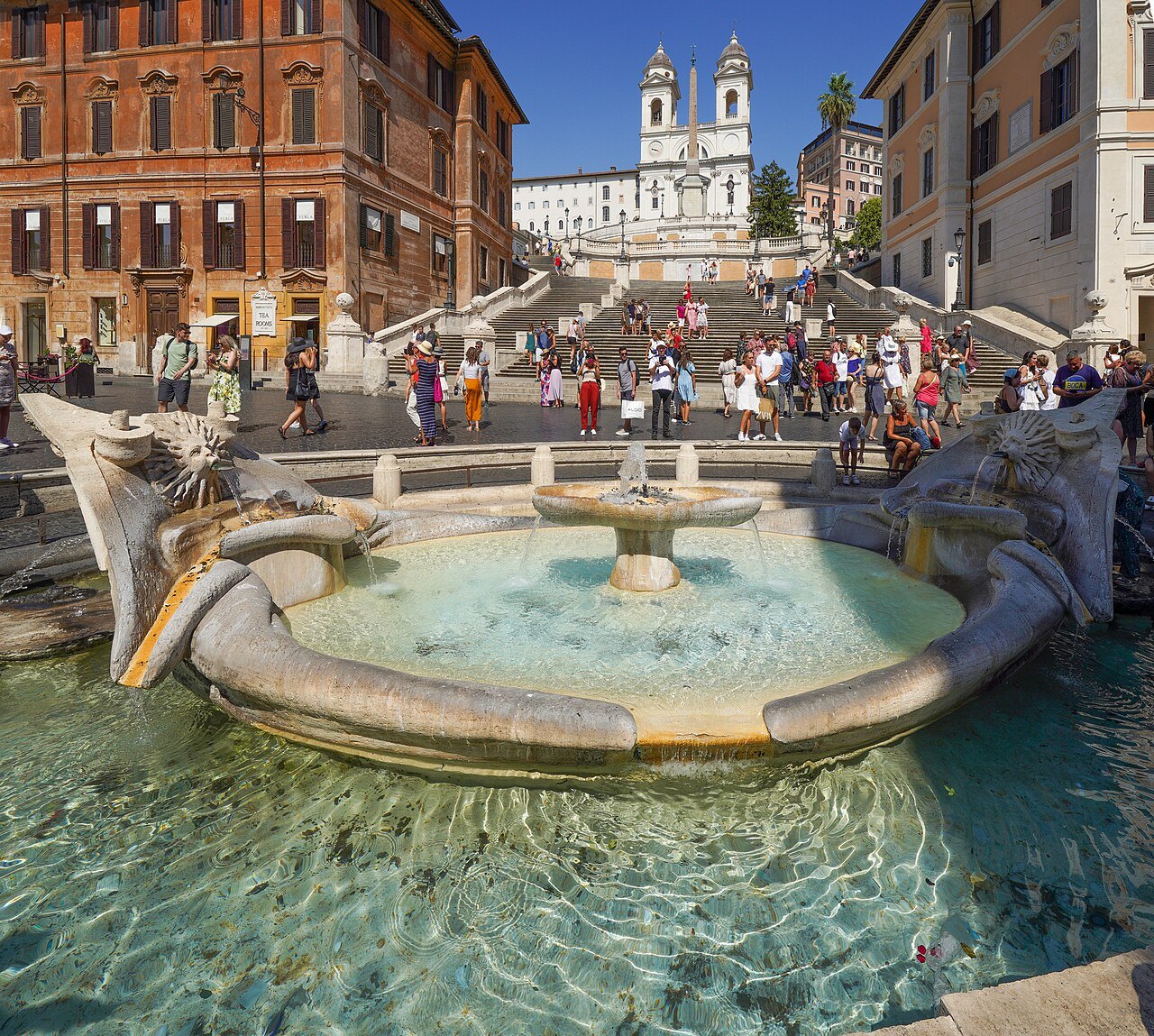
He settled into rooms at the foot of the Spanish Steps, close to the square where English visitors tended to gather, within sight of the Barcaccia fountain and the long flight of stairs climbing toward the church above. The location placed him at the center of one of the city's busiest meeting points even as his health declined through the winter.
He did not recover, and died in the house in 1821, not long after his arrival in the city, at twenty-five years old. His death there, so young and so far from England, became one of the defining stories attached to this corner of the square.
Over time that story grew into part of the square's wider identity, as much a fixture of the Piazza di Spagna as the fountain at its center or the stair rising behind it toward Trinità dei Monti.
Inside the museum
The Keats-Shelley Memorial House preserves the rooms associated with Keats's final weeks and presents them alongside a broader collection of Romantic-era material gathered over the years. Letters, portraits, first editions and personal relics of Keats, Shelley and Byron make up the bulk of what is on display inside.
The museum functions as both a memorial to one poet's death and an archive of a wider literary moment, when English writers traveled to Rome in numbers and left behind a record of their time in the city. Its holdings are drawn from across that circle of writers rather than from Keats alone.
Because the collection is built around personal papers and fragile objects, opening arrangements, ticketing and any rules on photography are set by the museum itself. Visitors should check directly with the Keats-Shelley Memorial House before planning a visit, especially if a specific room or document is the reason for coming.
The contrast between the quiet of the museum's rooms and the crowds gathering on the steps outside is often the first thing a visitor notices, a reminder that this square has long held both a quiet literary history and the bustle of one of the city's most famous meeting points.
The square the Romantics knew
The Piazza di Spagna that Keats looked out on was already a gathering point for foreign visitors to Rome, much as it remains today. The Spanish Steps themselves were barely a century old in his time, finished earlier in the eighteenth century after a long and contested history of design and funding.
The stair he saw from his window had only recently settled into its present form, completed soon after a competition in 1717 won by Francesco de Sanctis, following decades of dispute over who would pay for it and whose monument might stand at its approach.
Via dei Condotti opens off the same square, a street now associated with fashion rather than literature, home to the Italian flagship store of Bulgari, which sponsored the most recent restoration of the steps. The contrast between that modern commercial world and the poet's sickroom nearby is one of the square's quieter ironies.
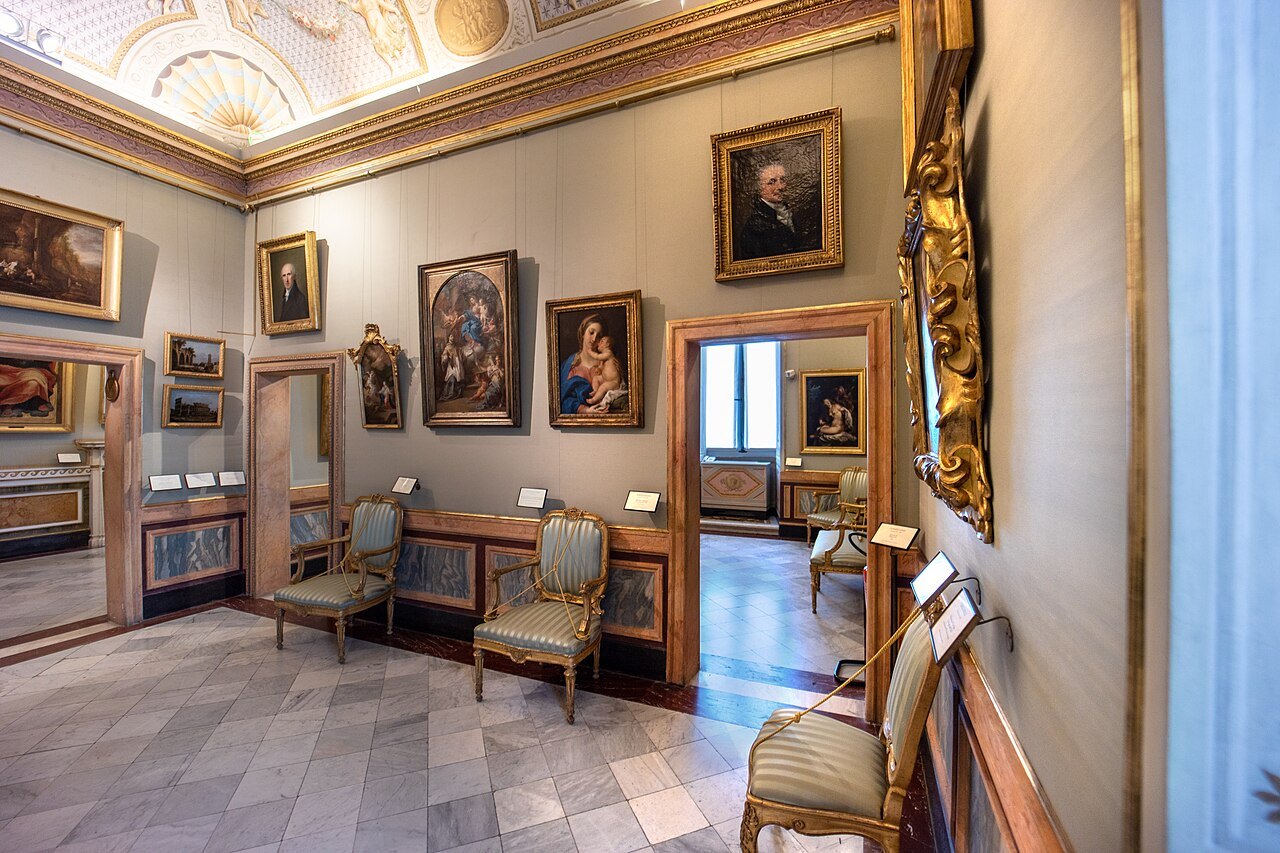
From the house, the view runs up the fanning flights of the stair to the twin towers of Trinità dei Monti at the top, the same church and the same climb that shape the whole character of the Spanish Steps.
Climbing the stair today
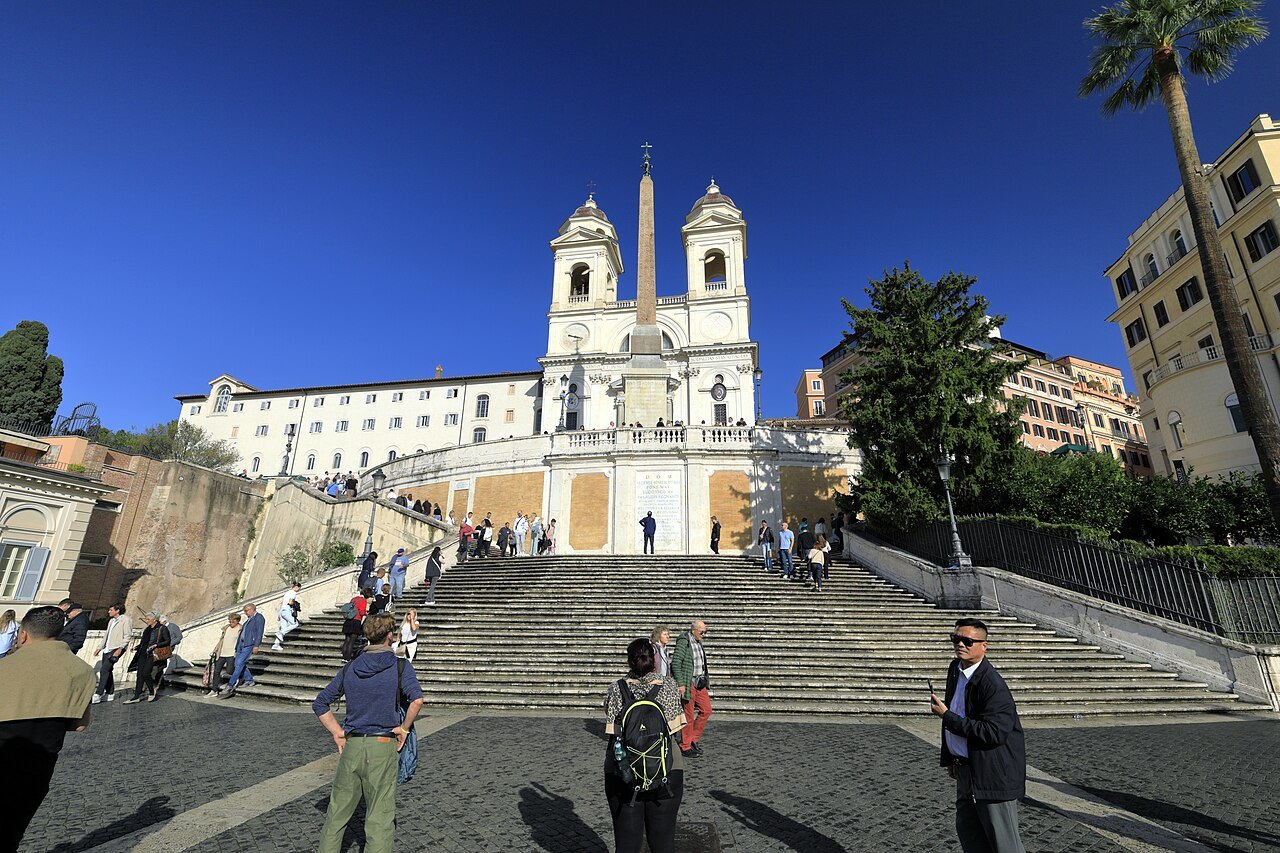
The stair the Keats-Shelley House faces is a public street, free to climb, rising about ninety-five feet from the piazza to the church terrace above. It is built as a series of flights that divide and reunite around landings, a design on the scale of a garden stair blown up to fill a city slope.
The design borrows from older models, the divided stairs Bramante planned for the Vatican's Belvedere Courtyard and the curved steps of Michelangelo's library vestibule in Florence, so that the flights divide and meet again around landings in a pattern a visitor can trace while climbing from bottom to top.
A city ordinance in effect since July 2019 forbids sitting, eating or pushing strollers on the steps, part of an effort to protect a monument that has needed repeated restoration since at least the eighteenth century. Visitors should come to look and to climb, not to linger over a meal on the stone.
Before the anniversary of Rome's founding in spring, part of the stair is covered in pots of azaleas that remain into early May, and at Christmas a nineteenth-century crib is set on the first landing, two seasonal sights worth timing a visit around if possible.
Nearby sights at top and bottom
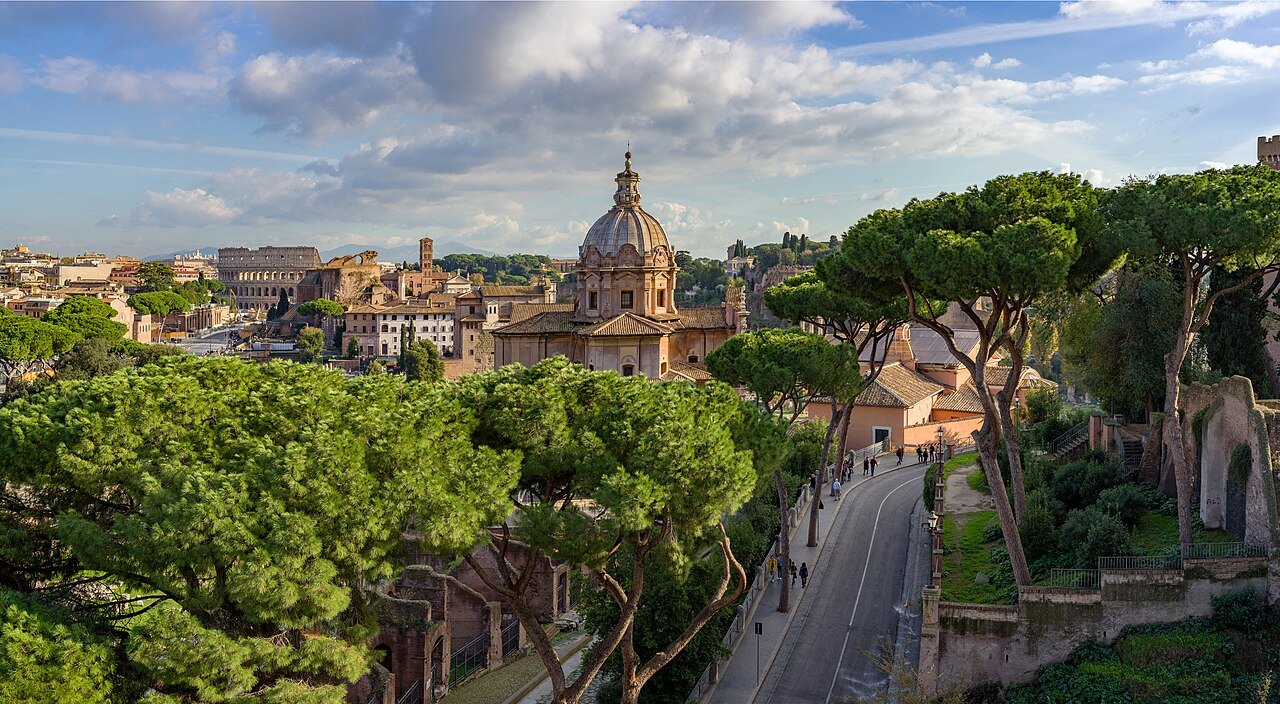
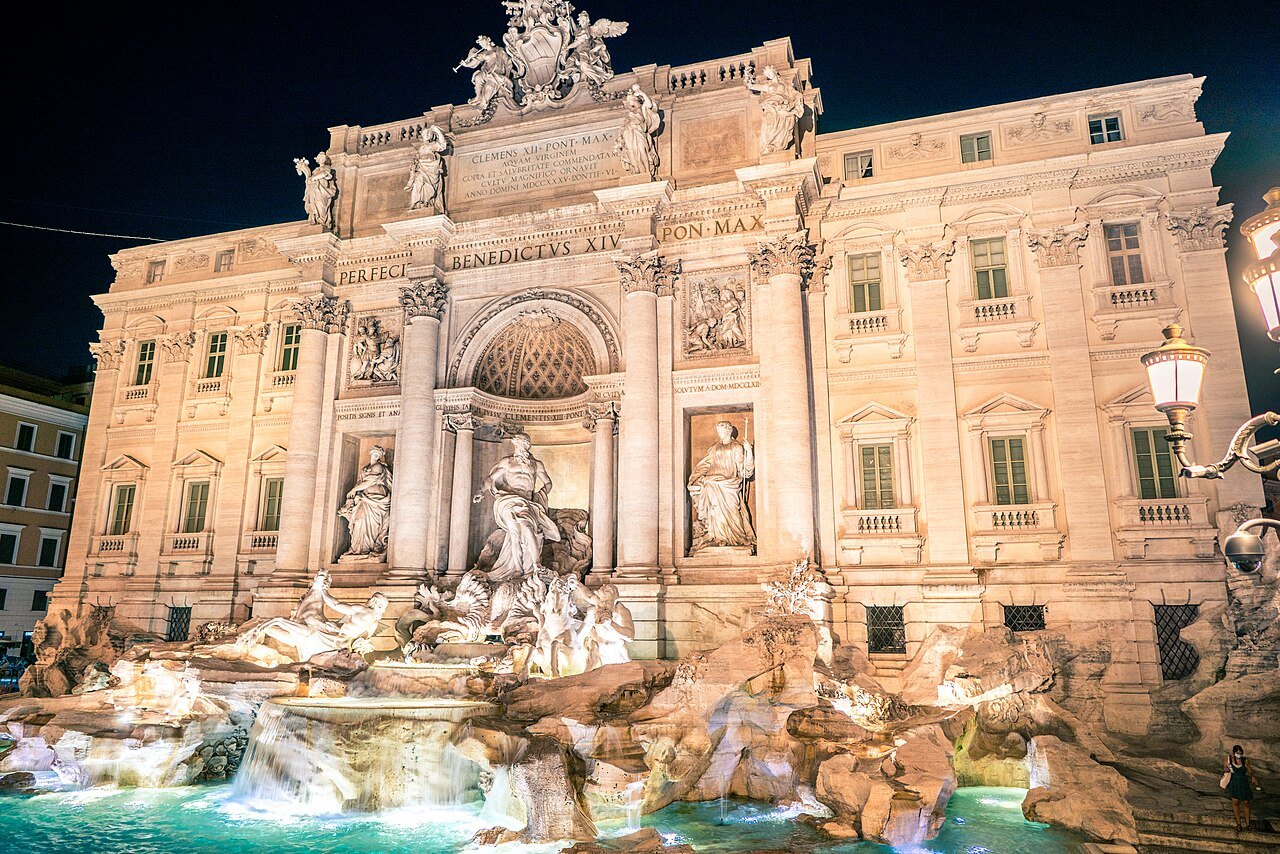
At the foot of the stair the Barcaccia fountain marks the square, built in the late 1620s and often credited to Pietro Bernini, fed, like the Trevi Fountain, by the ancient Acqua Vergine aqueduct that still supplies both. The Trevi Fountain itself lies a short walk to the south, making this corner of the city easy to combine with other sights on foot.
At the top of the stair, before the church of Trinità dei Monti, stands the Sallustian obelisk, a Roman imitation of an Egyptian original made for the Gardens of Sallust and moved to this spot at the end of the eighteenth century. From the terrace beside it the city opens out below, and a walk along the top of the Pincian Hill leads to the Villa Medici.
The square and stair sit within the rione of Campo Marzio, one of the compact historic districts at the heart of central Rome, an area best explored on foot and easy to reach from most parts of the center without needing to plan a long crossing of the city.
Planning a visit
Anyone hoping to see the rooms inside the Keats-Shelley Memorial House should check the museum's own channels for current arrangements, since access, ticketing and any limits on numbers are set independently of the steps outside and can change over time.
Visitors combining the house with other Rome sights in the same day may find it useful to plan the order of a route in advance, particularly if the Trevi Fountain, the Pincio gardens or the Villa Medici are also on the list, since all lie within easy walking distance of the square.
General guidance on reserving tickets and timing visits to Rome's museums and monuments, including smaller sites like this one, is gathered on the Booking Ahead page, a useful starting point before setting out for the Piazza di Spagna.
Read next
More from the journal
- Vatican CityWhy is Vatican City a separate country?St. Peter's and the Vatican Museums stand in the smallest country in the world, not in Italy. How a thousand years of papal rule ended in 1870, why the popes called themselves prisoners, what the Lateran Treaty of 1929 created, and what the border means for a visitor today.Read the piece →
- The Trevi FountainWhich aqueduct feeds the Trevi Fountain?How the ancient Acqua Vergine still feeds the Trevi Fountain, and what that means for a visit.Read the piece →
- Getting AroundHow does the Rome Metro work for visitors?Rome has only three Metro lines, and none of them runs through the heart of the old center. Which line reaches which sights, where they cross, why building them takes so long, how the Metrebus fare system ties them to the buses and trams, and when walking is simply faster.Read the piece →