THE WATER BEHIND THE FOUNTAIN
Which aqueduct feeds the Trevi Fountain?
How the ancient Acqua Vergine still feeds the Trevi Fountain, and what that means for a visit.
The answer in full
Read on
The aqueduct behind the fountain
The Trevi Fountain is often admired as pure spectacle, but it also marks the end point of a working aqueduct. Its water arrives through the Acqua Vergine, the modern form of the ancient Aqua Virgo, an aqueduct built to supply ancient Rome, still carrying water into the city even today.
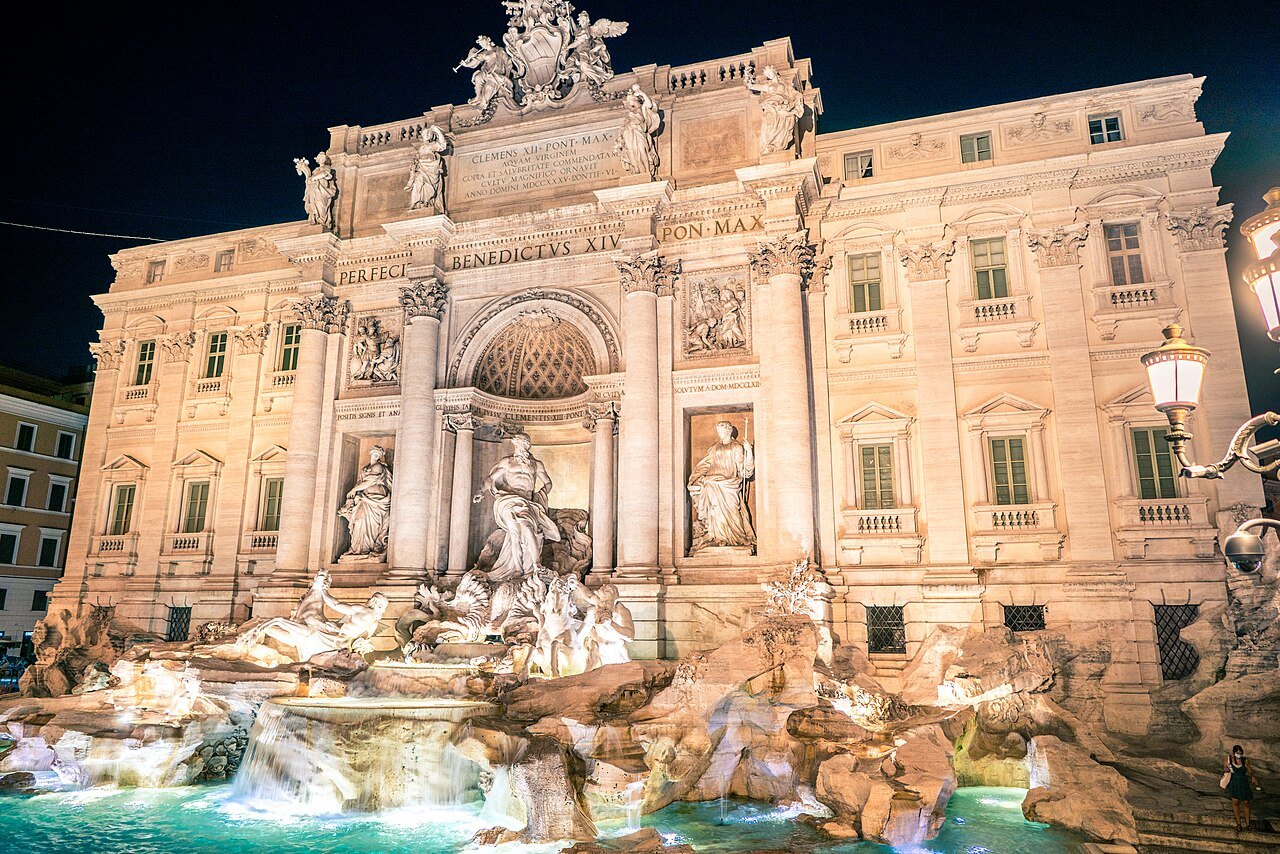
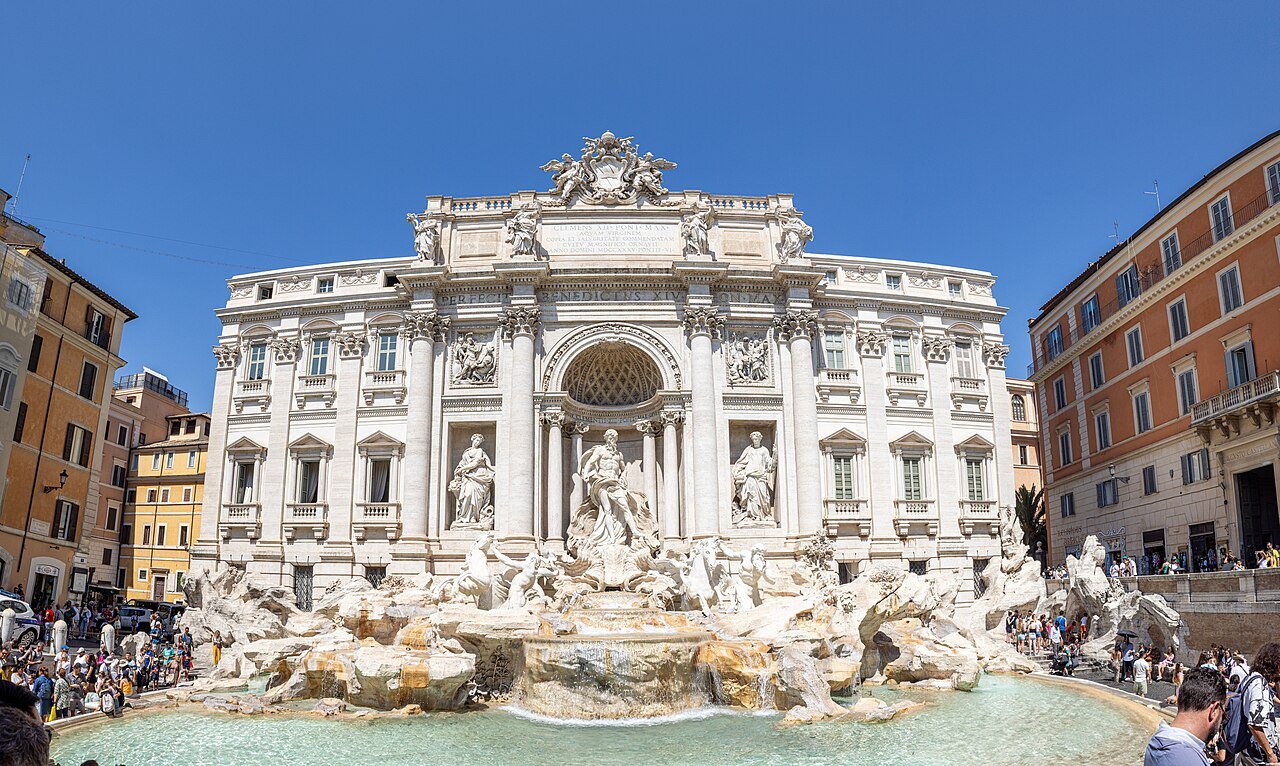
The fountain sits in the rione of Trevi, where three streets once met; the name comes from trivium, Latin for that meeting point. It stands about eighty-six feet high and one hundred sixty-one feet wide, filling the little square against the rear wall of a palace, so that the square seems almost too small to hold it.
Among Rome's monuments it is unusual in being fed by a source outside the walls rather than a modern water main, which is part of why its water behaves differently from an ordinary city fountain and why the aqueduct behind it carries its own long and unusually well documented history.
The legend of the maiden
According to the story, Roman engineers searching for pure water were led by a young girl to a spring about eight miles outside the city in 19 BC. The tale gave the aqueduct its popular name, Aqua Virgo, the aqueduct of the maiden, remembered today in a relief carved on the fountain itself.
The engineers did not run the water straight into the city but laid a channel about fourteen miles long, winding to keep a gentle slope, until it reached the Baths of Agrippa near today's Pantheon. For more than four centuries the aqueduct kept Rome's baths and fountains well supplied with some of the city's finest water.
The maiden's gesture, carved into the fountain's reliefs, is a reminder that the structure is not purely decorative; it commemorates an act of engineering, since the aqueduct really did bring usable water into Rome for centuries before Salvi designed a fountain to mark its arrival at the end of its long course.
A water supply that outlasted empires
Rome's aqueducts suffered badly when the Goths besieged the city in 537, cutting off several channels that had fed it for centuries. The Acqua Vergine was among the few that survived, staying in use through the Middle Ages, with repairs on record from as early as the eighth century onward.
The spring that feeds it is still used today, collected about six miles from the city; the water is notably low in calcium, a quality prized since antiquity that still shapes the fountain's appearance, leaving little mineral buildup on the stone over time, unlike many Roman fountains fed by harder water.
Because the Acqua Vergine never fully went dry, Rome could rebuild a grand fountain on this spot in the eighteenth century with confidence that real water, not a stagnant pool, would flow from it, a continuity that few other cities can claim for a source so old, still flowing beneath the city today.
From Bernini's sketches to Salvi's fountain
The fountain seen today took shape slowly. In 1629, Pope Urban VIII thought the existing fountain on the site too plain and asked Gian Lorenzo Bernini to design a replacement; the pope died before it could be built, though traces of his ideas survived into the later design. A century passed before the project moved forward again.
In 1730, Pope Clement XII held a competition for a new fountain. The Florentine architect Alessandro Galilei won first, causing an outcry among Romans over a non-Roman taking the commission; the runner-up, Nicola Salvi, was given the job instead, and work began in 1732, using a palace already on the site, now called Palazzo Poli, as the fountain's back wall.
Salvi died in 1751 with the sculpture only half finished. Four other sculptors completed the figures, among them Pietro Bracci, who carved Oceanus, and the architect Giuseppe Pannini finished the project in 1762, replacing planned statues of Agrippa and of the maiden with the allegories now in place. Pope Clement XIII inaugurated the finished fountain.
What you see
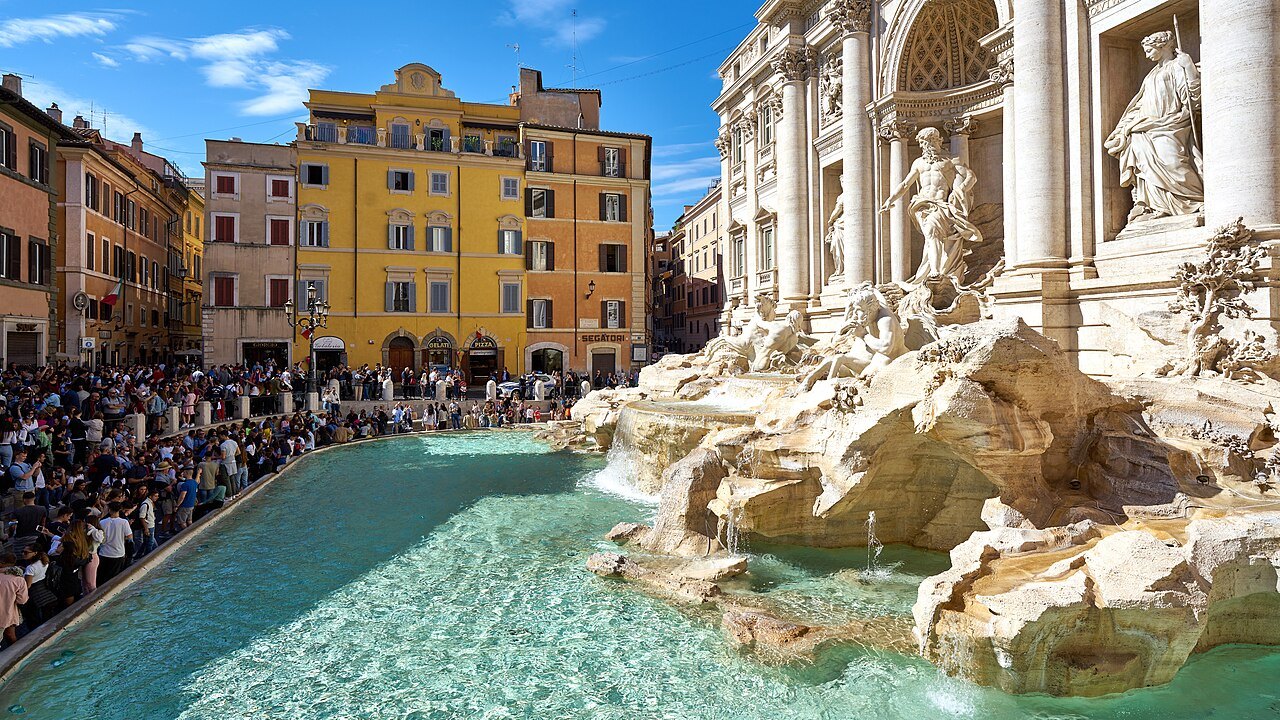
The fountain's theme is the taming of the waters. At its center, set into a triumphal arch against the palace façade, Oceanus rides a shell-shaped chariot pulled by sea horses, each led by a Triton struggling to control it; one horse is calm, the other rearing, a contrast repeated throughout the sculpture.
In the side niches stand two allegorical figures, Abundance pouring water from her urn and Salubrity holding a cup from which a snake drinks, while reliefs above tell the story of the aqueduct's Roman origin, including the maiden pointing out the spring. The whole composition has a lively Rococo feel.
Below the figures, carved rock and real water tumble forward over an artificial cliff into the wide basin that fills most of the square; most of the stone is travertine quarried near Tivoli. A large carved vase stands apart, placed, so the story goes, to hide a barber's sign Salvi disliked; Romans call it the Ace of Cups.
Restorations and crowds
The fountain has needed regular upkeep to stay as bright as it looks in photographs. It was cleaned of smog staining in 1988 and again in 1998, when recirculating pumps were installed. A larger restoration, sponsored by the fashion house Fendi, ran from June 2014 to November 2015 and added over a hundred LED lights for night illumination.
The fountain was drained again at the end of 2024 for several months of further work. When it reopened, a queuing system was introduced, limiting how many people can stand at the basin at once, a response to the fountain's standing as one of the most crowded spots in the city.
In February 2026 the city introduced a ticket for visitors who are not Roman residents who want to go down to the basin itself, part of an effort to manage crowding; proceeds are meant to fund restoration and stewarding. Because the system is new, check the fountain's own rules before planning around it.
The coins and how to visit
The best-known tradition at the fountain is throwing a coin into the water before leaving the city, said to guarantee a return visit; the proper method is to toss it with the right hand over the left shoulder, facing away from the fountain. Thousands of euros are estimated to land in the basin daily, collected and given to the charity Caritas.
Taking coins from the fountain is illegal, and inside the basin area the rules are simple: no food or drink, no smoking, no sitting on the edge of the basin, and the coin toss is the only thing visitors may throw. Since February 2026 a ticket has been required to go down onto the steps beside the water.
Tickets are sold through the fountain's official website and at the city's tourist information points and civic museums, as well as at the entrance by card only; see booking ahead for how such reservation systems generally work. Give the square a few minutes before descending, to take in the whole façade first.
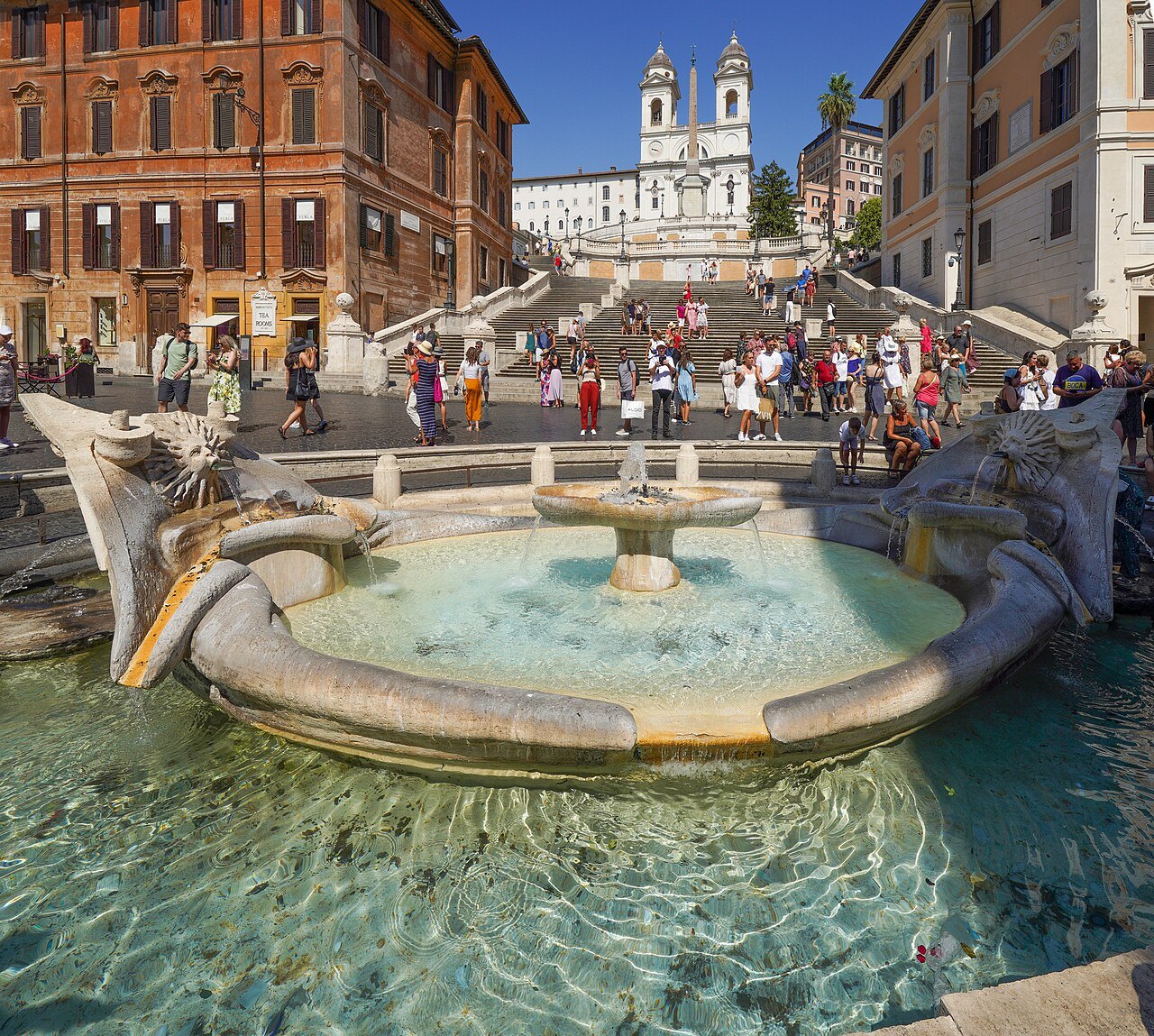
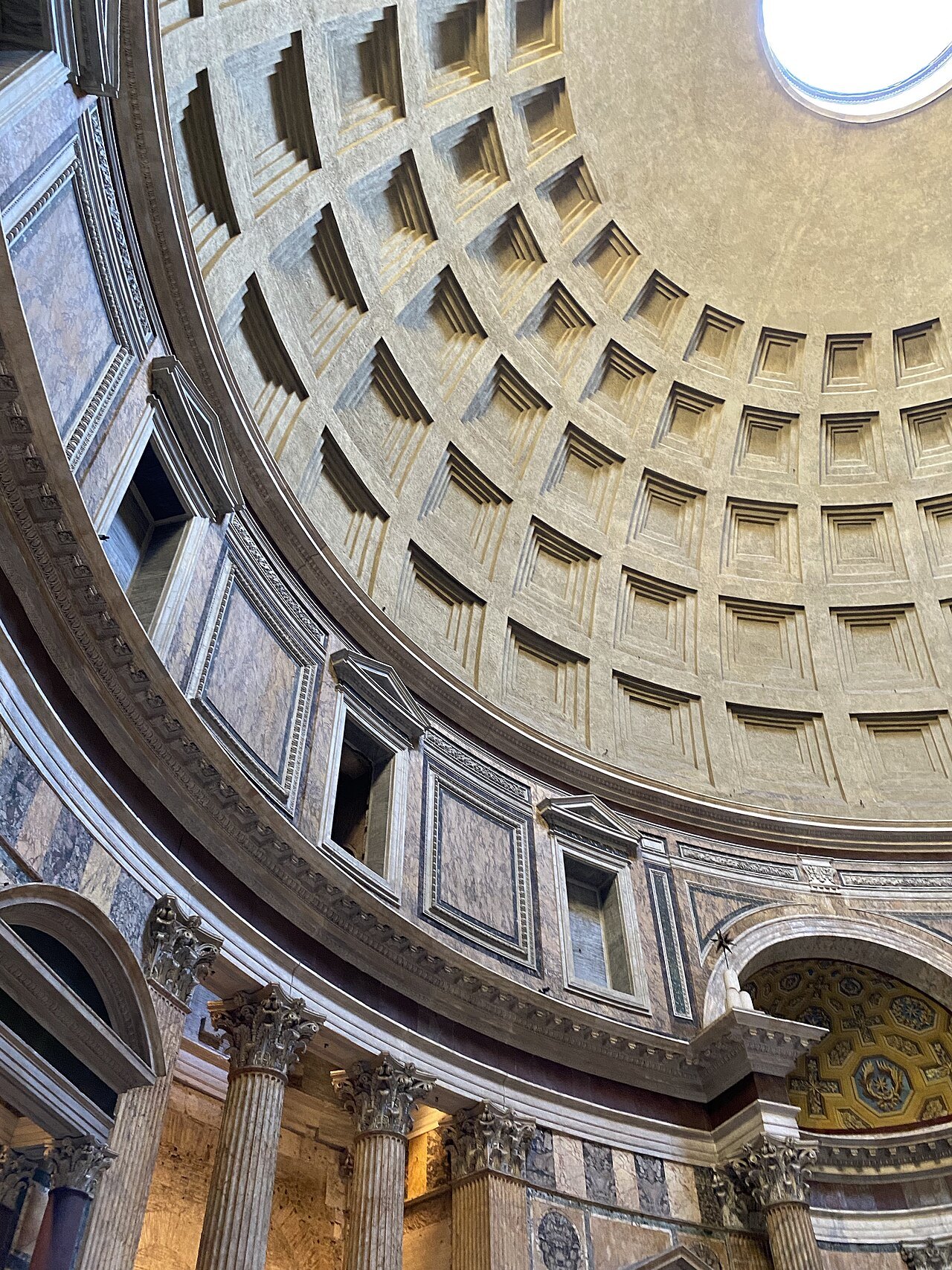
Film has done as much as water to make the fountain famous, from Roman Holiday in 1953 and Three Coins in the Fountain in 1954 to La Dolce Vita in 1960, in which Anita Ekberg wades into the basin, and Ottorino Respighi gave the fountain its own movement in his 1916 Fountains of Rome. The Spanish Steps and the Pantheon are a short walk away, easy to combine in one visit.
Read next
More from the journal
- The Trevi FountainWhy do people throw coins into the Trevi Fountain?The story behind Rome's famous coin-throwing tradition at the Trevi Fountain, and how the custom works today.Read the piece →
- The Palatine Hill and the Circus MaximusWhere does the word palace come from?How the Palatine Hill, home to Rome's emperors for centuries, gave English its word for palace.Read the piece →
- The RioniWhy are the districts of Rome called rioni?Old Rome is divided into twenty-two rioni, numbered from Monti to Prati, and their names are carved at street corners. Where the word comes from, how fourteen ancient regions became twenty-two modern districts, what the 1744 plaques are, and how to use the numbers to find your way.Read the piece →