TOMBS INSIDE ROME'S ANCIENT DOME
Who is buried in the Pantheon?
A guide to the artists, kings and relics buried inside the Pantheon's ancient rotunda.
The answer in full
Read on
A Church First, A Burial Place Second
The Pantheon owes its tombs to one fact: it stopped being a pagan temple. In 609 the Byzantine emperor Phocas gave the building to Pope Boniface IV, who consecrated it to Saint Mary and the Martyrs on 13 May of that year. Once it became a Christian church, it never stood empty, and that unbroken life as a working church eventually made it a place where prominent Romans wanted to be buried.
No tombs from antiquity survive inside the rotunda. The earliest burials date from the Renaissance, more than eight centuries after the building's consecration as a church, by which time the Pantheon's scale and survival had already made it one of the most admired interiors in Rome. Architects, painters and musicians sought burial here as a mark of standing, close to a structure that had outlived the empire that built it.
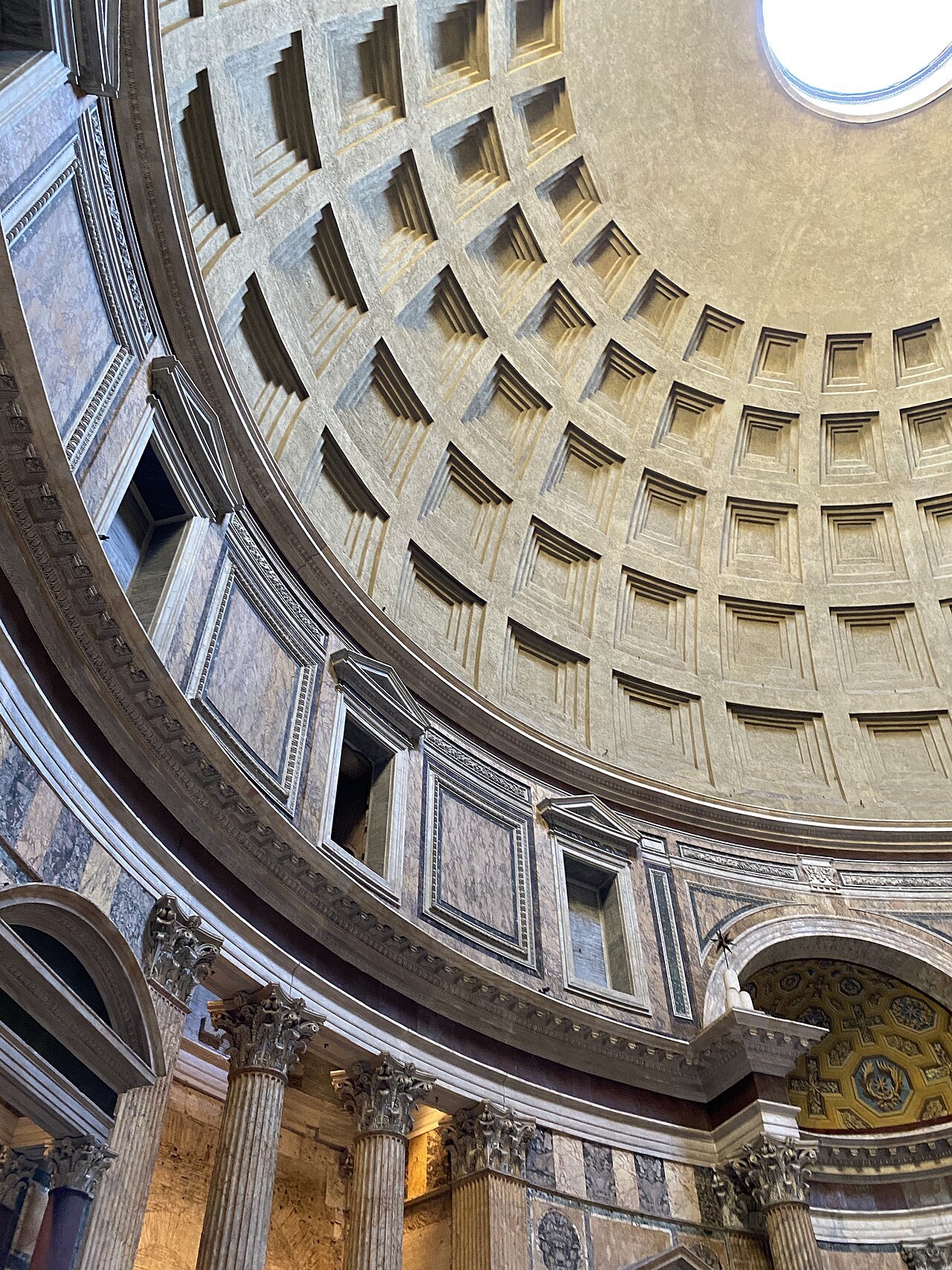
The practice continued into the modern era, when the kingdom of Italy adopted the Pantheon as a royal mausoleum after unification. Together, the Renaissance tombs and the later royal tombs make up what a visitor finds today around the rotunda walls: not ancient Romans at all, but figures drawn from roughly thirteen centuries of the building's life as a church, set beneath a dome built under the emperor Hadrian.
Raphael and the Artists of the Renaissance
The best-known tomb in the Pantheon belongs to Raphael, the painter who died in 1520 and asked to be buried here, a building he admired as a model of ancient design. His burial set a precedent: to lie near Raphael became, for later artists, a mark of honor in itself, and the Pantheon's reputation as a resting place for painters grew out of that single famous choice.
The painter Annibale Carracci, a leading figure of the Bolognese school who worked in Rome through the late sixteenth and early seventeenth centuries, is buried here as well, his tomb set not far from Raphael's. Together they made the Pantheon a gathering point for the memory of Italian painting, a building where visitors could pay respects to artists whose work still fills Rome's churches and galleries.
Two more figures from Rome's cultural history lie within the rotunda: the composer Arcangelo Corelli, whose sonatas and concertos helped define Baroque music, and the architect Baldassare Peruzzi, who designed buildings across the city during the High Renaissance. Their tombs sit among the others along the circular wall, modest in scale compared with the dome overhead, but part of the same long tradition of artistic burial here.
The Kings of a Unified Italy
After Italy was unified in the nineteenth century, the Pantheon took on a new role as a royal mausoleum. Victor Emmanuel II, the first king of a united Italy, died in 1878 and was buried here, a choice that linked the new monarchy to Rome's ancient and Christian past at a moment when the city had only recently become the nation's capital.
His successor, Umberto I, and Umberto's wife, Queen Margherita, are buried in a chapel on the side of the rotunda opposite Victor Emmanuel II's tomb. The two royal burials face one another across the circular room, each set within its own chapel, and marked out from the older Renaissance tombs by the honor guard that still stands beside them.
The monarchy itself ended in 1946, when Italy became a republic, and the last two kings of Italy died in exile abroad; neither is buried in the Pantheon. The royal tombs that remain belong only to the earlier generation of the House of Savoy, and the guard that continues to stand watch over them is a detail every visitor notices, whether or not they know the history behind it.
The Icon Above the Altar
The high altar holds something older than any of the tombs around it: a Byzantine icon of the Virgin and Child dating from the seventh century, given by the emperor Phocas to Pope Boniface IV for the building's consecration in 609. It has remained in the Pantheon ever since, a direct link back to the very day the ancient temple became a Christian church.
The altar and apse around the icon were redesigned in the early eighteenth century, long after the first Renaissance tombs had already been added to the rotunda and centuries before the royal tombs arrived. The icon and the architecture framing it are worth a pause before or after looking at the tombs, since both point to the building's long life as a place of worship rather than a museum piece.
The dedication to Saint Mary and the Martyrs also explains why the Pantheon still functions as a church and holds services, including a Pentecost tradition in which firefighters on the roof release red rose petals through the oculus. That continuing use is the same reason the tombs of artists and kings sit quietly within a building still shaped, first of all, around an altar and an icon nearly as old as the dome itself.
Visiting the Tombs Today
The tombs stand around the circumference of the rotunda, set into chapels and niches beneath the coffered dome, so a slow circuit of the walls takes in Raphael's tomb, the two royal chapels and the high altar in turn. Because the Pantheon remains a working church, the atmosphere around the tombs is that of a building still used for worship, not a stand-alone monument set aside purely for visitors.
Since July 2023, visitors have paid for entry, while those attending services keep free access, and the booking ahead page lays out what to check before going, including how to buy tickets from the official channel. Treat the whole visit, tombs included, as a visit to a church: speak quietly and dress with a degree of modesty.
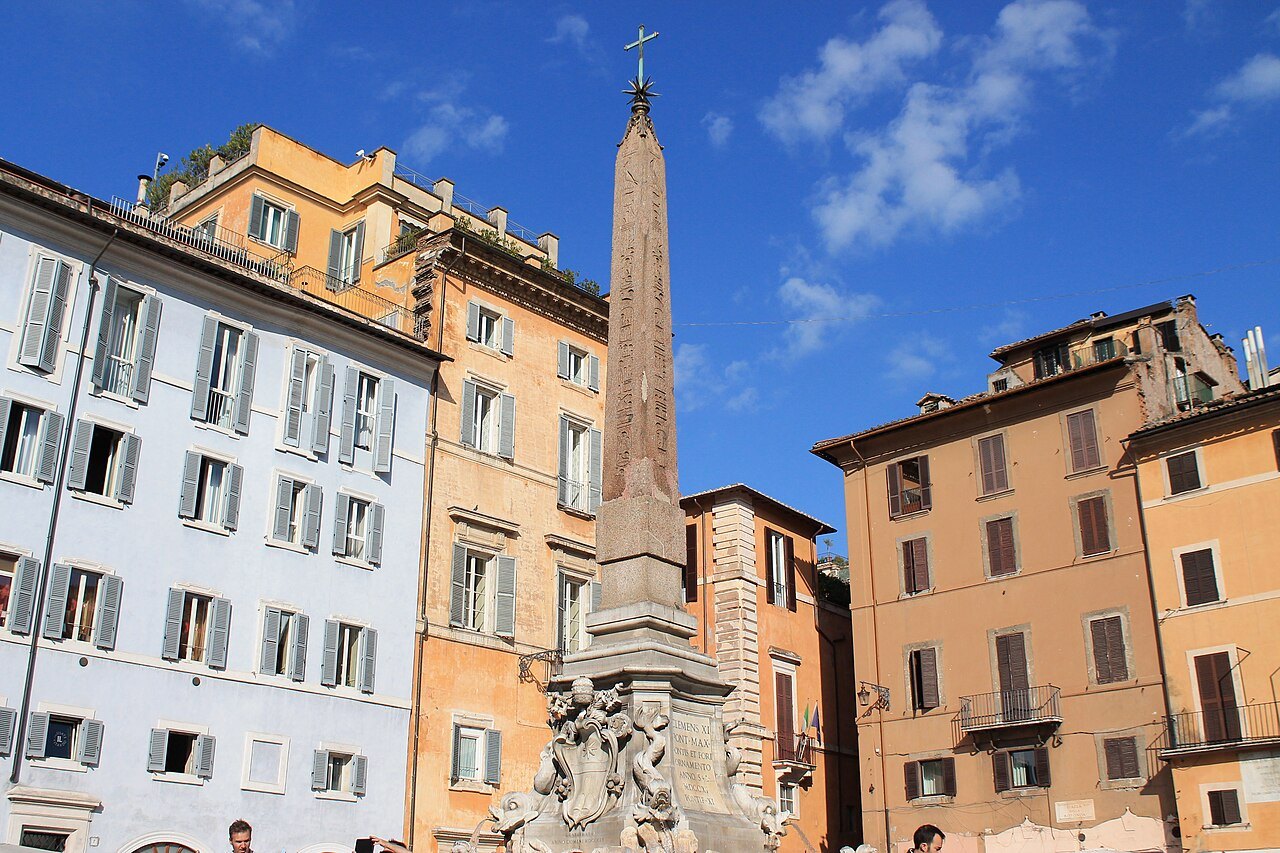
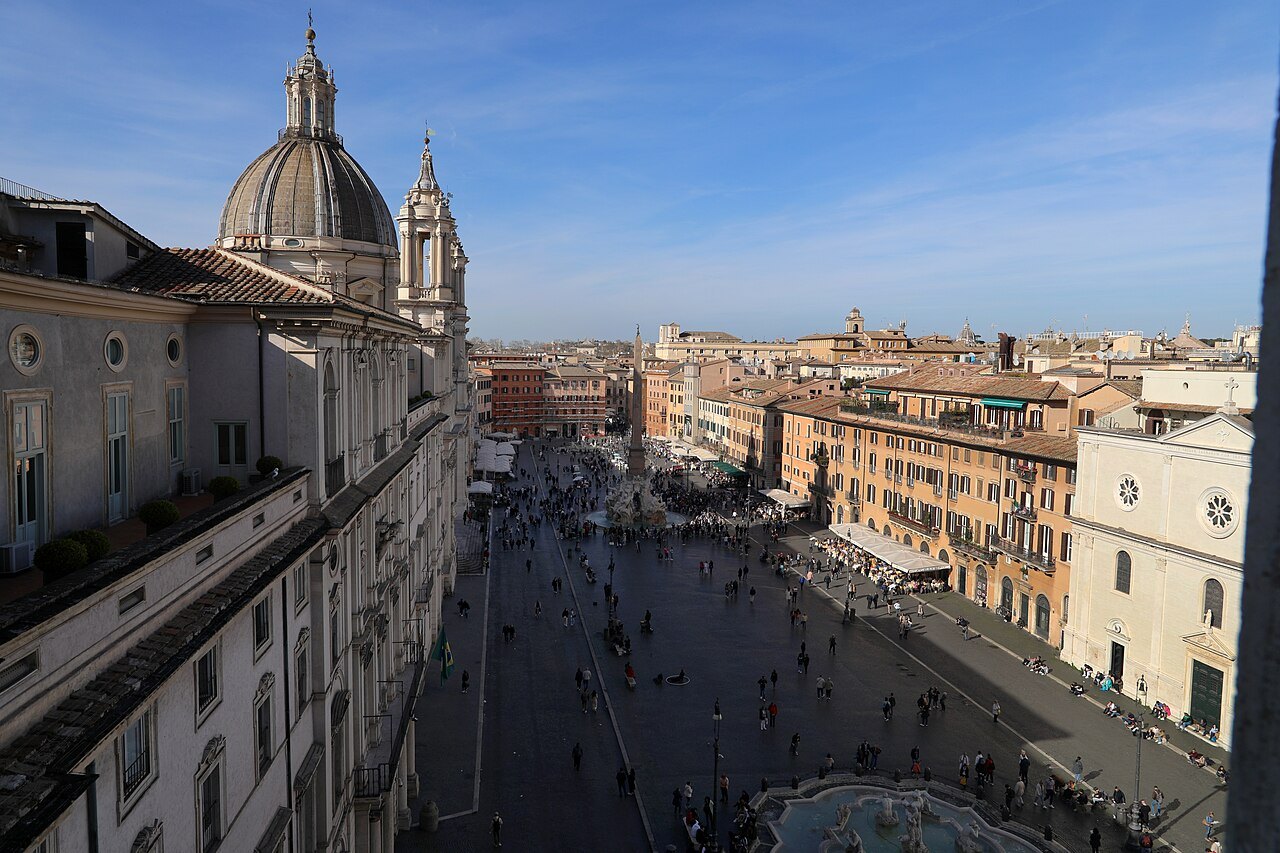
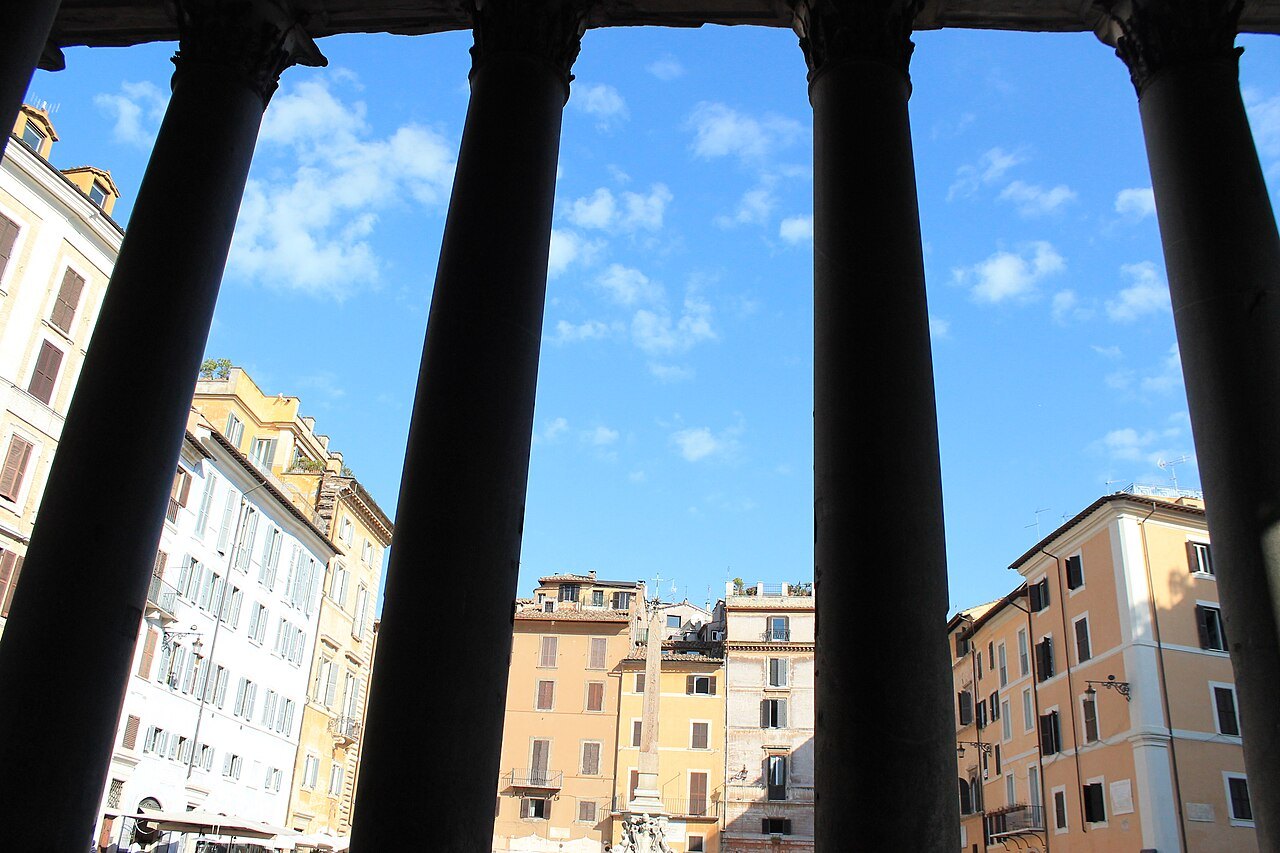
Half an hour inside is generally enough to take in the dome, the tombs and the moving patch of light cast through the oculus, though a day of passing clouds rewards a longer stay, when the beam from the opening shifts and returns. The streets around Piazza Navona make a natural approach on foot, with the Piazza della Rotonda itself a good vantage point for viewing the portico from outside.
Myths Worth Setting Aside
A long-standing Roman story claims that Pope Urban VIII melted the bronze trusses of the Pantheon's portico to cast Bernini's canopy over the altar of St. Peter's Basilica, inspiring a satirist's jab that what the barbarians did not do, the Barberini did. The pope's own accounts, studied by the archaeologist Carlo Fea, tell a different story about where that bronze actually went.
Roughly ninety percent of the melted bronze went into cannon cast for Castel Sant'Angelo, and the metal used for the canopy inside St. Peter's came from Venice, not from the Pantheon's roof. The bronze did disappear from the portico under Urban VIII in the seventeenth century, but it never reappeared in Bernini's famous work, whatever generations of Romans have preferred to believe about the Barberini pope.
The building was also never simply abandoned before filling with tombs: it became a church within about a century and a half of the fall of the western Roman Empire, which is one reason its ancient structure, inscriptions and dome survive well enough today for visitors to read them alongside the Renaissance and royal tombs added many centuries later.
Read next
More from the journal
- The PantheonWhy does the Pantheon have a hole in its roof?The Pantheon's dome has been open to the sky for nearly nineteen centuries. What the oculus does for the weight of the dome, how the builders made the concrete lighter as it rose, where the rain goes, how the light moves around the hall, and the rose petals that fall through it at Pentecost.Read the piece →
- The RioniWhy are the districts of Rome called rioni?Old Rome is divided into twenty-two rioni, numbered from Monti to Prati, and their names are carved at street corners. Where the word comes from, how fourteen ancient regions became twenty-two modern districts, what the 1744 plaques are, and how to use the numbers to find your way.Read the piece →
- The Capitoline Hill and its MuseumsHow did the statue of Marcus Aurelius survive the Middle Ages?Why the gilded bronze horseman on the Capitoline escaped the melting pots that claimed almost every other Roman emperor.Read the piece →