MICHELANGELO'S DOME, BUILT BY OTHERS
Who designed the dome of St. Peter's, and how was it built?
How Michelangelo designed St. Peter's dome, who finished it, and how its two shells were engineered and later repaired.
The answer in full
Read on
A church rebuilt, a dome imagined
Catholic tradition holds that Saint Peter was buried on this hill after his martyrdom under Nero, and the emperor Constantine raised the first basilica over the site between 319 and 333, a church over 340 feet long and entered through a colonnaded courtyard. By the Renaissance that building was ageing badly, and a line of popes, from Nicholas V to Julius II, began planning a replacement grand enough to match the ambitions of the age and the growing authority of Rome.
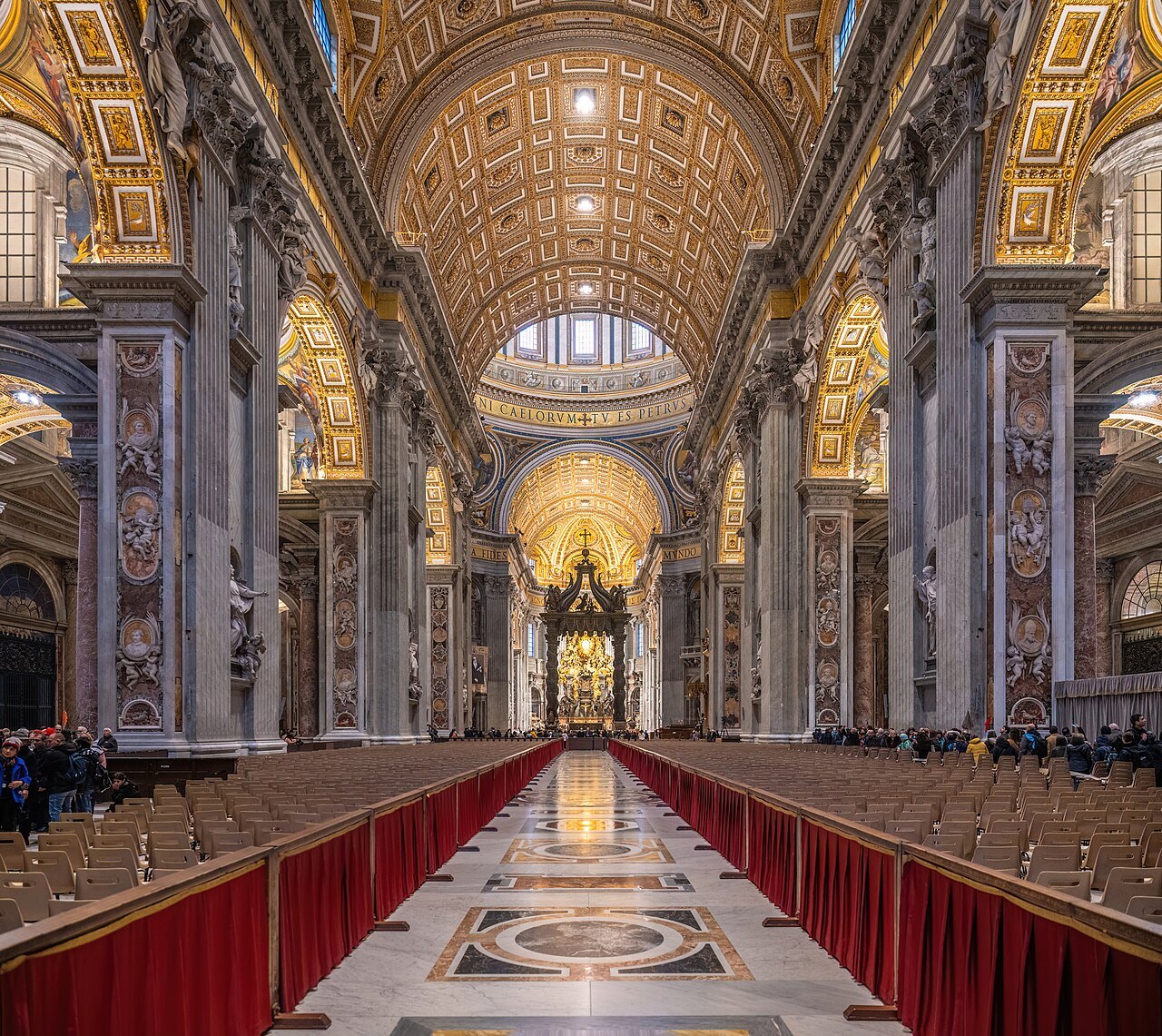
Work on the new basilica began on 18 April 1506 and did not finish until 18 November 1626, well over a century of construction. Part of the cost was raised by selling indulgences, and the scandal over one preacher's methods in selling them helped set off the Protestant Reformation, a controversy that shadowed the building almost from the start and outlasted several of the popes who had commissioned it.
Within that century of work, one element took the longest to settle and became the building's defining feature: the dome over the crossing. Its design would pass through more than one set of hands before it was finally raised, and its structure would need careful attention again long after the builders had packed up and gone home.
Michelangelo's design
The dome itself is credited to Michelangelo, who took charge of the project late in life and gave the crossing a design of unusual height and ambition, meant to be visible from across Rome rather than hidden behind the building's own bulk. It was a far bolder shape than anything the earlier planners of the new basilica had attempted, and it remains the part of the building most closely tied to his name.
Michelangelo did not live to see his design carried out. The work of finishing the dome fell to Giacomo della Porta and Domenico Fontana, who completed it in 1590, decades after Michelangelo had first drawn up plans for the crossing, turning his design into a structure that could actually be built and stand.
Domenico Fontana was one of the busiest engineers working for the popes of this period. A few years after finishing the dome, he moved the ancient Egyptian obelisk into the center of St. Peter's Square for Pope Sixtus V, an operation that very nearly ended in disaster when the ropes hauling it began to smoke under the strain.
Two shells and a daring span
The dome that Michelangelo designed and della Porta and Fontana built is not a single thickness of masonry but two shells, one nested inside the other, with a gap running between them. The inner shell is what a visitor standing in the nave sees overhead; the outer shell gives the dome its full, rounded profile against the sky and lets it read clearly from across the city.
That gap between the two shells is not only structural, it is also where part of a visit to the dome takes place today. A staircase runs up through the space between the surfaces, letting visitors pass from the level of the inner ring to the outer one near the lantern, close to the base of the cross.
The result is a dome that reads from the square below as one great unbroken curve, but is, underneath, an engineered cavity rather than solid stone, a solution that let Michelangelo's successors raise a vault of this size over the crossing without the supporting walls giving way under its own weight.
Cracks, chains, and later repairs
A dome of this size, carrying its own weight over such a wide span, put a strain on the structure that only became fully visible with time. In the eighteenth century cracks appeared in the masonry, a sign that the dome was slowly pushing outward at its base under the pull of its own mass.
The fix was direct and borrowed from an old trick of carpentry: iron chains were set between the two shells and run around the drum, binding it the way metal hoops bind the staves of a wooden barrel. The chains pulled the structure back together and stopped the cracks from opening further.
Those chains are still in place today, unseen, doing the same job inside a structure that has stood for more than four centuries. They are not visible to anyone standing in the square below, but they remain part of what keeps the dome Michelangelo imagined still standing firm over the crossing.
The dome on Rome's skyline
Once finished, the dome became the single most recognizable feature of Rome's skyline, its lantern and cross rising above every other roofline in the historic center. From many points across the city, the dome is the one landmark that orients a visitor toward the Vatican, even when St. Peter's Square itself is out of sight.
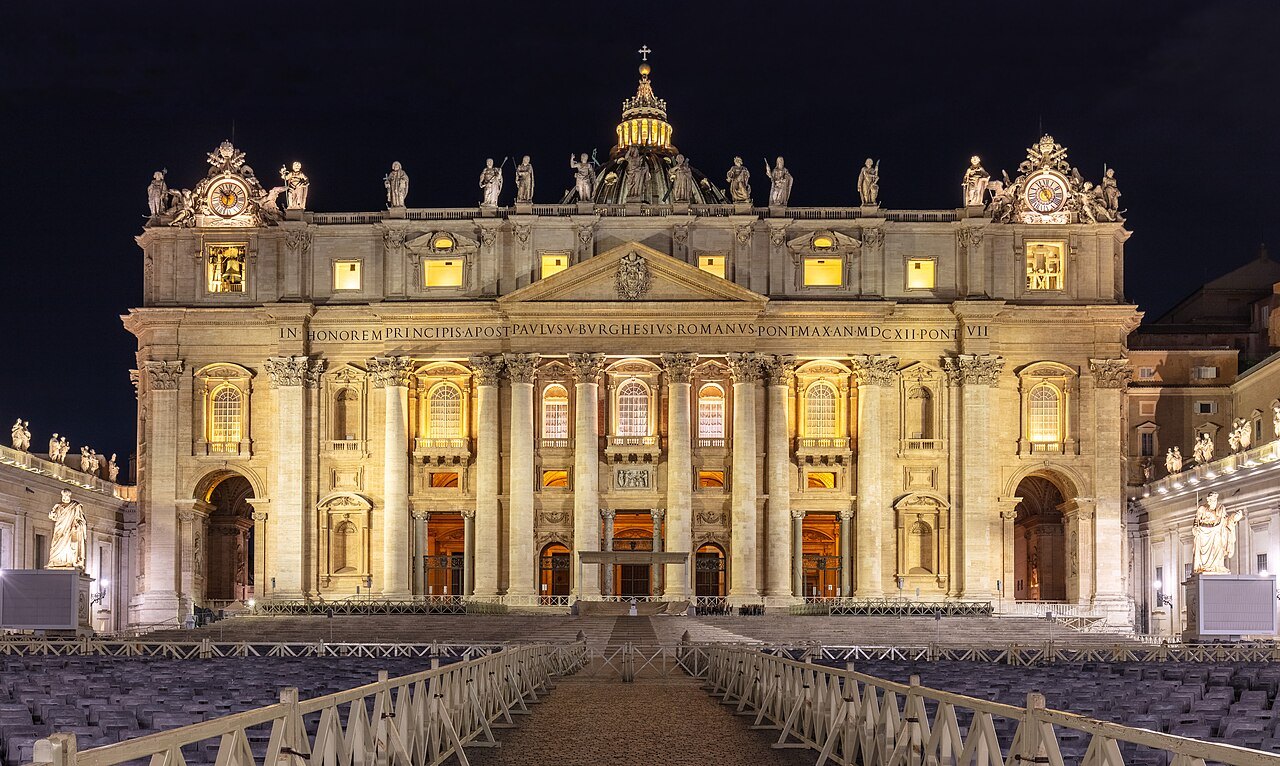
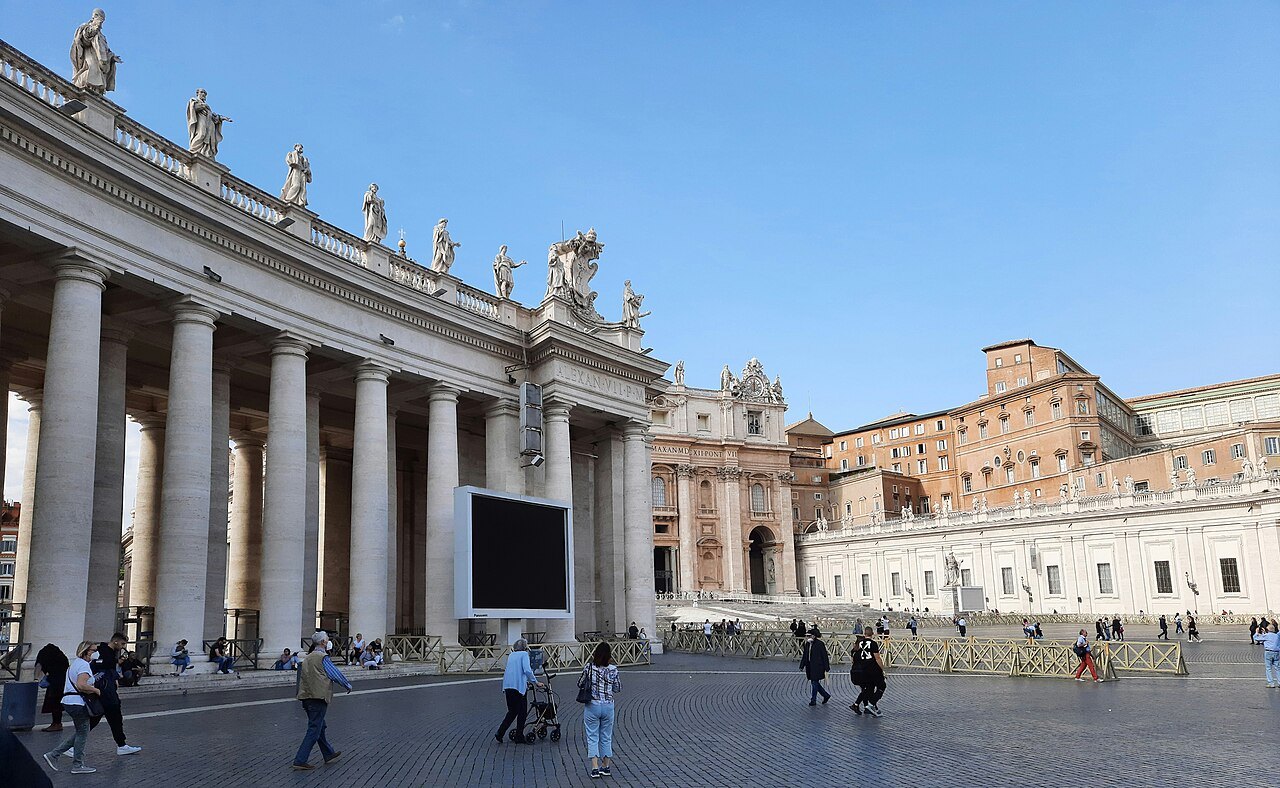
Up close, though, the dome is not the first thing a visitor sees. Carlo Maderno's façade, finished in 1612 and nearly 376 feet wide, is wide enough that it actually hides the dome from anyone standing near the front of the church, which is why the best view of it often comes from farther back in the square, or from across the river.
That gap between the distant silhouette and the close-up view is part of the building's long, layered history: a dome designed by Michelangelo to be seen from across Rome, fronted decades later by a façade whose sheer width works against it at close range, a trade-off historians of the building still discuss.
Climbing the dome today
The dome can be climbed, and the visit is arranged through the basilica's own website, which handles bookings for a timed slot. Visitors choose between taking an elevator partway up to the terrace level or climbing the stairs the whole way; either route then continues on foot toward the top of the dome.
The climb itself involves a long run of stairs, including a narrow, curving staircase that runs up between the dome's two shells toward the lantern, so it is not an easy visit for anyone unsteady on tight, uneven steps, or pressed for time before another appointment that day.
The reward comes in two stages. The inner ring looks almost straight down into the nave, giving a sense of the basilica's full height that is impossible to get from the floor. The outer ring, near the lantern, opens onto St. Peter's Square, the colonnades, and the wider rooftops of Vatican City and Rome beyond.
Anyone planning the climb alongside a visit to the basilica or the Vatican Museums on the same day should check current arrangements directly with the basilica's own website, since the dome is booked separately and on its own schedule; see booking ahead for how reservations across the Vatican sites generally work.
Read next
More from the journal
- Vatican CityWhy is Vatican City a separate country?St. Peter's and the Vatican Museums stand in the smallest country in the world, not in Italy. How a thousand years of papal rule ended in 1870, why the popes called themselves prisoners, what the Lateran Treaty of 1929 created, and what the border means for a visitor today.Read the piece →
- The Borghese Gallery and its GardensHow did Bernini make marble look like skin?Inside the Borghese Gallery, where Bernini carved marble into skin, bark, and breath.Read the piece →
- Piazza del Popolo and the PincioHow did an Egyptian obelisk come to stand in Piazza del Popolo?How Augustus, Domenico Fontana and Pope Sixtus V brought a pharaoh's obelisk to the center of Piazza del Popolo.Read the piece →