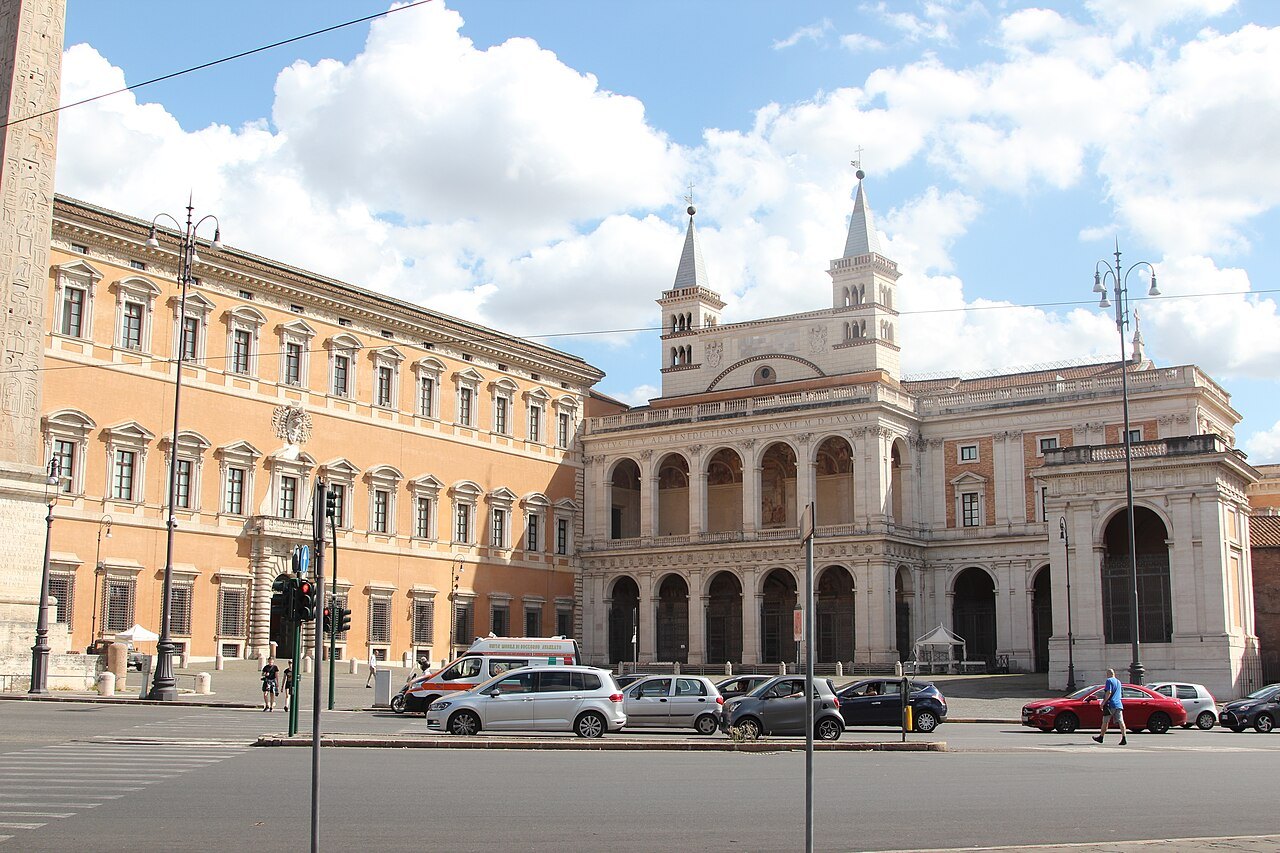
HOLY STAIRS AT THE LATERAN
Why do pilgrims climb the Holy Stairs on their knees?
The legend, the relic, and the penance behind the Scala Sancta's knee-climb across from St. John Lateran.
The answer in full
Read on
A staircase from Christ's trial
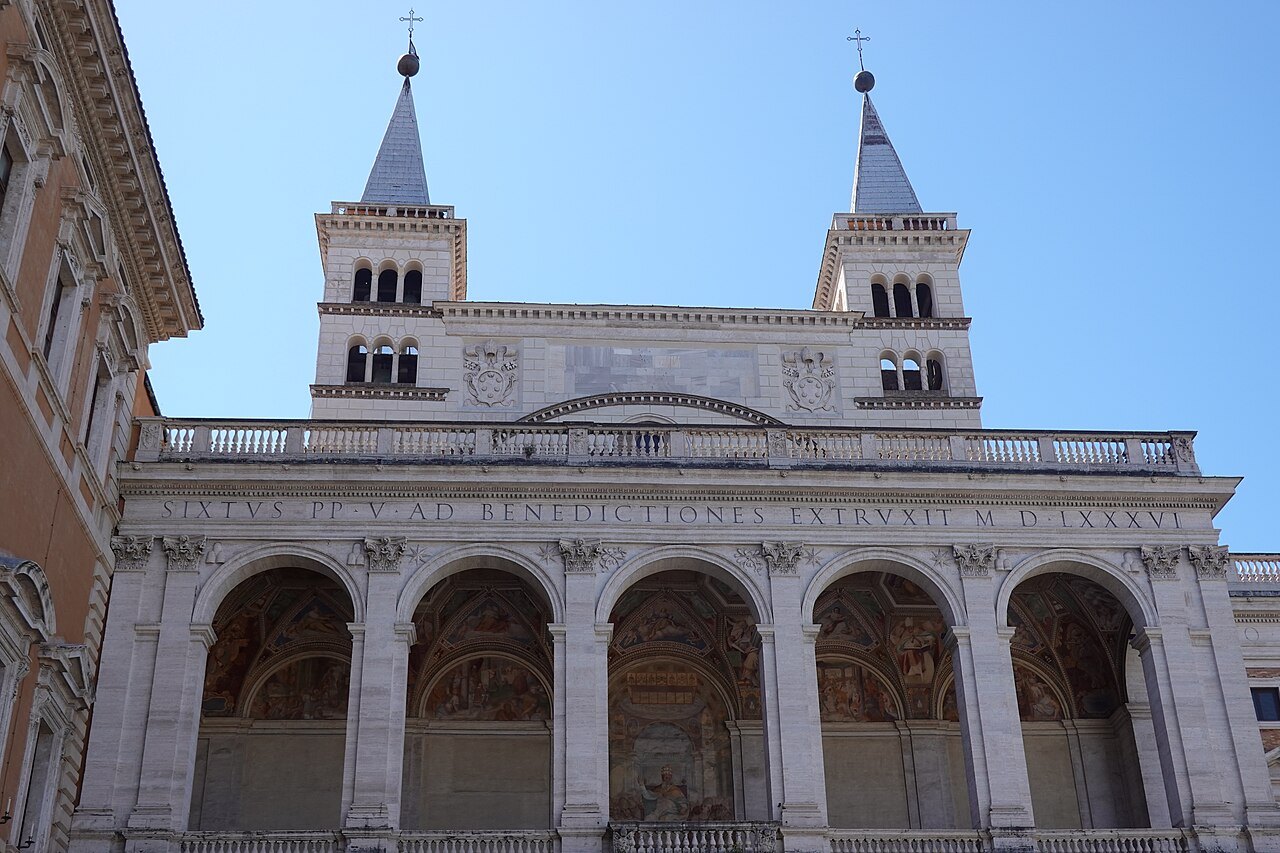
Across the road from the cathedral stands the Scala Sancta, the Holy Stairs: twenty-eight steps of white marble that, by Catholic tradition, once rose to the house of Pontius Pilate in Jerusalem. Christ is said to have climbed them on the way to his trial, the moment that set the Passion in motion. For believers, that makes the steps one of the most direct physical links anywhere outside the Holy Land to the hours before the crucifixion.
The claim rests on tradition rather than on any written record contemporary with the event, and no archaeological evidence ties this particular marble to first-century Jerusalem. Visitors who want certainty should treat the stairs as the Church itself does: a relic held by faith, approached in the spirit of devotion rather than examined as a verified artifact.
What matters to pilgrims is not a scholarly dating but the gesture of retracing, however symbolically, steps tradition assigns to Christ himself. The stairs are approached with the body, on the knees, rather than simply viewed with the eyes, which sets them apart from almost everything else in the Lateran complex.
The legend of Saint Helena
Medieval legend credits Saint Helena, mother of the emperor Constantine, with bringing the stairs from Jerusalem to Rome. Helena is remembered in Christian tradition as a tireless collector of relics connected to Christ's life and death, and the Scala Sancta is counted among the objects her search is said to have recovered for the city.
The story cannot be verified against independent evidence, and no source treats it as settled history rather than as pious tradition. That gap between legend and proof is typical of relics tied to Helena across Christendom, whose name recurs wherever a fragment of the Passion is said to have reached the West from Jerusalem.
None of this uncertainty has dampened the devotion built around the stairs over many centuries. Pilgrims come to them as a relic to be approached with reverence, not as a monument whose claims must first survive a historian's cross-examination, and the practice of climbing on the knees reflects exactly that attitude.
An act of penance, not a climb
Kneeling before an altar is ordinary Catholic practice, repeated in parishes everywhere. Ascending an entire staircase on the knees is the same gesture carried to an extreme, a deliberate, physically demanding act of penance meant to mirror, in some small way, the suffering tradition assigns to Christ on those very steps.
The discomfort is the point rather than an unfortunate side effect; ease would defeat the purpose of the exercise. Climbing upright, as anyone could do in moments, would turn the stairs into a mere passage from one floor to another instead of an act of devotion undertaken at some personal cost.
Pilgrims commonly pause on each of the twenty-eight steps to pray before moving to the next, stretching what would otherwise be a matter of seconds into a slow, deliberate ascent. The practice is private prayer rather than public performance, carried out quietly and without display even when other visitors are nearby.
Visitors who are simply curious, rather than making the climb themselves, are expected to stay quiet and keep out of the way of those on their knees. The staircase functions as an active place of prayer rather than a sight to be photographed at close range while others are mid-devotion.
Marble worn, then protected
For centuries the stairs took the direct weight and friction of countless kneeling pilgrims, wearing at the ancient marble itself. Since the early eighteenth century the steps have been cased in wood for protection, so for most of the past three centuries what the knees actually touch has been a wooden covering rather than the stone tradition prizes.
The casing was briefly removed after a restoration completed in 2019, letting visitors see the marble underneath before it was covered again for protection. That short window offered a rare look at the surface pilgrims had worn smooth over the centuries, evidence in itself of how many pilgrims had passed over it before.
The wood changes nothing about the devotion. Pilgrims still climb in exactly the same manner, step by step and on their knees, because the practice has always centered on the act of penance and prayer rather than on direct contact with one particular surface of ancient stone hidden beneath the boards.
Sixtus V and a destination at the top
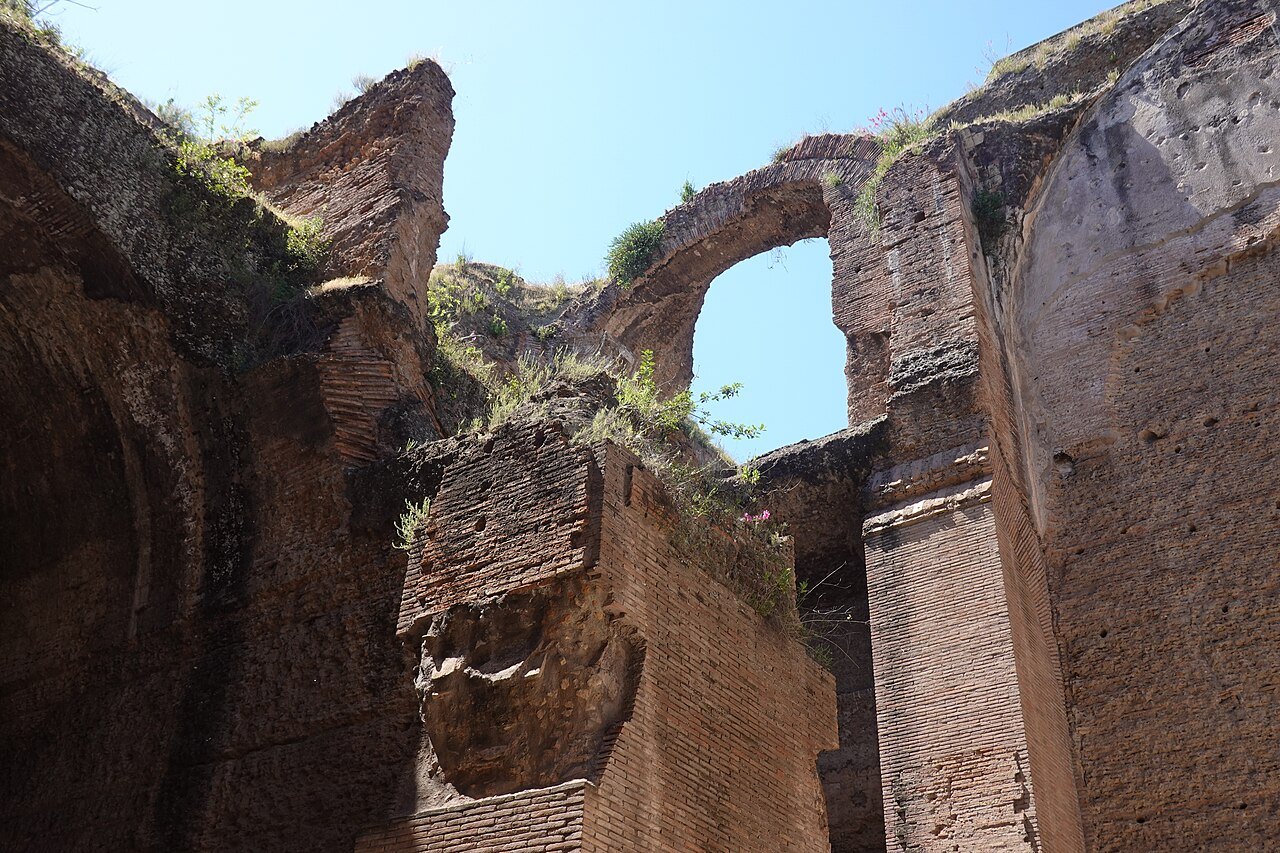
The stairs were rebuilt in their present position in 1589 under Pope Sixtus V, the same pope responsible for much of the rebuilding around St. John Lateran in the late sixteenth century. He gave the climb a fixed destination rather than leaving it as a freestanding gesture that could be performed anywhere in the city.
Sixtus set the stairs to lead directly to the Sancta Sanctorum, the Holy of Holies, which had served for centuries as the private chapel of the early popes. Arriving there on one's knees was understood as arriving at something specific and sacred, not merely finishing a physically difficult exercise for its own sake.
That link between the climb and its destination is part of why the Holy Stairs still draw pilgrims rather than only tourists. The effort of the ascent is tied, step by step, to a known and revered endpoint, which gives the whole practice a shape closer to pilgrimage than to penance performed in isolation.
What waits at the top
The Sancta Sanctorum takes its name from the many precious relics once kept there, a chapel small in size but outsized in the devotion attached to it. Chief among its treasures is an icon of Christ that legend holds was not made by human hands, a claim placing it among the most venerated objects associated with the Lateran.
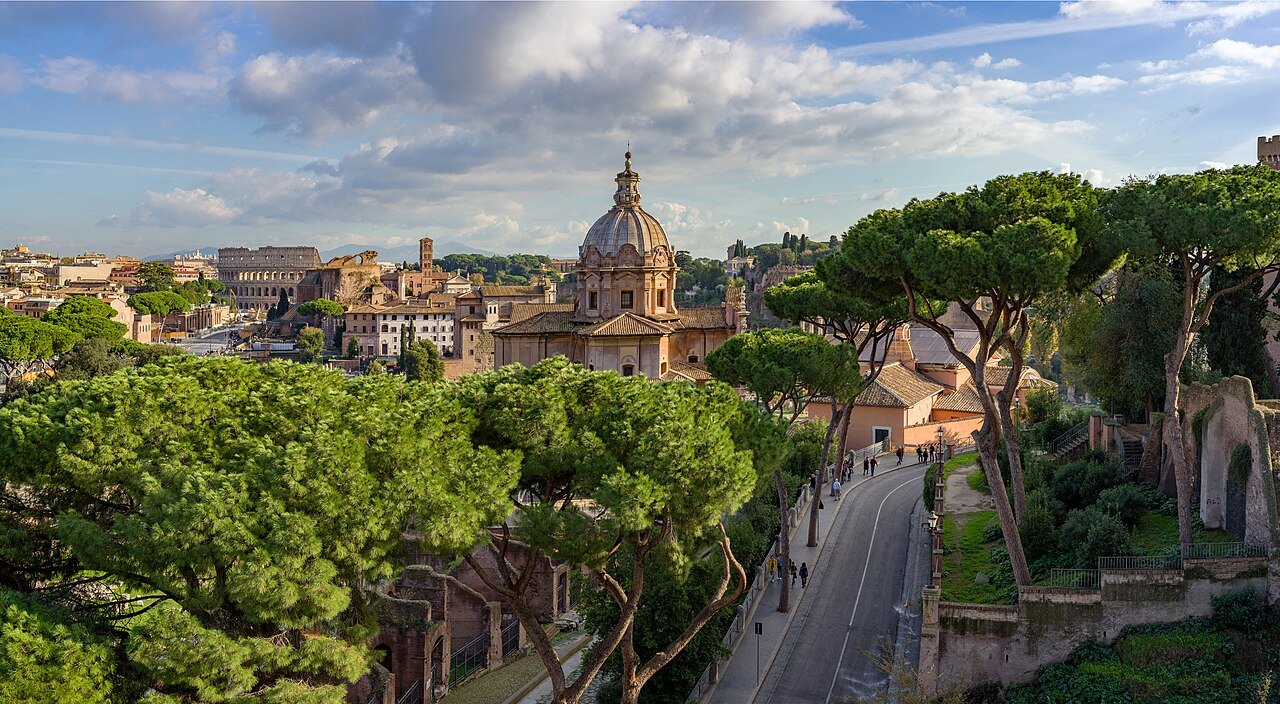
For many pilgrims that icon is the true goal of the climb, with the stairs serving as the penitential approach rather than as an end in themselves. Reaching the top on one's knees carries the sense of arriving before something sacred, having paid a physical cost to stand, or kneel, in its presence.
This gives the whole practice a shape familiar from pilgrimage more broadly: hardship undertaken on the way toward contact with something held sacred, rather than hardship for its own sake. The stairs and the chapel at their top work as a single unit of devotion rather than as two separate stops on a tour.
A devotion beside a grand basilica
St. John Lateran itself is the cathedral of Rome, the seat of the pope as bishop of the city rather than merely a grand church, and the oldest public church in Rome, founded in 324. Part of the complex rises over the remains of an imperial cavalry fort, a reminder of how much history the site carries before Christianity ever arrived there.
The Holy Stairs sit across the road in the shadow of that much larger building but follow their own, older rhythm of private prayer rather than public liturgy. That is part of why they are better understood as a place of devotion first and a sight only second, distinct from the basilica's formal grandeur next door.
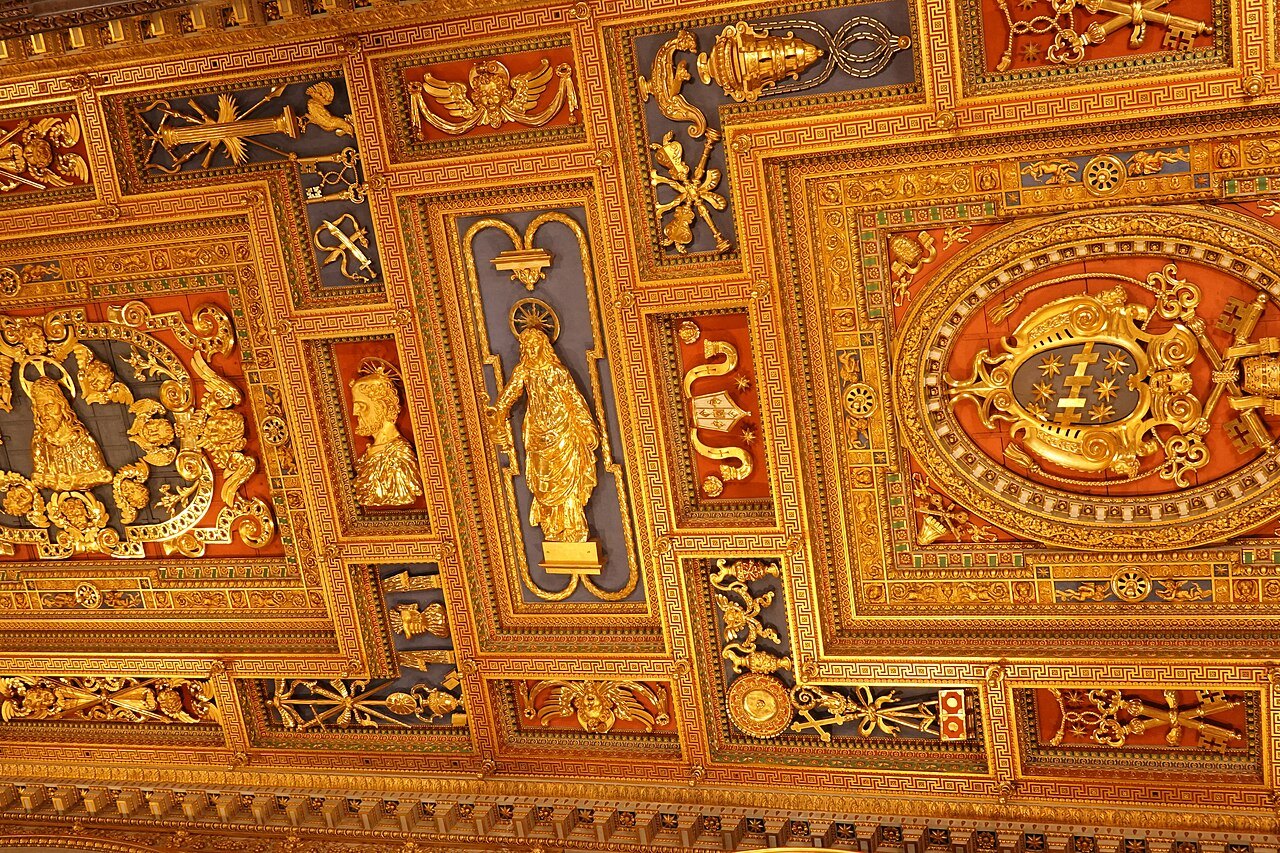
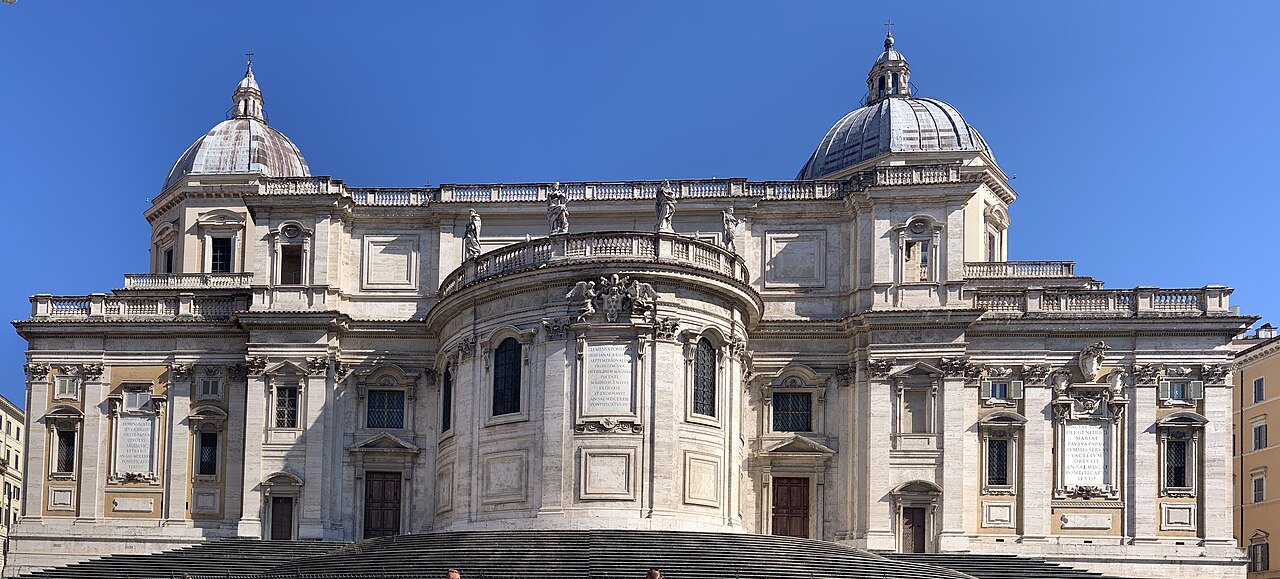
Visitors who want the fuller picture of the complex, including the basilica's history and how to approach it with respect, should read the main page for St. John Lateran. Those extending the morning eastward can pair it with the other papal basilica nearby, Santa Maria Maggiore.
Read next
More from the journal
- Santa Maria MaggioreWhy does it snow in Santa Maria Maggiore every August?The legend of a summer snowfall that gave Santa Maria Maggiore its site, its name, and its yearly feast.Read the piece →
- Castel Sant'AngeloHow did the pope escape to Castel Sant'Angelo in 1527?How Pope Clement VII fled along a fortified corridor to Castel Sant'Angelo during the 1527 sack of Rome.Read the piece →
- Piazza del Popolo and the PincioHow did an Egyptian obelisk come to stand in Piazza del Popolo?How Augustus, Domenico Fontana and Pope Sixtus V brought a pharaoh's obelisk to the center of Piazza del Popolo.Read the piece →