UNDERGROUND GALLERIES OF THE DEAD
How do you visit the catacombs of Rome?
A practical guide to visiting the Catacombs of San Callisto and San Sebastiano on the Appian Way.
The answer in full
Read on
Beneath the Road: Why the Catacombs Exist
Romans buried their dead outside the city walls, a practice that pushed cemeteries onto the roads leading out of Rome, the Appian Way among them. Along its first miles lie three catacombs of Roman and early Christian origin and one of Jewish origin, cut into the soft rock below the fields and vineyards south of the city. They served as burial places for ordinary families, for Christian communities under persecution, and eventually for popes and martyrs.
The word catacomb describes a gallery cut below ground and lined with niches for bodies, stacked one above another along narrow corridors rather than gathered into individual tombs. So many burial networks opened along the Appian Way that more than fifty have since been identified beneath the countryside south of Rome. Most remain closed to the public and reserved for archaeologists, though a few have been organized to receive visitors.
Not all of these burial networks are Christian. One of the catacombs along the road is Jewish in origin, a reminder that burying the dead outside the city walls was a practice shared across Rome's ancient communities rather than limited to one faith, and it stands as evidence of the varied communities that once lived and buried their dead along this stretch of road.
Which Catacombs Can Be Visited
Only a handful of Rome's more than fifty catacombs are organized for visitors, and two of the best known lie directly on the Appian Way: the Catacomb of San Callisto and the Catacomb of San Sebastiano. Both sit within the first few miles of the road, not far from the gate at Porta San Sebastiano, and each is run independently, with its own rules and its own guided visits.
A catacomb cannot be wandered through alone; visitors are shown around in a group, led by a guide who points out the burial niches, the faded paintings, and the chambers set aside for popes and martyrs. Because the galleries run on several levels underground, a guide also keeps the group oriented in passages that would otherwise be difficult to navigate without local knowledge.
Because visiting arrangements can change, and each catacomb sets its own rules for guided tours, treat this page as a starting point rather than a substitute for checking directly with San Callisto or San Sebastiano before arriving, especially if traveling as a group or hoping to join a visit in a particular language.
The Catacomb of San Callisto
The Catacomb of Callixtus takes its name from the deacon Callixtus, who administered the cemetery before his election as pope. Under his direction it grew into the official cemetery of the Roman Church, and it remains the most extensive catacomb on the Appian Way, covering about ninety acres across four underground levels.
Galleries reach more than sixty feet below the surface at their deepest point, a labyrinth of corridors lined with burial niches cut directly into the rock. Among its chambers is the Crypt of the Popes, where a number of third century bishops of Rome were buried, making the site one of the most important for the early history of the Church.
Because of its scale, a visit to San Callisto covers only a portion of the full network, following a set route chosen by the guides. The experience still gives a sense of how extensive the Christian cemeteries beneath the Appian Way became over the centuries the catacomb remained in continuous use.
The Catacomb of San Sebastiano
The Catacomb of San Sebastiano lies beneath the church of the same name, one of the Seven Pilgrim Churches of Rome and itself a stop on the Appian Way. The catacomb took its current name from the saint, though the site was already used for burials before that association developed.
Visitors descend from the church above into galleries that, like those at San Callisto, are organized for guided visits rather than open exploration. The combination of an active church at street level and a burial network below gives San Sebastiano a different character from San Callisto, where the catacomb itself makes up the whole of the visit.
Both catacombs stand close together within the first few miles of the road, so visitors can reach either, or both, on the same outing. Many combine a stop at one or both with the longer walk out from the city gate, pairing a short time underground with a longer stretch spent among the ruins above ground.
What You Will See Underground
Inside either catacomb, the core experience is much the same: narrow corridors cut through soft rock, lined on both sides with rectangular niches once sealed with marble or terracotta slabs, each holding the body of one of the dead. Some niches still carry the simple identifying marks that Roman and early Christian families used, names, symbols, and occasional dates.
Larger family chambers open off the corridors here and there, sometimes decorated with wall paintings of a kind rarely preserved above ground in Rome, work that survived largely because it was sealed away from light and weather for centuries. The paintings and inscriptions found in these chambers remain primary sources for historians studying the earliest Christian communities in the city.
A guide usually points out specific features along the route: chambers linked to particular saints or popes, inscriptions of interest, or the technique by which the galleries were originally dug. Because the routes shown to the public follow a fixed path, what a visitor sees depends on which catacomb is chosen and on the route the guide follows that day.
Fitting a Catacomb into a Walk on the Appian Way
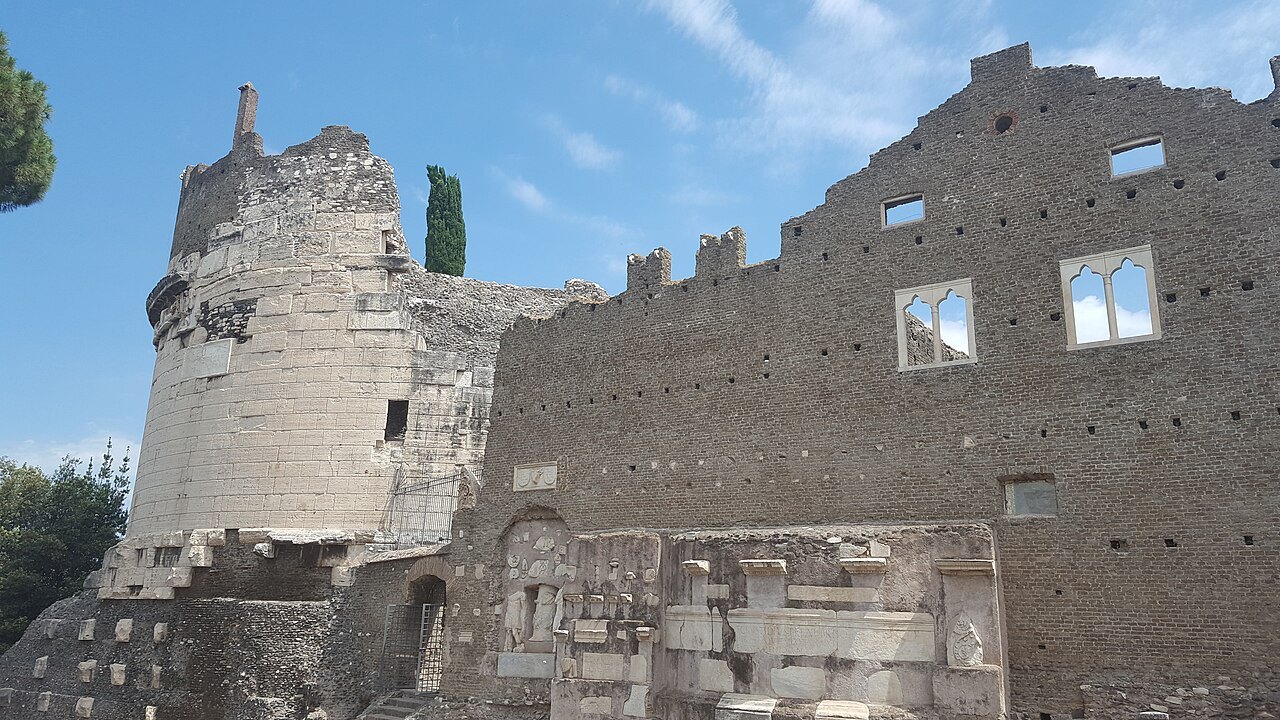
The catacombs sit close to other landmarks on the first stretch of the Appian Way, within reach of a single outing from inside the city. Starting at Porta San Sebastiano, a visitor passes the small church of Domine Quo Vadis, linked in Christian tradition to Peter's meeting with Christ, before reaching the turning for either catacomb.
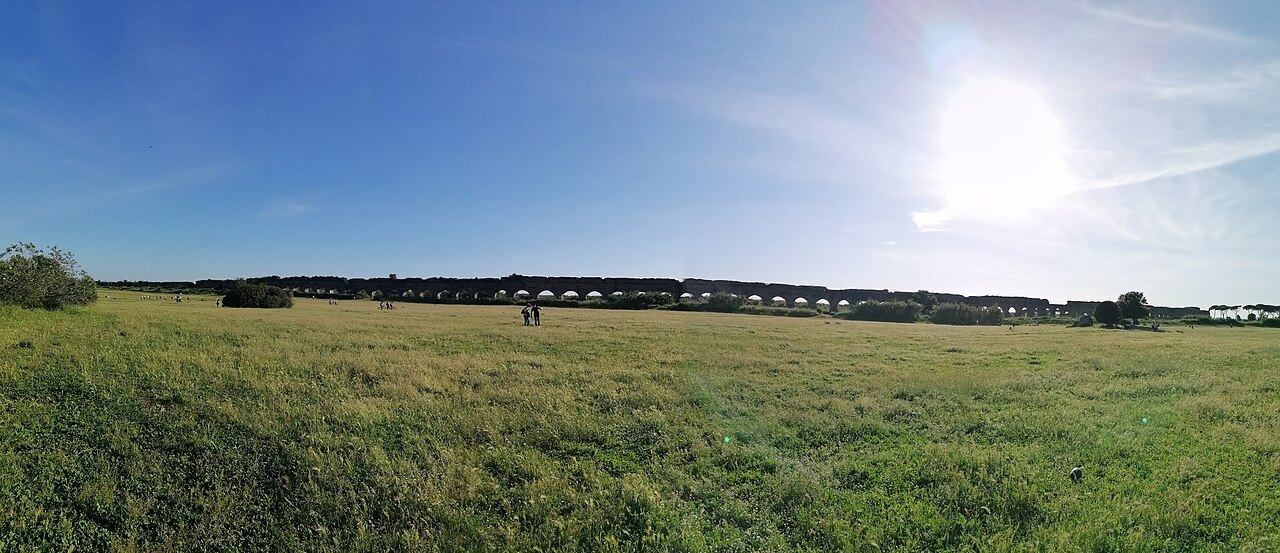
Beyond the catacombs, the same stretch of road continues toward the complex built by the emperor Maxentius and the Tomb of Caecilia Metella, so a stop underground fits naturally into a longer walk rather than standing apart from it. Visitors planning to cover more of the road on foot should allow for the uneven old paving described on the Appian Way page.
Because the two catacombs lie only a short distance apart, choosing between them, or visiting both, mostly comes down to time and to each site's own schedule of guided visits, which should be checked directly with the catacomb in question rather than assumed in advance, particularly for anyone traveling with children or in a larger party.
Planning the Stop
Each catacomb operates its own guided visits, and the details, group sizes, languages offered, how a tour is organized, are set independently rather than through a single ticket covering the whole Appian Way. Checking the official site of San Callisto or San Sebastiano ahead of time is the most reliable way to know what a particular day's visit will involve.
Visitors arriving from central Rome can combine the trip with the practical information on getting around, and those building a longer day out of the Appian Way may want to pair it with other sights listed on the sights page or with the attractions described for the park beyond the Aurelian Walls.
The catacombs reward unhurried attention rather than a rushed stop wedged between other sights. The guided format sets the pace, so building in time before and after, for the walk to and from the gate, makes for an easier visit than trying to fit it into a crowded itinerary built around too many stops in one afternoon.
Read next
More from the journal
- The Appian WayHow do you walk the Appian Way?A mile-by-mile guide to walking the Appian Way, from Porta San Sebastiano out past the tombs and catacombs.Read the piece →
- St. Peter's Basilica and SquareIs Saint Peter really buried under the basilica?What tradition, old building choices, and the basilica's own layout suggest about Saint Peter's burial place.Read the piece →
- Piazza del Popolo and the PincioHow did an Egyptian obelisk come to stand in Piazza del Popolo?How Augustus, Domenico Fontana and Pope Sixtus V brought a pharaoh's obelisk to the center of Piazza del Popolo.Read the piece →