THE LEONARDO EXPRESS, THE FL1 AND THE WHITE TAXIS
How do you get from Fiumicino Airport to central Rome?
Most visitors take the Leonardo Express, the non-stop train from the airport's own station to Roma Termini. How to find the train, when the regional FL1 line makes more sense, how to recognize an official taxi and its fixed fare to the center, and what to ignore on the way out.
The answer in full
Read on
The short answer
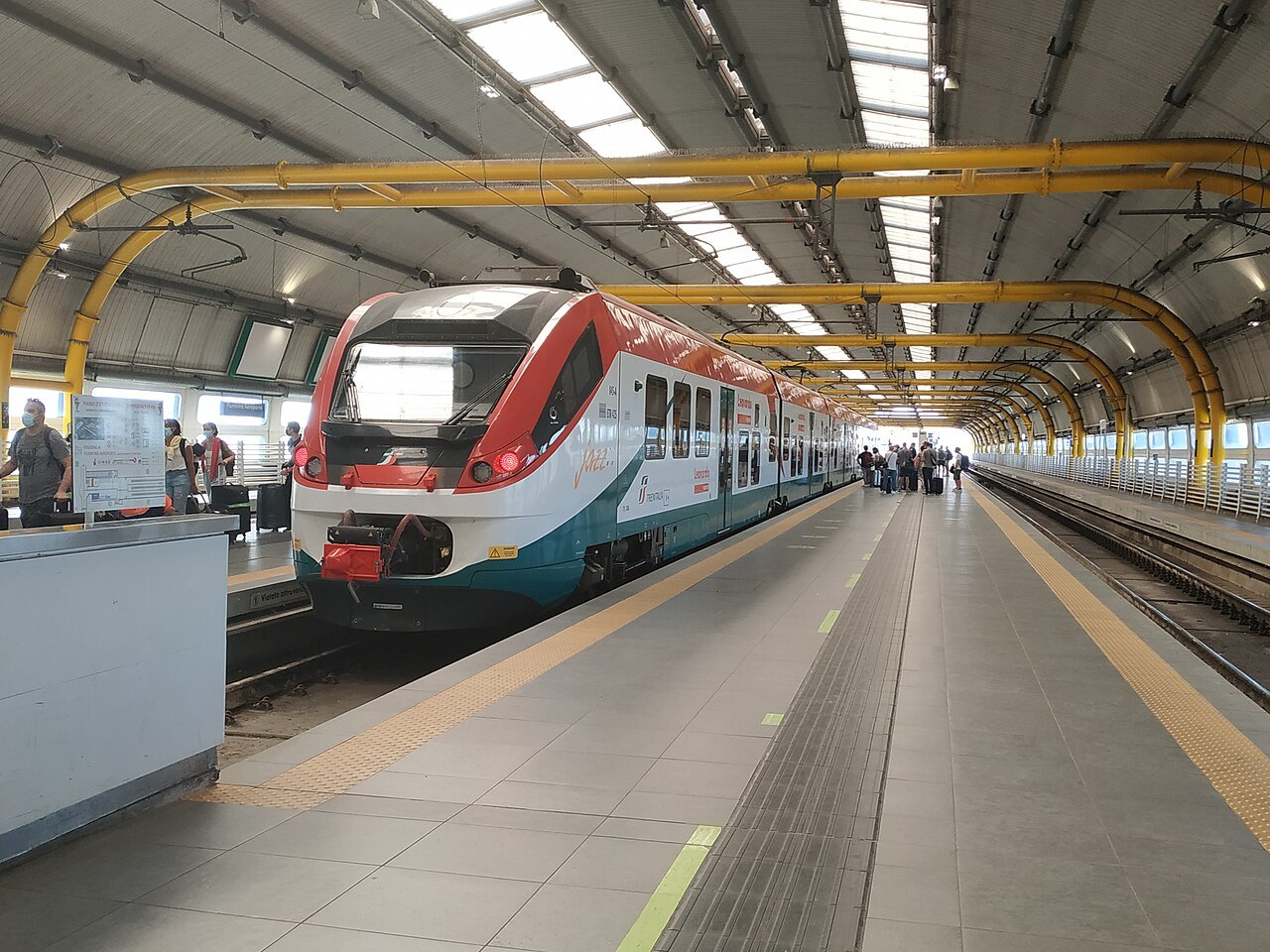
Take the train. Fiumicino has its own railway station inside the airport, and from it the Leonardo Express runs non-stop to Roma Termini, the city's main station, in thirty-two minutes, with a departure every fifteen minutes through the day. From Termini, both Metro lines, the city buses and a taxi rank take you the rest of the way.
If your hotel is near another station, such as Tiburtina, the regional FL1 line may suit you better. If you arrive late, have heavy luggage or are traveling as a group, an official taxi at a fixed fare to the historic center is the simplest answer. Everything else is detail, and the details follow.
The airport itself
Leonardo da Vinci–Fiumicino is Rome's main airport and the busiest in Italy, on the coast at Fiumicino, about twenty miles from the center. It opened in 1961, replacing Ciampino as the city's main airport, and it is managed by Aeroporti di Roma, whose website is the place to check terminals and services before you fly. It is named for Leonardo, and reproductions of his works and inventions are displayed in the terminals.
The terminals are connected, and the two points you need are easy to find: the taxis wait at the Arrivals level of Terminals 1 and 3, and the railway station is close to the terminals, reached on foot by following the signs for trains. The airport operator also runs buses from numbered stands outside, useful after the last train.
Finding the train
The Fiumicino Aeroporto station stands inside the airport area, near the arrival and departure terminals. Follow the signs for rail connections from the baggage hall. Tickets are sold on Trenitalia's website and app, at the ticket offices in the station, at self-service machines in the airport and the station, and at authorized travel agencies and newsstands.
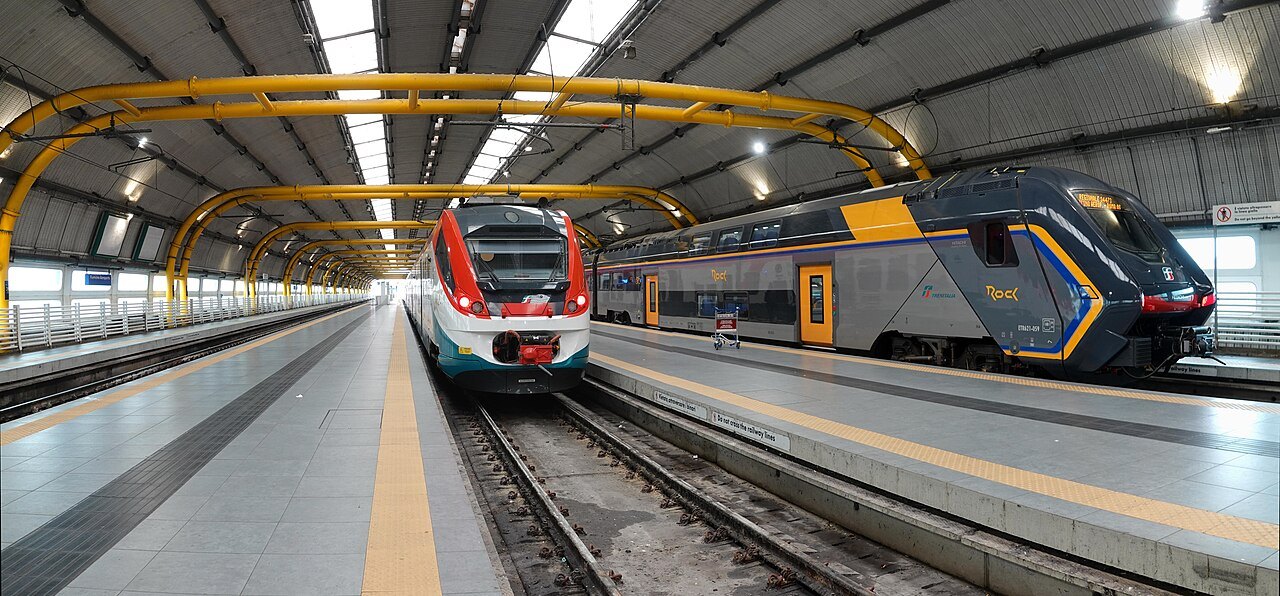
Two kinds of train leave from the same station. Make sure you know which one you want before you buy, because the tickets are different. The airport operator's own advice is simple: travelers going to Termini take the Leonardo Express; those heading for other Rome stations can take the FL1 regional trains.
The Leonardo Express
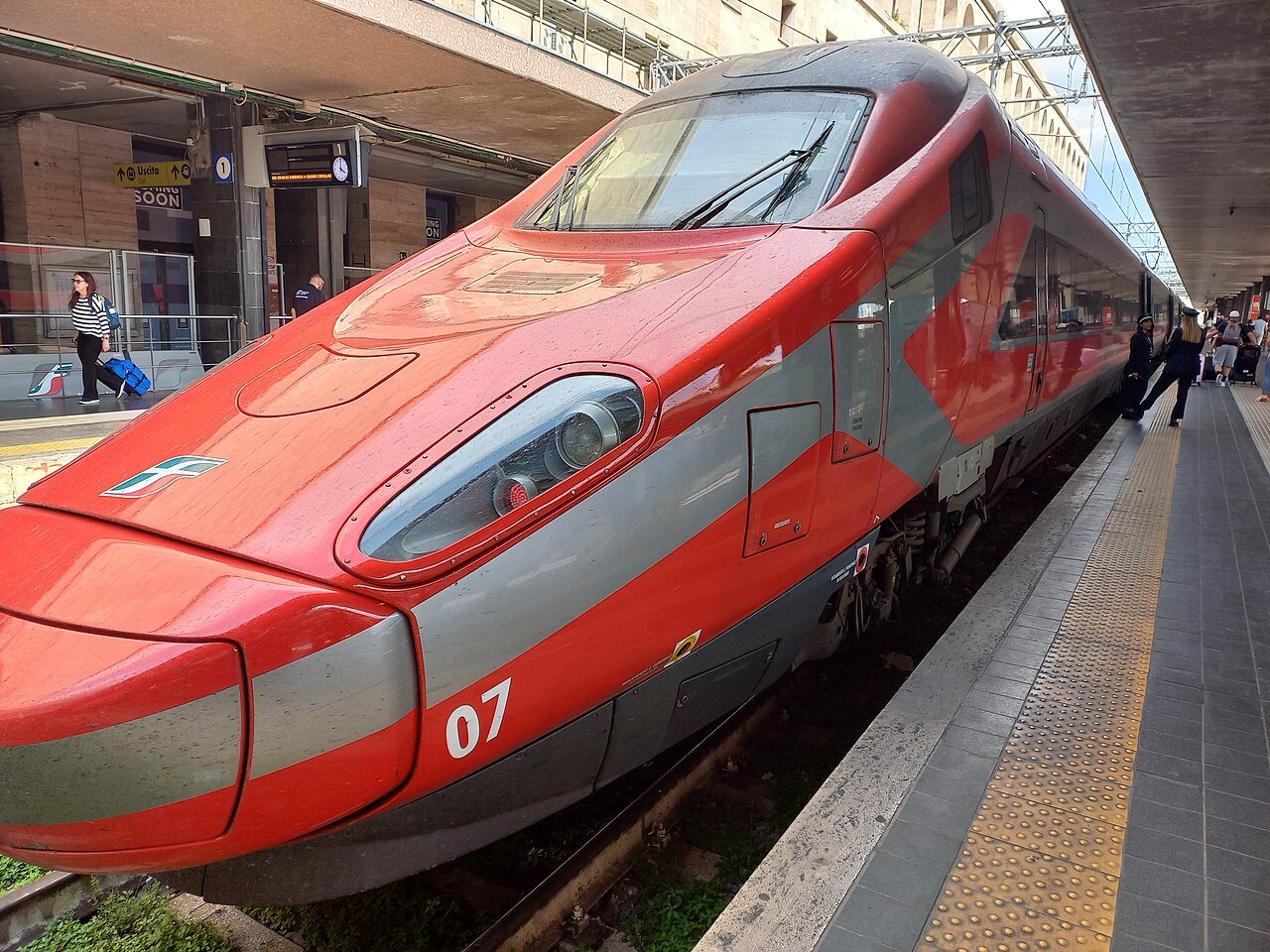
The Leonardo Express is a dedicated airport service, run by Trenitalia since 1989, that links the airport with Termini without stopping. The trains, in an airport livery of white, red and green, cover the twenty-three miles in thirty-two minutes, and they run every fifteen minutes for most of the day, with less frequent trains at some times.
At Termini you arrive in Italy's busiest station, where Metro lines A and B cross and the city's main bus station fills the square in front. Line A runs toward the Spanish Steps and the Vatican; line B toward the Colosseum. The taxi rank is outside the main entrance.
The FL1 regional train
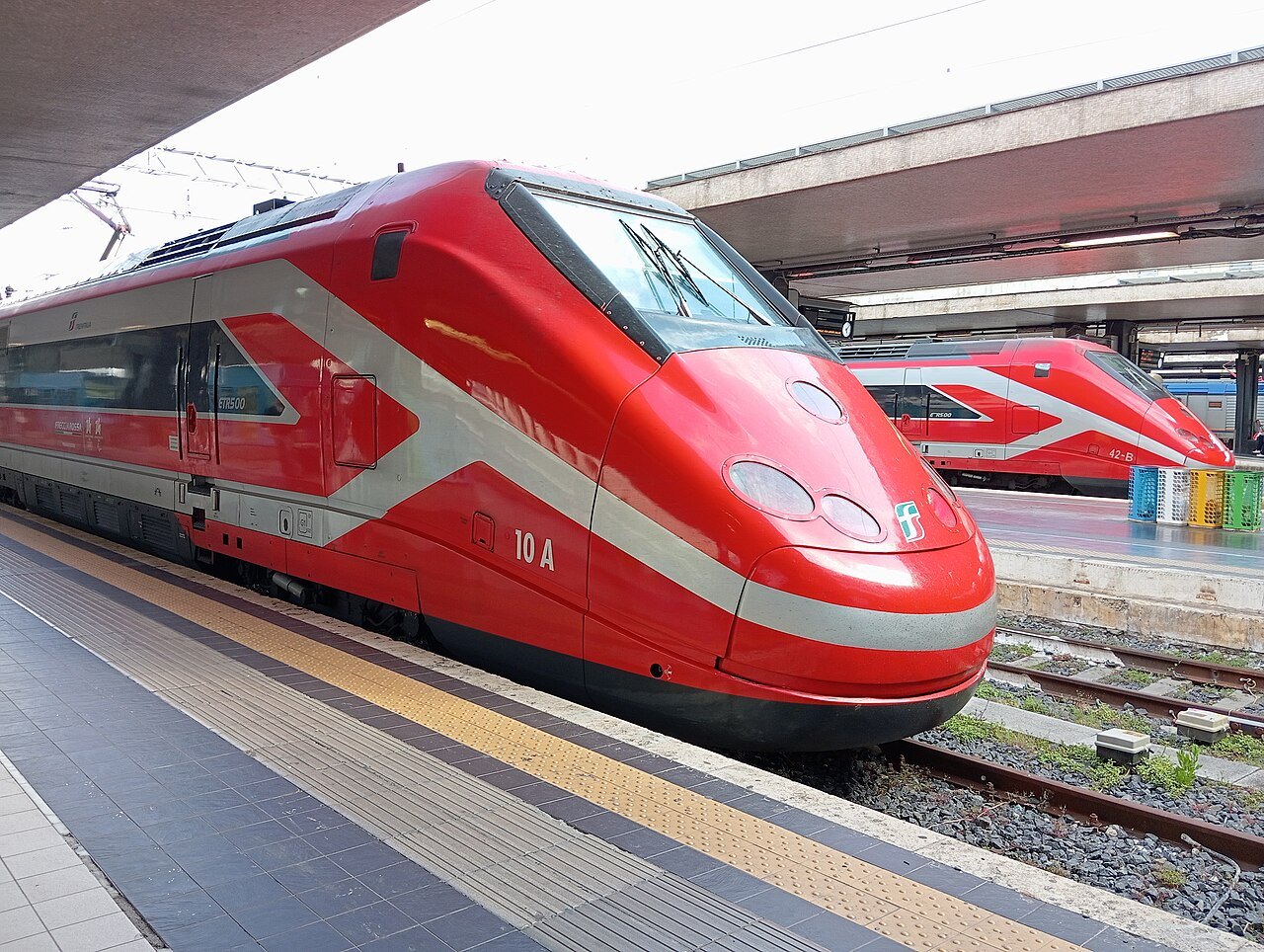
The FL1 trains are ordinary regional trains, and they do not go to Termini. They call at other Rome stations, including Tiburtina, the city's second station, in the northeast, which has its own stop on Metro line B. They run every fifteen minutes on working days and every thirty minutes on weekends and holidays.
The FL1 is the better choice if your hotel is near one of its stations, or if you are continuing on the regional network. For a first trip into the historic center, the Leonardo Express to Termini is usually simpler.
Taking a taxi
Official Rome taxis are white, with a TAXI sign on the roof, the city's symbol on the front doors and a license number shown on the doors, on the back and inside the car. At Fiumicino they wait at the Arrivals level of Terminals 1 and 3, and Fiumicino's own municipal taxis wait in front of the terminals and by the railway station.

A fixed fare set by the city of Rome applies between the airport and the historic center within the Aurelian Walls. It is valid in both directions and includes all supplements, so you should not be asked for more for luggage. Fixed fares also exist for a few other destinations, such as Tiburtina and Ostiense stations and the cruise port at Civitavecchia; for everywhere else the meter and the city's fare table apply, and it is sensible to confirm the expected fare with the driver before setting off.
What to ignore
The airport operator is direct about the risk. Any other vehicle waiting near the exit may be driven by someone without a taxi license, and the fare asked may be higher than the city's. It advises travelers to be suspicious of anyone inside the airport offering a ride into the city. Walk past them to the official rank.
A chauffeured car, called NCC in Italy, is a legitimate service, but it must be booked in advance and is not an alternative to the taxi rank. If you want a car waiting for you, book it before you fly.
If you land at Ciampino instead
Some low-cost and charter flights use Ciampino, Rome's second airport, about seven and a half miles southeast of the center, just outside the ring road. It opened in 1916 and is one of the oldest airports still working; the airship Norge set off from it in 1926 on the first flight to reach the North Pole.
Ciampino has no railway station of its own. Trenitalia's Ciampino Airlink combines a shuttle bus, which leaves from the square opposite the airport entrance, with a train from Ciampino station to Termini, so you arrive at the same place as the Leonardo Express. For the fixed taxi fares from Ciampino, check the city's published fare table before you travel.
Arriving well
Before you land, decide how you will get from Termini, or from your FL1 station, to your hotel, and check it on a map: the Metro does not cross the heart of the old center, so the last stretch may be a short walk, a bus or a taxi. Keep the fixed fare in mind if you take a taxi, and keep your luggage with you on the train.
The getting here page covers Ciampino, the stations and arrival by sea, and the getting around page explains the Metro, trams and buses.
Read next
More from the journal
- Getting AroundHow does the Rome Metro work for visitors?Rome has only three Metro lines, and none of them runs through the heart of the old center. Which line reaches which sights, where they cross, why building them takes so long, how the Metrebus fare system ties them to the buses and trams, and when walking is simply faster.Read the piece →
- The RioniWhy are the districts of Rome called rioni?Old Rome is divided into twenty-two rioni, numbered from Monti to Prati, and their names are carved at street corners. Where the word comes from, how fourteen ancient regions became twenty-two modern districts, what the 1744 plaques are, and how to use the numbers to find your way.Read the piece →
- Day TripsHow do you visit Ostia Antica from Rome?Ostia Antica, the port city of ancient Rome, is the easiest day trip from the center: a suburban train from Porta San Paolo, beside the Piramide Metro stop, takes you to a Roman town preserved under sand. How to get there, what the town was, what to look for among its streets, apartment blocks and baths, and how to plan the day.Read the piece →