Home · Eating & Drinking
The city's own
What to order
At the counter
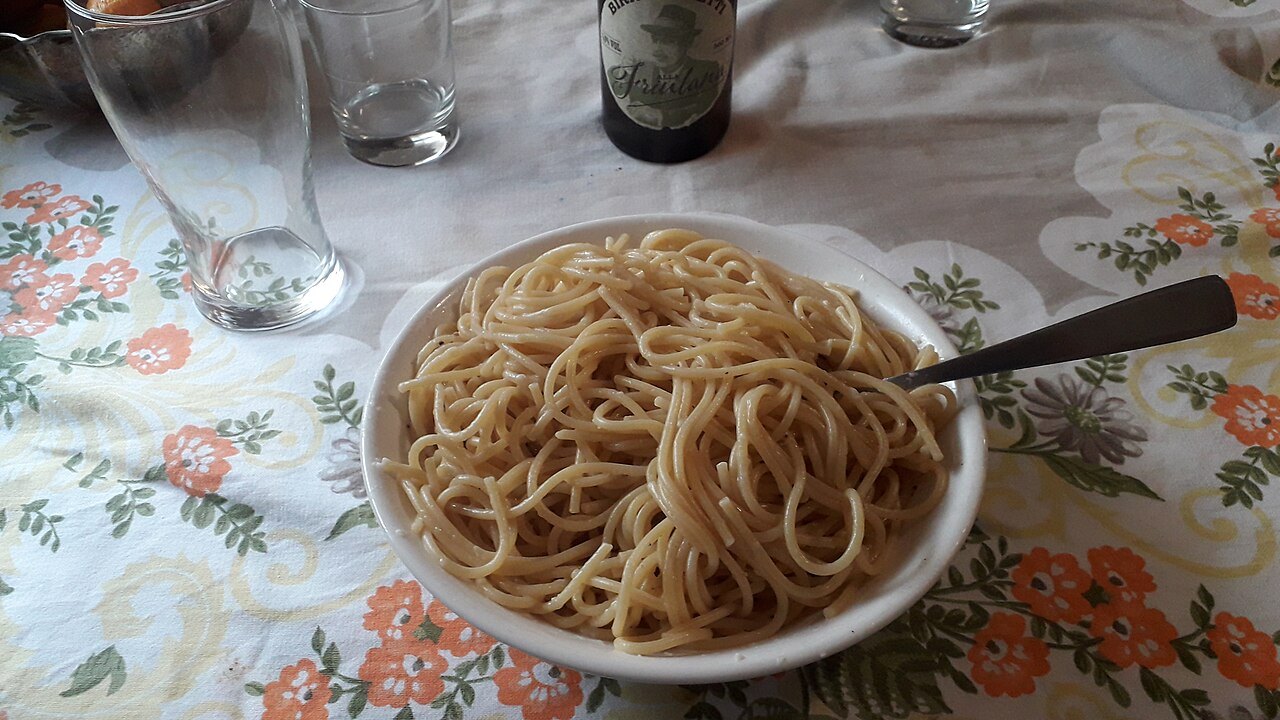
- Cacio e pepePasta with grated pecorino romano and black pepper, simple to list and hard to make smooth.
- GriciaGuanciale, pecorino and black pepper: the base the other Roman pastas build on.
- CarbonaraGricia with egg added; the dish took its modern form only in the mid-twentieth century.
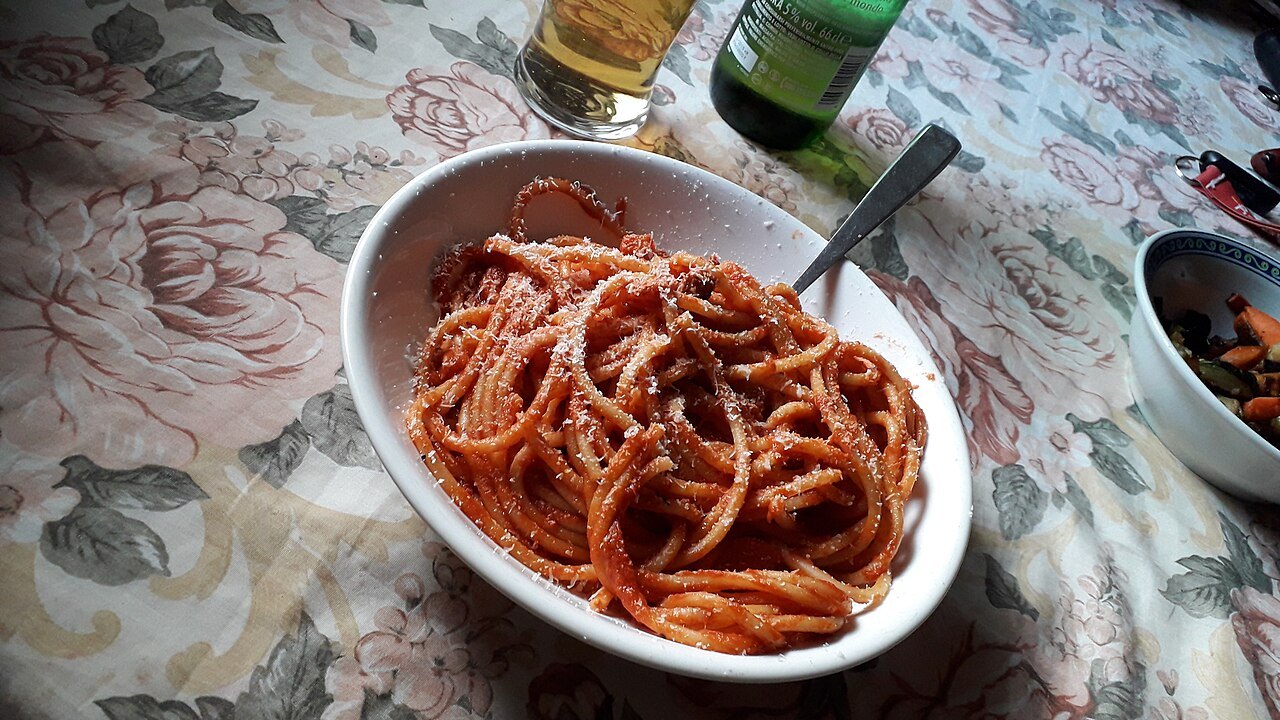
- AmatricianaGricia with tomato, from the mountain town of Amatrice, matriciana in Roman dialect.
- Carciofi alla giudiaJewish-style artichokes, fried twice until the leaves open, a spring specialty of the Ghetto.
- SupplìFried balls of rice in tomato sauce, a Roman snack whose name comes from the French surprise.
- Coda alla vaccinaraOxtail stewed the butchers' way with a great deal of celery, a dish of the fifth quarter.
- Pizza al taglioPizza by the slice, baked in long rectangular trays and sold by weight, a Roman invention.
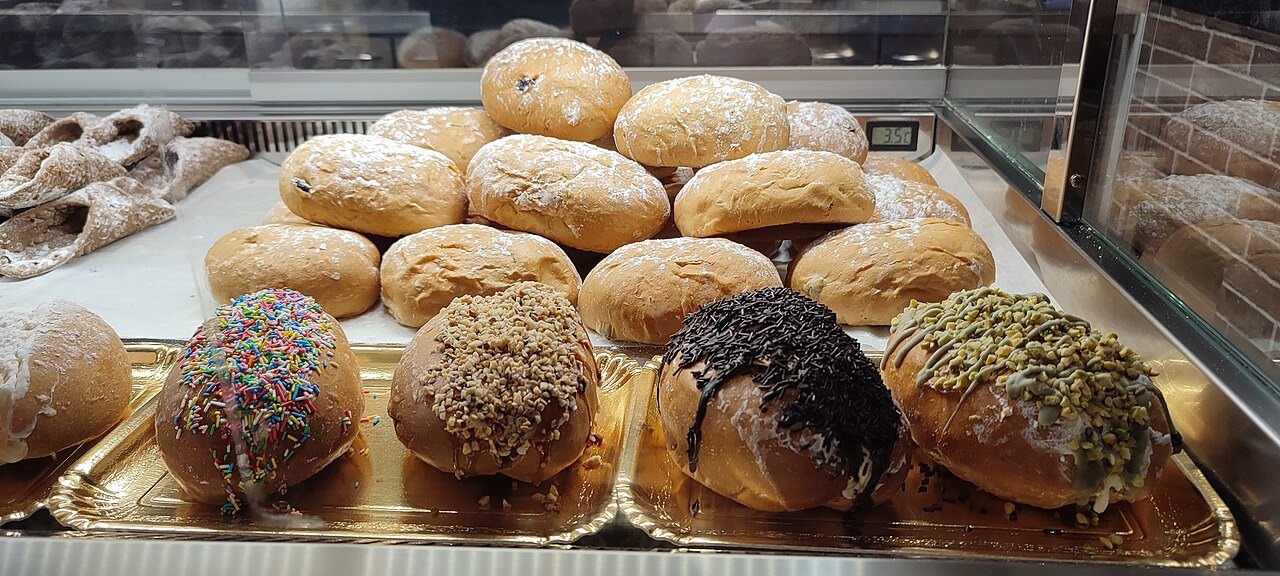
- MaritozzoA soft sweet bun split and filled with a generous amount of whipped cream.
In full
Eating & Drinking
How Rome eats
Roman cooking is built on fresh, seasonal, simply prepared ingredients from the countryside around the city, the Roman Campagna: peas, artichokes and fava beans, shellfish, milk-fed lamb and kid, and cheeses such as pecorino romano and ricotta. Olive oil dresses raw vegetables, while lard and the fat of prosciutto are preferred for frying. Some dishes belong to particular days of the week: gnocchi on Thursdays, salt cod on Fridays and tripe on Saturdays.
The city has eaten well for a long time. In the Renaissance it was a center of high cooking, because some of the best cooks of the age worked for the popes; Bartolomeo Scappi, cook to Pius IV, published a cookbook in 1570 with about a thousand recipes and the first known picture of a fork. Like all Italian cooking, Rome's was transformed by the crops of the New World, above all the tomato, brought by the Spanish. But the Rome most visitors taste today is older and humbler, the cooking of shepherds, butchers and the Jewish community.
The four pastas
Four pasta dishes are Rome's signature, and they are best understood as one family. Cacio e pepe is pasta with grated pecorino romano and black pepper, usually tonnarelli or spaghetti; getting the cheese smooth rather than lumpy is the whole art. Gricia adds guanciale, cured pork jowl. Carbonara is gricia with egg, and amatriciana is gricia with tomato. All four rely on pecorino romano, the hard, salty sheep's cheese of Rome. It was a staple of the legionaries, is still made to its old recipe, and is one of Italy's oldest cheeses, though nearly all of it is now made in Sardinia; on the first of May, Roman families traditionally eat it with fresh fava beans on an outing in the countryside.
Their stories are debated. Cacio e pepe is often credited to the shepherds of central Italy. Amatriciana comes from the town of Amatrice, in the mountains of Lazio, and is protected as a traditional specialty in the European Union. Carbonara, for all its fame, seems to be recent: its first appearances in print date from after the Second World War, and in 1950 an Italian newspaper reported that American officers had been looking for spaghetti alla carbonara in the restaurants of Trastevere for years. Fettuccine Alfredo, famous abroad, was invented in Rome but is not considered Roman cooking and is hard to find in the city.
The fifth quarter
The heart of old Roman cooking is the quinto quarto, the fifth quarter: the offal and cheaper cuts left after the four quarters of a carcass had been sold. Testaccio, the rione of the old slaughterhouse, was once called the belly of Rome, and its butchers, the vaccinari, gave their name to coda alla vaccinara, oxtail simmered with a great deal of celery, tomatoes and red wine. It is still one of the city's most popular dishes and appears on the menus of most Roman restaurants.
Rigatoni with pajata, a sauce made from entrails, and dishes of tripe belong to the same tradition, as does abbacchio, Roman milk-fed lamb, roasted with herbs. The people of the rione of Regola, where many butchers lived, were once nicknamed tail-eaters.
The Ghetto's kitchen
The Jewish community of Rome, established in the city since antiquity, left its mark on the city's food. Some dishes of the Ghetto go back more than four hundred years. The most famous is carciofi alla giudia, Jewish-style artichokes: whole artichokes fried twice, first at a low temperature to soften them and then, with their leaves spread open, at a higher one, until they turn golden and crisp like a flower. They are a specialty of the Jewish restaurants of the old Ghetto in Sant'Angelo in spring, when the artichokes are in season.
Street food
Rome eats well on its feet. Pizza al taglio, pizza by the slice, was developed in Rome: baked in large rectangular trays, it is cut to the size you ask for and sold by weight. Supplì are fried balls of rice in tomato sauce, first recorded in the nineteenth century; their name is a corruption of the French surprise, and one story has them arriving with Napoleon's troops. Porchetta, boneless roast pork, heavily salted and stuffed with garlic, rosemary or fennel, is a common street food in Rome, served in pizza bianca; the town most closely associated with it is Ariccia, in the Alban Hills.
Newer ideas join the old ones. The trapizzino, a pocket of pizza dough filled with one of Rome's traditional dishes, was created by the Roman pizza maker Stefano Callegari, who opened his first restaurant in 2005.
Sweet things and summer ice
Rome's favorite sweets are pasticcini, small individual pastries, along with gelato and handmade chocolates, and many Roman desserts are made with ricotta. The maritozzo, a soft bun split open and filled with a generous amount of whipped cream, is typical of Rome; some versions add pine nuts, raisins or candied fruit. In summer, look for grattachecca, shaved ice topped with sweet syrups, sold from kiosks; the oldest, Alla fonte d'oro, has served Romans since 1913.
Wine and the market squares
The countryside south of Rome is white-wine country. Frascati and the wines of the Castelli Romani, the towns of the Alban Hills, are the best known.
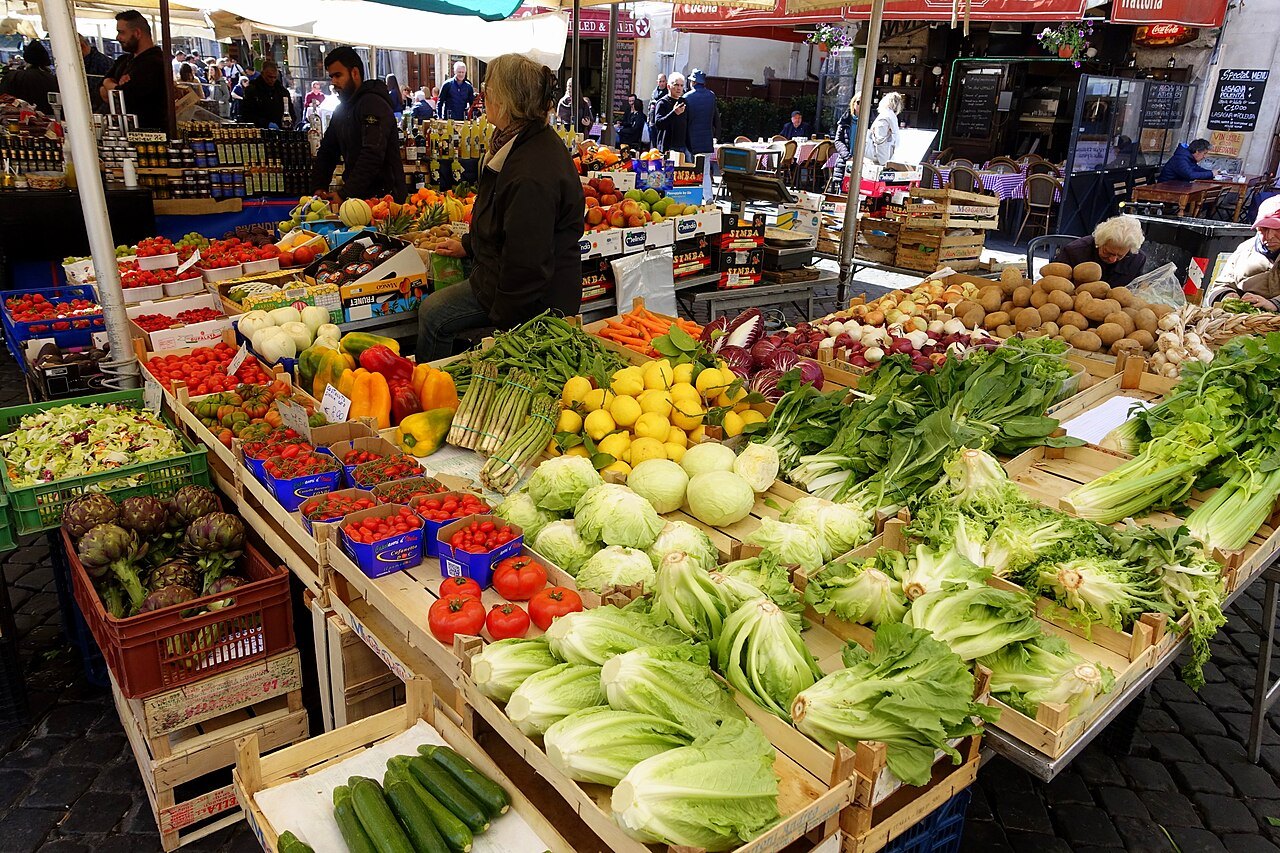
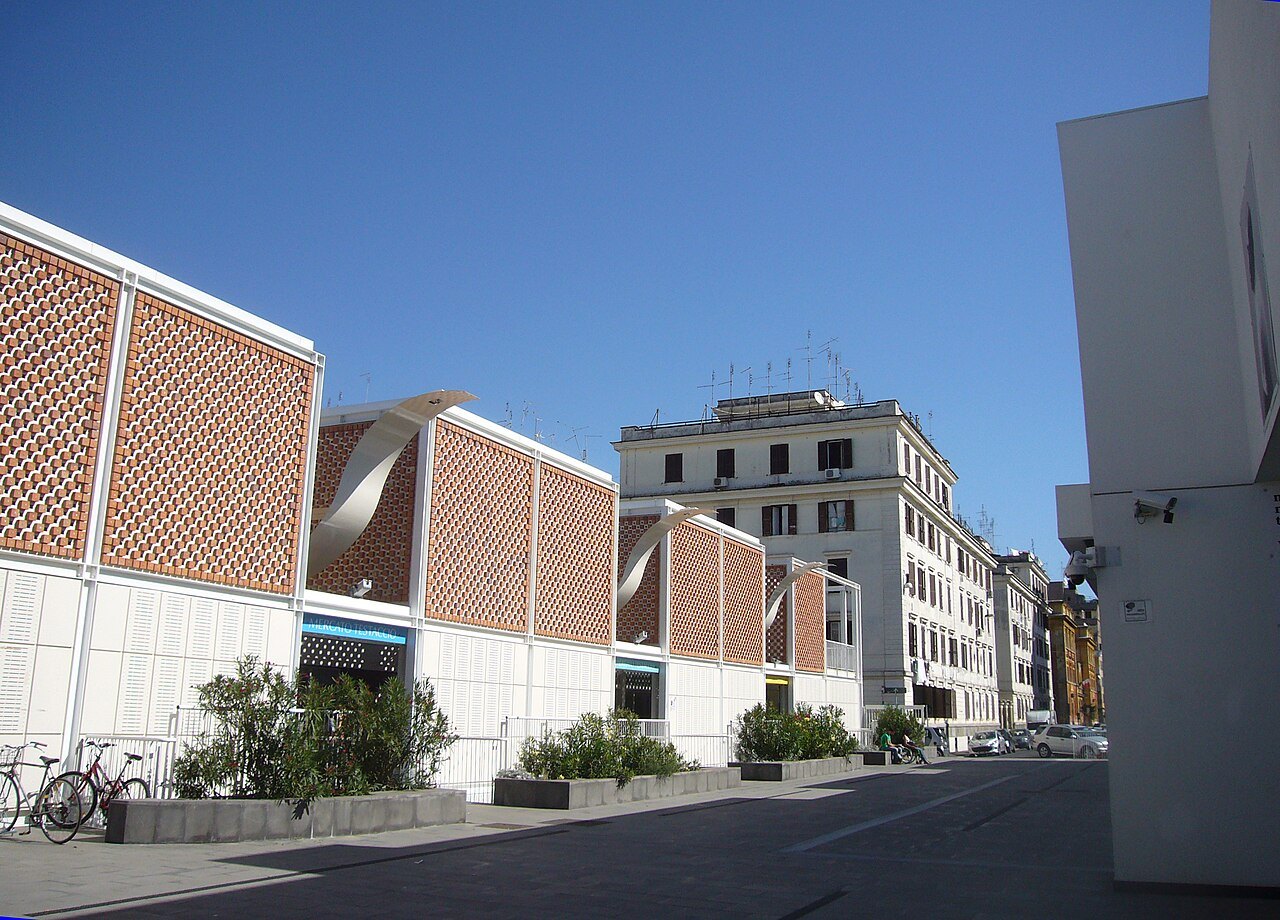
Campo de' Fiori, the field of flowers south of Piazza Navona, is one of the city's market squares, with a statue of the philosopher Giordano Bruno, burned there for heresy in 1600, looking down on the stalls. Testaccio, the old butchers' quarter, is the place to look for the most traditional Roman cooking.
Practical notes
Menus follow the seasons, so the artichokes of spring and the peas and fava beans of early summer come and go. Ask what is in season and what the kitchen is proud of. The great Roman pastas are simple enough that the difference between a good and an ordinary plate is obvious; try the same dish in two places and you will taste it. And in August, around Ferragosto, some family restaurants close for the holiday.
Seen on the way
More photographs
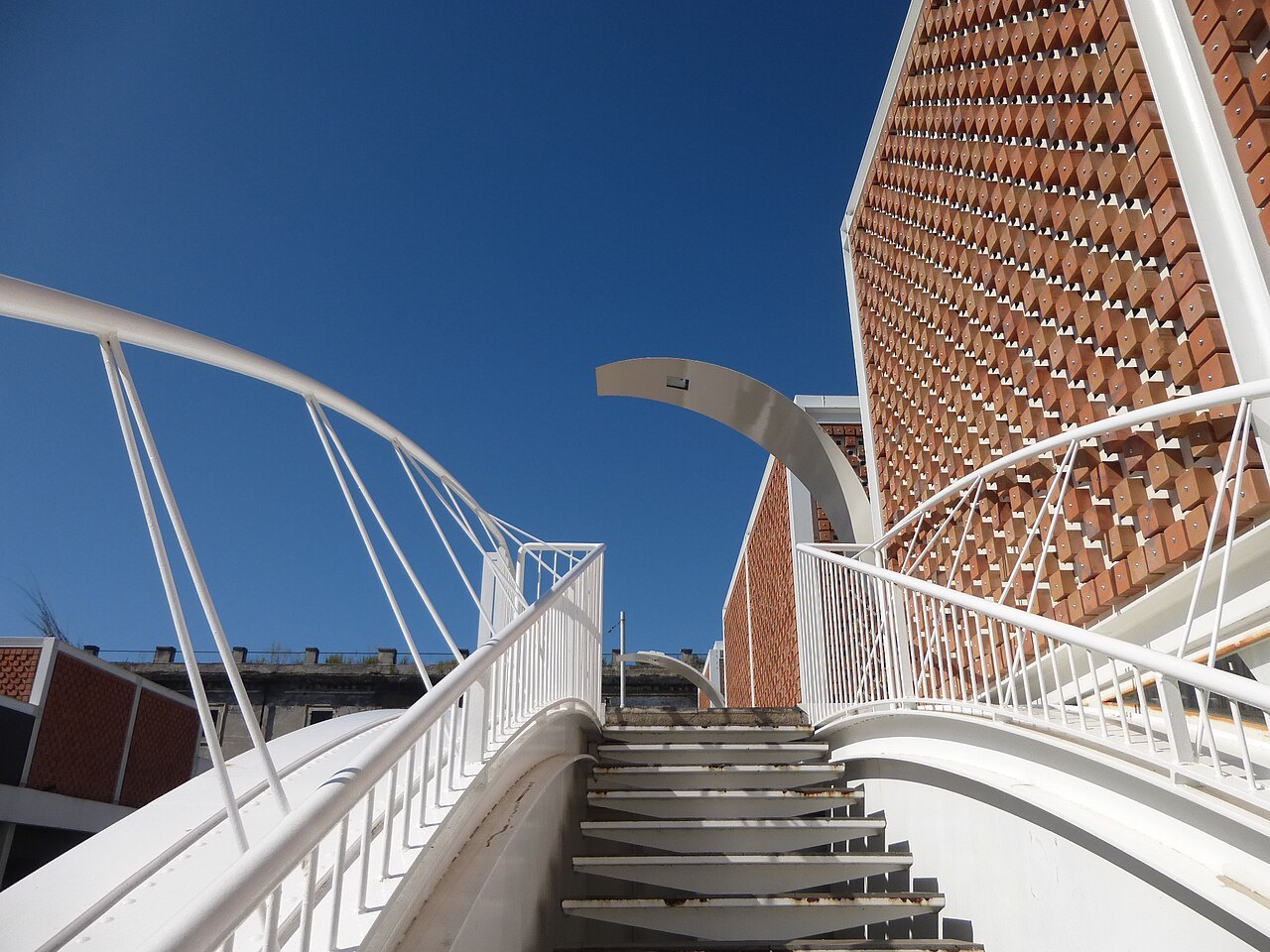
A stair and footbridge between the brick-latticed walls of the Testaccio marketLalupa, Wikimedia Commons, CC BY-SA 4.0 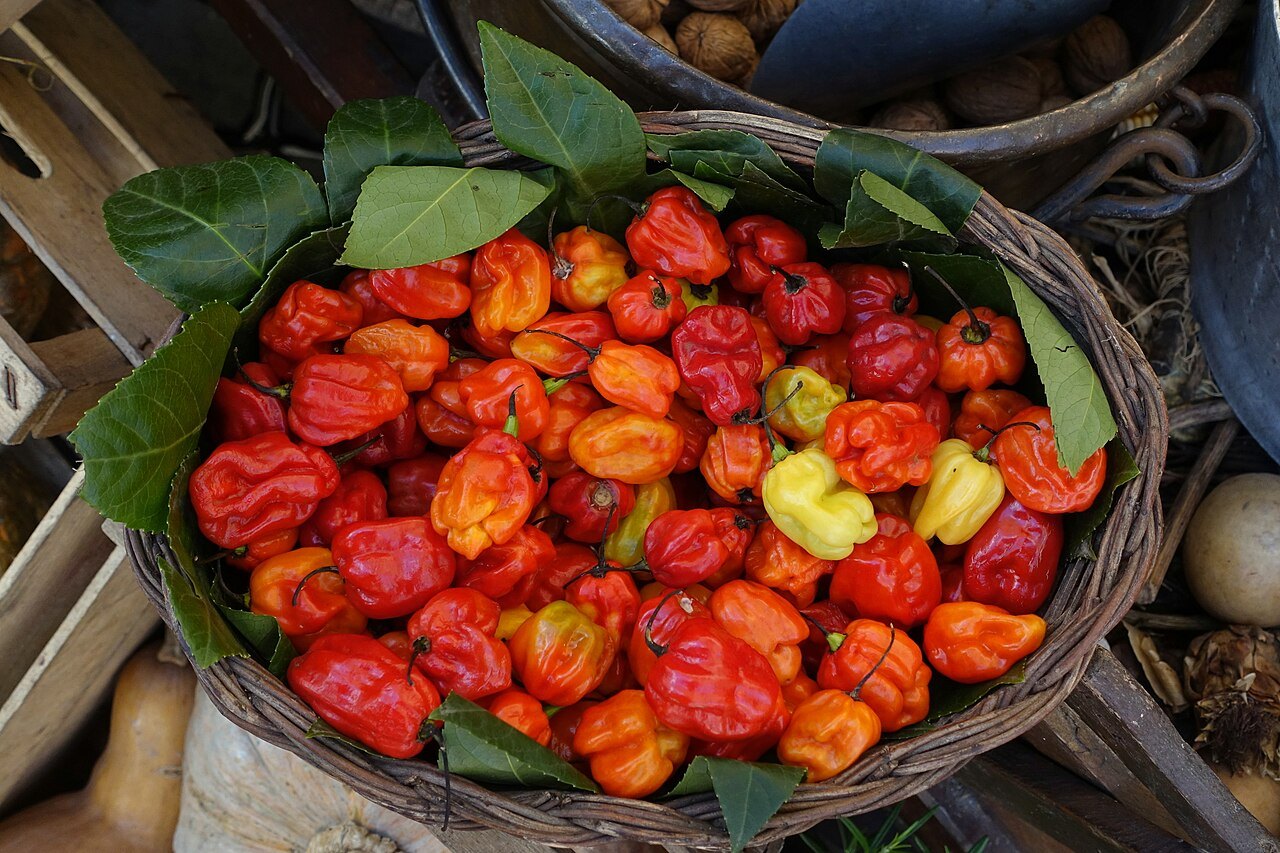
A basket of red and orange peppers on a stall in Campo de' FioriDaderot, Wikimedia Commons, CC0 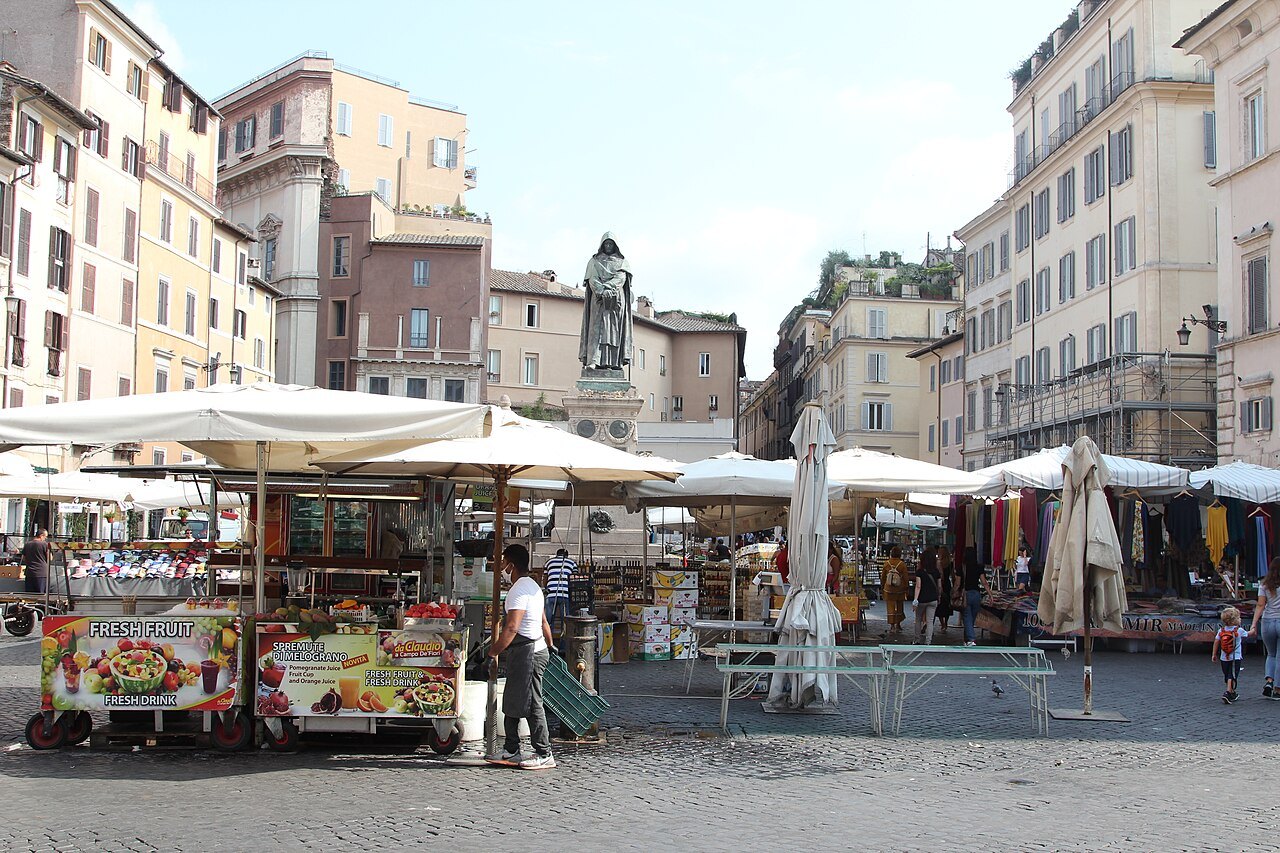
Market umbrellas in Campo de' Fiori below the statue of Giordano BrunoFallaner, Wikimedia Commons, CC BY-SA 4.0